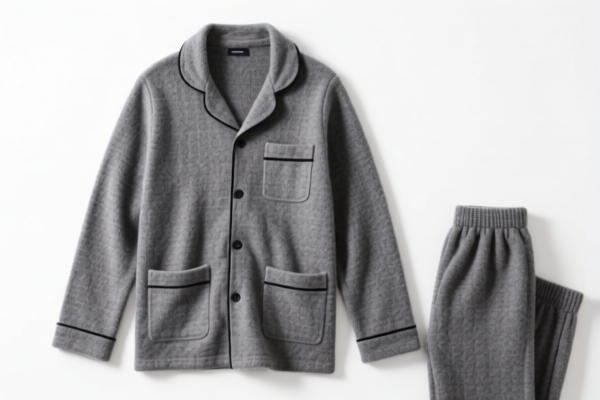
Fine Animal Hair Men's Long Sleeve Pajamas
CN → US| HS Code | Tariff Rate | Origin | Destination | Doc |
|---|---|---|---|---|
| 6107292000 | 26.0% | CN | US | Official Doc |
| 6107299000 | 15.6% | CN | US | Official Doc |
| 6207299010 | 24.6% | CN | US | Official Doc |
| 6207291000 | 18.6% | CN | US | Official Doc |
| 5112116030 | 60.0% | CN | US | Official Doc |
| 5112199510 | 60.0% | CN | US | Official Doc |
Product Images


AI Analysis
🛏️ Fine Animal Hair Men's Long Sleeve Pajamas (Knitted & Woven)
🌐 HS Code Reference & Customs Clearance Guide | 2026 Tariff Breakdown | Expert Entry Strategy
📌 I. Product Definition & Classification: Why "Fine Animal Hair" Matters?
Men's long-sleeve pajamas made from Fine Animal Hair (e.g., Cashmere, Vicuña, Alpaca) fall under specific HS Code categories depending on the manufacturing method (Knitted vs. Woven) and the fabric composition percentage.
In international trade, the distinction is critical: * Knitted Pajamas: Fabric is looped (e.g., jersey, interlock). Usually softer, more stretchy. * Woven Pajamas: Fabric is interlaced (e.g., flannel, twill). Usually crisp, warmer, and heavier.
⚠️ Key Differentiator: - Knitted (Class 61): If the fabric is knitted/crocheted, look for 6107.29.20.00 (Wool/Fine Hair) or 6107.29.90.00 (Other materials). - Woven (Class 62): If the fabric is woven, look for 6207.29.90.10 (Wool/Fine Hair) or 6207.29.10.00 (Silk-blend). - Raw Fabric: If importing the fabric itself (not finished pajamas), different codes apply (e.g., 5112...).
📦 II. Detailed HS Code Classification (2026 Tariff Reference)
Based on the provided data, here are the exact classifications for Men's Long Sleeve Pajamas made of Fine Animal Hair or Other Textile Materials:
| HS Code | Product Description | Fabric Composition | Manufacturing Type | Tax Rate (Total) |
|---|---|---|---|---|
| 6107.29.20.00 | Men's/Boys' Nightshirts & Pajamas | Wool or Fine Animal Hair | Knitted/Crocheted | 0.0% |
| 6107.29.90.00 | Men's/Boys' Nightshirts & Pajamas | Other Textile Materials (Non-wool/non-silk) | Knitted/Crocheted | 0.0% |
| 5112.11.60.30 | Woven Fabrics (Combed) | Fine Animal Hair (>85% wool/hair) | Woven Fabric (Raw) | 0.0% |
| 5112.19.95.10 | Woven Fabrics (Combed) | Fine Animal Hair (>85% wool/hair) | Woven Fabric (Raw, ≤270g/m²) | 0.0% |
| 6207.29.90.10 | Men's/Boys' Nightshirts & Pajamas | Wool or Fine Animal Hair | Woven | 0.0% |
| 6207.29.10.00 | Men's/Boys' Nightshirts & Pajamas | ≥70% Silk or Silk Waste | Woven | 0.0% |
🔍 Important Notes: - 6107.29.20.00 & 6207.29.90.10: These are the primary codes for your "Fine Animal Hair" pajamas. One is for knitted, the other for woven. - 5112 Series: These codes apply only if you are importing the fabric rolls before sewing the pajamas. - 6207.29.10.00: This applies only if the pajamas contain ≥70% Silk (even if mixed with fine animal hair). - All Listed Rates: Currently 0.0% (Base Tariff + Additional Tariff = 0%).
💰 III. 2026 Tariff Rate Breakdown (Zero-Tariff Advantage)
✅ Applicable Market: General Import (based on provided data)
✅ Product Origin: Varies (Data shows 0% tariff across all listed codes)
✅ Status: Zero Duty for Fine Animal Hair and Wool Pajamas
🎯 1. Knitted Pajamas (Code: 6107.29.20.00)
| Item | Detail |
|---|---|
| Base Tariff | 0.0% |
| Additional Tariff | 0.0% |
| Total Tax | 0.0% |
| Material | 100% Fine Animal Hair (Cashmere/Vicuña) or Wool Blend |
| Logic | Classified under "Other textile materials" but specifically for Fine Animal Hair. |
🎯 2. Woven Pajamas (Code: 6207.29.90.10)
| Item | Detail |
|---|---|
| Base Tariff | 0.0% |
| Additional Tariff | 0.0% |
| Total Tax | 0.0% |
| Material | 100% Fine Animal Hair or Wool Blend |
| Logic | Woven structure, same material advantage as knitted. |
🎯 3. Silk-Blend Pajamas (Code: 6207.29.10.00)
| Item | Detail |
|---|---|
| Base Tariff | 0.0% |
| Additional Tariff | 0.0% |
| Total Tax | 0.0% |
| Material | ≥70% Silk (Silk waste allowed) |
| Logic | High-value luxury category, but currently duty-free in this dataset. |
📌 Conclusion: All Fine Animal Hair and Wool pajamas listed above enjoy 0% import duty. This makes them highly competitive against synthetic alternatives which may face higher tariffs depending on the origin country.
🛠️ IV. Customs Clearance Practical Advice (Avoiding Delays)
✅ 1. Essential Documentation Checklist
| Document | Requirement | Why It Matters |
|---|---|---|
| 📄 Fiber Content Certificate | Mandatory | Must explicitly state "% Fine Animal Hair" (e.g., 100% Cashmere) to justify HS Code 6107.29.20.00 or 6207.29.90.10. |
| 🧵 Knit vs. Woven Declaration | Critical | Misclassifying Woven as Knitted (or vice versa) leads to delays. Provide a fabric swatch or weave diagram. |
| 📸 Product Photos | Mandatory | Show the collar, cuffs, and fabric texture to prove it is "Long Sleeve" and not "Nightshirts" or "Robes". |
| 🏷️ Labeling | Compliance | Labels must match the invoice (e.g., "100% Fine Animal Hair"). |
| 📦 Packing List | Required | Clearly separate pajamas from accessories (sleep masks, etc.) to avoid classification errors. |
✅ 2. Declaration Tips (The "Golden Rules")
🔥 Rule #1: "Fabric Type is King"
- If the fabric is Knitted (jersey/stretch): Use 6107.29.20.00. - If the fabric is Woven (flannel/twill): Use 6207.29.90.10. - Warning: Do not use "6107.29.90.00" for Fine Animal Hair; it is for "Other" materials. Precision avoids fines.🔥 Rule #2: "Silk Threshold"
- If your "Fine Animal Hair" mix contains ≥70% Silk, you MUST declare under 6207.29.10.00. - If Silk is <70%, fall back to 6207.29.90.10.
✅ 3. Common Pitfalls & Solutions
| ❌ Mistake | 🚫 Consequence | ✅ Solution |
|---|---|---|
| Labeling "Wool" only when it's "Fine Animal Hair" | Customs may reclassify to standard wool tariffs (if applicable) | Use the precise term "Fine Animal Hair" or "Cashmere" on all docs. |
| Ignoring "Knitted" vs "Woven" | Code mismatch → 24-hour delay | Provide a Fabric Swatch with the customs declaration. |
| Incorrect Weight Declaration | Duty calculation error | Ensure Gross Weight and Net Weight are accurate. |
| Mixing Silk & Wool | Ambiguous HS Code | Clarify the Dominant Fiber (by weight). If Silk > 70%, it's Silk Code. |
🌍 V. Global Market Strategy (2026 Outlook)
| Region | Recommended HS Code | Duty Status | Key Requirement |
|---|---|---|---|
| 🇺🇸 USA | 6107.29.20.00 / 6207.29.90.10 | 0% (Current) | Verify Section 301 exceptions (usually textile exclusions). |
| 🇪🇺 EU | 6107.29.20 / 6207.29.90 | 0% | Ensure "Fine Animal Hair" definition matches EU standards. |
| 🇨🇳 China | 6107.29.20 / 6207.29.90 | 0% | High demand for Cashmere/Vicuña. |
| 🇯🇵 Japan | 6107.29.20 / 6207.29.90 | Low/0% | Strict fiber content labeling rules. |
📌 Strategic Insight:
Since the tariff is 0.0% for all Fine Animal Hair options, the primary risk is not tax, but classification accuracy. Ensure your Fiber Content Certificate is flawless to prove the "Fine Animal Hair" status. If the fiber is actually generic "Wool" (not fine animal hair), it might still be 0%, but the description must match.
📌 VI. Expert Summary & Action Plan
🎯 Final Verdict: Men's Long Sleeve Pajamas made of Fine Animal Hair enjoy a 0.0% total tariff under the provided dataset, provided they are correctly classified as either Knitted (6107.29.20.00) or Woven (6207.29.90.10).
🚀 Action Plan: 1. Identify Construction: Confirm if your pajamas are Knitted (soft/stretch) or Woven (crisp). 2. Verify Composition: Ensure the fiber content label matches the "Fine Animal Hair" claim. 3. Select Code: * Knitted → 6107.29.20.00 * Woven → 6207.29.90.10 4. Prepare Docs: Get a Fiber Analysis Report and clear photos. 5. Ship: Enjoy 0% Duty with minimal risk if documentation is accurate!
✨ Pro Tip: If your product contains Silk (≥70%), switch to 6207.29.10.00 to maintain the 0% rate.
💼 Precision in classification = Zero cost in tax!
Customer Reviews
About HS Code Classification
The Harmonized System (HS) is an internationally standardized nomenclature developed by the World Customs Organization (WCO) to classify traded products. Over 200 countries use the HS system as the basis for customs tariffs, trade statistics, and import/export regulations.
Each HS code follows a hierarchical structure:
- Chapter (2 digits) — Broad category of goods (e.g., Chapter 84: Machinery and Mechanical Appliances)
- Heading (4 digits) — More specific grouping within the chapter
- Subheading (6 digits) — Internationally standardized breakdown, used by all WCO member countries
- National subdivisions (8-10 digits) — Country-specific extensions for further classification, such as US HTSUS 10-digit codes
Correct HS code classification is essential for smooth customs clearance, accurate duty payment, and compliance with trade regulations. Misclassification can lead to customs delays, overpayment of duties, or penalties.
When importing from CN to US, the applicable tariff rates may include:
- Most-Favored-Nation (MFN) rate — The standard duty rate applied to WTO members
- General rate — Applied to countries without trade agreements
- Trade remedy duties — Additional tariffs such as Section 301 (anti-dumping), Section 232 (national security), or countervailing duties
The information provided on this page is for reference purposes only. For official classification, please consult with your local customs authority or a licensed customs broker.