Girls' Certified Handwoven Cotton Shorts
CN → US| HS Code | Tariff Rate | Origin | Destination | Doc |
|---|---|---|---|---|
| 6104622060 | 32.4% | CN | US | Official Doc |
| 6203424561 | 34.1% | CN | US | Official Doc |
| 6110202049 | 34.0% | CN | US | Official Doc |
| 6104220050 | 0.0% | CN | US | Official Doc |
Product Images
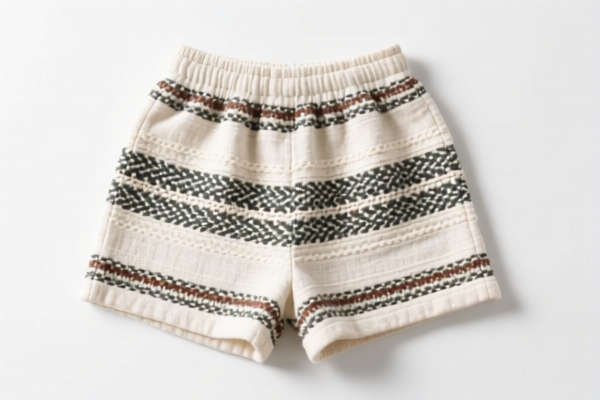
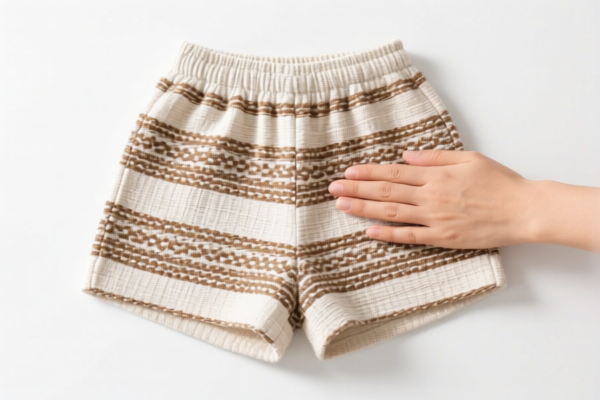
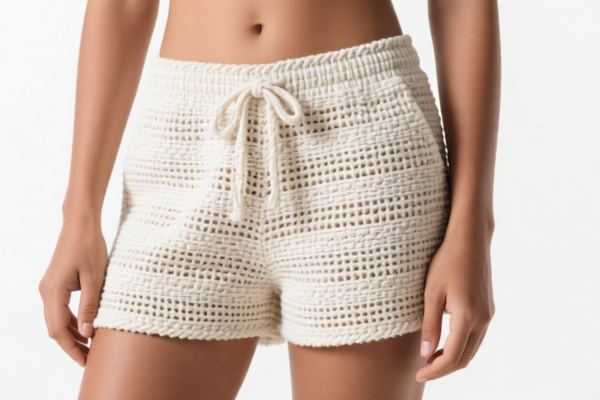
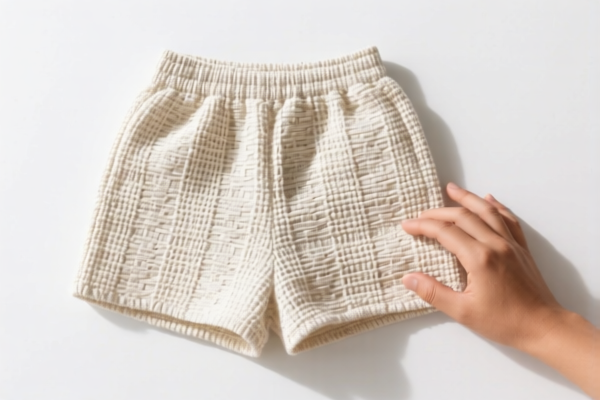
AI Analysis
🧵 Girls' Certified Handwoven Cotton Shorts
🌐 HS Code Reference & Customs Clearance Guide | 2026 Latest Tariff Analysis | Professional Entry Strategy 📌 I. Product Definition & Classification: Is "Handwoven" the Key?
"Girls' Certified Handwoven Cotton Shorts" presents a unique classification challenge in international trade. While the core material is cotton, the manufacturing process (handwoven) and the garment type (shorts) determine the specific HS Code and, consequently, the tax burden.
In customs classification: * Knitted vs. Woven: This is the most critical distinction. "Shorts" are typically classified under two main chapters: * Chapter 61: Articles of Apparel and Clothing Accessories, Knitted or Crocheted. * Chapter 62: Articles of Apparel and Clothing Accessories, Not Knitted or Crocheted (i.e., Woven). * "Handwoven" Implication: Handwoven fabrics are technically woven (not knitted). Therefore, they generally fall under Chapter 62, unless the specific local tariff schedule or a special trade agreement classifies certain handcrafted items differently (which is rare for standard shorts). * "Certified": This likely refers to organic certification, fair trade, or authenticity of the weave. It does not change the HS Code but may be relevant for labeling requirements or preferential tariff claims if specific sustainability protocols apply (though not reflected in the basic HS codes provided below).
⚠️ Critical Distinction: - If the shorts are Handwoven → Likely Chapter 62 (Woven). - If the shorts are Knitted (even if made by hand knitting) → Chapter 61. - Note: The provided DATA contains both Chapter 61 and 62 codes. We must distinguish based on the "Handwoven" descriptor.
📦 II. HS Code Classification Details (2026 Latest Tariff Alignment)
Based on the provided <DATA>, we have four HS Codes. Two are for Knitted shorts (Ch 61), and two are for Woven shorts (Ch 62). Since the product is explicitly "Handwoven", it is technically a woven fabric garment.
| HS Code | Product Description | Material | Manufacturing Method | Relevance to "Handwoven" |
|---|---|---|---|---|
6104.62.20.60 |
Girls' Knitted Cotton Shorts | Cotton | Knitted/Crocheted | ❌ Incorrect (Unless "handwoven" is a mistranslation of "hand-knitted") |
6104.22.00.50 |
Girls' Cotton Shorts (Ensemble) | Cotton | Knitted/Crocheted | ❌ Incorrect (Knitted) |
6203.42.45.61 |
Girls' Cotton Shorts | Cotton | Woven | ✅ Most Likely Correct for "Handwoven" shorts |
6110.20.20.49 |
Girls' Knitted Cotton Garments | Cotton | Knitted/Crocheted | ❌ Incorrect (Knitted; applies to tops/sweaters, not shorts) |
🔍 Key Insight: - "Handwoven" = Woven Fabric. Therefore, it falls under Chapter 62. - The specific code
6203.42.45.61corresponds to "Girls' Cotton Shorts" (Woven). - The code6104.62.20.60is for "Girls' Knitted Cotton Shorts." If the producer means "hand-knitted," this code applies. If they mean "hand-loom woven,"6203.42.45.61is the correct one. - Assumption for this guide: We will analyze both scenarios because "handwoven" is sometimes confused with "hand-knitted" in casual trade descriptions. However, strictly speaking, woven takes precedence for handloom textiles.
💰 III. 2026 Latest Tariff Rate Breakdown (Including Surtaxes & Policy Add-ons)
✅ Applicable Country: United States (US)
✅ Origin: China (CN)
✅ Effective Time: 2025/2026 (Current Trade War Conditions)
The provided <DATA> shows a consistent Total Tax Rate structure with three components:
1. Base Tariff (Standard MFN or Specific Code Rate)
2. Section 301 Surtax (7.5%)
3. Section 122 Tariff (10%)
🎯 1. For Woven Shorts: 6203.42.45.61 (Girls' Cotton Shorts)
This is the most accurate code for "Handwoven" shorts.
| Item | Value | Details |
|---|---|---|
| Base Tariff | 16.6% | Standard duty for girls' woven cotton shorts |
| Section 301 Surtax | +7.5% | Added on top of base for Chinese origin |
| Section 122 Tariff | +10% | Specific US trade action tariff |
| Total Tax Rate | 34.1% | 16.6% + 7.5% + 10% |
| Tax Calculation | CIF Value × 34.1% | |
| De Minimis Exemption | ❌ Not Eligible | High total rate (>25%) disqualifies from $800 de minimis |
📌 Explanation: - "Section 301 (7.5%)": Refers to the USTR's list of goods subject to additional duties due to unfair trade practices. - "Section 122 (10%)": Refers to Section 122 of the Trade Act of 1974, allowing the President to adjust duties to protect national security or balance of payments (often applied to textiles). - Total 34.1% is a high tariff. This makes the product less competitive in the US market compared to non-Chinese origins.
🎯 2. For Knitted Shorts: 6104.62.20.60 (Girls' Knitted Cotton Shorts)
Only applies if "handwoven" is actually "hand-knitted."
| Item | Value | Details |
|---|---|---|
| Base Tariff | 14.9% | Standard duty for girls' knitted cotton shorts |
| Section 301 Surtax | +7.5% | Additional duty for Chinese origin |
| Section 122 Tariff | +10% | Additional duty under Section 122 |
| Total Tax Rate | 32.4% | 14.9% + 7.5% + 10% |
| Tax Calculation | CIF Value × 32.4% | |
| De Minimis Exemption | ❌ Not Eligible |
📌 Comparison: Knitted shorts are slightly cheaper (32.4%) than woven (34.1%), but the classification must be physically accurate. Knitted fabrics have stretch; woven fabrics (like denim or handloom cotton) do not.
🎯 3. For Other Knitted Garments: 6110.20.20.49
Note: The data lists this as "Girls' Knitted Cotton Garments" with a 34.0% rate. This is likely for tops/sweaters, not shorts. Do not use this for shorts unless misclassified.
🛠️ IV. Customs Clearance Practical Advice (Avoid Pitfalls)
✅ 1. Preparation Checklist (Must-Haves)
| Document | Required | Explanation |
|---|---|---|
| ✅ Product Composition Label | ✔️ | Must state "100% Cotton" or percentage. |
| ✅ Fabric Construction Photo | ✔️ | Crucial: Show the weave structure. Woven vs. Knitted. Customs may reject if unclear. |
| ✅ Certificate of Origin (CO) | ✔️ | Proof of Chinese origin triggers the 17.5% surtaxes. |
| ✅ Commercial Invoice | ✔️ | Must clearly state: "Girls' Handwoven Cotton Shorts" and HS Code 6203.42.45.61. |
| ✅ Handloom Certification | ✔️ | If "Certified" refers to handloom authenticity, provide this to justify any potential cultural or artisanal claims (though it doesn't lower tax). |
✅ 2. Declaration Tips (Key Mnemonics)
🔥 "Woven is 62, Knitted is 61. Check the stretch! 'Handwoven' means Woven. If you say 'Handwoven' but file under 61, you risk audit and penalties."
| Scenario | Correct HS Code | Total Tax | Why? |
|---|---|---|---|
| Handwoven (Loom) | 6203.42.45.61 |
34.1% | Fabric is interlaced threads (Woven). |
| Hand-Knitted | 6104.62.20.60 |
32.4% | Fabric is looped threads (Knitted). |
| Ensemble (Set) | 6104.22.00.50 |
Varies | Only if it's a top+shorts set. Single shorts don't apply. |
✅ 3. Special Handling for "Certified" Products
- Labeling: Ensure the label says "Made in China" clearly. Mislabeling origin can lead to fraud penalties and seizure.
- Value: The "Certified" status may increase the declared value (higher quality). Ensure the Transaction Value is supported by invoices. Customs will assess tax on the higher, verified value.
- Section 122: The 10% tariff is significant. Ensure the customs broker is aware of this specific surtax for textile goods to avoid surprise audits.
🌍 V. Global Market Comparison (2026 Context)
| Country/Region | Recommended HS Code | Base Tariff | Surtaxes (China) | Total Impact |
|---|---|---|---|---|
| 🇺🇸 USA | 6203.42.45.61 (Woven) |
16.6% | +17.5% (301+122) | 34.1% (High Barrier) |
| 🇨🇳 China | 6203.42.45.61 |
5-10% | None | Low Barrier (For Domestic) |
| 🇪🇺 EU | 6203.42.45.61 |
~12% | None (unless sanctions) | Moderate |
| 🇬🇧 UK | 6203.42.45.61 |
~12% | None | Moderate |
📌 Conclusion: - The US market is the most challenging due to the 17.5% additional tariffs (7.5% + 10%). - Strategy: Consider non-Chinese sourcing (e.g., Vietnam, India, Bangladesh) if targeting the US, as they may be exempt from Section 301/122 tariffs. - Alternative: If the product is sold domestically in China or to non-US markets, the tariff burden is significantly lower.
📌 VI. Common Errors & Pitfalls (Lessons Learned)
❌ Error 1: Classifying "Handwoven" as "Knitted" (6104...)
👉 Consequence: Customs may reclassify, leading to back taxes + penalties. Woven and knitted fabrics look very different under microscopy.
❌ Error 2: Ignoring the "Section 122" 10% tariff
👉 Consequence: Underpaying duties by 10% per shipment. This is not a standard MFN rate and must be manually added by the broker.
❌ Error 3: Misunderstanding "Certified"
👉 Consequence: If "Certified" implies organic, ensure you have the OCF/GOTS certificate. Lack of proof may lead to rejected claims for "eco-friendly" marketing bonuses or higher scrutiny.
✅ Correct Approach:
"Girls' Woven Cotton Shorts, 100% Cotton, Handloom Manufactured, Certified by [Agency]. HS Code: 6203.42.45.61."
🎯 VII. Conclusion: Professional Declaration, Cost Control!
🎯 Remember:
🔹 "Handwoven = Woven = Chapter 62".
🔹 "Total Tax = Base + 7.5% + 10% = 34.1%".
🔹 "Knitted is cheaper (32.4%) but only if it's actually knitted."
🔹 "Don't let 'Certified' distract you from the fabric structure."
📌 Pro Tip: If your volume is high, consider pre-classification rulings with US Customs (CBSA or CBP) to confirm the "Handwoven" status and avoid future disputes. Also, explore duty drawback programs if the goods are later re-exported.
📣 Immediate Action:
📞 Verify fabric construction with your supplier.
📄 Confirm if "Handwoven" means Woven (6203) or Knitted (6104).
💰 Calculate landed cost with 34.1% total tax for US entry.
🚀 Optimize supply chain to reduce tariff impact.
✨ Professional customs clearance starts with accurate classification!
💼 Your profit margin depends on every percentage point of duty.
Customer Reviews
About HS Code Classification
The Harmonized System (HS) is an internationally standardized nomenclature developed by the World Customs Organization (WCO) to classify traded products. Over 200 countries use the HS system as the basis for customs tariffs, trade statistics, and import/export regulations.
Each HS code follows a hierarchical structure:
- Chapter (2 digits) — Broad category of goods (e.g., Chapter 84: Machinery and Mechanical Appliances)
- Heading (4 digits) — More specific grouping within the chapter
- Subheading (6 digits) — Internationally standardized breakdown, used by all WCO member countries
- National subdivisions (8-10 digits) — Country-specific extensions for further classification, such as US HTSUS 10-digit codes
Correct HS code classification is essential for smooth customs clearance, accurate duty payment, and compliance with trade regulations. Misclassification can lead to customs delays, overpayment of duties, or penalties.
When importing from CN to US, the applicable tariff rates may include:
- Most-Favored-Nation (MFN) rate — The standard duty rate applied to WTO members
- General rate — Applied to countries without trade agreements
- Trade remedy duties — Additional tariffs such as Section 301 (anti-dumping), Section 232 (national security), or countervailing duties
The information provided on this page is for reference purposes only. For official classification, please consult with your local customs authority or a licensed customs broker.