Girls' Chemical Fiber Trousers
CN → USProduct Images
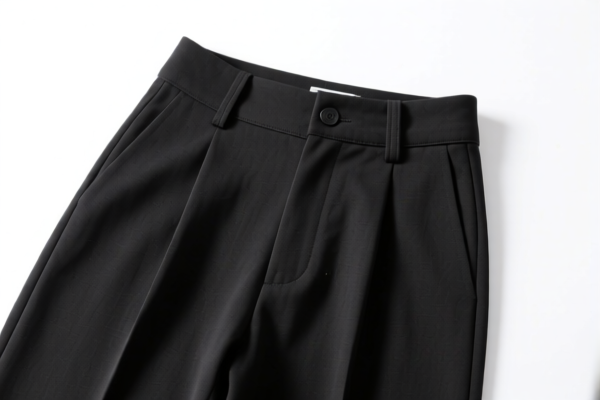
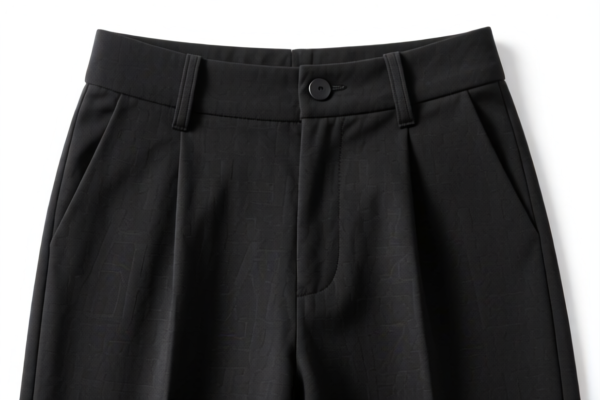
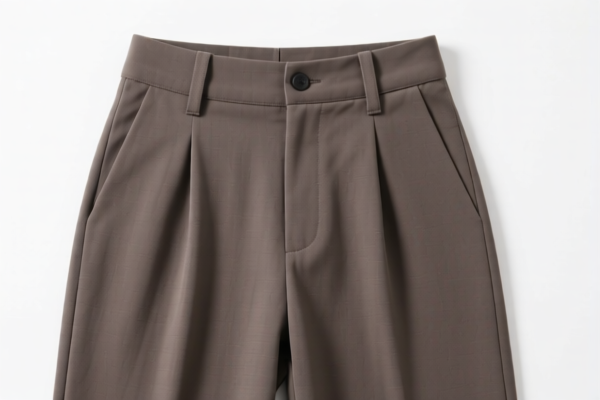
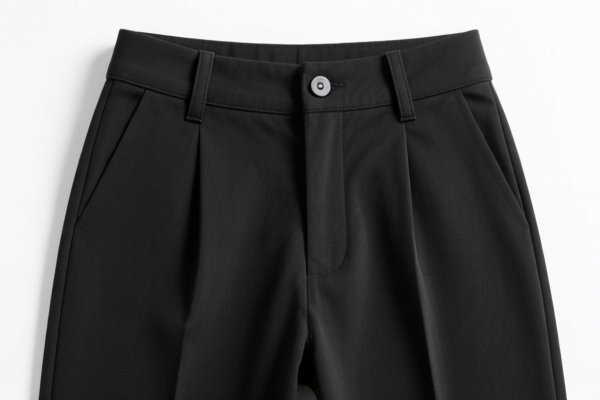
AI Analysis
👖 Girls' Chemical Fiber Trousers
🌐 HS Code Reference & Customs Clearance Guide | 2026 Latest Tariff Analysis | Professional-Level Clearance Strategy
📌 I. Product Definition & Classification: Do You Really Understand "Girls' Trousers"?
Girls' chemical fiber trousers are a subset of women's/infant apparel made from synthetic or artificial fibers (e.g., polyester, nylon, acrylic). In international trade, classification depends heavily on fiber content, age group, and construction type.
Key Distinctions:
- By Fiber: "Chemical fiber" includes both synthetic fibers (e.g., polyester, nylon) and artificial fibers (e.g., viscose, rayon).
- By Age: "Girls" typically refers to children under 14 years old.
- By Type: Trousers include pants, jeans, shorts, and leggings (if structured as trousers).
⚠️ Critical Differentiator:
- If the trousers are made of synthetic fibers (e.g., polyester) → HS 6104.63
- If made of artificial fibers (e.g., viscose) → HS 6104.62
- If made of cotton (not applicable here, but for contrast) → HS 6104.63 (if synthetic) or 6204.63 (if woven, not knitted)
📦 II. HS Code Classification Details (2026 Latest Tariff Authority Comparison)
| HS Code | Product Description | Applicable Scenario | Fiber Type | Knitted/Crocheted? |
|---|---|---|---|---|
6104.62.00.00 |
Women’s or girls’ trousers, artificial fiber (e.g., viscose, rayon), knitted or crocheted | Children’s leggings, knit pants | Artificial Fiber | ✅ Yes |
6104.63.00.00 |
Women’s or girls’ trousers, synthetic fiber (e.g., polyester, nylon), knitted or crocheted | Children’s synthetic sweatpants, knit trousers | Synthetic Fiber | ✅ Yes |
6204.63.00.00 |
Girls’ trousers, synthetic fiber, not knitted/crocheted (e.g., woven jeans, dress pants) | Woven jeans, dress pants, cargo pants | Synthetic Fiber | ❌ No |
6204.62.00.00 |
Girls’ trousers, artificial fiber, not knitted/crocheted | Woven rayon pants, viscose dress pants | Artificial Fiber | ❌ No |
🔍 Key Reminder:
- Knitted vs. Woven: This is the most critical distinction. Knitted trousers (stretchy, jersey-like) go to Chapter 61. Woven trousers (structured, denim-like) go to Chapter 62.
- "Girls" Definition: Typically under 14 years old. If labeled for adults, classification may shift.
- Chemical Fiber: Must specify synthetic (polyester, nylon) vs. artificial (viscose, rayon) in documentation.
💰 III. 2026 Latest Tariff Rate Details (Including Surcharges & Policy Add-ons)
✅ Applicable Country: United States (US)
✅ Country of Origin: China (CN)
✅ Effective Date: From November 10, 2025 (including subsequent imports)
🎯 1. 6104.62.00.00 – Girls’ Trousers, Artificial Fiber, Knitted
| Item | Content |
|---|---|
| Base Tariff | 16% (ad valorem) |
| USITC Surcharge | +25% (from USITC Footnote 9903.88.01) |
| IEEPA Surcharge | +10% (for China/HK products, from Nov 10, 2025) |
| Total Tariff | 51% |
| Tax Calculation | CIF Value × 51% |
| De Minimis Exemption | ❌ Not Available (deny_de_minimis) |
| Legal Basis Path | IEEPA:9903.01.25 → IEEPA:9903.01.24 → USITC:6104.62.00.00 → FOOTNOTE:9903.88.01 |
📌 Explanation:
- "USITC 25% surcharge" comes from Section 301 of the U.S. Trade Act;
- "IEEPA 10%" is the additional tariff under the International Emergency Economic Powers Act;
- Total 51%, which is extremely high, must be anticipated in advance!
🎯 2. 6104.63.00.00 – Girls’ Trousers, Synthetic Fiber, Knitted
| Item | Content |
|---|---|
| Base Tariff | 16% |
| USITC Surcharge | +25% |
| IEEPA Surcharge | +10% |
| Total Tariff | 51% |
| Tax Calculation | CIF × 51% |
| De Minimis Exemption | ❌ Not Available |
| Legal Basis Path | IEEPA:9903.01.25 → IEEPA:9903.01.24 → USITC:6104.63.00.00 → FOOTNOTE:9903.88.01 |
📌 Note:
- Same as above, both artificial and synthetic fiber knitted trousers face the same high tariffs.
- Regardless of fabric type (polyester vs. viscose), if knitted, the tariff is 51%.
🎯 3. 6204.62.00.00 – Girls’ Trousers, Artificial Fiber, Woven
| Item | Content |
|---|---|
| Base Tariff | 17% |
| USITC Surcharge | +25% |
| IEEPA Surcharge | +10% |
| Total Tariff | 52% |
| Tax Calculation | CIF × 52% |
| De Minimis Exemption | ❌ Not Available |
| Legal Basis Path | IEEPA:9903.01.25 → IEEPA:9903.01.24 → USITC:6204.62.00.00 → FOOTNOTE:9903.88.01 |
📌 Note:
- Woven artificial fiber trousers have a slightly higher base rate (17% vs. 16%), leading to 52% total.
- Examples: Woven rayon pants, viscose dress pants.
🎯 4. 6204.63.00.00 – Girls’ Trousers, Synthetic Fiber, Woven
| Item | Content |
|---|---|
| Base Tariff | 17% |
| USITC Surcharge | +25% |
| IEEPA Surcharge | +10% |
| Total Tariff | 52% |
| Tax Calculation | CIF × 52% |
| De Minimis Exemption | ❌ Not Available |
| Legal Basis Path | IEEPA:9903.01.25 → IEEPA:9903.01.24 → USITC:6204.63.00.00 → FOOTNOTE:9903.88.01 |
📌 Note:
- Woven synthetic fiber trousers (e.g., polyester jeans, nylon cargo pants) also face 52% total tariff.
- Examples: Woven polyester jeans, nylon windbreaker pants.
🛠️ IV. Customs Clearance Practical Advice (实战避坑指南)
✅ 1. Required Documents Checklist (No Exceptions)
| Document | Required | Notes |
|---|---|---|
| ✅ Product Specification Sheet | ✔️ | Include fiber content %, construction (knitted/woven), age group, size range |
| ✅ Fabric Swatch or Lab Report | ✔️ | Proof of synthetic vs. artificial fiber (e.g., polyester vs. viscose) |
| ✅ Product Photos (with label) | ✔️ | Clear view of brand, model, care label, fiber content |
| ✅ Third-Party Test Report | ✔️ | CPSIA, CE, REACH, OEKO-TEX (if applicable) |
| ✅ Commercial Invoice | ✔️ | Must specify “Girls’ Knitted/Woven Trousers, Chemical Fiber” |
| ✅ Certificate of Origin (CO) | ✔️ | If not from China, may qualify for preferential rates |
| ✅ Packing List | ✔️ | Show relationship between main items and accessories |
✅ 2. Declaration Tips (Key Mantras)
🔥 “Knitted to Ch61, Woven to Ch62; Synthetic vs. Artificial, Tariff May Vary!”
| Scenario | Correct Declaration | Wrong Practice |
|---|---|---|
| Knitted polyester pants | 6104.63.00.00 |
Misdeclare as woven → 52% |
| Knitted viscose leggings | 6104.62.00.00 |
Misdeclare as synthetic → 51% |
| Woven polyester jeans | 6204.63.00.00 |
Misdeclare as knitted → 51% |
| Woven rayon pants | 6204.62.00.00 |
Misdeclare as synthetic → 52% |
✅ 3. Special Cases Handling
| Scenario | Handling Advice |
|---|---|
| OEM Custom Pants | Provide customer order + design drawings to avoid "non-standard" labeling |
| Pants with Elastic Waist | Still classified as trousers, not "elastic bands" |
| Pants for Babies (<2 Years) | May fall under Chapter 61 or 62, but age definition matters; confirm with CBP |
| Pants with Metal Zippers/Buttons | Do not separate parts; declare as complete garments |
| Leggings vs. Trousers | If structured like pants (with fly, pockets), declare as trousers; if simple stretchy tubes, may be "tights" (6104.69) |
🌍 V. Global Market Comparison (2026 Latest)
| Country/Region | Recommended HS Code | Tariff | Certification Requirements | Notes |
|---|---|---|---|---|
| 🇺🇸 USA | 6104.63.00.00 / 6204.63.00.00 |
51-52% (China) | CPSIA + OEKO-TEX | High tariffs for chemical fiber |
| 🇨🇳 China | 6104.63.00.00 / 6204.63.00.00 |
5-10% | CCC + RoHS | No additional surcharges |
| 🇪🇺 EU | 6104.63.00.00 / 6204.63.00.00 |
0-12% (if CE) | CE + REACH | No surcharges |
| 🇦🇺 Australia | 6104.63.00.00 / 6204.63.00.00 |
5% | RCM | No surcharges |
| 🇯🇵 Japan | 6104.63.00.00 / 6204.63.00.00 |
0-10% | PSE | No surcharges |
📌 Conclusion:
- USA is the only market with high additional tariffs for chemical fiber apparel from China;
- Chinese-made girls’ trousers face extremely high clearance costs in the US, suggesting supply chain adjustments or alternative origins.
📌 VI. Common Mistakes & Pitfalls (Lessons from Blood)
❌ Mistake 1: Declaring "knitted pants" as "woven"
👉 Consequence: Wrong HS code → delayed clearance or penalties
❌ Mistake 2: Not specifying synthetic vs. artificial fiber
👉 Consequence: Customs may reassess → back taxes + interest
❌ Mistake 3: Using "girls' pants" without fiber content
👉 Consequence: Unclear classification → 30-60 days delay
❌ Mistake 4: Separating zippers, buttons, or elastic bands
👉 Consequence: Each part taxed separately → total tariff exceeds 100%
✅ Correct Practice:
“Girls’ Knitted Trousers, 100% Polyester, Age 5-12, Elastic Waist, with Fly Closure, Model XYZ, CPSIA & OEKO-TEX Certified”
🎯 VII. Conclusion: Professional Declaration, Save Time, Cut Costs!
🎯 Remember the Mantra:
🔹 "Knitted to 61, Woven to 62; Synthetic vs. Artificial, Tariff May Differ!"
🔹 "HS Code Determines Destiny, Tariff Differs by 1%, Declaration Mistake Costs Thousands!"
📌 Tips:
- If your trousers are originally from Vietnam, Mexico, Thailand, or Malaysia, you may apply for IEEPA exemption, with tariffs as low as 0-5%;
- Recommend pre-ruling (Advance Ruling) to avoid clearance risks.
📣 Act Now:
📞 Contact a professional customs broker + Provide product images + Apply for HS Code pre-ruling
🚀 Let your girls’ trousers pass customs smoothly, export efficiently, and double profits!
✨ Professional clearance starts with accurate classification!
💼 Every cent of your cost deserves precise calculation!
Customer Reviews
About HS Code Classification
The Harmonized System (HS) is an internationally standardized nomenclature developed by the World Customs Organization (WCO) to classify traded products. Over 200 countries use the HS system as the basis for customs tariffs, trade statistics, and import/export regulations.
Each HS code follows a hierarchical structure:
- Chapter (2 digits) — Broad category of goods (e.g., Chapter 84: Machinery and Mechanical Appliances)
- Heading (4 digits) — More specific grouping within the chapter
- Subheading (6 digits) — Internationally standardized breakdown, used by all WCO member countries
- National subdivisions (8-10 digits) — Country-specific extensions for further classification, such as US HTSUS 10-digit codes
Correct HS code classification is essential for smooth customs clearance, accurate duty payment, and compliance with trade regulations. Misclassification can lead to customs delays, overpayment of duties, or penalties.
When importing from CN to US, the applicable tariff rates may include:
- Most-Favored-Nation (MFN) rate — The standard duty rate applied to WTO members
- General rate — Applied to countries without trade agreements
- Trade remedy duties — Additional tariffs such as Section 301 (anti-dumping), Section 232 (national security), or countervailing duties
The information provided on this page is for reference purposes only. For official classification, please consult with your local customs authority or a licensed customs broker.