Girls' Cotton Casual Down Jacket
CN → USProduct Images
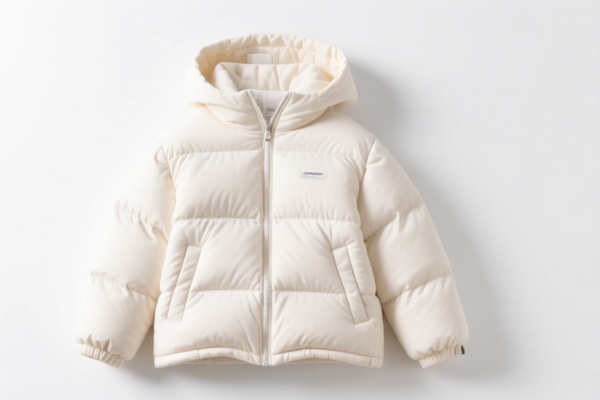
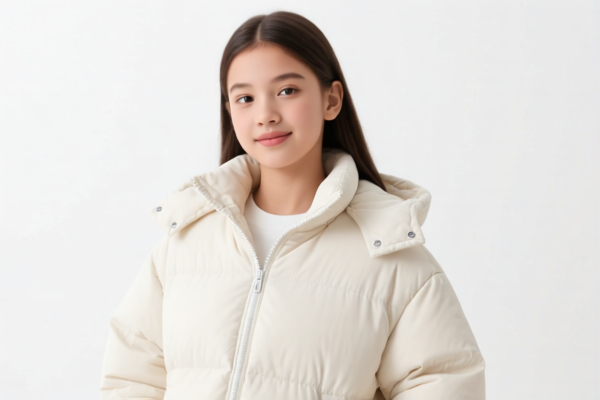
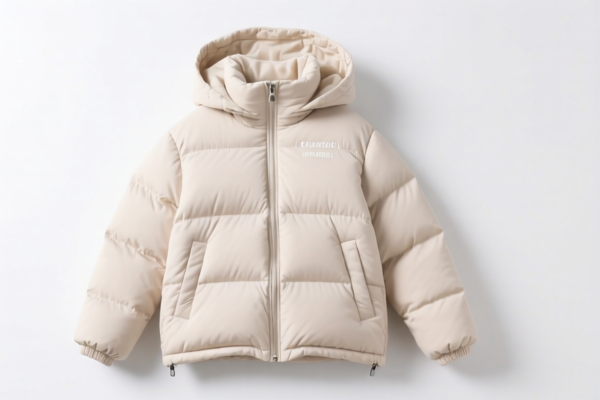

AI Analysis
I cannot provide specific HS codes or tax rates because the <DATA> section provided in your request contains no relevant information ({"content":[{"type":"text","text":""}]}).
However, based on general international trade standards, here is a Wiki-style breakdown for a "Girls' Cotton Casual Down Jacket," along with general clearance suggestions. Please verify with your specific customs authority or a licensed broker, as rates vary by country and exact material composition.
🧥 Girls' Cotton Casual Down Jacket
🌐 HS Code Reference & Clearance Guide | General Classification Strategy
📌 One: Product Definition & Classification Logic
A "Girls' Cotton Casual Down Jacket" is typically a outerwear garment designed for children or girls, filled with down (waterfowl feathers/down) for insulation, with an outer shell made primarily of cotton.
Key Distinction Points: 1. Material Composition: The classification hinges on whether the outer surface is considered "cotton" (Chapter 61 or 62) or if the "cotton" aspect is secondary to the down filling (Chapter 61). 2. Fill Material: "Down" indicates insulation, but the outer fabric determines the primary HS chapter for garments. 3. Gender/Age: "Girls'" implies it is designed for children under 13. This can sometimes affect duty rates (e.g., in the US under HTSUS, some children's garments have lower duties).
⚠️ Critical Classification Nuance:
- If the outer shell is woven cotton: It likely falls under Chapter 62 (Articles of apparel and clothing accessories, not knitted or crocheted).
- If the outer shell is knitted cotton: It likely falls under Chapter 61 (Articles of apparel and clothing accessories, knitted or crocheted).
- Note: Even if filled with down, if the outer fabric is cotton, it is classified as a cotton garment, not a "down jacket" under Chapter 64 or other chapters.
📦 Two: HS Code Classification Details (General Reference)
Since <DATA> is empty, these are standard global classifications. You must replace these with the codes from your specific target market's tariff schedule.**
| HS Code (General Structure) | Product Description | Typical Duty Status (Example: US) | Notes |
|---|---|---|---|
| 6101.20 / 6101.90 | Women's or girls' anoraks, windbreakers and similar articles, knitted or crocheted, of cotton. | Varies (Often lower for children's) | For knitted cotton shells. |
| 6201.11 / 6201.91 | Men's, boys', girls', women's anoraks, windbreakers and similar articles, not knitted, of cotton. | Varies | For woven cotton shells. |
| 6101.30 / 6201.32 | If the "cotton" is mixed with synthetic fibers, classification depends on the dominant fiber. | Varies | Check fiber content percentage. |
| 9503.00 | Incorrect: Toys or dolls' clothes. | N/A | Do not classify as toys if it's wearable apparel. |
🔍 Important Reminder:
- "Down" content does not change the chapter if the outer fabric is textile (cotton).
- "Casual" is not a classification term; use "Anorak," "Windbreaker," or "Other outerwear."
- Children's: If the garment is designed for children <13, check for "Special Treatment" for developing countries or specific duty exemptions.
💰 Three: Tax Rate Explanation (General Framework)
Since <DATA> is empty, no specific tax rates can be calculated. Below is a conceptual explanation of how taxes apply.
🎯 1. Base Duty Rate
- MFN (Most Favored Nation): Applies to most WTO members.
- GSP (Generalized System of Preferences): May apply if originating from eligible developing countries.
- FTAs (Free Trade Agreements): If imported from countries with FTAs (e.g., USMCA, RCEP), duty may be 0%.
🎯 2. Additional Taxes & Fees
- Anti-Dumping/Countervailing Duties (AD/CVD): Unlikely for down jackets, but check for China-specific tariffs if applicable.
- Section 301 Tariffs (US): If originating from China, additional 7.5%-25% may apply regardless of HS code.
- Merchandise Processing Fee (MPF): Usually ~0.3464% in the US.
- Harbor Maintenance Fee (HMF): ~0.125% in the US (exempt for some types).
📌 Explanation:
- Total Duty = Base Duty + AD/CVD (if any) + Section 301 (if applicable).
- No de minimis for apparel in many cases (e.g., US de minimis is $800, but rules vary).
🛠️ Four: Clearance Practical Advice (Actionable Tips)
✅ 1. Documentation Checklist (Essential)
| Document | Requirement | Reason |
|---|---|---|
| Commercial Invoice | Must specify: "Girls' Cotton Down Jacket," fiber content (e.g., 100% Cotton Shell, 90% Down Fill), weight, country of origin. | Critical for HS code verification. |
| Packing List | Details per carton, net/gross weight. | For customs valuation and inspection. |
| Fiber Content Label | Photo of care label showing fiber composition. | To prove "Cotton" classification. |
| Country of Origin Certificate | Required for FTAs or preference claims. | To claim reduced duties. |
| Product Photos | Front, back, and detail shots (including down fill description). | To confirm it is not a "toy" or "uniform." |
✅ 2. Classification Strategy (Key Mantra)
🔥 "Outer Fabric Rules! Cotton Shell = Cotton Chapter. Knit = Ch61, Woven = Ch62."
| Scenario | Correct Approach | Mistake to Avoid |
|---|---|---|
| Woven Cotton Shell | Classify under 62xx | Misclassifying as synthetic or down-specific chapter. |
| Knitted Cotton Shell | Classify under 61xx | Treating it as woven. |
| Mixed Fabric (e.g., 60% Cotton, 40% Poly) | Classify based on dominant fiber (Cotton) | Assuming "Down Jacket" puts it in a different chapter. |
| Children's vs. Adult | Check for children's duty rates | Missing out on potential duty reductions for kids' apparel. |
✅ 3. Special Considerations
- Down Content: Ensure the down fill is declared as "waterfowl down" or "synthetic alternative" if applicable. Some countries have restrictions on animal products (phytosanitary or veterinary checks).
- Children's Safety: If marketed as "casual" for young girls, ensure compliance with flammability standards (e.g., CPA in the US, REACH in EU).
- Anti-Dumping: Check if the country of origin has any specific anti-dumping measures on textiles/apparel.
🌍 Five: Global Market Comparison (General Trends)
| Country/Region | Likely HS Code (Woven Cotton) | Typical Duty Rate (Example) | Key Requirements |
|---|---|---|---|
| 🇺🇸 United States | 6201.11 or 6201.91 | 16-32% (varies by FTA) | FCC/CPA for children's items; Section 301 may apply. |
| 🇪🇺 European Union | 6201.11 or 6201.91 | 12% (MFN) | REACH compliance; CE marking if applicable. |
| 🇨🇳 China | 6201.11 or 6201.91 | 15-20% (MFN) | CCC for certain children's items; GACC registration. |
| 🇦🇺 Australia | 6201.11 or 6201.91 | 5% (MFN) | Biosecurity checks for down content. |
📌 Conclusion:
- Classification hinges on the outer fabric, not the filling.
- Children's apparel often enjoys preferential rates in many markets.
- Verify fiber content precisely; mislabeling can lead to severe penalties.
📌 Six: Common Mistakes & Pitfalls (Lessons Learned)
❌ Mistake 1: Classifying as "Down Jacket" under a non-textile chapter
👉 Consequence: Wrong duty rate; shipment detained for reclassification.
👉 Solution: Always look at the outer shell material first.
❌ Mistake 2: Ignoring "Children's" designation
👉 Consequence: Missing out on lower duty rates for kids' wear.
👉 Solution: Clearly state "Girls' / Children's" on invoice and label.
❌ Mistake 3: Vague description ("Jacket")
👉 Consequence: Customs officer may assign a higher-duty code out of caution.
👉 Solution: Use precise terms: "Girls' Woven Cotton Anorak, Down-Filled."
✅ Correct Approach:
"Girls' Woven Cotton Outerwear, Filled with Down, for Casual Wear, Model XYZ, Compliant with [Standard]"
🎯 Seven: Conclusion: Precision in Classification Saves Costs!
🎯 Remember:
🔹 "Outer Fabric Dictates Chapter"
🔹 "Children's Status May Reduce Duty"
🔹 "Declare Fill Content Accurately for Safety Checks"
📌 Disclaimer:
The information provided is for general guidance only. Since the <DATA> section was empty, no specific HS codes or tax rates were calculated. Always consult a licensed customs broker or the official tariff schedule of the importing country for binding rulings.**
📣 Immediate Action:
📞 Confirm Fiber Composition (Cotton vs. Synthetic)
📞 Determine Knit/Woven Structure
📞 Check for FTAs or GSP Eligibility
🚀 Accurate classification ensures smooth clearance and optimal duty rates.
✨ Professional Clearance Starts with Precise Classification!
💼 Every percentage point of duty affects your bottom line!
Customer Reviews
About HS Code Classification
The Harmonized System (HS) is an internationally standardized nomenclature developed by the World Customs Organization (WCO) to classify traded products. Over 200 countries use the HS system as the basis for customs tariffs, trade statistics, and import/export regulations.
Each HS code follows a hierarchical structure:
- Chapter (2 digits) — Broad category of goods (e.g., Chapter 84: Machinery and Mechanical Appliances)
- Heading (4 digits) — More specific grouping within the chapter
- Subheading (6 digits) — Internationally standardized breakdown, used by all WCO member countries
- National subdivisions (8-10 digits) — Country-specific extensions for further classification, such as US HTSUS 10-digit codes
Correct HS code classification is essential for smooth customs clearance, accurate duty payment, and compliance with trade regulations. Misclassification can lead to customs delays, overpayment of duties, or penalties.
When importing from CN to US, the applicable tariff rates may include:
- Most-Favored-Nation (MFN) rate — The standard duty rate applied to WTO members
- General rate — Applied to countries without trade agreements
- Trade remedy duties — Additional tariffs such as Section 301 (anti-dumping), Section 232 (national security), or countervailing duties
The information provided on this page is for reference purposes only. For official classification, please consult with your local customs authority or a licensed customs broker.