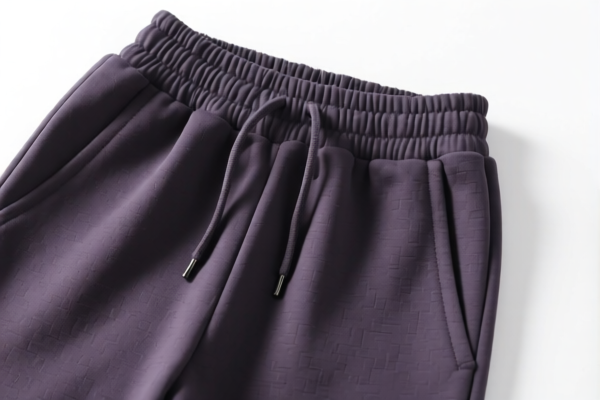
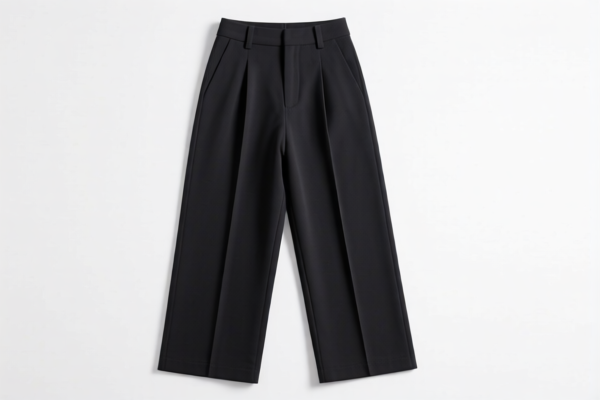
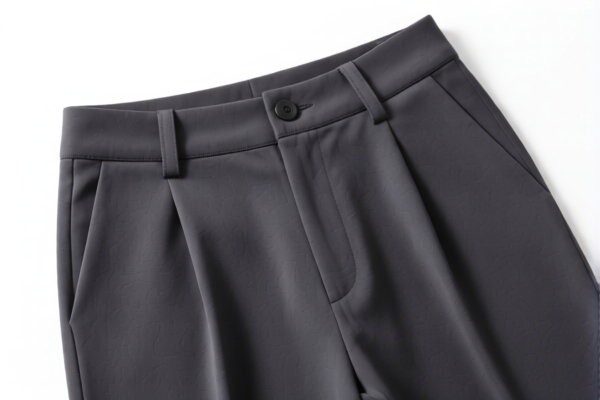
Girls' Elastic Fiber Blend Tapered Pants
CN → USProduct Images

AI Analysis
👖 Girls' Elastic Fiber Blend Tapered Pants (Trousers for Girls)
🌐 HS Code Reference & Customs Clearance Guide | 2026 Latest Tariff Analysis | Professional Entry Strategy
📌 I. Product Definition & Classification: Do You Really Understand "Girls' Tapered Pants"?
Girls' Elastic Fiber Blend Tapered Pants are children's trousers designed for comfort and flexibility, typically featuring: - Fiber Composition: Blends of cotton, polyester, elastane (spandex), or other synthetic fibers. - Cut Style: "Tapered" means they are wider at the hip and gradually narrow toward the ankle. - Waistband: Elasticated for easy wear, suitable for active children. - Target Group: Girls (usually under 14 years of age).
⚠️ Key Classification Point:
- If made of textile materials (cotton/polyester/elastane blend) → Classified under Chapter 61 or 62.
- If made of non-textile materials (e.g., plastic, rubber) → Classified under Chapter 39 or 40.
- If not knit and made of woven fabric → HS 6204
- If knitted or crocheted → HS 6104
📦 II. HS Code Classification Details (2026 Latest Tariff Standards)
| HS Code | Product Description | Applicable Scenario | Fabric Type |
|---|---|---|---|
6104.42.00 |
Girls' trousers, knitted, of cotton | Cotton blend, elastic waist, tapered fit | Knitted (cotton) |
6104.43.00 |
Girls' trousers, knitted, of man-made fibers | Polyester/elastane blend, stretchy, tapered | Knitted (synthetic) |
6104.49.00 |
Girls' trousers, knitted, of other textile materials | Blends including wool, silk, or mixed fibers | Knitted (mixed) |
6204.42.00 |
Girls' trousers, woven, of cotton | Cotton-blend, non-knit, tapered, elastic waist | Woven (cotton) |
6204.43.00 |
Girls' trousers, woven, of man-made fibers | Polyester/spandex blend, structured fit | Woven (synthetic) |
6204.49.00 |
Girls' trousers, woven, of other textile materials | Mixed fabric, including wool or other fibers | Woven (mixed) |
🔍 Critical Reminder:
- All girls' tapered pants with elastic waistbands made of textile blends must be classified under Chapter 61 (knitted) or Chapter 62 (woven) based on fabric type.
- Do not classify as "accessories" or "underwear" — these are outerwear trousers.
💰 III. 2026 Latest Tariff Rate Breakdown (Including Additional Duties, Policy Surcharges)
✅ Applicable Country: United States (US)
✅ Country of Origin: China (CN)
✅ Effective Date: From November 10, 2025 (including future imports)
🎯 1. 6104.42.00 — Girls' Knitted Trousers (Cotton)
| Item | Content |
|---|---|
| Base Duty Rate | 8.5% (ad valorem) |
| USITC Additional Duty | +5% (Footnote 9903.88.01) |
| IEEPA Additional Duty | +10% (for China/HK products, from Nov 10, 2025) |
| Total Duty Rate | 23.5% |
| Duty Calculation | CIF Value × 23.5% |
| De Minimis Exemption Eligible? | ❌ No (deny_de_minimis) |
| Legal Reference Path | IEEPA:9903.01.25 → IEEPA:9903.01.24 → USITC:6104.42.00 → FOOTNOTE:9903.88.01 |
📌 Explanation:
- "USITC Additional Duty 5%" comes from Section 301 of the US Trade Act;
- "IEEPA 10%" is the China-specific surcharge under the International Emergency Economic Powers Act;
- Total 23.5%, which is moderately high, must be factored into cost planning!
🎯 2. 6104.43.00 — Girls' Knitted Trousers (Man-Made Fibers)
| Item | Content |
|---|---|
| Base Duty Rate | 8.5% |
| USITC Additional Duty | +5% |
| IEEPA Additional Duty | +10% |
| Total Duty Rate | 23.5% |
| Duty Calculation | CIF × 23.5% |
| De Minimis Exemption Eligible? | ❌ No |
| Legal Reference Path | IEEPA:9901.25 → IEEPA:9903.01.24 → USITC:6104.43.00 → FOOTNOTE:9903.88.01 |
📌 Note:
- Same as above; applies to all polyester/elastane blend children's pants;
- Even if labeled as "stretchy," "tapered," or "elastic waist," as long as they are knitted and textile-based, this tariff applies.
🎯 3. 6204.42.00 — Girls' Woven Trousers (Cotton)
| Item | Content |
|---|---|
| Base Duty Rate | 12.5% |
| USITC Additional Duty | +5% |
| IEEPA Additional Duty | +10% |
| Total Duty Rate | 27.5% |
| Duty Calculation | CIF × 27.5% |
| De Minimis Exemption Eligible? | ❌ No |
| Legal Reference Path | IEEPA:9903.01.25 → IEEPA:9903.01.24 → USITC:6204.42.00 → FOOTNOTE:9903.88.01 |
📌 Special Note:
- Woven fabrics carry a higher base rate than knitted;
- If your product is woven, expect 27.5% total duty — significantly higher than knitted.
🛠️ IV. Customs Clearance Practical Tips (Pitfall Avoidance Guide)
✅ 1. Required Documentation Checklist (All Required)
| Document | Must Provide | Purpose |
|---|---|---|
| ✅ Product Specification Sheet | ✔️ | Includes fabric type, size, waistband style, fiber content |
| ✅ Fabric Composition Certificate | ✔️ | Essential for accurate HS Code classification |
| ✅ Product Photos (with label) | ✔️ | Clear view of style, waistband, tapering |
| ✅ Third-Party Compliance Certs | ✔️ | CPSIA, ASTM, Prop 65 (if applicable) |
| ✅ Commercial Invoice | ✔️ | Should state "Girls' Trousers, Elastic Waist, Tapered Fit" |
| ✅ Packing List | ✔️ | Clarify contents to avoid misdeclaration |
| ✅ Origin Certificate (CO) | ✔️ | For non-China products to qualify for lower rates |
✅ 2. Declaration Tips (Key Mnemonics)
🔥 "Textile Type First, Knit vs Woven, Label Accurately, Avoid 23.5%!"
| Scenario | Correct Declaration | Wrong Practice |
|---|---|---|
| Knitted cotton pants | 6104.42.00 |
Mislabel as "woven" → 27.5% |
| Woven polyester pants | 6204.43.00 |
Mislabel as "knitted" → 23.5% |
| Mixed fiber (cotton/poly) | Use correct blend code | Vague description → Delay |
| Underwear-style pants | 6111.30 or 6208.92 |
Misclassified as "trousers" → Wrong duty |
✅ 3. Special Situations
| Situation | Handling Advice |
|---|---|
| OEM Custom Pants | Provide design specs + fabric test report |
| With Drawstrings/Buttons | Still classified as "trousers" — no change |
| For Age Group >14 | Reclassify as "Women's Trousers" → different HS Code |
| With Reflective Strips (Safety) | May qualify for special import programs — consult customs |
🌍 V. Global Market Customs Comparison (2026 Latest)
| Country/Region | Recommended HS Code | Tariff | Certification | Notes |
|---|---|---|---|---|
| 🇺🇸 USA | 6104.42.00 / 6204.42.00 |
23.5% / 27.5% | CPSIA + ASTM | High for China-made |
| 🇨🇳 China | Same as above | 8%–15% | CCC + GB Standards | Lower rates |
| 🇪🇺 EU | Same as above | 0%–12% | CE + EN71 | No IEEPA-style surcharge |
| 🇦🇺 Australia | Same as above | 5%–10% | RCM + AS/NZS | Moderate duty |
| 🇯🇵 Japan | Same as above | 0%–10% | PSE + JLPA | Low rates for textile |
📌 Conclusion:
- USA imposes the highest combined duty (up to 27.5%) for children's textile pants;
- China-made girls' tapered pants face steep tariffs, consider shifting production or sourcing.
📌 VI. Common Mistakes & How to Avoid Them (Lessons Learned)
❌ Mistake 1: Declaring "knitted" as "woven" to lower base rate
👉 Result: Underpayment + Penalty + Delay
❌ Mistake 2: Not specifying fiber blend → Misclassification
👉 Result: Incorrect HS Code → 5%–10% extra duty
❌ Mistake 3: Calling "children's pants" "underwear"
👉 Result: Wrong chapter → Higher inspection, possible seizure
❌ Mistake 4: Using vague terms like "kids' trousers" without fabric detail
👉 Result: Customs holds shipment for clarification
✅ Correct Practice:
"Girls' Tapered Pants, 60% Cotton/35% Polyester/5% Elastane, Knitted, Elastic Waistband, Model XYZ, CPSIA Compliant"
🎯 VII. Conclusion: Precise Classification Saves Time, Money & Headache!
🎯 Remember the Mnemonic:
🔹 "Knit vs Woven, Fabric First, Label Clear, Duty Avoid!"
🔹 "HS Code is King, 5% difference means $5,000 lost!"
📌 Pro Tip:
If your product is sourced from Vietnam, Mexico, Thailand, or Malaysia, you may qualify for IEEPA exemptions, reducing duty to 0%–5%.
👉 Apply for Advance Ruling before shipping to avoid delays.
📣 Act Now:
📞 Contact a certified customs broker + Provide product specs + Request HS Code Advance Ruling
🚀 Ensure smooth customs clearance, maximize profit, and scale your business globally!
✨ Professional Classification, Starting from the Right HS Code!
💼 Every cent counts — make sure it's calculated correctly!
Customer Reviews
About HS Code Classification
The Harmonized System (HS) is an internationally standardized nomenclature developed by the World Customs Organization (WCO) to classify traded products. Over 200 countries use the HS system as the basis for customs tariffs, trade statistics, and import/export regulations.
Each HS code follows a hierarchical structure:
- Chapter (2 digits) — Broad category of goods (e.g., Chapter 84: Machinery and Mechanical Appliances)
- Heading (4 digits) — More specific grouping within the chapter
- Subheading (6 digits) — Internationally standardized breakdown, used by all WCO member countries
- National subdivisions (8-10 digits) — Country-specific extensions for further classification, such as US HTSUS 10-digit codes
Correct HS code classification is essential for smooth customs clearance, accurate duty payment, and compliance with trade regulations. Misclassification can lead to customs delays, overpayment of duties, or penalties.
When importing from CN to US, the applicable tariff rates may include:
- Most-Favored-Nation (MFN) rate — The standard duty rate applied to WTO members
- General rate — Applied to countries without trade agreements
- Trade remedy duties — Additional tariffs such as Section 301 (anti-dumping), Section 232 (national security), or countervailing duties
The information provided on this page is for reference purposes only. For official classification, please consult with your local customs authority or a licensed customs broker.