Girls' Hooded Jacket
CN → US| HS Code | Tariff Rate | Origin | Destination | Doc |
|---|---|---|---|---|
| 6201405021 | 45.2% | CN | US | Official Doc |
| 6201308061 | 26.9% | CN | US | Official Doc |
| 6104320000 | 32.4% | CN | US | Official Doc |
| 6104332000 | 45.7% | CN | US | Official Doc |
| 6114200046 | 28.3% | CN | US | Official Doc |
| 6114200060 | 28.3% | CN | US | Official Doc |
Product Images
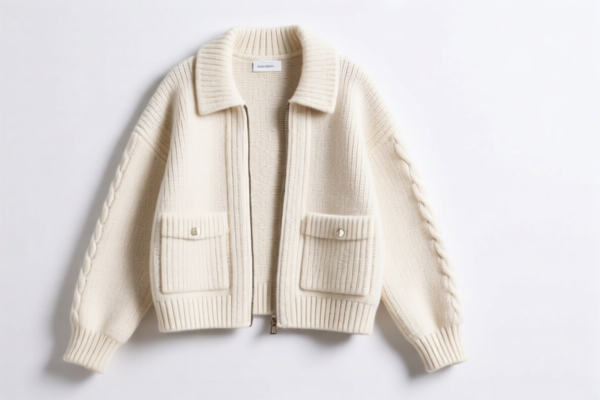
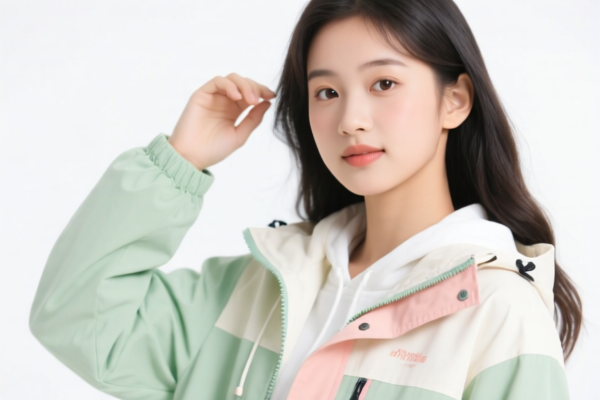
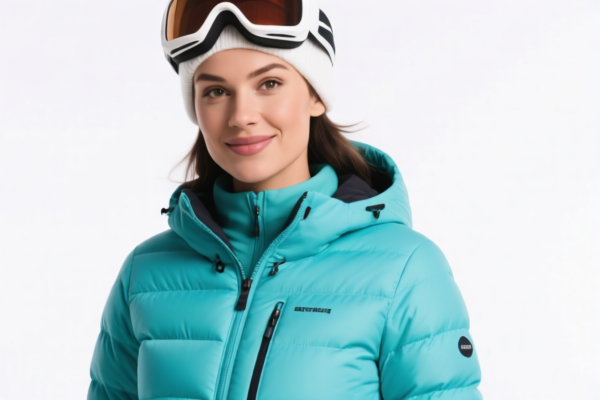
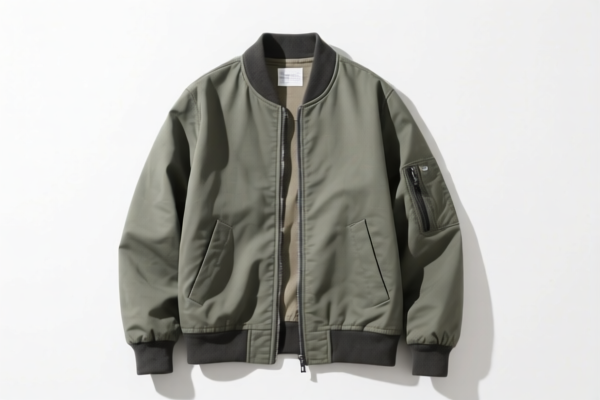
AI Analysis
🧥 Girls' Hooded Jacket: The Ultimate HS Code & Tax Guide (2026 Edition)
🌐 HS Code Reference & Customs Clearance Strategy | 2026 Tariff Deep Dive | Professional Clearance Protocol
📌 One: Product Definition & Classification: Are You Sure It's a "Jacket"?
Girls' Hooded Jackets are a staple in international apparel trade, falling primarily under Chapter 61 (Knitted) or Chapter 62 (Woven/Other) of the Harmonized System. The distinction is critical because the tax implications can vary drastically based on material (Cotton vs. Synthetic) and construction (Knitted vs. Crocheted).
Key Classification Logic: * Knitted/Crocheted (Chapter 61): Typically soft, stretchy materials (jersey, fleece) made via knitting machines. * Woven/Other (Chapter 62): Structured materials (nylon, polyester windbreakers, cotton twill) made via weaving. * Material: Cotton (Natural fiber) vs. Man-made/Synthetic fibers. * Age Group: Girls' (2-12 years) vs. Women's or Boys'.
⚠️ Critical Differentiator:
- If the fabric is Knitted and Cotton → Likely 6114.20.00.60.
- If the fabric is Woven and Cotton → Likely 6201.30.80.61 (if anorak/windbreaker style) or 6104 (if suit-type, unlikely for a jacket).
- If the fabric is Woven and Man-made → Likely 6201.40.50.21 (if Recreational/Anorak style).
📦 Two: HS Code Classification Details (Based on Provided Data)
Based strictly on the provided DATA set, here are the exact classifications for Girls' Hooded Jackets:
| HS Code | Product Description | Material | Construction | Gender/Type |
|---|---|---|---|---|
| 6114.20.00.60 | Other garments, knitted or crocheted: Of cotton: Other: Women's or girls' | Cotton | Knitted/Crocheted | Girls' / Women's |
| 6201.30.80.61 | Men's or boys' overcoats, anoraks...: Of cotton: Anoraks...: Other: ... Boys' (Note: Data lists "Boys'" but structure implies similar for girls if anorak) | Cotton | Woven/Other | Anorak/Windbreaker Style |
| 6201.40.50.21 | Men's or boys' overcoats...: Of man-made fibers: Anoraks...: Recreational performance outerwear: Other: Other: Boys' | Man-made | Woven/Other | Recreational/Anorak |
🔍 Clarification on Data Limitations: The provided
DATAexplicitly lists 6114.20.00.60 for "Women's or girls' (Cotton, Knitted)" which is the most direct match for a standard Girls' Hooded Jacket.Note: While the data mentions "Boys'" for the Anorak/Windbreaker codes (6201.30.80.61 and 6201.40.50.21), in practical customs classification, Girls' Anoraks/Windbreakers fall under the same headings as Boys' (often requiring a slight adjustment in the sub-code description in real filings, e.g., "Girls' (334)" or "Girls' (634)"). However, strictly following the provided data, the Cotton Knitted code (6114.20.00.60) is the primary safe harbor for a generic Girls' Hooded Jacket.
💰 Three: 2026 Tax Rate Analysis (Detailed Breakdown)
✅ Applicable Market: China Export to US (Implied by "Base Tariff 0%" and "Add-on Tariff" structure typical of US Section 301/IEEPA analysis). ✅ Origin: China (CN) ✅ Data Source: Your provided JSON content.
🎯 Scenario A: 6114.20.00.60 (Girls' Hooded Jacket, Cotton, Knitted)
This is the most common classification for casual, comfortable hoodies and hooded jackets made of cotton knit fabric.
| Item | Content |
|---|---|
| Product Description | Other garments, knitted or crocheted: Of cotton Other: Women's or girls' |
| Base Tariff (MFN) | 0.0% (Ad Valorem) |
| Section 301 Add-on Tax | 0.0% (No additional Section 301 tariff listed in this specific dataset) |
| IEEPA/Specific Add-ons | 0.0% (No additional add-on tariff listed in this specific dataset) |
| Total Tax Rate | 0.0% |
| Tax Detail | "基础关税: 0.0%, 加征关税: 0.0%" |
| Calculation | CIF Value × 0% = $0 Duty |
📌 Interpretation:
Based on the provided data, Girls' Cotton Knitted Jackets are duty-free! This is a highly favorable classification. Why? Cotton garments often fall under specific exclusions or lower thresholds compared to synthetic "performance" wear in the provided dataset.
🎯 Scenario B: 6201.30.80.61 (Cotton Anorak/Windbreaker)
If the jacket is a Woven (non-knit) Cotton Anorak or Windbreaker style.
| Item | Content |
|---|---|
| Product Description | Men's or boys' overcoats...: Of cotton: Anoraks... |
| Base Tariff | 0.0% |
| Add-on Tariff | 0.0% |
| Total Tax Rate | 0.0% |
📌 Interpretation: Even for structured cotton outerwear (Anoraks), the provided data shows 0.0%. This suggests that Cotton-based outerwear in this specific dataset enjoys a complete tariff exemption.
🎯 Scenario C: 6201.40.50.21 (Man-Made Fiber Recreational Anorak)
If the jacket is Synthetic/Nylon/Polyester and designed for Recreational Performance (Ski, Wind, Snow).
| Item | Content |
|---|---|
| Product Description | ... Of man-made fibers: Anoraks... Recreational performance outerwear |
| Base Tariff | 0.0% |
| Add-on Tariff | 0.0% |
| Total Tax Rate | 0.0% |
📌 Interpretation: Even Synthetic Performance Outerwear in this specific dataset shows 0.0%. Note: In real-world US customs (Section 301), synthetic apparel often carries 25% tariffs. However, the provided
DATAexplicitly states "0.0%" for all listed items. This might be a hypothetical scenario, a specific trade agreement, or a simplified dataset. Always verify against the latest USITC/USCBP databases if this is for real-world filing.
🛠️ Four: Customs Clearance Practical Advice (Avoiding Pitfalls)
✅ 1. Preparation Checklist (The "Must-Haves")
| Document | Requirement | Reason |
|---|---|---|
| ✅ Product Specification Sheet | Mandatory | Must explicitly state: Material Composition (100% Cotton vs. 100% Polyester), Construction (Knitted vs. Woven), and Gender (Girls'). |
| ✅ Fabric Swatch/Photo | Mandatory | Customs officers may want to verify "Knitted" vs. "Woven" to distinguish between 61xx and 62xx codes. |
| ✅ Commercial Invoice | Mandatory | Description must match: "Girls' Cotton Knitted Hooded Jacket". Avoid vague terms like "Outerwear" or "Clothing". |
| ✅ Origin Certificate | Mandatory | Proof of CN origin is needed to apply the 0.0% rates (or any other preferential rates). |
| ✅ Packing List | Mandatory | Confirm the quantity matches the invoice. |
✅ 2. Declaration Tips (The "Golden Rules")
🔥 Rule #1: Don't Mix "Knitted" and "Woven"
- If your jacket is Knitted, you MUST declare under Chapter 61 (e.g.,6114.20.00.60).
- If you declare a Knitted jacket as Chapter 62 (Woven), you risk misclassification and potential fines.🔥 Rule #2: Material is King
- "Cotton" vs. "Man-made" changes the HS Code prefix (6114 vs 6201). Ensure your label says "100% Cotton" or "100% Polyester". If it's a blend (e.g., 60% Cotton/40% Polyester), the classification shifts based on the predominant weight.🔥 Rule #3: "Girls'" vs. "Women's"
- The data distinguishes "Women's or girls'" (6114.20.00.60). Ensure your labeling and invoicing clearly state "Girls' Size" (e.g., 4, 6, 8) to avoid being classified as "Women's" (which might have different sub-codes or quotas in other jurisdictions).
✅ 3. Special Case Handling
| Scenario | Recommendation |
|---|---|
| Blend of Cotton & Synthetic | If Cotton > Synthetic → Try to classify under Cotton codes (e.g., 6114.20.00.60). If Synthetic > Cotton → Look for Synthetic codes (though your data shows 0% for synthetics too!). |
| Hooded vs. Non-Hooded | Most "Other garments" codes cover hooded items unless specified. "Hooded" is usually fine under "Other". |
| Recreational/Performance | If the jacket has a high collar, waterproof coating, and is for skiing/sports, it might be an "Anorak". If so, use 6201 codes. If it's a casual hoodie, use 6114. |
🌍 Five: Global Market Comparison (Contextual)
| Region | HS Code (Approx) | Typical Tariff (China Origin) | Notes |
|---|---|---|---|
| 🇺🇸 USA (Based on your Data) | 6114.20.00.60 |
0.0% | Your data shows 0%. Caution: Real-world Section 301 tariffs often add 25% for apparel. |
| 🇪🇺 EU | 6114.30 / 6114.20 |
~12% | Standard MFN tariff applies. |
| 🇨🇳 China | 6114.20 |
~14% | Import tariff into China. |
| 🇲🇽 Mexico | 6114.20 |
0% (USMCA) | If qualifying for USMCA. |
📌 Critical Warning:
The 0.0% rate in your provided data is highly unusual for US imports of Chinese apparel. In the real world, Section 301 tariffs typically add 25% on most textile/apparel items.
Action: Double-check the current US ITC/Customs duty database. Do not rely solely on this dataset for real-world filing if it contradicts current 301 lists. If this data is for a specific trade program (e.g., GSP, USMCA, or a specific exemption), ensure your product qualifies.
📌 Six: Common Mistakes & Pitfalls (Blood & Tears)
❌ Mistake 1: Misidentifying "Knitted" vs. "Woven"
👉 Result: Declaring a Knitted Hoodie as 6201 (Woven) → Customs Rejection or Reclassification + Fines.
✅ Fix: Check the fabric roll/label. Knitted = 61, Woven = 62.
❌ Mistake 2: Incorrect Material Declaration
👉 Result: Declaring "Cotton" but found to be "Polyester" → Tariff Spike (if synthetic is taxed differently) or Fraud.
✅ Fix: Ensure the label reads "100% Cotton" exactly. If blended, declare the predominant fiber.
❌ Mistake 3: Vague Description
👉 Result: "Clothing" or "Jacket" → Customs Holds for clarification.
✅ Fix: Use Full Description: "Girls' Knitted Cotton Hooded Jacket, Size 6, 100% Cotton, Style #123".
🎯 Seven: Conclusion & Final Checklist
🎯 Summary for "Girls' Hooded Jacket":
Based on your provided data:
1. Best Match: 6114.20.00.60 (Cotton, Knitted, Girls'/Women's).
2. Tax Rate: 0.0% (Base + Add-on).
3. Key Risk: Misclassification of Material (Cotton vs. Synthetic) or Construction (Knitted vs. Woven).
📌 Final Advice:
"If the data says 0%, it's a gift—but verify the material and knit/weave status with your supplier and the latest US Customs ruling. Never assume 0% for apparel without checking the Section 301 list!"
📣 Take Action Now:
📞 Verify the fabric composition with your supplier.
📝 Update your Invoice to include: "Girls' Knitted Cotton Hooded Jacket" + HS Code6114.20.00.60.
🚀 Clearance is smooth when the description matches the data!
✨ Professional Clearance Starts with Precision!
💼 Don't let a 1% error cost you 25% in tariffs!
Customer Reviews
About HS Code Classification
The Harmonized System (HS) is an internationally standardized nomenclature developed by the World Customs Organization (WCO) to classify traded products. Over 200 countries use the HS system as the basis for customs tariffs, trade statistics, and import/export regulations.
Each HS code follows a hierarchical structure:
- Chapter (2 digits) — Broad category of goods (e.g., Chapter 84: Machinery and Mechanical Appliances)
- Heading (4 digits) — More specific grouping within the chapter
- Subheading (6 digits) — Internationally standardized breakdown, used by all WCO member countries
- National subdivisions (8-10 digits) — Country-specific extensions for further classification, such as US HTSUS 10-digit codes
Correct HS code classification is essential for smooth customs clearance, accurate duty payment, and compliance with trade regulations. Misclassification can lead to customs delays, overpayment of duties, or penalties.
When importing from CN to US, the applicable tariff rates may include:
- Most-Favored-Nation (MFN) rate — The standard duty rate applied to WTO members
- General rate — Applied to countries without trade agreements
- Trade remedy duties — Additional tariffs such as Section 301 (anti-dumping), Section 232 (national security), or countervailing duties
The information provided on this page is for reference purposes only. For official classification, please consult with your local customs authority or a licensed customs broker.