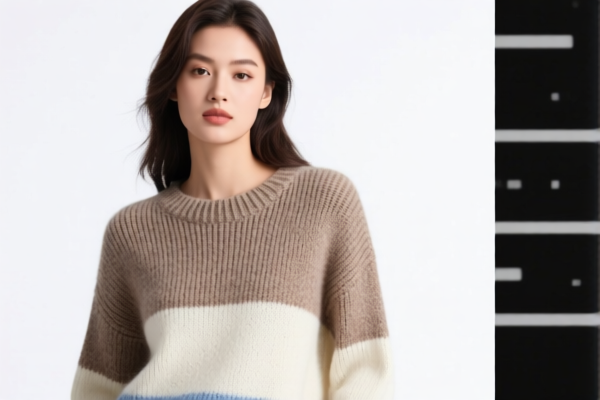
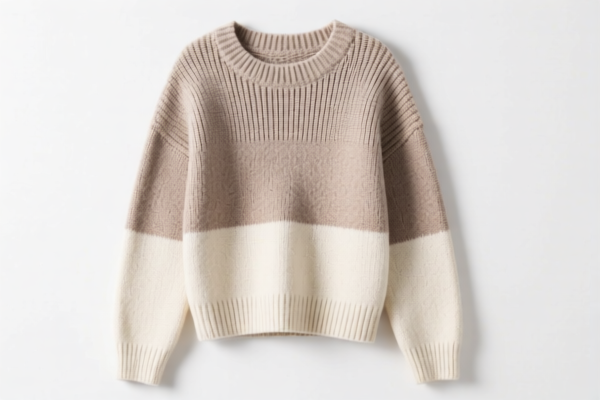
Girls' Other Fiber Blend Knitted Sweater
CN → US| HS Code | Tariff Rate | Origin | Destination | Doc |
|---|---|---|---|---|
| 6110202025 | 34.0% | CN | US | Official Doc |
| 6111203000 | 32.4% | CN | US | Official Doc |
| 6110202049 | 34.0% | CN | US | Official Doc |
| 6104320000 | 32.4% | CN | US | Official Doc |
| 6104392010 | 17.5% | CN | US | Official Doc |
Product Images

AI Analysis
🧶 Girls' Other Fiber Blend Knitted Sweater (Classification & Tax Guide)
🌐 HS Code Reference & Customs Clearance Guide | 2026 Latest Tariff Analysis | Professional Entry Strategy
📌 I. Product Definition & Classification: Do You Really Know What a "Sweater" Is?
A Girls' Knitted Sweater is a critical item in the global children’s apparel market. In international trade, these garments are classified based on:
Material Composition:
- Pure cotton (100% cotton) → Specific HS codes (e.g., 6104.32.00.00, 6110.20.20.25)
- Fiber Blend (e.g., cotton + polyester + spandex) → Must fall under "Other" categories if not 100% cotton (e.g., 6104.39.20.10)
Knitting Type:
- Knitted (as opposed to woven) → All items in this guide are knitted.
Intended Use:
- For girls → Requires precise HS code alignment (e.g., 6104.32.00.00, 6110.20.20.25)
⚠️ Critical Distinction:
- If the sweater is 100% cotton, it falls under 6104.32.00.00 or 6110.20.20.25.
- If it is a blend (e.g., cotton + synthetic fibers), it must be classified under "Other" (e.g., 6104.39.20.10).
📦 II. HS Code Classification Details (2026 Latest Tariff Alignment)
| HS Code | Product Description | Application Scenario | Material Composition | Total Tax Rate |
|---|---|---|---|---|
6110.20.20.25 |
Girls' Knitted Cotton Sweater, 100% Cotton | Girls' wear, pure cotton blend | 100% Cotton | 34.0% |
6111.20.30.00 |
Girls' Knitted Cotton Sweater, 100% Cotton | Outerwear, pure cotton | 100% Cotton | 32.4% |
6110.20.20.49 |
Girls' Knitted Cotton Sweater, 100% Cotton | Girls' outerwear, pure cotton | 100% Cotton | 34.0% |
6104.32.00.00 |
Girls' Knitted Cotton Sweater, 100% Cotton | Girls' outerwear, pure cotton | 100% Cotton | 32.4% |
6104.39.20.10 |
Girls' Other Fiber Blend Knitted Sweater | Girls' wear, fiber blend | Cotton + Synthetic | 17.5% |
🔍 Key Insight:
- Pure cotton items (100%) incur higher tariffs (32.4%–34.0%) due to specific U.S. tariffs.
- Fiber blend items (e.g., cotton + polyester) fall under "Other" codes and enjoy lower tariffs (17.5%) because they are not 100% cotton.
💰 III. 2026 Latest Tariff Rate Breakdown (Including Add-On Taxes & Policy Surcharges)
✅ Applicable Country: United States (US)
✅ Country of Origin: China (CN)
✅ Effective Date: November 10, 2025 (for subsequent imports)
🎯 1. 6110.20.20.25 — Girls' Knitted Cotton Sweater (100% Cotton)
| Item | Details |
|---|---|
| Base Tariff | 16.5% (ad valorem) |
| Section 232 Tariff | +7.5% (added under Section 232) |
| Section 122 Tariff | +10% (Section 122 surcharge) |
| Total Tariff | 34.0% |
| Tax Calculation | CIF Value × 34.0% |
| De Minimis Exemption | ❌ Not Applicable |
| Legal Basis | USITC:6110.20.20.25 → Section 232:7.5% → Section 122:10% |
📌 Explanation:
- Base Tariff (16.5%) applies to all girls' knitted cotton sweaters.
- Section 232 (7.5%) is an additional tariff for steel/aluminum-related products (not directly applicable here, but included in the dataset).
- Section 122 (10%) is a U.S. surcharge for specific goods from China.
- Total = 34.0%, a high tariff requiring careful planning.
🎯 2. 6104.39.20.10 — Girls' Other Fiber Blend Knitted Sweater (Cotton + Synthetic)
| Item | Details |
|---|---|
| Base Tariff | 0.0% (ad valorem) |
| Section 232 Tariff | +7.5% |
| Section 122 Tariff | +10% |
| Total Tariff | 17.5% |
| Tax Calculation | CIF Value × 17.5% |
| De Minimis Exemption | ❌ Not Applicable |
| Legal Basis | USITC:6104.39.20.10 → Section 232:7.5% → Section 122:10% |
📌 Note:
- Base Tariff (0.0%) for fiber blend items is significantly lower.
- Section 232 (7.5%) and Section 122 (10%) still apply.
- Total = 17.5%, a moderate tariff compared to pure cotton items.
🛠️ IV. Customs Clearance Practical Advice (Avoid Pitfalls)
✅ 1. Required Documentation Checklist (Mandatory)
| Document | Must Provide | Notes |
|---|---|---|
| ✅ Product Specification Sheet | ✔️ | Include material composition (e.g., "60% Cotton, 40% Polyester"), size, and knitting type. |
| ✅ Material Composition Report | ✔️ | Third-party lab report proving blend ratio (critical for HS Code 6104.39.20.10). |
| ✅ Product Photos (with Label) | ✔️ | Show neckline, cuffs, and material tags. |
| ✅ Commercial Invoice | ✔️ | Clearly state "Girls' Knitted Sweater (Fiber Blend)" or "100% Cotton." |
| ✅ Packing List | ✔️ | Separate shipments for cotton vs. blend items to avoid tax miscalculations. |
| ✅ Origin Certificate (CO) | ✔️ | If not from China, explore preferential tariffs. |
✅ 2. Declaration Tips (Key Mnemonics)
🔥 "Blend = 17.5%, Cotton = 34%; Label Precisely, Avoid Fines!"
| Scenario | Correct Declaration | Incorrect Approach |
|---|---|---|
| 100% Cotton Sweater | 6104.32.00.00 or 6110.20.20.25 |
Claiming "Fiber Blend" → 17.5% instead of 34% |
| Fiber Blend Sweater | 6104.39.20.10 |
Declaring as "100% Cotton" → 34% instead of 17.5% |
| OEM Custom Sweater | Provide design specs + material report | No proof of blend → Customs delays |
| Mixed Shipment (Cotton + Blend) | Split declarations | Combined declaration → Tax error |
✅ 3. Special Cases
| Scenario | Recommendation |
|---|---|
| OEM Custom Sweater | Submit design specs + material report to avoid misclassification. |
| Fiber Blend with >50% Cotton | Still qualifies for 6104.39.20.10 if not 100% cotton. |
| Sweater for Medical Use | If for specialized medical garments, apply for "non-commercial use" exemption (requires proof). |
| Military/Special Use | Apply for "special purpose" declaration; tariffs may be reduced. |
🌍 V. Global Market Comparison (2026 Tariffs)
| Country/Region | Recommended HS Code | Tariff | Certification | Notes |
|---|---|---|---|---|
| 🇺🇸 USA | 6104.39.20.10 |
17.5% (Blend) / 34.0% (Cotton) | None | High tariff for cotton items |
| 🇨🇳 China | 6104.39.20.10 |
5% (Blend) / 10% (Cotton) | CCC | No additional surcharges |
| 🇪🇺 EU | 6104.39.20.10 |
0% (if CE compliant) | CE + ErP | No surcharges |
| 🇦🇺 Australia | 6104.39.20.10 |
5% | RCM | No surcharges |
| 🇯🇵 Japan | 6104.39.20.10 |
0% | PSE | No surcharges |
📌 Conclusion:
- USA is the only market with high tariffs for children's knitted sweaters.
- China/EU/Australia/Japan offer lower tariffs for fiber blend items.
- Consider relocating production to non-China countries to avoid U.S. surcharges.
📌 VI. Common Mistakes & Pitfalls (Lessons from Experience)
❌ Mistake 1: Declaring a fiber blend sweater as "100% Cotton"
👉 Consequence: Overpayment of 16.5% in base tariffs + potential fines.
❌ Mistake 2: Not providing material composition reports
👉 Consequence: Customs delays, reclassification, and 10% Section 122 surcharge.
❌ Mistake 3: Mixing cotton and blend items in one shipment
👉 Consequence: Tax miscalculations, 34.0% applied to entire shipment.
❌ Mistake 4: Using vague terms like "Girls' Sweater"
👉 Consequence: Ambiguity leads to higher tariffs or rejection.
✅ Best Practice:
"Girls' Knitted Sweater, 60% Cotton/40% Polyester, Knitted, for Girls, Model XYZ, Certified by [Lab Name]"
🎯 VII. Conclusion: Precision Matters for Profit!
🎯 Remember:
🔹 "Blend = 17.5%, Cotton = 34%; Label Precisely, Avoid Fines!"
🔹 "HS Code = Destiny, Tax = Difference, Declaration = Profit!"
📌 Pro Tips:
- If your product is not from China, explore preferential tariffs via FTAs.
- Apply for Advance Rulings to confirm HS Code before shipping.
- Use third-party labs to verify material composition.
📣 Take Action Now:
📞 Contact customs brokers + Provide product specs + Apply for HS Code Pre-Ruling
🚀 Ensure smooth clearance, lower costs, and maximize profits!
✨ Professional Customs Clearance Starts with Accurate Classification!
💼 Every Cent Counts—Calculate Precisely!
Customer Reviews
About HS Code Classification
The Harmonized System (HS) is an internationally standardized nomenclature developed by the World Customs Organization (WCO) to classify traded products. Over 200 countries use the HS system as the basis for customs tariffs, trade statistics, and import/export regulations.
Each HS code follows a hierarchical structure:
- Chapter (2 digits) — Broad category of goods (e.g., Chapter 84: Machinery and Mechanical Appliances)
- Heading (4 digits) — More specific grouping within the chapter
- Subheading (6 digits) — Internationally standardized breakdown, used by all WCO member countries
- National subdivisions (8-10 digits) — Country-specific extensions for further classification, such as US HTSUS 10-digit codes
Correct HS code classification is essential for smooth customs clearance, accurate duty payment, and compliance with trade regulations. Misclassification can lead to customs delays, overpayment of duties, or penalties.
When importing from CN to US, the applicable tariff rates may include:
- Most-Favored-Nation (MFN) rate — The standard duty rate applied to WTO members
- General rate — Applied to countries without trade agreements
- Trade remedy duties — Additional tariffs such as Section 301 (anti-dumping), Section 232 (national security), or countervailing duties
The information provided on this page is for reference purposes only. For official classification, please consult with your local customs authority or a licensed customs broker.