Girls' Other Garments Made of Man Made Fibers
CN → US| HS Code | Tariff Rate | Origin | Destination | Doc |
|---|---|---|---|---|
| 6114303054 | 32.4% | CN | US | Official Doc |
| 6211431092 | 33.5% | CN | US | Official Doc |
| 6114303070 | 32.4% | CN | US | Official Doc |
| 6112201090 | 45.7% | CN | US | Official Doc |
| 6112410040 | 42.4% | CN | US | Official Doc |
Product Images
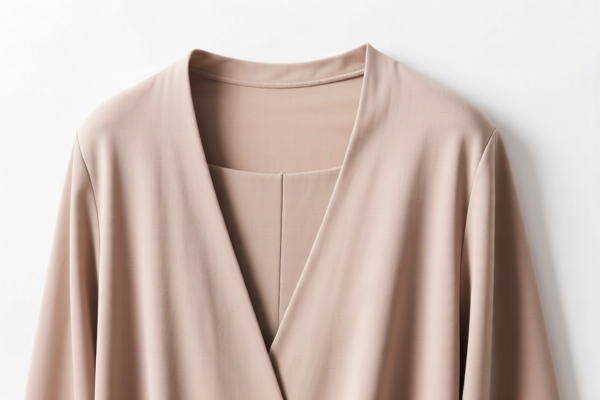


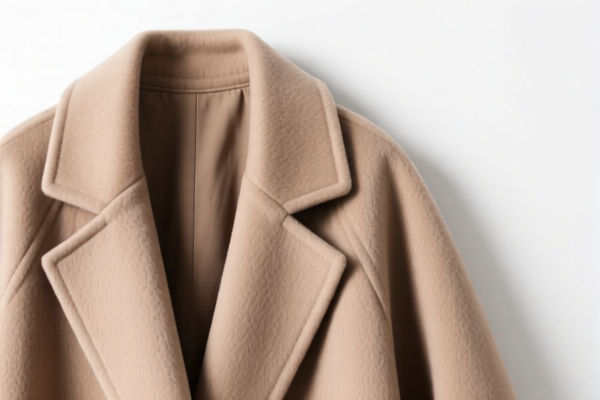
AI Analysis
👗 Girls' Other Garments Made of Man-Made Fibers: HS Code Classification & 2026 Tariff Strategy
🌐 Global Trade Compliance Guide | 2026 Customs Tariff Breakdown | Expert Entry Strategy
📌 I. Product Definition & Classification: Are You Sure You Know "Girls' Other Garments"?
In international trade, "Girls' Other Garments Made of Man-Made Fibers" is a broad category under Chapter 61 and Chapter 62 (Knitted vs. Woven). This category covers apparel that does not fall into specific sub-categories like " Dresses," "Skirts," "Trousers," or "Suits," but still qualifies as outerwear for girls (typically under 16 years old) made from synthetic or artificial fibers (e.g., polyester, nylon, acrylic).
Key Distinction:
- Knitted (Chapter 61): Stretchy, jersey-like, or knitted fabrics → HS Code 6114 series.
- Woven (Chapter 62): Non-stretch, structured, or woven fabrics → HS Code 6211 series.
- Material: Must be man-made fibers (synthetic). Natural fibers (cotton, wool) follow different codes.
- Function: "Other" garments (e.g., jackets, overalls, casual sets, swimwear, raincoats) not explicitly listed elsewhere.
⚠️ Critical Warning:
- Misclassifying knitted vs. woven can shift the HS Code by 61xx vs. 62xx, drastically altering the tax rate.
- "Other" garments are high-risk for misclassification; if they fit a more specific category (e.g., "Jackets"), they must be classified there, not under "Other."
📦 II. HS Code Classification Matrix (2026 Tariff Authority)
| HS Code | Product Description | Key Features | Material | Gender | Total Tax (US Import from CN) |
|---|---|---|---|---|---|
6114.30.30.54 |
Girls' Other Garments, Knitted, Man-Made Fibers | Knitted fabric, no specific category match | Synthetic (e.g., polyester) | Girls | 32.4% |
6211.43.10.92 |
Girls' Other Garments, Woven, Man-Made Fibers | Woven fabric, no specific category match | Synthetic | Girls | 33.5% |
6114.30.30.70 |
Girls' Other Garments, Knitted, Man-Made Fibers | Knitted, specific use match | Synthetic | Girls | 32.4% |
6112.20.10.90 |
Girls' Other Garments, Knitted, Swimwear/Sportswear | Knitted swimwear or sportswear | Synthetic | Girls | 45.7% |
6112.41.00.40 |
Girls' Other Garments, Knitted, Nightwear | Knitted nightgowns or pajamas | Synthetic | Girls | 42.4% |
🔍 Clarification:
- 6114.30.30.xx: Knitted "other garments" (e.g., casual jackets, cardigans).
- 6211.43.10.92: Woven "other garments" (e.g., woven jackets, blazers).
- 6112.20.10.90: Knitted swimwear/sportswear (specifically high-tax category).
- 6112.41.00.40: Knitted nightwear (pajamas, sleepwear).
- "Other" does not mean "generic" – it means "not specifically listed elsewhere." If the garment fits a narrower category, use that!
💰 III. 2026 Tariff Breakdown (US Import from China)
✅ Target Market: United States (US)
✅ Origin: China (CN)
✅ Effective Date: 2025-11-10 onwards
🎯 1. 6114.30.30.54 / 6114.30.30.70 – Knitted "Other Garments" (Casual Wear)
| Item | Details |
|---|---|
| Base Duty | 14.9% (ad valorem) |
| Section 301 Tariff (China) | +7.5% |
| 122 Clause Tariff (Section 301) | +10% |
| Total Tax | 32.4% |
| Calculation | CIF Value × 32.4% |
| De Minimis Exemption | ❌ Not Applicable (Section 301 rules apply) |
| Legal Pathway | Section 301: 14.9% → 122 Clause: 10% → 301 Add-on: 7.5% |
📌 Explanation:
- Base Duty (14.9%): Standard US tariff for "Other Knitted Garments" (Chapter 61).
- Section 301 (7.5%): Additional tariff on Chinese textiles under "Section 301" (2018–2025 trade war).
- 122 Clause (10%): Specific 122 Clause tariff for textiles from China (effective Nov 2025).
- Total = 32.4%: High cost, requires precise classification to avoid "Other" mislabeling.
🎯 2. 6211.43.10.92 – Woven "Other Garments" (Casual Wear)
| Item | Details |
|---|---|
| Base Duty | 16.0% |
| Section 301 Tariff (China) | +7.5% |
| 122 Clause Tariff (Section 301) | +10% |
| Total Tax | 33.5% |
| Calculation | CIF Value × 33.5% |
| De Minimis Exemption | ❌ Not Applicable |
| Legal Pathway | Section 301: 16.0% → 122 Clause: 10% → 301 Add-on: 7.5% |
📌 Note:
- Woven garments are taxed slightly higher (16.0% vs. 14.9%) than knitted ones.
- Same Section 301 and 122 Clause rules apply.
- Total = 33.5%: Slightly higher than knitted, but still very high.
🎯 3. 6112.20.10.90 – Knitted Swimwear/Sportswear
| Item | Details |
|---|---|
| Base Duty | 28.2% |
| Section 301 Tariff (China) | +7.5% |
| 122 Clause Tariff (Section 301) | +10% |
| Total Tax | 45.7% |
| Calculation | CIF Value × 45.7% |
| De Minimis Exemption | ❌ Not Applicable |
| Legal Pathway | Section 301: 28.2% → 122 Clause: 10% → 301 Add-on: 7.5% |
📌 Warning:
- Swimwear/Sportswear has a much higher base duty (28.2%) due to specific industry protection.
- Total = 45.7%: One of the highest tax rates in this category!
- Must be clearly labeled as swimwear/sportswear, not "other garments."
🎯 4. 6112.41.00.40 – Knitted Nightwear (Pajamas, Sleepwear)
| Item | Details |
|---|---|
| Base Duty | 24.9% |
| Section 301 Tariff (China) | +7.5% |
| 122 Clause Tariff (Section 301) | +10% |
| Total Tax | 42.4% |
| Calculation | CIF Value × 42.4% |
| De Minimis Exemption | ❌ Not Applicable |
| Legal Pathway | Section 301: 24.9% → 122 Clause: 10% → 301 Add-on: 7.5% |
📌 Clarification:
- Nightwear is a specific category, so it cannot be declared as "Other Garments."
- Total = 42.4%: High, but lower than swimwear (45.7%).
- Must provide proof (e.g., "nightgown," "pajama set") to justify this code.
🛠️ IV. Customs Clearance实操建议 (Practical Strategy)
✅ 1. Document Checklist (Non-Negotiable)
| Document | Required? | Purpose |
|---|---|---|
| Product Specifications | ✅ | Confirm material (man-made fiber), knit vs. woven, gender, age group. |
| Fabric Swatch or Material Certificate | ✅ | Prove "man-made fiber" (e.g., polyester, nylon). |
| Product Photos (Front/Back/Inside) | ✅ | Show design, seams, tags, and "girls" labeling. |
| Commercial Invoice | ✅ | Must include: "Girls' [Type] Garment, 100% Man-Made Fibers". |
| Packing List | ✅ | Avoid "mixed" declarations (e.g., do not mix with adult garments). |
| Original Design Drawings | ✅ | If "other" garments, show why they don't fit specific categories. |
| FCC/CE/RoHS Certificates | ✅ | Required for textiles with electronic components (e.g., smart wearables). |
✅ 2. Declaration Tips (Key Rule: "Be Specific!")
🔥 "Knitted vs. Woven, Swimwear vs. Sleepwear, Name Must Match!"
| Scenario | Correct Declaration | Incorrect Declaration |
|---|---|---|
| Casual jacket, knitted, polyester | 6114.30.30.54 (Girls' Other Garments, Knitted) |
"Girls' Jacket" → 6104.21.00.00 (Jackets) → 32.4% vs. 18% |
| Woven raincoat, nylon | 6211.43.10.92 (Girls' Other Garments, Woven) |
"Raincoat" → 6202.11.00.00 (Raincoats) → 33.5% vs. 25% |
| Swimwear, knitted, polyester | 6112.20.10.90 (Swimwear) |
"Other Garments" → 6114.30.30.54 → 45.7% vs. 32.4% |
| Pajamas, knitted, cotton-blend (wait, not man-made!) | 6112.41.00.40 (Nightwear) |
"Nightwear" but 100% cotton → 6211.43.10.92 → Error! |
⚠️ Critical:
- Do NOT declare "Other Garments" if the item fits a specific category (e.g., "Jackets," "Raincoats," "Swimwear").
- "Other" is the last resort – only if no other code fits.
- Material must be 100% man-made (no cotton blends, wool, or silk).
✅ 3. Special Cases & Workarounds
| Situation | Action |
|---|---|
| Mixed Materials (e.g., 80% polyester, 20% cotton) | ❌ Cannot use "man-made fiber" codes → Requires different HS Code (e.g., cotton blend). |
| "Unisex" Garments | ❌ Do not declare as "Girls" → Must be declared as "Women" or "Men" with different tax rates. |
| Customized Designs | ✅ Provide design drawings to prove "other" status (e.g., unique cut, no standard category match). |
| Export to Non-US Markets | ✅ US tax rules do not apply → Research EU, China, Japan tariffs separately. |
🌍 V. Global Market Comparison (2026 Tariff Overview)
| Country/Region | Recommended HS Code | Total Tariff (CN Origin) | Certifications Required | Notes |
|---|---|---|---|---|
| 🇺🇸 USA | 6114.30.30.54 / 6211.43.10.92 |
32.4% – 45.7% | CE, RoHS (if electronic) | Highest tax due to Section 301 + 122 Clause. |
| 🇨🇳 China | Same as above | 14.9% – 28.2% | CCC (if electronics) | No Section 301/122 Clause → Much lower. |
| 🇪🇺 EU | Same as above | 0% – 12% (if under FTA) | CE, REACH | No Section 301 → Lower risk. |
| 🇯🇵 Japan | Same as above | 0% – 8% | PSE, JIS | No Section 301 → Most favorable. |
| 🇦🇺 Australia | Same as above | 0% – 5% | RCM | No Section 301 → Lowest tax. |
📌 Conclusion:
- USA is the most expensive market for Chinese girls' garments due to Section 301 + 122 Clause.
- EU, Japan, Australia have significantly lower taxes (often 0% if under FTA).
- Strategy: If possible, re-route via Vietnam, Mexico, or Thailand (FTAs may apply).
📌 VI. Common Mistakes & Pitfalls (Avoid These!)
❌ Mistake 1: Declaring swimwear as "Other Garments" → 45.7% vs. 32.4%
👉 Fix: Always declare as 6112.20.10.90 (Swimwear) with proof.
❌ Mistake 2: Declaring cotton-blend garments as "man-made fiber" → Error in HS Code
👉 Fix: Use correct code for cotton blends (e.g., 6211.43.10.91 for cotton).
❌ Mistake 3: Declaring unisex garments as "Girls" → Customs Audit
👉 Fix: Split declarations: "Girls" + "Women" or "Unisex."
❌ Mistake 4: Failing to provide fabric certificates → Delay at Customs
👉 Fix: Always include material certificates for man-made fibers.
✅ Correct Declaration Example:
"Girls' Knitted Jacket, 100% Polyester, Man-Made Fiber, Other Garment, HS Code: 6114.30.30.54"
🎯 VII. Conclusion: Smart Classification = Cost Savings!
🎯 Key Takeaways:
🔹 "Other" is the last option – only if no specific code fits.
🔹 Material must be 100% man-made (no cotton, wool, silk).
🔹 Knitted vs. Woven → 61xx vs. 62xx → Tax difference of 1-2%.
🔹 Swimwear/Sportswear → 45.7% (highest!) – must be declared correctly.
🔹 Nightwear → 42.4% – not "Other," but specific code.
🔹 US is the most expensive market – consider Vietnam/Mexico/Thailand for lower taxes.
📌 Pro Tip:
If your garments are produced in Vietnam, Mexico, or Thailand, you may qualify for Section 301 exemption (0%–5% tax) under FTAs.
Apply for Pre-Ruling (Advance Ruling) from US Customs 3 months before shipment to avoid penalties.
📣 Take Action Now:
📞 Contact a professional customs broker + Provide product specs + Pre-approve HS Code.
🚀 Save 10-20% in taxes by classifying correctly!
✨ Customs Compliance: Where Precision Meets Profit!
💼 Every dollar saved starts with the right HS Code.
Customer Reviews
About HS Code Classification
The Harmonized System (HS) is an internationally standardized nomenclature developed by the World Customs Organization (WCO) to classify traded products. Over 200 countries use the HS system as the basis for customs tariffs, trade statistics, and import/export regulations.
Each HS code follows a hierarchical structure:
- Chapter (2 digits) — Broad category of goods (e.g., Chapter 84: Machinery and Mechanical Appliances)
- Heading (4 digits) — More specific grouping within the chapter
- Subheading (6 digits) — Internationally standardized breakdown, used by all WCO member countries
- National subdivisions (8-10 digits) — Country-specific extensions for further classification, such as US HTSUS 10-digit codes
Correct HS code classification is essential for smooth customs clearance, accurate duty payment, and compliance with trade regulations. Misclassification can lead to customs delays, overpayment of duties, or penalties.
When importing from CN to US, the applicable tariff rates may include:
- Most-Favored-Nation (MFN) rate — The standard duty rate applied to WTO members
- General rate — Applied to countries without trade agreements
- Trade remedy duties — Additional tariffs such as Section 301 (anti-dumping), Section 232 (national security), or countervailing duties
The information provided on this page is for reference purposes only. For official classification, please consult with your local customs authority or a licensed customs broker.