Girls' Other Synthetic Fiber Clothing
CN → US| HS Code | Tariff Rate | Origin | Destination | Doc |
|---|---|---|---|---|
| 6211431092 | 33.5% | CN | US | Official Doc |
| 6114303054 | 32.4% | CN | US | Official Doc |
| 6112410040 | 42.4% | CN | US | Official Doc |
| 6112201090 | 45.7% | CN | US | Official Doc |
| 6114303070 | 32.4% | CN | US | Official Doc |
Product Images

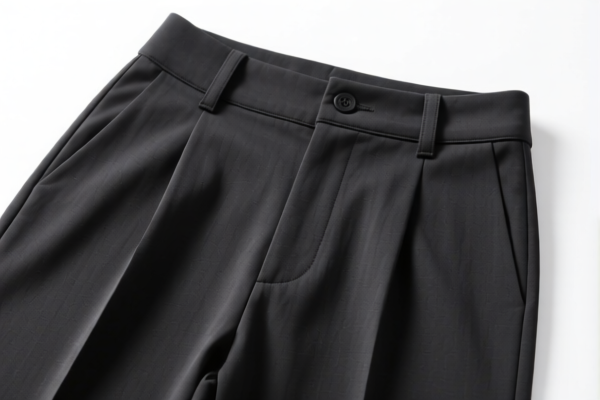

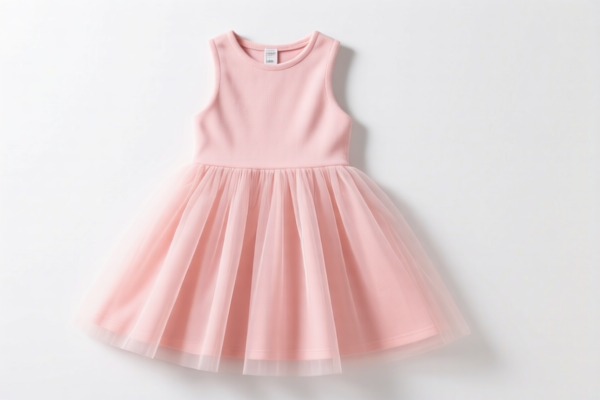
AI Analysis
👗🧵 Girls' Other Synthetic Fiber Clothing
🌐 HS Code Reference & Customs Clearance Guide | 2026 Latest Tariff Breakdown | Professional Strategy for Global Trade
📌 I. Product Definition & Classification: Do You Really Know "Girls' Synthetic Clothing"?
Girls' Other Synthetic Fiber Clothing refers to apparel designed for female children (typically under 16 years old) made from synthetic fibers (e.g., polyester, nylon, acrylic, rayon) that do not fall under specific categories like knit t-shirts, dresses, suits, or outerwear coats.
These items typically include:
- Casual playsuits, rompers, jumpsuits (non-knit)
- Synthetic fiber skirts, tops, or pants not classified under "knitted" or "woven dresses"
- Costume wear, sportswear, or uniforms made from synthetic blends (non-knit)
⚠️ Critical Distinction:
- If the garment is knitted → Likely falls under 6112/6114/6115 series
- If woven (non-knit) → Likely falls under 6211/6212/6213 series
- If not a dress, suit, or outerwear →归入 “Other” subcategories (6114.30.30.xx or 6211.43.10.xx)
📦 II. HS Code Classification Details (2026 Tariff Authority Comparison)
| HS Code | Product Description | Material | Gender | Knitted/Woven |
|---|---|---|---|---|
6114.30.30.54 |
Girls' other synthetic fiber clothing (non-knit) | Synthetic fiber | Girls | ✅ Woven |
6114.30.30.70 |
Girls' other synthetic fiber clothing (non-knit) | Synthetic fiber | Girls | ✅ Woven |
6211.43.10.92 |
Girls' other synthetic fiber clothing (woven) | Synthetic fiber | Girls | ✅ Woven |
6112.20.10.90 |
Girls' other synthetic fiber clothing (knitted) | Synthetic fiber | Girls | ❌ Knitted |
6112.41.00.40 |
Girls' other synthetic fiber clothing (knitted) | Synthetic fiber | Girls | ❌ Knitted |
🔍 Key Reminder:
- Woven garments → Use 6211.43.10.92 or 6114.30.30.xx
- Knitted garments → Use 6112.20.10.90 or 6112.41.00.40
- Do NOT misclassify "synthetic" as "cotton" or "natural fiber" → Higher tax penalties!
💰 III. 2026 Latest Tariff Rate Breakdown (Including Additional Taxes & Policy Surcharges)
✅ Applicable Country: USA (US)
✅ Country of Origin: China (CN)
✅ Effective Date: November 10, 2025 (including subsequent imports)
🎯 1. 6114.30.30.54 & 6114.30.30.70 — Girls' Other Synthetic Fiber Clothing (Woven)
| Item | Details |
|---|---|
| Base Tariff | 14.9% |
| Additional US Tariff | +7.5% (Section 232/301) |
| Section 122 Tariff | +10% (China-specific) |
| Total Tax Rate | 32.4% |
| Tax Calculation | CIF Value × 32.4% |
| De Minimis Exemption | ❌ Not Allowed (denied) |
| Legal Pathway | Base Tariff: 6114.30.30.54/70 → Section 232/301: 7.5% → Section 122: 10% |
📌 Explanation:
- Base Tariff (14.9%) applies to synthetic fiber clothing for girls.
- Additional 7.5% is a US-China trade war surcharge (Section 301).
- 10% Section 122 is a special China-specific tariff.
- Total 32.4% is very high → Must be factored into cost planning!
🎯 2. 6211.43.10.92 — Girls' Other Synthetic Fiber Clothing (Woven)
| Item | Details |
|---|---|
| Base Tariff | 16.0% |
| Additional US Tariff | +7.5% |
| Section 122 Tariff | +10% |
| Total Tax Rate | 33.5% |
| Tax Calculation | CIF × 33.5% |
| De Minimis Exemption | ❌ Not Allowed |
| Legal Pathway | Base Tariff: 6211.43.10.92 → Section 301: 7.5% → Section 122: 10% |
📌 Note:
- This is woven synthetic clothing for girls.
- Higher base rate (16.0%) vs.6114.30.30.54(14.9%) → 1.1% difference.
- Total 33.5% is still extremely high.
🎯 3. 6112.20.10.90 — Girls' Other Synthetic Fiber Clothing (Knitted)
| Item | Details |
|---|---|
| Base Tariff | 28.2% |
| Additional US Tariff | +7.5% |
| Section 122 Tariff | +10% |
| Total Tax Rate | 45.7% |
| Tax Calculation | CIF × 45.7% |
| De Minimis Exemption | ❌ Not Allowed |
| Legal Pathway | Base Tariff: 6112.20.10.90 → Section 301: 7.5% → Section 122: 10% |
📌 Warning:
- Knitted synthetic clothing has the highest base tariff (28.2%) → Total 45.7%.
- Avoid knitted synthetic girls' clothing if possible due to extreme tax burden.
🎯 4. 6112.41.00.40 — Girls' Other Synthetic Fiber Clothing (Knitted)
| Item | Details |
|---|---|
| Base Tariff | 24.9% |
| Additional US Tariff | +7.5% |
| Section 122 Tariff | +10% |
| Total Tax Rate | 42.4% |
| Tax Calculation | CIF × 42.4% |
| De Minimis Exemption | ❌ Not Allowed |
| Legal Pathway | Base Tariff: 6112.41.00.40 → Section 301: 7.5% → Section 122: 10% |
📌 Note:
- Knitted but with slightly lower base rate (24.9%) vs.6112.20.10.90(28.2%).
- Total 42.4% is still very high.
🛠️ IV. Customs Clearance Practical Advice (Real-World Pitfall Avoidance)
✅ 1. Document Checklist (All Required)
| Document | Required | Explanation |
|---|---|---|
| ✅ Product Specification Sheet | ✔️ | Include fiber type, weave/knit method, gender, age range |
| ✅ Production Process Diagram | ✔️ | Show weaving/knitting process, fiber composition |
| ✅ Product Photos (with Label) | ✔️ | Clear image of tag showing fiber content & gender |
| ✅ Third-Party Test Report | ✔️ | FDA, CPSC, CPSIA (if applicable) |
| ✅ Commercial Invoice | ✔️ | Must state "Girls' Other Synthetic Fiber Clothing" |
| ✅ Certificate of Origin (CO) | ✔️ | If not China, check for preferential rates |
| ✅ Packing List | ✔️ | Show quantity, weight, and packaging details |
✅ 2. Declaration Tips (Golden Rule)
🔥 “Synthetic ≠ Cotton, Knitted ≠ Woven, Gender Must Be Clear!”
| Situation | Correct Declaration | Wrong Practice |
|---|---|---|
| Woven synthetic girls' clothing | 6114.30.30.54 or 6211.43.10.92 |
Misdeclared as cotton → Higher tax |
| Knitted synthetic girls' clothing | 6112.20.10.90 or 6112.41.00.40 |
Declared as woven → Customs delay |
| Mixed fiber (50% synthetic, 50% cotton) | 6114.30.30.54 (if synthetic dominant) |
Declared as 100% cotton → Penalty |
| "Girls' dress" misdeclared as "Other" | 6104.44.00.00 (if dress) |
Declared as "Other" → Lower tax |
✅ 3. Special Cases Handling
| Situation | Recommendation |
|---|---|
| OEM/Custom Orders | Provide customer order + design blueprint to prove "girls'" category |
| Mixed Gender Packaging | Clearly separate "girls'" items in declaration |
| Fabric Blends | Use dominant fiber for classification (e.g., 60% synthetic → synthetic category) |
| Export to Third Country | Check if Section 122 applies (only for US imports from China) |
🌍 V. Global Market Comparison (2026 Tariff Overview)
| Country/Region | Recommended HS Code | Tariff | Certification | Notes |
|---|---|---|---|---|
| 🇺🇸 USA | 6114.30.30.54 / 6211.43.10.92 |
32.4%~33.5% (woven) | FDA, CPSC | 45.7% for knitted |
| 🇨🇳 China | 6114.30.30.54 / 6211.43.10.92 |
5%~10% | CCC, RoHS | No Section 122 |
| 🇪🇺 EU | 6114.30.30.54 / 6211.43.10.92 |
0%~5% | CE, REACH | No Section 122 |
| 🇦🇺 Australia | 6114.30.30.54 / 6211.43.10.92 |
5% | RCM | No Section 122 |
| 🇯🇵 Japan | 6114.30.30.54 / 6211.43.10.92 |
0% | PSE | No Section 122 |
📌 Conclusion:
- USA has the highest tax burden (up to 45.7% for knitted).
- Woven synthetic girls' clothing is cheaper (32.4%~33.5%).
- Knitted synthetic girls' clothing is expensive (42.4%~45.7%).
- Avoid knitted if possible for US exports.
📌 VI. Common Mistakes & Pitfall Avoidance (Hard Lessons Learned)
❌ Mistake 1: Declaring "Girls' Synthetic Clothing" as "Cotton"
👉 Consequence: Tax evasion + Penalty → Double tariff!
❌ Mistake 2: Misclassifying Knitted as Woven
👉 Consequence: 45.7% vs. 32.4% → 13.3% extra tax!
❌ Mistake 3: Using "Other Clothing" without specifying fiber type
👉 Consequence: Customs audit → Delay + Fine
❌ Mistake 4: Mixing "Girls' Dresses" with "Other Clothing"
👉 Consequence: Different HS Code → Higher tax on dresses
✅ Correct Practice:
“Girls' Other Synthetic Fiber Clothing, Woven, 100% Polyester, Age 3-12, Model XYZ, FDA & CPSC Certified”
🎯 VII. Conclusion: Precise Classification = Cost Savings!
🎯 Remember:
🔹 “Synthetic ≠ Cotton, Knitted ≠ Woven, Gender Must Be Clear!”
🔹 “HS Code Saves Lives, Tariff Differs by 13%, One Mistake = Huge Cost!”
📌 Pro Tip:
If your product is originating from Vietnam, Mexico, Thailand, Malaysia, you can apply for IEEPA exemption → Tariff: 0%~5%.
Recommendation: Apply for Advance Ruling before shipment to avoid customs delays.
📣 Take Action Now:
📞 Contact professional customs broker + Provide product specs + Apply for HS Code Advance Ruling
🚀 Let your Girls' Synthetic Clothing clear customs smoothly, boost profits!
✨ Professional Customs Clearance Starts with Accurate Classification!
💼 Every Cent of Your Cost Deserves Precise Calculation!
Customer Reviews
About HS Code Classification
The Harmonized System (HS) is an internationally standardized nomenclature developed by the World Customs Organization (WCO) to classify traded products. Over 200 countries use the HS system as the basis for customs tariffs, trade statistics, and import/export regulations.
Each HS code follows a hierarchical structure:
- Chapter (2 digits) — Broad category of goods (e.g., Chapter 84: Machinery and Mechanical Appliances)
- Heading (4 digits) — More specific grouping within the chapter
- Subheading (6 digits) — Internationally standardized breakdown, used by all WCO member countries
- National subdivisions (8-10 digits) — Country-specific extensions for further classification, such as US HTSUS 10-digit codes
Correct HS code classification is essential for smooth customs clearance, accurate duty payment, and compliance with trade regulations. Misclassification can lead to customs delays, overpayment of duties, or penalties.
When importing from CN to US, the applicable tariff rates may include:
- Most-Favored-Nation (MFN) rate — The standard duty rate applied to WTO members
- General rate — Applied to countries without trade agreements
- Trade remedy duties — Additional tariffs such as Section 301 (anti-dumping), Section 232 (national security), or countervailing duties
The information provided on this page is for reference purposes only. For official classification, please consult with your local customs authority or a licensed customs broker.