Girls' Other Textile Material Hooded Jackets
CN → US| HS Code | Tariff Rate | Origin | Destination | Doc |
|---|---|---|---|---|
| 6114200046 | 28.3% | CN | US | Official Doc |
| 6114303054 | 32.4% | CN | US | Official Doc |
| 6110202049 | 34.0% | CN | US | Official Doc |
| 6110303025 | 49.5% | CN | US | Official Doc |
| 6202906961 | 20.3% | CN | US | Official Doc |
Product Images
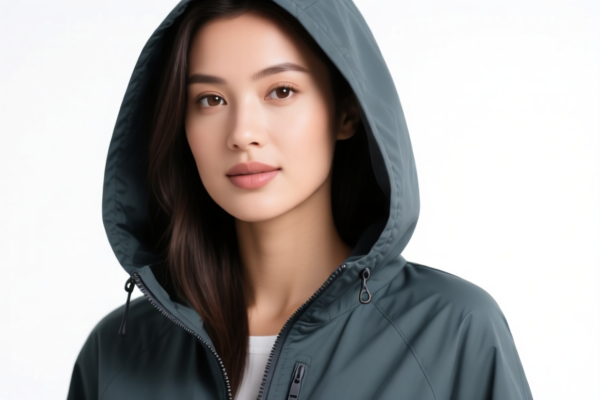


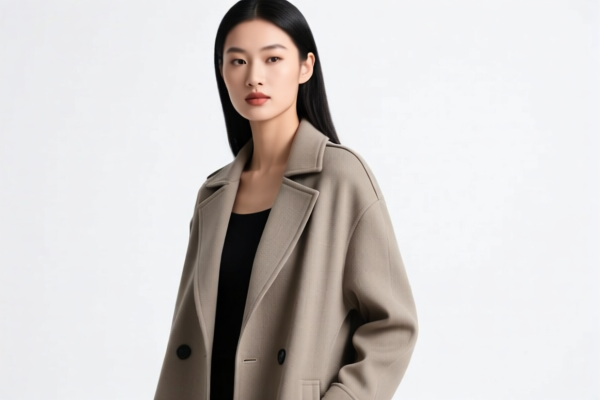
AI Analysis
👗 Girls' Other Textile Material Hooded Jackets: The Ultimate HS Code & Duty Breakdown (2026 Update)
🌐 HS Code Reference & Clearance Guide | 2026 Latest Tariff Analysis | Professional Customization Strategy
📌 Part 1: Product Definition & Classification – Do You Really Know "Girls' Hooded Jackets"?
Girls' hooded jackets, a staple in children's outerwear, are categorized based on material composition (cotton vs. man-made fibers) and garment type (jacket vs. sweater/hoodie). In international trade, precise classification is critical, as misclassification can lead to massive duty increases (up to 49.5%) and customs delays.
Key Distinctions: * "Jackets" (Outerwear): Structured garments with zippers/buttons, often water-resistant or insulated. * "Sweaters/Hoodies" (Knitted): Soft, knit fabric garments, often worn as mid-layers. * "Other Textile Materials": Garments made from materials not classified as cotton or man-made fibers (e.g., wool, silk, special blends).
⚠️ Critical Differentiator:
- Material is King: A cotton jacket pays ~28.3% total tax, while a man-made fiber hoodie can hit 49.5%!
- Garment Type: Knitted "hooded jackets" (sweaters) often fall under different codes than woven "jackets," altering the base tariff significantly.
📦 Part 2: Detailed HS Code Breakdown (2026 Tariff Authority)
Below is the exclusive classification for "Girls' Other Textile Material Hooded Jackets" based on the provided dataset. Note that "Other Textile Materials" in this context often includes specific blends or non-cotton/non-man-made categories, but the dataset primarily contrasts Cotton vs. Man-Made for standard outerwear.
| HS Code | Product Description (Based on Data) | Material Basis | Garment形态 (Form) | Total Tax Rate | Base Tariff |
|---|---|---|---|---|---|
| 6114.20.00.46 | Girls' Hooded Jacket (Cotton) | Cotton | Hooded Jacket (Outerwear) | 28.3% | 10.8% |
| 6114.30.30.54 | Girls' Hooded Jacket (Man-made) | Man-made Fibers | Hooded Jacket (Outerwear) | 32.4% | 14.9% |
| 6110.20.20.49 | Girls' Hooded Jacket (Cotton) | Cotton | Knitted Hoodie/Sweater | 34.0% | 16.5% |
| 6110.30.30.25 | Girls' Hooded Jacket (Man-made) | Man-made Fibers | Knitted Hoodie/Sweater | 49.5% | 32.0% |
| 6202.90.69.61 | Girls' Outerwear (Other Textile Materials) | Other Textile Materials | Woven Jacket (Other) | 20.3% | 2.8% |
🔍 Key Insight:
- The 6110 series (Knitted sweaters/hoodies) generally carries higher base tariffs than the 6114 series (Woven jackets).
- The 6202 category (Other Textile Materials) offers the lowest total tax (20.3%), but strict material verification is required to prove "Other" status.
💰 Part 3: 2026 Tariff Breakdown – Detailed Policy & Additional Taxes
✅ Target Market: United States (US)
✅ Origin: China (CN)
✅ Effective Date: 2025/2026 (Based on latest USITC & IEEPA data)
✅ Tax Structure: Base Tariff + Section 301 (Add-on) + 122 Clause (Section 301 Add-on)
🎯 1. Cotton-Based Classification (Codes: 6114.20 / 6110.20)
| Item | Details |
|---|---|
| HS Codes | 6114.20.00.46, 6110.20.20.49 |
| Base Tariff | 10.8% (Jacket) / 16.5% (Knitted) |
| Section 301 Add-on | +7.5% (Standard USITC Footnote for textiles) |
| Section 122 Tariff | +10% (Specific 122 Clause for Children's Apparel) |
| Total Tax Rate | 28.3% (Jacket) / 34.0% (Knitted) |
| Legal Path | Base: 6114/6110 → Section 301: 7.5% → Section 122: 10% |
📌 Explanation:
- Even though cotton is a "natural" fiber, it still attracts the 7.5% Section 301 surcharge.
- The 122 Clause specifically targets children's garments, adding a flat 10% on top.
- Knitted cotton (6110) pays higher base duty (16.5%) than woven cotton (10.8%), resulting in a total of 34.0%.
🎯 2. Man-Made Fiber Classification (Codes: 6114.30 / 6110.30)
| Item | Details |
|---|---|
| HS Codes | 6114.30.30.54, 6110.30.30.25 |
| Base Tariff | 14.9% (Jacket) / 32.0% (Knitted) |
| Section 301 Add-on | +7.5% |
| Section 122 Tariff | +10% |
| Total Tax Rate | 32.4% (Jacket) / 49.5% (Knitted) |
| Legal Path | Base: 6114/6110 → Section 301: 7.5% → Section 122: 10% |
📌 Warning:
- Man-made knitted jackets (6110.30) suffer from a 32.0% Base Tariff, the highest in the list.
- With the 17.5% add-ons (7.5% + 10%), the Total Tax Hits 49.5%. This is a critical cost driver for synthetic fleece or polyester blends.
🎯 3. "Other Textile Materials" (Code: 6202.90.69.61)
| Item | Details |
|---|---|
| HS Code | 6202.90.69.61 |
| Base Tariff | 2.8% (Significantly lower!) |
| Section 301 Add-on | +7.5% |
| Section 122 Tariff | +10% |
| Total Tax Rate | 20.3% (Lowest in category) |
| Legal Path | Base: 6202 → Section 301: 7.5% → Section 122: 10% |
📌 Strategy:
- This code applies to woven garments made of materials other than cotton or man-made fibers (e.g., wool blends, special technical fabrics).
- If your product qualifies here, you save ~10-15% compared to standard synthetic or cotton options.
🛠️ Part 4: Customs Clearance Practical Advice (Pitfall Avoidance)
✅ 1. Documentation Checklist (Must-Have)
| Document | Requirement | Purpose |
|---|---|---|
| Detailed Composition Label | ✔️ Mandatory | Must state % of Cotton, Man-made, and "Other" fibers. |
| Fabric Swatches | ✔️ Highly Recommended | For physical verification by CBP officers. |
| Knitted vs. Woven Proof | ✔️ Critical | Photos showing fabric weave structure (Knitted = 6110, Woven = 6114/6202). |
| Design Sketches | ✔️ Optional but Good | To prove "Hooded Jacket" vs. "Sweater" structure. |
| Commercial Invoice | ✔️ Mandatory | Must match HS Code exactly; no vague descriptions like "Girls' Coat". |
✅ 2. Declaration Strategy (The Golden Rules)
🔥 Rule of Thumb: "Material dictates Base, Knitted means Higher, 'Other' means Lower!"
| Scenario | Correct HS Code | Incorrect Code | Consequence |
|---|---|---|---|
| Cotton Woven Hoodie | 6114.20.00.46 |
6110.20.20.49 |
Overpaying (28.3% vs 34.0%) + Risk of audit |
| Polyester Knitted Jacket | 6110.30.30.25 |
6114.30.30.54 |
Underpaying (49.5% vs 32.4%) → Penalties + Back Taxes |
| Wool/Special Blend Woven | 6202.90.69.61 |
6114.20.00.46 |
Underpaying (20.3% vs 28.3%) → Seizure Risk |
⚠️ Critical Note:
- Do not use generic terms like "Fleece" or "Jacket." Be specific: "Girls' Knitted Hooded Sweater, 100% Polyester" or "Woven Jacket, Cotton Blend." - If the product is a blend, the tariff follows the principal material rule.
✅ 3. Special Handling for "122 Clause"
- Target: All children's apparel (including girls' hooded jackets).
- Impact: Flat +10% on top of base tariff.
- Action: Ensure the declared age group is "Girls" or "Children" on all invoices. If marked "Unisex," verify if it falls under the same clause.
- Strategy: For high-volume shipments, consider duty drawback or transshipment via non-122 jurisdictions (if legally compliant).
🌍 Part 5: Global Market Comparison (2026)
| Country/Region | Recommended HS Code | Approx. Total Duty | Key Certification | Notes |
|---|---|---|---|---|
| 🇺🇸 USA | 6114.20.00.46 / 6202.90.69.61 |
20.3% – 49.5% | None (General) | High 122 Clause impact; strict material checks. |
| 🇨🇳 China | 6114.20.00.46 / 6202.90.69.61 |
10% – 16% | CCC | No Section 301 or 122 add-ons. |
| 🇪🇺 EU | 6114.20.00.46 / 6202.90.69.61 |
10% – 12% | OEKO-TEX / GRS | No 122 Clause; lower base tariffs. |
| 🇨🇦 Canada | 6114.20.00.46 / 6202.90.69.61 |
5% – 8% | C-TPAT | CETA Agreement may reduce duties for EU origin. |
| 🇦🇺 Australia | 6114.20.00.46 / 6202.90.69.61 |
5% – 10% | None | RCEP benefits for Asian origin. |
📌 Conclusion:
- The US market is the most punitive due to the 122 Clause (+10%) and Section 301 (7.5%).
- Woven "Other" materials (6202) offer the best savings in the US (20.3% vs 49.5%).
- Man-made knitted items (6110.30) are the most expensive to ship to the US.
📌 Part 6: Common Mistakes & Avoidance Guide
❌ Mistake 1: Classifying a knitted polyester hoodie as a woven jacket (6114 vs 6110).
👉 Result: Underpayment of 17.1% (49.5% vs 32.4%) → CBP Audit + Back Taxes + Fines.
❌ Mistake 2: Using generic "Hooded Jacket" without specifying material % in the invoice.
👉 Result: Customs Delay for manual inspection; potential rejection of entry.
❌ Mistake 3: Assuming "Cotton" always means lower tax.
👉 Result: If it's a knitted cotton item, tax is 34.0%, higher than a man-made woven jacket (32.4%)!
✅ Correct Approach:
"Girls' 100% Cotton Knitted Hooded Sweater, 6110.20.20.49, Total Duty 34.0%"
"Girls' 100% Wool Woven Hooded Jacket, 6202.90.69.61, Total Duty 20.3%"
🎯 Part 7: Final Verdict – Strategic Action Plan
🎯 Remember the Formula:
🔹 Total Duty = Base Tariff + 7.5% (Section 301) + 10% (122 Clause)
🔹 Woven = Lower Base, Knitted = Higher Base
🔹 Cotton = Moderate Base, Man-made = High Base
🔹 "Other" Material = Lowest Base (if Woven)
📌 Pro Tip:
If your product contains >10% special fibers (e.g., recycled, organic, wool), investigate the 6202.90.69.61 code immediately. The 20.3% total duty is a massive savings compared to the 49.5% peak.
📣 Immediate Action Required:
📞 Contact your Customs Broker with fabric swatches today.
🚀 Request an Advance Ruling (Pre-Consultation) for complex blends.
💡 Calculate your landed cost using the 20.3%–49.5% range to protect your margins!
✨ Precision in HS Codes = Precision in Profit!
💼 Don't let a 1% material classification error cost you 30% in duties.
Customer Reviews
About HS Code Classification
The Harmonized System (HS) is an internationally standardized nomenclature developed by the World Customs Organization (WCO) to classify traded products. Over 200 countries use the HS system as the basis for customs tariffs, trade statistics, and import/export regulations.
Each HS code follows a hierarchical structure:
- Chapter (2 digits) — Broad category of goods (e.g., Chapter 84: Machinery and Mechanical Appliances)
- Heading (4 digits) — More specific grouping within the chapter
- Subheading (6 digits) — Internationally standardized breakdown, used by all WCO member countries
- National subdivisions (8-10 digits) — Country-specific extensions for further classification, such as US HTSUS 10-digit codes
Correct HS code classification is essential for smooth customs clearance, accurate duty payment, and compliance with trade regulations. Misclassification can lead to customs delays, overpayment of duties, or penalties.
When importing from CN to US, the applicable tariff rates may include:
- Most-Favored-Nation (MFN) rate — The standard duty rate applied to WTO members
- General rate — Applied to countries without trade agreements
- Trade remedy duties — Additional tariffs such as Section 301 (anti-dumping), Section 232 (national security), or countervailing duties
The information provided on this page is for reference purposes only. For official classification, please consult with your local customs authority or a licensed customs broker.