Girls' Sleeveless Artificial Fiber Garment
CN → US| HS Code | Tariff Rate | Origin | Destination | Doc |
|---|---|---|---|---|
| 6206303061 | 32.9% | CN | US | Official Doc |
| 6206403050 | 44.4% | CN | US | Official Doc |
| 6109100065 | 34.0% | CN | US | Official Doc |
| 6104291050 | 0.0% | CN | US | Official Doc |
| 6109901070 | 49.5% | CN | US | Official Doc |
| 6104230036 | 0.0% | CN | US | Official Doc |
Product Images
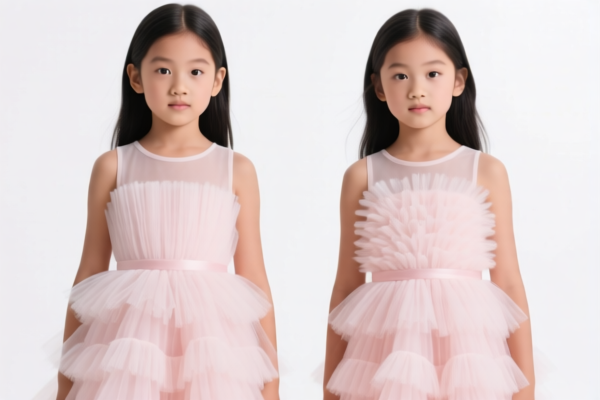
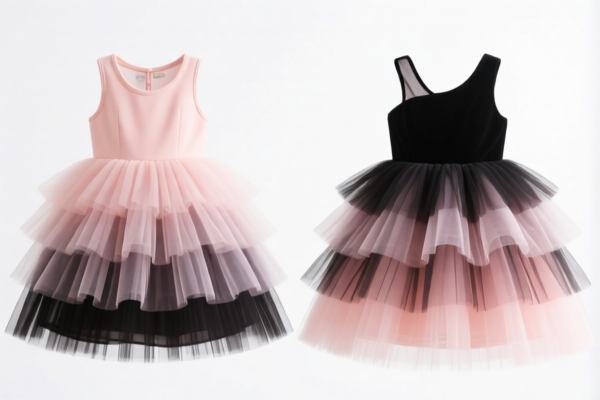
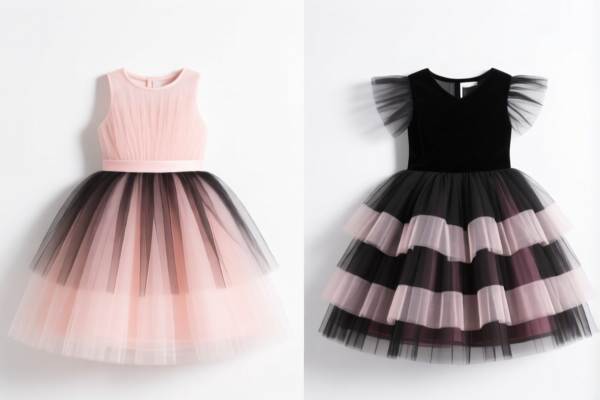
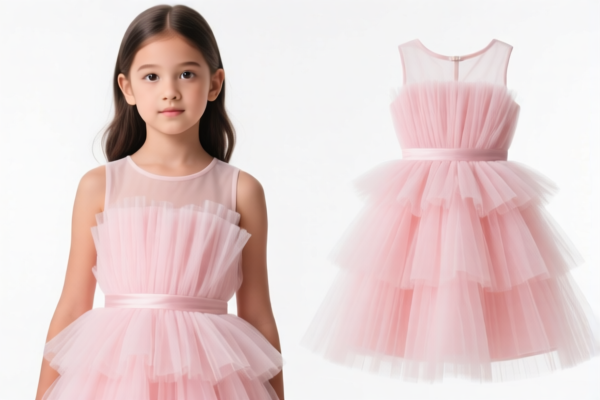
AI Analysis
👗 Girls' Sleeveless Artificial Fiber Garments (Synthetic/Man-Made Fiber)
🌐 HS Code Reference & Clearance Guide | 2026 Latest Tariff Analysis | Professional Clearance Strategy
📌 Part I: Product Definition & Classification: What Exactly Are "Girls' Sleeveless Artificial Fiber Garments"?
In international trade, "Girls' Sleeveless Garments" made from Artificial or Synthetic Fibers are broadly categorized under Chapter 61 (Articles of Apparel and Clothing Accessories, Knitted or Crocheted) or Chapter 62 (Articles of Apparel and Clothing Accessories, Not Knitted or Crocheted).
The term "Artificial Fiber" typically refers to Regenerated Fibers (e.g., Viscose/Rayon), while "Synthetic Fiber" refers to Manufactured Polymers (e.g., Polyester, Nylon, Acrylic). Both fall under "Other Textile Materials" in HS nomenclature when not specified as cotton or wool.
⚠️ Critical Distinction:
- If the garment is knitted or crocheted (e.g., T-shirts, tank tops, knitted vests) → Chapter 61
- If the garment is woven, sewn, or tailored (e.g., woven blouses, dresses, suits) → Chapter 62
- Sleeveless classification affects subheading selection (e.g., T-shirts vs. Blouses vs. Dresses).
📦 Part II: HS Code Classification Details (2026 Latest Tariff Authority对照)
Based on the provided <DATA> XML, here are the relevant HS Codes for Girls' Sleeveless Garments made of Artificial/Synthetic Fibers:
| HS Code | Product Description | Material | Application Scenario |
|---|---|---|---|
6206.40.30.50 |
Girls' Blouses, Shirts, and Shirt-Blouses | Synthetic Fiber or Cotton Blend | Woven sleeveless tops/blouses |
6109.90.10.70 |
T-shirts, Tank Tops, and Other Singlets | Textile Materials (Synthetic/Artificial) | Knitted sleeveless tops |
6104.29.10.50 |
Women's/Girls' Ensembles (Sleeveless) | Textile Materials | Multi-piece outfits (e.g., top+skirt) |
6104.23.00.36 |
Women's/Girls' Suits, Ensembles, Blazers, Dresses | Synthetic Fiber | Tailored synthetic sleeveless sets |
🔍 Key Insight:
-6206.40.30.50: For woven sleeveless shirts/blouses made of synthetic fibers.
-6109.90.10.70: For knitted sleeveless tops/tank tops made of textile materials (including synthetic/artificial).
-6104.29.10.50and6104.23.00.36: Apply to ensembles (multi-piece sets) where rates are calculated per garment if separated, or as a whole if entered together.
💰 Part III: 2026 Latest Tariff Rate Breakdown (Including Surcharge & Policy Add-ons)
✅ Applicable Country: United States (US)
✅ Origin: China (CN)
✅ Effective Date: Current rates apply for imports post-2025.
🎯 1. 6206.40.30.50 —— Girls' Woven Blouses/Shirts (Synthetic Fiber)
| Item | Detail |
|---|---|
| Base Tariff | 26.9% (ad valorem) |
| Section 301 Surcharge | +7.5% |
| Section 122 Tariff | +10% |
| Total Effective Rate | 44.4% |
| Tax Calculation | CIF Value × 44.4% |
| De Minimis Exemption | ❌ Not Eligible (High tariff rate excludes de minimis relief) |
| Legal Basis Path | HTSUS:6206.40.30.50 → Section 301: Footnote 9903.88.01 → Section 122: EO 14158 |
📌 Explanation:
- Base 26.9%: Standard US MFN tariff for woven synthetic blouses.
- Section 301 (7.5%): Additional tariff on Chinese-made goods under Trade Act Section 301.
- Section 122 (10%): Specific duty on certain textile/apparel items.
- Total 44.4%: A high-cost clearance item; requires careful cost allocation.
🎯 2. 6109.90.10.70 —— Girls' Knitted T-shirts/Tank Tops (Textile Materials)
| Item | Detail |
|---|---|
| Base Tariff | 32.0% (ad valorem) |
| Section 301 Surcharge | +7.5% |
| Section 122 Tariff | +10% |
| Total Effective Rate | 49.5% |
| Tax Calculation | CIF Value × 49.5% |
| De Minimis Exemption | ❌ Not Eligible |
| Legal Basis Path | HTSUS:6109.90.10.70 → Section 301 → Section 122 |
📌 Explanation:
- Knitted sleeveless tops (tank tops) face the highest total tariff (49.5%) among the listed codes.
- This is due to higher base rates for knitted textile goods combined with surcharges.
🎯 3. 6104.29.10.50 & 6104.23.00.36 —— Ensembles (Textile/Synthetic Fiber)
| Item | Detail |
|---|---|
| Base Tariff | "Rate applicable to each garment in the ensemble if entered separately" + 17.5% surcharge? |
| Section 301 Surcharge | +7.5% |
| Section 122 Tariff | +10% |
| Total Effective Rate | Variable (Depends on individual garment classification) |
| De Minimis Exemption | ❌ Not Eligible |
| Legal Basis Path | HTSUS:6104.29.10.50 / 6104.23.00.36 |
📌 Explanation:
- If the ensemble is declared as one item, the tariff is calculated based on the most heavily taxed component or an averaged rate.
- If separated, each piece is taxed individually.
- Caution: Misdeclaring ensemble components can lead to customs penalties.
🛠️ Part IV: Clearance Practical Advice (Pitfall Avoidance Guide)
✅ 1. Documentation Checklist (Mandatory)
| Document | Required | Notes |
|---|---|---|
| ✅ Product Spec Sheet | ✔️ | Fabric composition (e.g., 100% Polyester), knit/weave type, style |
| ✅ Composition Certificate | ✔️ | Lab test report confirming synthetic/artificial fiber content |
| ✅ Product Photos (Labeled) | ✔️ | Clear images of label, tags, and garment structure |
| ✅ Commercial Invoice | ✔️ | Must state "Girls' Sleeveless Garment, Synthetic Fiber, HTS 6206.40.30.50" |
| ✅ Packing List | ✔️ | Item count, weight, dimensions |
| ✅ Certificate of Origin (CO) | ✔️ | If applicable, for potential preferential treatment (though unlikely for China-US) |
✅ 2. Declaration Tips (Critical Mnemonic)
🔥 "Knitted vs Woven: Chapter 61 vs 62! Fiber Type: Synthetic vs Cotton! Rate Difference is Huge!"
| Scenario | Correct HS Code | Incorrect Practice | Consequence |
|---|---|---|---|
| Woven synthetic sleeveless shirt | 6206.40.30.50 (44.4%) |
Misdeclare as knitted → 6109.90.10.70 (49.5%) |
Overpay tax or underpay → Penalty |
| Knitted tank top | 6109.90.10.70 (49.5%) |
Misdeclare as woven → 6206.40.30.50 |
Incorrect classification → Audit |
| Ensemble (Top+Skirt) | 6104.29.10.50 |
Declare as two separate items | Complex tax calculation, potential error |
| Cotton blend (not synthetic) | Not in this dataset | Use synthetic code | Wrong tax base → Discrepancy |
✅ 3. Special Cases Handling
| Scenario | Handling Advice |
|---|---|
| OEM Custom Designs | Provide design sketches + fabric swatches to prove fiber type |
| Mixed Fabric (e.g., 50% Cotton, 50% Polyester) | If synthetic component is not predominant, it may not qualify for "Synthetic Fiber" classification. Check HS rules. |
| Gift Items / Samples | Even for low-value samples, high tariff rates mean no de minimis relief. Consider shipping via non-US channels if possible. |
| Pre-cut Garments (Cut & Sew) | Ensure documentation states "Finished Garment," not "Fabric Panels," to avoid misclassification. |
🌍 Part V: Global Market Clearance Comparison (2026 Latest)
| Country/Region | Recommended HS Code | Tariff Rate | Certification | Notes |
|---|---|---|---|---|
| 🇺🇸 USA | 6206.40.30.50 / 6109.90.10.70 |
44.4% – 49.5% | No special cert | High tariff due to Section 301 & 122 |
| 🇨🇳 China | 6206.40.30.50 / 6109.90.10.70 |
~5–10% | CCC (if applicable) | Lower duty for domestic trade |
| 🇪🇺 EU | 6109.90.10.70 |
~0–12% | CE (if textiles) | No Section 301 equivalent |
| 🇬🇧 UK | 6109.90.10.70 |
~0–12% | UKCA | Post-Brexit rules apply |
| 🇯🇵 Japan | 6109.90.10.70 |
~0–10% | PSE (if electronic accessories) | Low tariff for apparel |
📌 Conclusion:
- USA imposes the highest combined tariff (44.4%–49.5%) due to trade policies.
- EU, UK, Japan have significantly lower rates, making them more cost-effective markets for synthetic apparel.
- Strategy: If targeting the US, consider supply chain diversification (e.g., produce in Vietnam, Bangladesh) to mitigate Section 301 tariffs.
📌 Part VI: Common Mistakes & Pitfall Guide (Lessons Learned)
❌ Mistake 1: Declaring a woven blouse as knitted to avoid higher tax
👉 Consequence: Customs inspection reveals mismatch → 100% penalty + seizure
❌ Mistake 2: Ignoring Section 122 tariff in cost calculation
👉 Consequence: Profit margin eroded by 10% unexpected cost
❌ Mistake 3: Misclassifying ensembles as single items without specifying components
👉 Consequence: Tax underpayment → Back taxes + interest
❌ Mistake 4: Using "Girls' Clothes" as generic description
👉 Consequence: Customs cannot verify fiber type → Delay + Additional Documentation Request
✅ Correct Practice:
"Girls' Sleeveless Woven Blouse, 100% Polyester, Style No. ABC, HTS 6206.40.30.50, Made in China"
🎯 Part VII: Conclusion: Precision in Classification Saves Money!
🎯 Remember the Mnemonic:
🔹 "Knitted = 61, Woven = 62! Synthetic = High Tax! Ensemble = Complex Calc!"
🔹 "HS Code Determines Tax Rate! 44.4% vs 49.5% Matters!"
📌 Pro Tip:
If your garments are produced in Vietnam, Bangladesh, or India, you may avoid Section 301 tariffs, reducing total duty to ~16.5%–32%.
Recommend Advance Ruling (APL) from US CBP for complex ensemble classifications.
📣 Immediate Action:
📞 Engage a Customs Broker + Provide Fabric Test Reports + Apply for HTS Ruling
🚀 Ensure your sleeveless synthetic garments clear customs smoothly, legally, and profitably!
✨ Professional Clearance Starts with Accurate Classification!
💼 Every Percent of Tariff Affects Your Bottom Line!
Customer Reviews
About HS Code Classification
The Harmonized System (HS) is an internationally standardized nomenclature developed by the World Customs Organization (WCO) to classify traded products. Over 200 countries use the HS system as the basis for customs tariffs, trade statistics, and import/export regulations.
Each HS code follows a hierarchical structure:
- Chapter (2 digits) — Broad category of goods (e.g., Chapter 84: Machinery and Mechanical Appliances)
- Heading (4 digits) — More specific grouping within the chapter
- Subheading (6 digits) — Internationally standardized breakdown, used by all WCO member countries
- National subdivisions (8-10 digits) — Country-specific extensions for further classification, such as US HTSUS 10-digit codes
Correct HS code classification is essential for smooth customs clearance, accurate duty payment, and compliance with trade regulations. Misclassification can lead to customs delays, overpayment of duties, or penalties.
When importing from CN to US, the applicable tariff rates may include:
- Most-Favored-Nation (MFN) rate — The standard duty rate applied to WTO members
- General rate — Applied to countries without trade agreements
- Trade remedy duties — Additional tariffs such as Section 301 (anti-dumping), Section 232 (national security), or countervailing duties
The information provided on this page is for reference purposes only. For official classification, please consult with your local customs authority or a licensed customs broker.