Girls' Slim fit Knitted Sweater
CN → US| HS Code | Tariff Rate | Origin | Destination | Doc |
|---|---|---|---|---|
| 6110202020 | 34.0% | CN | US | Official Doc |
| 6110190080 | 33.5% | CN | US | Official Doc |
| 6104220080 | 0.0% | CN | US | Official Doc |
| 6104230040 | 0.0% | CN | US | Official Doc |
| 6110202025 | 34.0% | CN | US | Official Doc |
Product Images
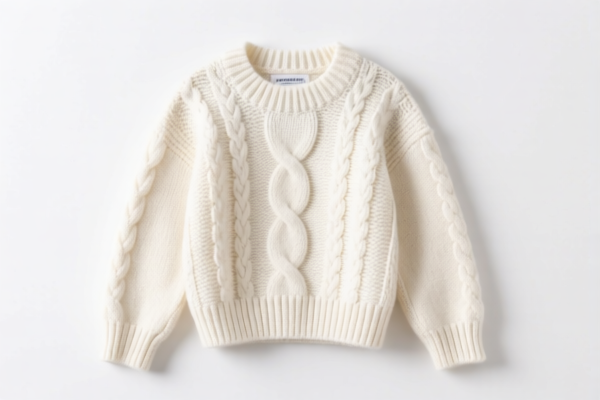
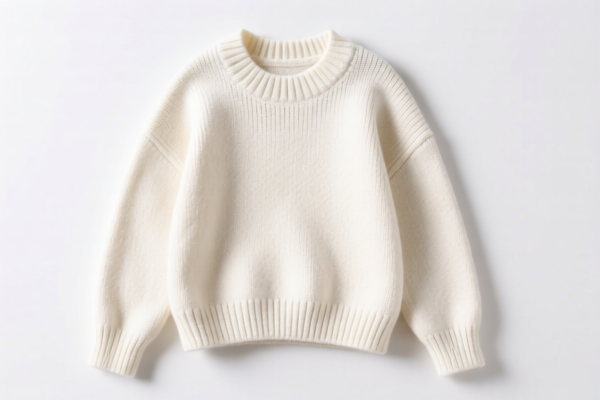


AI Analysis
👗 Girls' Slim Fit Knitted Sweater
🌐 HS Code Reference & Customs Clearance Guide | 2026 Latest Tariff Analysis | Professional Compliance Strategy
📌 I. Product Definition & Classification: Do You Really Know "Girls' Slim Fit Knitted Sweater"?
A Girls' Slim Fit Knitted Sweater is a women’s/children’s knitted garment, typically designed for cold weather, featuring a tailored fit that contours to the body. In international trade, its classification depends heavily on:
- Material Composition (Cotton, Wool, Synthetic Fibers, etc.)
- Garment Type (Sweater vs. Jacket/Coat)
- Target Demographic (Girls’ vs. Women’s)
⚠️ Key Classification Points:
- If made of cotton → Likely falls under 6110.20.20.20 (Women’s) or 6110.20.20.25 (Girls’)
- If made of wool/fine animal hair → Likely 6110.19.00.80
- If made of synthetic/non-wool fibers → Likely 6104.22.00.80 or 6104.23.00.40
- If it has outerwear features (e.g., zipper, structured collar) → May be classified as a jacket/coat under Chapter 6104
📦 II. HS Code Classification Details (2026 Latest Tariff Reference)
| HS Code | Product Description | Material | Tax Rate (US/CN Origin) | Tax Breakdown |
|---|---|---|---|---|
6110.20.20.20 |
Women’s slim-fit knitted sweater | Cotton | 34.0% | Base: 16.5% + Section 301: 7.5% + Section 122: 10% |
6110.19.00.80 |
Women’s slim-fit knitted sweater | Wool/Fine Animal Hair | 33.5% | Base: 16.0% + Section 301: 7.5% + Section 122: 10% |
6104.22.00.80 |
Women’s knitted sweater ensemble | Cotton/Wool Blend | Base Rate + 17.5% | Base: Applicable to each garment if separate + Section 301: 7.5% + Section 122: 10% |
6104.23.00.40 |
Women’s knitted sweater ensemble | Synthetic/Non-Wool | Base Rate + 17.5% | Base: Applicable to each garment if separate + Section 301: 7.5% + Section 122: 10% |
6110.20.20.25 |
Girls’ cotton knitted jacket | Cotton | 34.0% | Base: 16.5% + Section 301: 7.5% + Section 122: 10% |
🔍 Important Notes:
- 6104.22/6104.23 apply to ensemble sets (e.g., sweater + skirt/pants). If declared as separate items, the base rate applies to each individually.
- Girls’ items (under 12 years) may have different base rates than women’s items.
- Section 122 Tariff: An additional 10% tariff applied to certain textile imports from China under specific trade policies.
💰 III. 2026 Latest Tariff Rate Breakdown (Including Additional Taxes & Policy Surcharges)
✅ Applicable Country: United States (US)
✅ Origin: China (CN)
✅ Effective Date: 2025+ (Including subsequent imports)
🎯 1. 6110.20.20.20 —— Women’s Cotton Slim-Fit Knitted Sweater
| Item | Detail |
|---|---|
| Base Tariff | 16.5% (ad valorem) |
| Section 301 Surcharge | +7.5% |
| Section 122 Surcharge | +10.0% |
| Total Tariff | 34.0% |
| Tax Calculation | CIF Value × 34.0% |
| De Minimis Exemption | ❌ Not Eligible (deny_de_minimis) |
| Legal Basis Path | USITC:6110.20.20.20 → Section 301: Footnote 9903.88.01 → Section 122: HTSUS Note |
📌 Explanation:
- Base 16.5%: Standard MFN tariff for women’s knitted cotton sweaters.
- Section 301 7.5%: Retaliatory tariff on Chinese textiles under US Trade Act Section 301.
- Section 122 10%: Additional tariff under specific US-China trade measures for certain apparel items.
- Total 34.0%: High tariff rate, must be accounted for in pricing strategies.
🎯 2. 6110.19.00.80 —— Women’s Wool/Fine Animal Hair Slim-Fit Knitted Sweater
| Item | Detail |
|---|---|
| Base Tariff | 16.0% |
| Section 301 Surcharge | +7.5% |
| Section 122 Surcharge | +10.0% |
| Total Tariff | 33.5% |
| Tax Calculation | CIF Value × 33.5% |
| De Minimis Exemption | ❌ Not Eligible |
| Legal Basis Path | USITC:6110.19.00.80 → Section 301 → Section 122 |
📌 Note:
- Wool/fine animal hair sweaters have a slightly lower base tariff (16.0% vs. 16.5%) but are still subject to the same surcharges.
- Includes materials like cashmere, mohair, alpaca, etc.
🎯 3. 6104.22.00.80 & 6104.23.00.40 —— Women’s Knitted Sweater Ensemble (Cotton/Synthetic)
| Item | Detail |
|---|---|
| Base Tariff | Applicable to each garment if declared separately |
| Section 301 Surcharge | +7.5% |
| Section 122 Surcharge | +10.0% |
| Total Additional Surcharge | +17.5% |
| De Minimis Exemption | ❌ Not Eligible |
📌 Explanation:
- These HS codes apply to ensemble sets (e.g., sweater + pants/skirt).
- If declared as separate items, each item is taxed individually under its own HS code.
- Example: A cotton sweater + cotton pants ensemble → Each item taxed under6104.22.00.80or6104.23.00.40with +17.5% surcharge on top of the base rate.
🎯 4. 6110.20.20.25 —— Girls’ Cotton Knitted Jacket
| Item | Detail |
|---|---|
| Base Tariff | 16.5% |
| Section 301 Surcharge | +7.5% |
| Section 122 Surcharge | +10.0% |
| Total Tariff | 34.0% |
| De Minimis Exemption | ❌ Not Eligible |
📌 Note:
- This HS code applies to girls’ outerwear (jackets/coats) made of cotton.
- If the item is a sweater (not outerwear), it should not be classified here. Misclassification can lead to penalties.
🛠️ IV. Customs Clearance Practical Advice (Field Anti-Pit Guide)
✅ 1. Required Documentation Checklist (All Mandatory)
| Document | Required | Description |
|---|---|---|
| ✅ Product Spec Sheet | ✔️ | Material composition, size, fit, closure type |
| ✅ Material Certificate | ✔️ | Lab test report confirming cotton/wool/synthetic content |
| ✅ Product Photos (Including Label) | ✔️ | Clear images of garment, tags, and any logos |
| ✅ Commercial Invoice | ✔️ | Must state "Knitted Sweater" or "Knitted Jacket" accurately |
| ✅ Packing List | ✔️ | Detail item counts, weights, and dimensions |
| ✅ Origin Certificate (CO) | ✔️ | If not originating from China, may qualify for reduced tariffs |
| ✅ Third-Party Test Report | ✔️ | FTC, CPSIA (for children’s items), or other safety compliance |
✅ 2. Declaration Tips (Key Mantras)
🔥 "Material First, Fit Second, Name Precise, Tariff Reduced!"
| Scenario | Correct Declaration | Incorrect Practice |
|---|---|---|
| Women’s Cotton Sweater | 6110.20.20.20 – "Women’s Cotton Knitted Sweater" |
Mislabel as "Girls’" → Different base rate |
| Girls’ Cotton Sweater | 6110.20.20.25 – "Girls’ Cotton Knitted Jacket" |
Mislabel as "Sweater" → Wrong HS code |
| Wool Sweater | 6110.19.00.80 – "Women’s Wool Knitted Sweater" |
Mislabel as "Cotton" → 34% vs. 33.5% |
| Synthetic Sweater Ensemble | 6104.23.00.40 – "Women’s Synthetic Knitted Sweater Ensemble" |
Declare as single item → Incorrect surcharge application |
| Outerwear (Jacket) | 6110.20.20.25 – "Girls’ Cotton Knitted Jacket" |
Declare as "Sweater" → Lower tariff but potential penalty |
✅ 3. Special Cases Handling
| Scenario | Handling Advice |
|---|---|
| Mixed Material | Provide detailed material breakdown (e.g., 80% Cotton, 20% Polyester). Classification depends on principal material. |
| Children’s Items (Under 12) | Ensure compliance with CPSIA (Consumer Product Safety Improvement Act). Labeling must include age appropriateness. |
| OEM/ODM Custom Goods | Provide design drawings and customer orders to prove intended use and avoid misclassification. |
| Set vs. Single Item | Clearly declare whether items are sold as a set or separately. Sets under 6104.xx may have different tax treatments. |
| Samples for Evaluation | Sample shipments may still be subject to tariffs. Declare accurately and consider applying for temporary admission if eligible. |
🌍 V. Global Market Comparison (2026 Latest)
| Country/Region | Recommended HS Code | Tariff (CN Origin) | Certification Requirements | Notes |
|---|---|---|---|---|
| 🇺🇸 United States | 6110.20.20.20 |
34.0% | FTC, CPSIA (if children’s) | High tariffs due to Section 301 & 122 |
| 🇨🇳 China | 6110.20.20.20 |
~5-7% | CCC (if applicable) | Lower tariffs, no Section 301 |
| 🇪🇺 European Union | 6110.20.20.20 |
~12-16% | CE, REACH | No Section 301/122 surcharges |
| 🇬🇧 United Kingdom | 6110.20.20.20 |
~12-16% | UKCA, REACH | Post-Brexit tariff structure |
| 🇦🇺 Australia | 6110.20.20.20 |
~5-10% | ACCC, Standards Australia | Moderate tariffs |
| 🇯🇵 Japan | 6110.20.20.20 |
~0-15% | PSE, JIS | Varies by material |
📌 Conclusion:
- US tariffs are the highest due to Section 301 and Section 122 surcharges.
- EU, UK, and Australia have moderate tariffs but require strict safety certifications (especially for children’s items).
- China domestic tariffs are significantly lower, but export markets impose additional surcharges.
📌 VI. Common Errors & Pitfalls (Lessons Learned)
❌ Error 1: Misclassifying a sweater as a jacket or vice versa
👉 Consequence: Incorrect HS code → Tariff discrepancy + Penalties
❌ Error 2: Ignoring material composition
👉 Consequence: Cotton vs. Wool vs. Synthetic → Tariff rates vary by 0.5-34%
❌ Error 3: Declaring ensemble sets as single items without proper breakdown
👉 Consequence: Incorrect surcharge application → Over/Underpayment of Tariffs
❌ Error 4: Failing to provide material certificates
👉 Consequence: Customs holds shipment for verification → Delays + Storage Fees
❌ Error 5: Not labeling children’s items with age appropriateness
👉 Consequence: CPSIA non-compliance → Product Recall + Fines
✅ Correct Approach:
"Girls’ Slim Fit Knitted Sweater, 100% Cotton, Age 6-12, CPSIA Compliant, Model XYZ"
🎯 VII. Conclusion: Precise Classification, Smooth Clearance, Cost Optimization!
🎯 Remember the Mantras:
🔹 "Material Determines HS Code, Fit Determines Category, Name Determines Accuracy!"
🔹 "Cotton Sweater: 34%, Wool: 33.5%, Synthetic Ensemble: Base + 17.5%!"
📌 Pro Tip:
- If your sweaters are sourced from Vietnam, Mexico, Thailand, or Malaysia, you may qualify for Section 301 Exemptions, reducing tariffs to 0-5%.
- Apply for Advance Rulings from US Customs and Border Protection (CBP) to confirm HS code classification before shipment.
📣 Immediate Action:
📞 Contact a Professional Customs Broker + Provide Product Photos + Apply for HS Code Advance Ruling
🚀 Ensure Smooth Customs Clearance, Efficient Export, and Maximized Profits!
✨ Professional Clearance Starts with Accurate Classification!
💼 Every Penny of Cost Deserves Precise Calculation!
Customer Reviews
About HS Code Classification
The Harmonized System (HS) is an internationally standardized nomenclature developed by the World Customs Organization (WCO) to classify traded products. Over 200 countries use the HS system as the basis for customs tariffs, trade statistics, and import/export regulations.
Each HS code follows a hierarchical structure:
- Chapter (2 digits) — Broad category of goods (e.g., Chapter 84: Machinery and Mechanical Appliances)
- Heading (4 digits) — More specific grouping within the chapter
- Subheading (6 digits) — Internationally standardized breakdown, used by all WCO member countries
- National subdivisions (8-10 digits) — Country-specific extensions for further classification, such as US HTSUS 10-digit codes
Correct HS code classification is essential for smooth customs clearance, accurate duty payment, and compliance with trade regulations. Misclassification can lead to customs delays, overpayment of duties, or penalties.
When importing from CN to US, the applicable tariff rates may include:
- Most-Favored-Nation (MFN) rate — The standard duty rate applied to WTO members
- General rate — Applied to countries without trade agreements
- Trade remedy duties — Additional tariffs such as Section 301 (anti-dumping), Section 232 (national security), or countervailing duties
The information provided on this page is for reference purposes only. For official classification, please consult with your local customs authority or a licensed customs broker.