Girls' Suits of Other Textile Materials
CN → USProduct Images


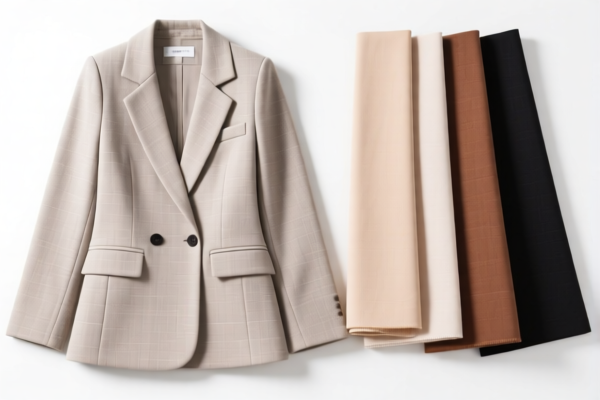

AI Analysis
👗 Girls' Suits of Other Textile Materials
🌐 HS Code Classification & Clearance Strategy | 2026 Global Trade Guide | Expert Customs Tactics
📌 I. Product Definition: What Exactly Are "Girls' Suits"?
In international trade, "Girls' Suits" refers to tailored sets designed for female children (typically under 14 years), consisting of: 1. A Jacket or Blazer: With matching lapels, buttons, and structured fit. 2. Matching Trousers, Skirts, or Shorts: Cut to match the jacket in fabric and style.
⚠️ Crucial Classification Rule (The "Set" Definition): * Set (86% Match): Must be identical fabric, matching color/design, same cut, and sold together. Must be classified as a suit (Chapter 61/62). * Separate Items: If the jacket and bottom are different fabrics or colors, they must be declared separately as a jacket (61.04) and pants/skirt (61.04/62.04/62.05). Never force a mismatched set into a "suit" code to avoid penalties.
📦 II. HS Code Classification Matrix (2026 Customs Tariff)
Since the user specified "Other Textile Materials" (excluding Silk, Wool, Cotton), we focus on Man-made fibers (Synthetic) and Other Natural Fibers (e.g., Viscose/Rayon not classified as Wool/Cotton).
Primary Category: Chapter 61 (Knitted) or Chapter 62 (Woven/Non-knitted).
Note: Most formal "Suits" are Woven (Chapter 62). If knitted, use Chapter 61.
🏷️ Scenario A: Woven Suits (Most Common for "Suits")
| HS Code | Description | Material Type | Typical Usage |
|---|---|---|---|
| 6204.23 | Woven Suit (Jacket + Trousers/Skirt) | Synthetic Fibers (Polyester, Nylon, Acrylic) | School uniforms, formal party wear, business-casual |
| 6204.29 | Woven Suit | Other Textile Materials (Viscose, Ramie, Alpaca, etc.) | Luxury dresses, niche fashion, semi-formal wear |
| 6204.30 | Skirt Suits (Jacket + Skirt) | Any "Other" Material | Girls' school uniform sets, formal events |
🧶 Scenario B: Knitted Suits (Less Common for Formal Suits)
| HS Code | Description | Material Type | Typical Usage |
|---|---|---|---|
| 6104.23 | Knitted Suit Set | Synthetic Fibers | Casual wear, sporty suits, school uniforms |
| 6104.29 | Knitted Suit Set | Other Textile Materials | Lightweight, stretchable sets (e.g., rayon/spandex blends) |
🔍 Key Differentiator:
- "Other Textile Materials" in customs usually implies Synthetic (Man-made) or Vegetable Fibers (like Viscose) that are NOT Wool (51), Cotton (52), or Silk (50). - If the suit is Polyester (most common), it falls under 6204.23 or 6104.23. - If the suit is Viscose/Rayon, it falls under 6204.29 or 6104.29.
💰 III. 2026 Tariff & Duty Breakdown (USA Focus)
✅ Target Market: United States (US)
✅ Origin: China (CN) (Assuming high-risk origin for context)
✅ Effective Date: 2026 Tariff Schedule (Section 301 & IEEPA)
🎯 1. Synthetic Woven Suits (6204.23.00.00)
| Item | Detail |
|---|---|
| Base MFN Duty | 17.5% (Standard US rate for synthetic suits) |
| Section 301 Duty | +25% (Targeted on Chinese goods) |
| IEEPA/301 Phase 4 | +10% (Additional surcharge on textiles/apparel) |
| Total Duty Rate | 52.5% |
| De Minimis | ❌ Denied (Textiles are excluded) |
| Legal Path | HTSUS:6204.23.00.00 → Section 301: 1001.10 → IEEPA: 9903.88 |
📌 Explanation:
Synthetic suits are high-value targets. The 52.5% combined rate is a "brutal" tax wall. Even if you ship from Vietnam or Mexico, rules of origin must be strictly proven to avoid "transshipment" penalties.
🎯 2. "Other Material" Woven Suits (6204.29.00.00)
| Item | Detail |
|---|---|
| Base MFN Duty | 17.5% (Similar to synthetic) |
| Section 301 Duty | +25% |
| IEEPA/301 Phase 4 | +10% |
| Total Duty Rate | 52.5% |
| De Minimis | ❌ Denied |
| Legal Path | HTSUS:6204.29.00.00 → Section 301: 1001.10 → IEEPA: 9903.88 |
📌 Note:
Even if the material is exotic (e.g., Ramie, Alpaca), if it's not wool or silk, it falls into this bucket and suffers the same high tariff.
🛠️ IV. Clearance Practical Guide (Avoiding the Pitfalls)
✅ 1. Documentation Checklist (Mandatory)
| Document | Requirement | Why It Matters |
|---|---|---|
| Detailed Commercial Invoice | Must list Separate jacket & pants prices if not a set. | Prevents "Undervaluation" flags. |
| Fabric Content Certificate | Must specify % of Synthetic vs. Other. | Critical for choosing 6204.23 vs 6204.29. |
| Composition Label | Must be on the garment (e.g., "100% Polyester"). | Customs verifies against label. |
| Set Proof (Match Test) | Photos showing identical fabric swatch for jacket & pants. | Proves it qualifies as a "Suit" (lower duty for set vs. separate? Note: Duty is often same, but classification differs). |
| Country of Origin Form | Form A or Certificate of Origin. | Essential for claiming any Free Trade Agreement (FTA) benefits. |
✅ 2. Declaration Strategy (Golden Rules)
🔥 Rule of Thumb:
"If it doesn't match perfectly, declare separately!"
| Situation | Correct Declaration | Risk if Wrong |
|---|---|---|
| Perfect Match (Same fabric, cut) | Declare as "Suit" (6204.23/29) | If declared as separate items → Higher complexity, potential misclassification. |
| Mismatched Colors | Declare Jacket (6204.12/24) + Pants (6204.12/24) separately. | Declaring as a "Suit" → Customs Seizure or 100% fine. |
| Mix of Materials (e.g., Cotton jacket, Polyester pants) | Declare Separately as Jacket & Pants. | Declaring as a "Suit" → Rejected (Sets must be same material). |
| Knitted vs. Woven | Check the weave! Woven = Ch 62, Knitted = Ch 61. | Wrong Chapter → Automatic penalty. |
✅ 3. Special Case: "Girls" Age Limit
- Definition: Under 14 years old.
- Proof: If the size is XXS or labeled "Toddler" or "Girls 4-14", provide a size chart.
- Risk: If customs determines the item is for adults (e.g., "Miniature Woman"), the duty rate may change (Adult suits sometimes have different rates or higher scrutiny).
🌍 V. Global Market Comparison (2026)
| Market | HS Code (Woven) | Base Duty | US 301/IEEPA Impact | Total Duty (China Origin) | Strategy |
|---|---|---|---|---|---|
| 🇺🇸 USA | 6204.23 / 6204.29 |
17.5% | +35% (Combined) | 52.5% | Avoid direct shipping from China; use Vietnam/Mexico. |
| 🇪🇺 EU | 6204.23 / 6204.29 |
12.0% | 0% (No 301) | 12.0% | Excellent market if non-Chinese origin. |
| 🇯🇵 Japan | 6204.23 / 6204.29 |
15.0% | 0% | 15.0% | High demand for school uniforms. |
| 🇦🇺 Australia | 6204.23 / 6204.29 |
5.0% | 0% | 5.0% | Very low duty, but strict quarantine. |
📌 VI. Common Mistakes & "Blood Tears" (Avoid These!)
❌ Mistake 1: "Mix-and-Match" Sets
Scenario: A red polyester jacket + blue synthetic pants sold as a "Suit Set".
Result: Customs classifies as two separate items (Jacket + Trousers). If declared as a suit, you get a 100% fine for misclassification.
Fix: Always declare Jacket and Pants* separately if fabric/color differs.
❌ Mistake 2: Confusing "Knitted" vs. "Woven"
Scenario: You ship a stretchy, knit suit but declare it as Woven (6204).
Result: HS Code Error. Knitted suits (6104) often have lower duties than Woven (6204) in some countries, or vice versa. Misdeclaration leads to delays.
Fix:* Inspect the fabric weave under a microscope.
❌ Mistake 3: "Other Material" Ambiguity
Scenario: Label says "80% Viscose, 20% Polyester".
Result: Customs may classify as Cotton (if they mistake Viscose) or Synthetic.
Fix: Provide a Lab Test Report* from an accredited lab (e.g., SGS, Intertek) confirming exact fiber composition.
✅ Pro Tip:
"The Suit Must Be a Suit!"
If it's not a matching set (jacket + trousers/skirt, same fabric, same cut, same color), do not call it a suit. Call it a "Jacket and Trousers" set.
🎯 VII. Conclusion: Smart Shipping, Zero Risk
🎯 Final Checklist for Exporters: 1. Confirm Fabric: Is it Synthetic (Polyester/Nylon) or Other (Viscose/Rayon)? → Choose 6204.23 or 6204.29. 2. Confirm Construction: Woven (Ch 62) or Knitted (Ch 61)? 3. Confirm Set: Are jacket and pants identical? → If yes, Suit. If no, Separate. 4. Confirm Origin: If from China, Budget 52.5%. If from Vietnam/Mexico, Check FTA.
🚀 Action Plan:
📞 Contact your freight forwarder with the fabric swatch and photos of the matching set.
📄 Apply for a Binding Tariff Ruling (BTR) from US Customs (CBP) before shipping to lock in the HS Code and duty rate.
🚢 Consider Third-Party Warehousing (Vietnam/Mexico) to bypass high US Section 301 tariffs on Chinese-origin textile suits.
✨ "Textile Suits are tricky – one wrong word costs 50%!"
💼 Precision in Classification = Profit in Your Pocket.
Customer Reviews
About HS Code Classification
The Harmonized System (HS) is an internationally standardized nomenclature developed by the World Customs Organization (WCO) to classify traded products. Over 200 countries use the HS system as the basis for customs tariffs, trade statistics, and import/export regulations.
Each HS code follows a hierarchical structure:
- Chapter (2 digits) — Broad category of goods (e.g., Chapter 84: Machinery and Mechanical Appliances)
- Heading (4 digits) — More specific grouping within the chapter
- Subheading (6 digits) — Internationally standardized breakdown, used by all WCO member countries
- National subdivisions (8-10 digits) — Country-specific extensions for further classification, such as US HTSUS 10-digit codes
Correct HS code classification is essential for smooth customs clearance, accurate duty payment, and compliance with trade regulations. Misclassification can lead to customs delays, overpayment of duties, or penalties.
When importing from CN to US, the applicable tariff rates may include:
- Most-Favored-Nation (MFN) rate — The standard duty rate applied to WTO members
- General rate — Applied to countries without trade agreements
- Trade remedy duties — Additional tariffs such as Section 301 (anti-dumping), Section 232 (national security), or countervailing duties
The information provided on this page is for reference purposes only. For official classification, please consult with your local customs authority or a licensed customs broker.