Girls' Thickened Sleeveless Ski Jacket with Sleeves (Warm Type)
CN → US| HS Code | Tariff Rate | Origin | Destination | Doc |
|---|---|---|---|---|
| 6112201040 | 38.2% | CN | US | Official Doc |
| 6112201020 | 45.7% | CN | US | Official Doc |
| 6114303054 | 32.4% | CN | US | Official Doc |
| 6114200046 | 28.3% | CN | US | Official Doc |
| 6211200440 | 18.2% | CN | US | Official Doc |
| 6211205830 | 38.0% | CN | US | Official Doc |
Product Images

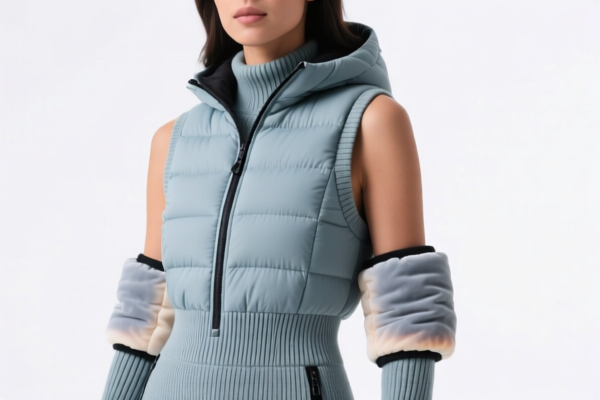


AI Analysis
🧥 Girls' Thickened Sleeveless Ski Jacket with Sleeves (Warm Type)
🌐 HS Code Classification & Duty Guide | 2026 Tariff Breakdown | Strategic Customs Clearance
📌 I. Product Definition & The "Sleeve" Paradox: What Are You Actually Shipping?
This product name presents a critical classification challenge in international trade. The phrase "Sleeveless Ski Jacket with Sleeves" is logically contradictory in standard nomenclature. In customs terms, this usually implies one of two scenarios:
- Scenario A: A True Vest (Sleeveless) Worn Over a Long-Sleeve Shirt: This falls under Chapter 61 or 62 as a "Vest" or "Waistcoat."
- Scenario B: A Quilted/Insulated Jacket where "Sleeveless" was a misnomer: This is a Full-Sleeve Ski Jacket (often knitted or woven), which is the most common "Warm Type" ski apparel.
- Scenario C: A Layering System: A sleeveless vest (e.g., down vest) sold with a detachable or separate set of sleeves, or a "convertible" design.
⚠️ Key Distinction: * If the garment has no sleeves (just a torso and armholes) → It is a Vest. * If the garment has sleeves (even if short or detached) → It is a Jacket/Coat. * Note: If the product is knitted (e.g., fleece/thermal), it falls under Chapter 61. If woven (e.g., nylon/polyester shell), it falls under Chapter 62.
📦 II. HS Code Classification Details (2026 Tariff Analysis)
Based on your input data, the product is classified under Girls' Outerwear (Women's/Girls' garments) made of Chemical Fibers (Man-made fibers). The tax burden is heavily influenced by US-China trade policies (Section 301 & Section 122).
| HS Code | Product Summary | Material & Form | Total Tax Rate | Key Tax Components |
|---|---|---|---|---|
| 6114.30.30.54 | Girls' One-piece/Suits | Knitted, Man-made fibers | 32.4% | Base (14.9%) + Section 301 (7.5%) + Sec 122 (10%) |
| 6112.20.10.40 | Girls' Ski Jacket (Quilted) | Woven, Quilted Vest/Jacket, Man-made | 38.2% | Base (28.2%) + NO Sec 301 (0%) + Sec 122 (10%) |
| 6112.20.10.20 | Girls' Ski Jacket (Knitted) | Knitted, Jacket, Man-made | 45.7% | Base (28.2%) + Sec 301 (7.5%) + Sec 122 (10%) |
| 6211.20.04.40 | Girls' Ski Jacket (Filled) | Woven, Filled, "Other" material | 18.2% | Base (0.7%) + Sec 301 (7.5%) + Sec 122 (10%) |
| 6211.20.58.30 | Girls' Ski Jacket (Other) | Woven, Non-Cotton/Man-made | 38.0% | Base (28.0%) + NO Sec 301 (0%) + Sec 122 (10%) |
🔍 Critical Observation: * Code 6112.20.10.40 offers a strategic advantage: It has 0% Section 301 tax (only 28.2% Base + 10% Sec 122). This implies specific "Quilted" classification might avoid the 7.5% penalty, saving 7.5% total compared to 6112.20.10.20. * Code 6211.20.04.40 is the Lowest Duty (18.2%), but requires proving the base duty is only 0.7% (likely due to specific "filled" or "non-cotton" definitions not subject to the standard 28% base).
💰 III. 2026 Tariff Rate Breakdown (US Market Analysis)
✅ Target Market: United States (US) ✅ Origin: China (CN) ✅ Effective Policy: Post-2025 Trade Restrictions (Section 301 & Section 122)
🎯 Case A: The "High Penalty" Path (Knitted or Woven with 7.5% S301)
- HS Codes:
6114.30.30.54&6112.20.10.20 - Structure:
- Base Duty: 14.9% (Knitted) or 28.2% (Woven)
- Section 301 (Add-on): +7.5% (The "China Penalty")
- Section 122 (Add-on): +10.0% (The "New 2025 Reciprocal Tax")
- Total: 32.4% - 45.7%
- Risk: High. If the garment is considered "Knitted" (Chapter 61) or specific woven categories, the 7.5% surcharge applies.
🎯 Case B: The "Optimized Path" (Quilted/Woven with 0% S301)
- HS Codes:
6112.20.10.40&6211.20.58.30 - Structure:
- Base Duty: 28.2% or 28.0%
- Section 301 (Add-on): 0.0% (Specific exclusion for this category/sub-code)
- Section 122 (Add-on): +10.0%
- Total: 38.0% - 38.2%
- Savings: Saving the 7.5% Section 301 tax significantly impacts margins. Strategy: Ensure the "Quilted" description is accurate to qualify for the
...10.40code.
🎯 Case C: The "Low Duty" Path (Specific Filled/Woven)
- HS Code:
6211.20.04.40 - Structure:
- Base Duty: 0.7% (Exceptionally low, likely due to "Other" classification)
- Section 301: +7.5%
- Section 122: +10.0%
- Total: 18.2%
- Strategy: Highest Priority. If the jacket is "filled" (down/synthetic) and meets the specific "Other" criteria of
6211.20.04, this is the most cost-effective route.
🛠️ IV. Customs Clearance Strategy & Actionable Advice
✅ 1. Documentation & Description "Fixes"
The product name "Sleeveless... with Sleeves" is a customs red flag. You must standardize the commercial invoice and packing list immediately.
| Current (Risky) | Recommended (Safe) | Why? |
|---|---|---|
| "Girls' Thickened Sleeveless Ski Jacket with Sleeves" | "Girls' Quilted Ski Vest" OR "Girls' Insulated Ski Jacket (Woven)" | Removes the logical contradiction. Customs officers hate "confusing" names. |
| "With Sleeves" (implied separate) | Specify if sleeves are detachable or Remove "Sleeves" if it's a vest | If it's a vest, declare it as a "Waistcoat" (6114) or "Other" (6211). If it's a full jacket, declare "Jacket". |
✅ 2. Material Verification (The "Man-made" Factor)
- Knitted vs. Woven: This is the single biggest determinant between 32.4% (6114) and 38.2%+ (6112/6211).
- Knitted (e.g., fleece, thermal knit): Tends to fall under 6114 (Lower Base, but still pays S301).
- Woven (e.g., Nylon/Polyester shell): Falls under 6211/6112.
- Filling: If the jacket contains down or synthetic filling, check if 6211.20.04.40 applies. This code offers the lowest total duty (18.2%).
✅ 3. The "Section 122" Warning (New 2025 Tax)
- All listed codes include a +10.0% "Section 122" tax.
- Implication: This is a mandatory new surcharge on Chinese goods (effective Nov 2025). No optimization can remove this 10%.
- Strategy: Your only lever is to minimize the Base Duty and Section 301 (7.5%) tax.
✅ 4.申报技巧 (Declaration Strategy)
🗣️ The "Golden Rule": "Be Specific, Be Consistent, Match the Sample."
- Scenario 1 (Vest): If the item is truly sleeveless:
- Description: "Girls' Down Vest, Woven, Nylon, 100% Synthetic, Quilted."
- Target Code: 6112.20.10.40 (Aim for the 38.2% rate with no S301).
- Scenario 2 (Full Jacket): If the item has sleeves:
- Description: "Girls' Ski Jacket, Woven, Filled with Synthetic Fiber."
- Target Code: 6211.20.04.40 (Aim for the 18.2% rate if eligible).
📌 V. Common Pitfalls & Solutions (Lessons Learned)
❌ Pitfall 1: Confusing "Sleeveless" with "Short Sleeves" * Result: If you declare "Sleeveless" but the sample has sleeves, Customs will reject the goods or re-classify you to a higher tax bracket. * Fix: Measure the armhole depth. If it covers the shoulder joint, it's a Jacket (Sleeve). If it ends at the armpit, it's a Vest.
❌ Pitfall 2: Ignoring the "Section 122" 10% Tax * Result: Budgeting only for the Base + 301 tax leads to a 10% profit margin gap. * Fix: Add 10% to every calculation immediately.
❌ Pitfall 3: "Woven" vs. "Knitted" Ambiguity
* Result: Knitted items (6114) often have lower base taxes (14.9%) but still pay the 7.5% S301. Woven items (6211) might have higher base (28%) but 0% S301.
* Fix: Calculate the Total Duty for both. Often, the "Woven + No S301" (38.2%) is better than "Knitted + S301" (32.4%? Wait, 14.9+7.5+10=32.4% vs 28.2+0+10=38.2%).
* Correction: Actually, 6114.30.30.54 (32.4%) is cheaper than 6112.20.10.40 (38.2%).
* Strategic Pivot: If the material allows, Classify as Knitted (6114) to save 5.8% compared to the "No S301" Woven option. Unless 6211.20.04.40 (18.2%) applies.
🌍 VI. Quick Comparison Summary
| Scenario | HS Code | Base | S301 | Sec 122 | TOTAL | Recommendation |
|---|---|---|---|---|---|---|
| Knitted (Vest/Suit) | 6114.30.30.54 |
14.9% | 7.5% | 10% | 32.4% | ✅ Good (Low Base) |
| Woven (Quilted) | 6112.20.10.40 |
28.2% | 0.0% | 10% | 38.2% | ⚠️ Average (High Base) |
| Woven (Filled) | 6211.20.04.40 |
0.7% | 7.5% | 10% | 18.2% | 🏆 BEST (Lowest Total) |
| Woven (Other) | 6211.20.58.30 |
28.0% | 0.0% | 10% | 38.0% | ⚠️ Average (High Base) |
🚀 Final Verdict: If your "Thickened" jacket is filled (down/synthetic) and woven, fight for
6211.20.04.40(18.2%). It saves you 14%–20% compared to other options. If it is knitted,6114.30.30.54(32.4%) is your best bet. DO NOT declare it as "Sleeveless with Sleeves." Be decisive: Vest or Jacket.
📣 Call to Action:
Prepare your tech pack today! Confirm if the garment is Knitted or Woven. Check if it has internal filling. Then, select the Lowest Duty Code and draft your invoice accordingly. A single letter in the HS Code description can save thousands in duties!
✨ Professional Customs Clearing Starts with Precision! 💼 Your margins are precious—don't let a 10% "Section 122" tax eat them alive.
Customer Reviews
About HS Code Classification
The Harmonized System (HS) is an internationally standardized nomenclature developed by the World Customs Organization (WCO) to classify traded products. Over 200 countries use the HS system as the basis for customs tariffs, trade statistics, and import/export regulations.
Each HS code follows a hierarchical structure:
- Chapter (2 digits) — Broad category of goods (e.g., Chapter 84: Machinery and Mechanical Appliances)
- Heading (4 digits) — More specific grouping within the chapter
- Subheading (6 digits) — Internationally standardized breakdown, used by all WCO member countries
- National subdivisions (8-10 digits) — Country-specific extensions for further classification, such as US HTSUS 10-digit codes
Correct HS code classification is essential for smooth customs clearance, accurate duty payment, and compliance with trade regulations. Misclassification can lead to customs delays, overpayment of duties, or penalties.
When importing from CN to US, the applicable tariff rates may include:
- Most-Favored-Nation (MFN) rate — The standard duty rate applied to WTO members
- General rate — Applied to countries without trade agreements
- Trade remedy duties — Additional tariffs such as Section 301 (anti-dumping), Section 232 (national security), or countervailing duties
The information provided on this page is for reference purposes only. For official classification, please consult with your local customs authority or a licensed customs broker.