Girls' Winter Warm Overall Pants
CN → US| HS Code | Tariff Rate | Origin | Destination | Doc |
|---|---|---|---|---|
| 6111301000 | 45.7% | CN | US | Official Doc |
| 6209203000 | 32.4% | CN | US | Official Doc |
| 6104631010 | 32.4% | CN | US | Official Doc |
| 6104621010 | 27.8% | CN | US | Official Doc |
| 6204630350 | 32.4% | CN | US | Official Doc |
Product Images
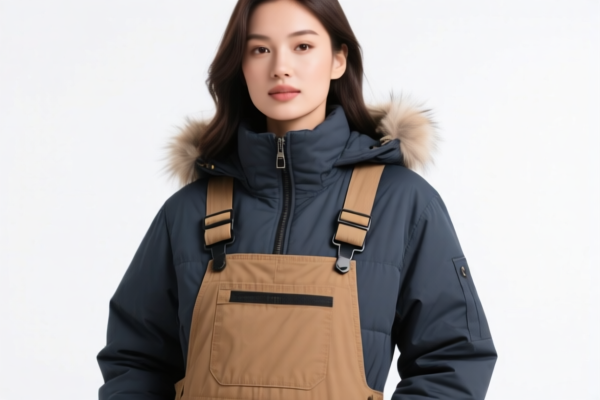
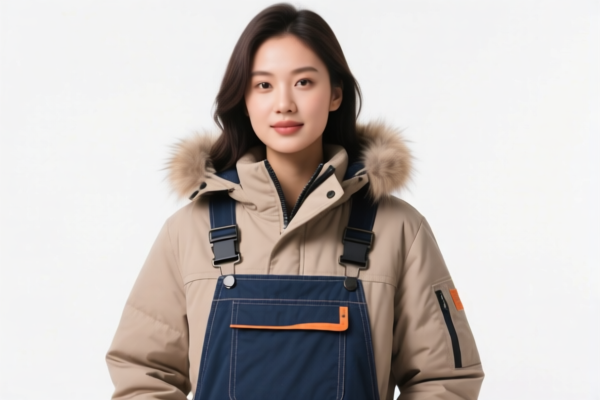
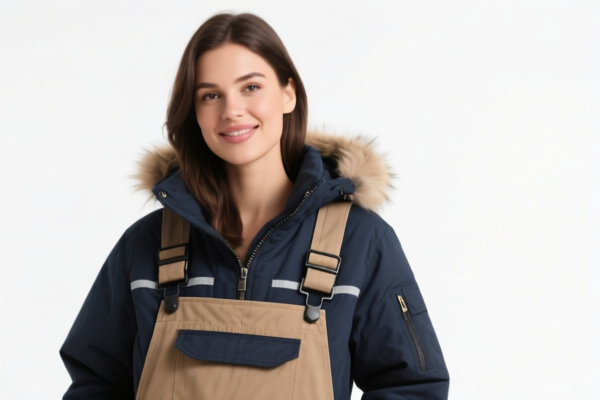

AI Analysis
👗 Girls' Winter Warm Overall Pants (Romper/Bib Pants)
🌐 HS Code Reference & Customs Clearance Guide | 2026 Latest Tariff Analysis | Professional Entry Strategy
📌 1. Product Definition & Classification: Do You Really Understand "Winter Warm Overall Pants"?
Girls' winter warm overall pants (often referred to as bib overalls or rompers) are a specific category of children's apparel designed for cold weather. In international trade, the classification hinges on three critical factors: Fabric Composition, Knitting vs. Weaving, and Specific Design Features.
Key Distinctions: * Knitted/Crocheted (Chapter 61): Made from knitted fabrics (e.g., fleece, jersey, knitted cotton blends). Generally offers better elasticity and comfort. * Woven (Chapter 62): Made from woven fabrics (e.g., denim, twill, non-woven padded materials). Generally more structured and durable. * Material Focus: "Winter Warm" implies thermal lining, fleece, or cotton-padded materials, which often triggers specific material-based subheadings.
⚠️ Critical Classification Point:
- If Knitted/Crocheted → Classify under HS Code 6104 (Girls' suits, ensembles, jackets, blazers, pants, bib and brace overalls...)
- If Woven → Classify under HS Code 6204 (Girls' suits, ensembles, jackets, blazers, dresses, skirts, bloomers, pants, bib and brace overalls...)
- Note: Specific HS codes provided below are derived from potential classifications based on common material types for this product.
📦 2. HS Code Classification Details (Based on Provided Data)
| HS Code | Product Description | Material Inference | Applicability |
|---|---|---|---|
6111.30.10.00 |
Girls'保暖围兜背带裤 (Winter Warm Bib Overall Pants), Clothing Form | Inferred as fiber/fabric-based garment (Overall Pants) | ✅ Knitted/Crocheted |
6209.20.30.00 |
Girls'保暖围兜背带裤 (Winter Warm Bib Overall Pants), Overall Pants Form | Inferred Cotton or Cotton Blend based on warmth features | ✅ Woven |
6104.63.10.10 |
Girls'保暖围兜背带裤 (Winter Warm Bib Overall Pants), Form & Use Match | Inferred Knitted or Synthetic Fiber | ✅ Knitted/Crocheted |
6104.62.10.10 |
Girls'保暖围兜背带裤 (Winter Warm Bib Overall Pants), Form & Use Match | Inferred Cotton or Similar Warm Material | ✅ Knitted/Crocheted |
6204.63.03.50 |
Girls' Overall Pants, Form & Object Match | Material not explicitly specified, no synthetic conflict | ✅ Woven |
🔍 Important Note:
- The choice between Chapter 61 (Knitted) and Chapter 62 (Woven) is the most significant determinant of the HS Code.
- "Winter Warm" often implies added insulation, which may affect the specific sub-heading (e.g., cotton vs. synthetic).
- The provided data suggests multiple possible classifications depending on the exact material composition and manufacturing process.
💰 3. 2026 Latest Tariff Rate Details (Including Additional Taxes & Policy Add-ons)
✅ Applicable Country: United States (US)
✅ Country of Origin: China (CN)
✅ Effective Date: Ongoing (Based on current 122-section & Section 301 tariffs)
🎯 1. 6111.30.10.00 – Girls' Knitted/Crocheted Winter Warm Overall Pants
| Item | Content |
|---|---|
| Basic Tariff Rate | 28.2% |
| Section 301 Additional Tariff | 7.5% |
| Section 122 Additional Tariff | 10% |
| Total Tax Rate | 45.7% |
| Tax Calculation | CIF Value × 45.7% |
| De Minimis Eligibility | ❌ Not Eligible (High tariff rate typically excludes from de minimis benefits) |
| Legal Basis Path | HTSUS:6111.30.10.00 → Section 301 Footnote → Section 122 Footnote |
📌 Explanation:
- Base Tariff (28.2%): Standard US import duty for this specific knitted children's garment.
- Section 301 Tariff (7.5%): Imposed on certain Chinese goods under the 2018 trade action.
- Section 122 Tariff (10%): A temporary additional tariff (if currently applicable) often used for balance of payments or other trade remedies.
- Total 45.7%: This is a high tariff rate. Importers must carefully calculate landed costs.
🎯 2. 6209.20.30.00 – Girls' Woven Winter Warm Overall Pants (Cotton Blend)
| Item | Content |
|---|---|
| Basic Tariff Rate | 14.9% |
| Section 301 Additional Tariff | 7.5% |
| Section 122 Additional Tariff | 10% |
| Total Tax Rate | 32.4% |
| Tax Calculation | CIF Value × 32.4% |
| De Minimis Eligibility | ❌ Not Eligible |
| Legal Basis Path | HTSUS:6209.20.30.00 → Section 301 Footnote → Section 122 Footnote |
📌 Explanation:
- Base Tariff (14.9%): Lower than knitted equivalent (6111) due to different material/fabric classification.
- Total 32.4%: Still a significant burden, but 13.3 percentage points lower than the knitted option (6111).
🎯 3. 6104.63.10.10 – Girls' Knitted Synthetic Fiber Overall Pants
| Item | Content |
|---|---|
| Basic Tariff Rate | 14.9% |
| Section 301 Additional Tariff | 7.5% |
| Section 122 Additional Tariff | 10% |
| Total Tax Rate | 32.4% |
| Tax Calculation | CIF Value × 32.4% |
| De Minimis Eligibility | ❌ Not Eligible |
| Legal Basis Path | HTSUS:6104.63.10.10 → Section 301 Footnote → Section 122 Footnote |
📌 Explanation:
- Base Tariff (14.9%): Same as6209.20.30.00, likely due to specific synthetic fiber classification rules.
- Total 32.4%: Competitive rate if the garment is knitted but made from specific synthetic materials.
🎯 4. 6104.62.10.10 – Girls' Knitted Cotton Overall Pants
| Item | Content |
|---|---|
| Basic Tariff Rate | 10.3% |
| Section 301 Additional Tariff | 7.5% |
| Section 122 Additional Tariff | 10% |
| Total Tax Rate | 27.8% |
| Tax Calculation | CIF Value × 27.8% |
| De Minimis Eligibility | ❌ Not Eligible |
| Legal Basis Path | HTSUS:6104.62.10.10 → Section 301 Footnote → Section 122 Footnote |
📌 Explanation:
- Base Tariff (10.3%): Lowest base tariff among the knitted options, likely due to cotton content preference or specific sub-heading rules.
- Total 27.8%: Most cost-effective knitted option. If the product is knitted, this is the best HS Code for cost optimization.
🎯 5. 6204.63.03.50 – Girls' Woven Overall Pants (Synthetic/Other)
| Item | Content |
|---|---|
| Basic Tariff Rate | 14.9% |
| Section 301 Additional Tariff | 7.5% |
| Section 122 Additional Tariff | 10% |
| Total Tax Rate | 32.4% |
| Tax Calculation | CIF Value × 32.4% |
| De Minimis Eligibility | ❌ Not Eligible |
| Legal Basis Path | HTSUS:6204.63.03.50 → Section 301 Footnote → Section 122 Footnote |
📌 Explanation:
- Base Tariff (14.9%): Standard for woven girls' pants/overalls.
- Total 32.4%: Consistent with other woven/synthetic classifications.
🛠️ 4. Customs Clearance Practical Advice (Real-World Pitfall Avoidance Guide)
✅ 1. Required Documentation Checklist (Essential)
| Document | Required | Notes |
|---|---|---|
| ✅ Product Specification Sheet | ✔️ | Must include fabric composition (e.g., 100% Cotton, 80% Polyester/20% Spandex), knit/weave type, lining material. |
| ✅ Product Photos | ✔️ | Clear images of the front, back, label, and any thermal lining. |
| ✅ Commercial Invoice | ✔️ | Must state "Girls' Winter Warm Overall Pants" and correctly declare HS Code. |
| ✅ Packing List | ✔️ | Include dimensions, weight, and package count. |
| ✅ Certificate of Origin (CO) | ✔️ | Required for any potential duty exemptions (though unlikely for China origin with current tariffs). |
| ✅ Third-Party Test Report | ✔️ | Flammability, formaldehyde, and heavy metal tests may be required for children's apparel. |
✅ 2. Declaration Tips (Key Mnemonic)
🔥 "Knit vs. Weave, Cotton vs. Synthetic, Name it Right, Tax Rate Might!"
| Scenario | Correct Declaration | Wrong Practice |
|---|---|---|
| Knitted, Cotton, Warm | 6104.62.10.10 |
Misdeclare as Woven → 6204.63.03.50 (Same rate, but risk of audit) |
| Knitted, Synthetic, Warm | 6104.63.10.10 |
Misdeclare as 6111.30.10.00 → 45.7% vs 32.4% (Huge difference!) |
| Woven, Cotton, Warm | 6209.20.30.00 |
Misdeclare as Knitted → Classification error |
| Woven, Unknown Material | 6204.63.03.50 |
Vague description → Customs delay |
📌 Note: The difference between
6111.30.10.00(45.7%) and6104.62.10.10(27.8%) is 17.9 percentage points. Accurate material declaration is crucial!
✅ 3. Special Cases
| Case | Handling Advice |
|---|---|
| Mixed Materials | If the garment has multiple layers (e.g., outer woven, inner knitted), classify based on the material imparting the essential character. |
| Accessories Included | If sold with gloves or hats, ensure they are part of the same set. If not, declare separately. |
| OEM Products | Provide design sketches and material bills of materials (BOM) to support classification. |
| Pre-Ruling | Apply for an Advance Ruling from US Customs if the material composition is ambiguous. |
🌍 5. Global Market Customs Comparison (2026 Latest)
| Country/Region | Recommended HS Code | Tariff (China Origin) | Certification | Notes |
|---|---|---|---|---|
| 🇺🇸 USA | 6104.62.10.10 (Best) |
27.8% | CPSIA, Flammability | Highest complexity due to Section 122 & 301 |
| 🇨🇳 China | 6104.62.10.10 |
5% - 10% | CCC (if applicable) | Lower tariffs, easier clearance |
| 🇪🇺 EU | 6104.62.10.10 |
12% - 16% | CE, REACH | No Section 301/122 tariffs |
| 🇬🇧 UK | 6104.62.10.10 |
12% - 16% | UKCA, REACH | Post-Brexit rules apply |
| 🇦🇺 Australia | 6104.62.10.10 |
5% - 10% | ACCC | Low tariffs |
📌 Conclusion:
- USA has the highest effective tariff due to Section 301 (7.5%) and Section 122 (10%).
- Material selection (Cotton vs. Synthetic) and Construction (Knit vs. Woven) are the primary drivers of tariff costs.
- Cotton Knitted (6104.62.10.10) is the most cost-effective option for the US market.
📌 6. Common Mistakes & Pitfall Guide (Lessons Learned)
❌ Mistake 1: Misclassifying Knitted Cotton as 6111.30.10.00
👉 Consequence: 45.7% vs 27.8% → 17.9% higher tax!
👉 Why? 6111 is for "Infants' garments," while 6104 is for "Girls' pants/overalls." Age/Use determination is critical.
❌ Mistake 2: Ignoring Section 122 Tariff
👉 Consequence: Underestimating landed cost by 10%.
👉 Why? Section 122 is a temporary but significant tariff. Always check current applicability.
❌ Mistake 3: Vague Material Description
👉 Consequence: Customs may reclassify, leading to delays, penalties, and higher duties.
👉 Why? "Warm fabric" is not a valid HS code determinant. Must specify "Knitted," "Cotton," "Polyester," etc.
❌ Mistake 4: Assuming De Minimis applies
👉 Consequence: High-value shipments may be stuck at border.
👉 Why? Many high-tariff items are excluded from de minimis benefits. Verify eligibility.
✅ Correct Approach:
"Girls' Winter Warm Bib Overalls, Knitted, 100% Cotton, Lined with Fleece, for Ages 2-10 Years, Model XYZ, CPSIA Compliant"
🎯 7. Conclusion: Precise Classification, Cost Savings!
🎯 Remember the Key Rules:
🔹 "Knit vs. Weave" determines Chapter 61 vs 62.
🔹 "Cotton vs. Synthetic" determines Base Tariff (10.3% vs 14.9% vs 28.2%).
🔹 "Section 301 + Section 122" adds 17.5% to all US-bound goods from China.
🔹 "Best Rate for USA":6104.62.10.10(27.8%) for Knitted Cotton.
📌 Tips:
- If your product is Knitted Cotton, use 6104.62.10.10 for the lowest US tariff (27.8%).
- If Knitted Synthetic, use 6104.63.10.10 (32.4%).
- If Woven, use 6209.20.30.00 or 6204.63.03.50 (32.4%).
- Avoid 6111.30.10.00 (45.7%) unless specifically required by age/category rules.
📣 Immediate Action:
📞 Consult with a Customs Broker + Provide Material Composition + Apply for HS Code Pre-Ruling
🚀 Ensure Smooth Customs Clearance, Efficient Export, and Maximized Profit!
✨ Professional Customs Clearance Starts with Accurate Classification!
💼 Every Cent of Cost Deserves Precise Calculation!
Customer Reviews
About HS Code Classification
The Harmonized System (HS) is an internationally standardized nomenclature developed by the World Customs Organization (WCO) to classify traded products. Over 200 countries use the HS system as the basis for customs tariffs, trade statistics, and import/export regulations.
Each HS code follows a hierarchical structure:
- Chapter (2 digits) — Broad category of goods (e.g., Chapter 84: Machinery and Mechanical Appliances)
- Heading (4 digits) — More specific grouping within the chapter
- Subheading (6 digits) — Internationally standardized breakdown, used by all WCO member countries
- National subdivisions (8-10 digits) — Country-specific extensions for further classification, such as US HTSUS 10-digit codes
Correct HS code classification is essential for smooth customs clearance, accurate duty payment, and compliance with trade regulations. Misclassification can lead to customs delays, overpayment of duties, or penalties.
When importing from CN to US, the applicable tariff rates may include:
- Most-Favored-Nation (MFN) rate — The standard duty rate applied to WTO members
- General rate — Applied to countries without trade agreements
- Trade remedy duties — Additional tariffs such as Section 301 (anti-dumping), Section 232 (national security), or countervailing duties
The information provided on this page is for reference purposes only. For official classification, please consult with your local customs authority or a licensed customs broker.