Girls' Wool Blend Knitted Sweater (Casual Style)
CN → US| HS Code | Tariff Rate | Origin | Destination | Doc |
|---|---|---|---|---|
| 6109901540 | 23.1% | CN | US | Official Doc |
| 6114900540 | 29.5% | CN | US | Official Doc |
| 6114900570 | 29.5% | CN | US | Official Doc |
| 6110190040 | 33.5% | CN | US | Official Doc |
| 6110110040 | 33.5% | CN | US | Official Doc |
Product Images
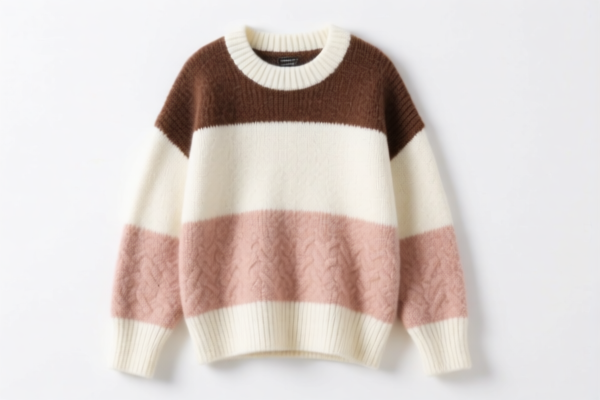
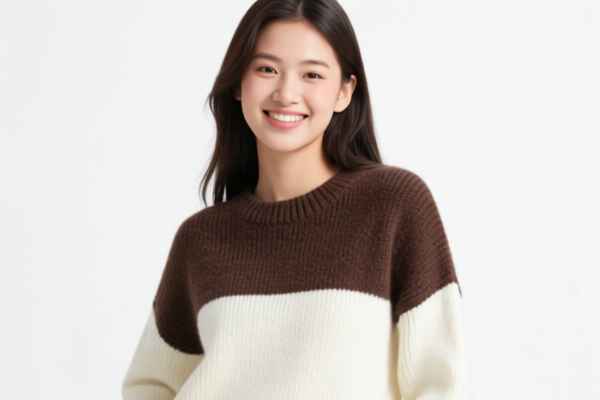
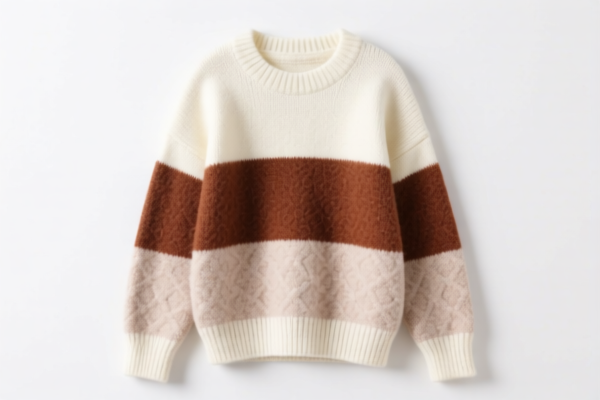

AI Analysis
👕 Girls' Wool Blend Knitted Sweater (Casual Style)
🌐 HS Code Reference & Customs Clearance Guide | 2026 Latest Tariff Analysis | Professional Clearance Strategy
📌 I. Product Definition & Classification: Do You Really Understand "Girls' Knitted Sweaters"?
Girls' wool blend knitted sweaters are essential casual wear items for children, characterized by their knit structure and blended fiber content. In international trade, the classification depends heavily on the specific material composition, knit type, and functional description. Misclassification can lead to significant tariff differences, ranging from 23.1% to 33.5%, due to varying base tariffs and additional duties.
⚠️ Key Distinction:
- If the sweater is described broadly as a "knitted garment" for girls without specifying the exact chapter sub-heading, it often defaults to 6110 (Sweaters, pullovers, etc.), which carries the highest base tariff (16%).
- If classified under 6109 (T-shirts, singlets, etc.) or general 6114 (Other knitted garments), the base tariff is lower (5.6% or 12%), resulting in a lower total tax burden.
- "Wool Blend" is critical: If the wool content is high, it may trigger specific "wool" headings; however, "blend" allows for flexibility in classification between chapters 6109, 6110, and 6114 depending on the garment's design (e.g., T-shirt style vs. formal sweater).
📦 II. HS Code Classification Details (2026 Latest Tariff Authority Comparison)
| HS Code | Product Description | Application Scenario | Total Tax Rate | Base Tariff |
|---|---|---|---|---|
6109.90.15.40 |
Girls' Wool Blend Knitted Garment | Casual wear, T-shirt style, singlets | 23.1% | 5.6% |
6114.90.05.40 |
Girls' Wool Blend Knitted Garment (Upper Body) | General outerwear, casual jackets/cardigans | 29.5% | 12.0% |
6114.90.05.70 |
Girls' Wool Blend Knitted Garment (General) | General clothing items, not specified as sweaters | 29.5% | 12.0% |
6110.19.00.40 |
Girls' Wool Blend Knitted Sweater | Classic sweaters, pullovers, cardigans | 33.5% | 16.0% |
6110.11.00.40 |
Girls' Wool Blend Knitted Sweater (Child) | Formal or semi-formal knitted sweaters for girls | 33.5% | 16.0% |
🔍 Key Reminder:
-6110Heading is the standard for "Sweaters, Pullovers, Cardigans." It has the highest base tariff (16%) and thus the highest total tax (33.5%). Use this only if the item is clearly a structured sweater.
-6109Heading is for "T-shirts, Singlets, and Other Knitted Underwear/Casual Tops." If your "casual style" sweater resembles a T-shirt or has a simple knit structure, this classification (23.1%) is the most tax-efficient.
-6114Heading is a "catch-all" for other knitted garments. If the product doesn't fit strictly into 6109 or 6110, it may fall here (29.5%).
💰 III. 2026 Latest Tariff Rate Breakdown (Including Additional Duties & Policy Surcharges)
✅ Applicable Country: United States (US)
✅ Country of Origin: China (CN)
✅ Effective Date: 2025 November 10 onwards (including subsequent imports)
🎯 1. 6109.90.15.40 —— Girls' Wool Blend Knitted Top (Casual/T-shirt Style)
| Item | Content |
|---|---|
| Base Tariff | 5.6% (ad valorem) |
| Section 301 Additional Duty | +7.5% |
| Section 122 Duty | +10% |
| Total Tax Rate | 23.1% |
| Tax Calculation | CIF Value × 23.1% |
| De Minimis Eligibility | ❌ Not Applicable (Subject to full duties) |
| Legal Basis Path | Base: 6109.90.15.40 → Sec 301: 7.5% → Sec 122: 10% |
📌 Explanation:
- This is the most favorable classification among the options provided.
- The Section 301 Duty (7.5%) and Section 122 Duty (10%) are fixed surcharges on Chinese-origin goods.
- The low base tariff (5.6%) makes the total cost significantly lower than the6110category.
🎯 2. 6114.90.05.40 & 6114.90.05.70 —— Girls' Wool Blend Knitted Garment (Other/Upper Body)
| Item | Content |
|---|---|
| Base Tariff | 12.0% (ad valorem) |
| Section 301 Additional Duty | +7.5% |
| Section 122 Duty | +10% |
| Total Tax Rate | 29.5% |
| Tax Calculation | CIF Value × 29.5% |
| De Minimis Eligibility | ❌ Not Applicable |
| Legal Basis Path | Base: 6114.90.05.x0 → Sec 301: 7.5% → Sec 122: 10% |
📌 Note:
- These codes apply if the garment is considered "other knitted garments" (not specifically a sweater under 6110 or a T-shirt under 6109).
- The base tariff is higher than6109, leading to a 29.5% total rate.
- Useful if the product has complex features that don't fit neatly into 6109 or 6110.
🎯 3. 6110.19.00.40 & 6110.11.00.40 —— Girls' Wool Blend Knitted Sweater (Classic Sweater)
| Item | Content |
|---|---|
| Base Tariff | 16.0% (ad valorem) |
| Section 301 Additional Duty | +7.5% |
| Section 122 Duty | +10% |
| Total Tax Rate | 33.5% |
| Tax Calculation | CIF Value × 33.5% |
| De Minimis Eligibility | ❌ Not Applicable |
| Legal Basis Path | Base: 6110.1x.00.x0 → Sec 301: 7.5% → Sec 122: 10% |
📌 Warning:
- This is the highest tax bracket for this product.
-6110is strictly for "Sweaters, Pullovers, Cardigans." If your product is a "casual" knit top that resembles a T-shirt, do not use this code to avoid overpaying.
-6110.11is for wool sweaters, while6110.19is for other textiles. Since it's a "blend,"6110.19is more appropriate unless wool content >50%.
🛠️ IV. Customs Clearance Practical Advice (Real-World Pitfall Guide)
✅ 1. Required Documentation Checklist (Mandatory)
| Document | Required | Description |
|---|---|---|
| ✅ Product Specification Sheet | ✔️ | Must detail fiber content (e.g., 80% Wool, 20% Polyester), knit type, and size. |
| ✅ Product Photos | ✔️ | Clear images of front, back, label, and any unique features (e.g., hood, zip). |
| ✅ Commercial Invoice | ✔️ | Must specify "Girls' Knitted Sweater" or "Knitted Top" and HS Code. |
| ✅ Packing List | ✔️ | Details packaging, weight, and dimensions. |
| ✅ Origin Certificate | ✔️ | Proof of Chinese origin (if applicable) to confirm surcharges. |
| ✅ Labeling Compliance | ✔️ | Ensure labels meet US FTC requirements (Fiber content, Country of Origin, Care Instructions). |
✅ 2. Declaration Tips (Key Mnemonic)
🔥 "Casual Top? Use 6109! Sweater? Use 6110! Don't Guess, Check the Design!"
| Scenario | Correct Declaration | Error Practice |
|---|---|---|
| Simple knit top, T-shirt style | 6109.90.15.40 (23.1%) |
Declared as 6110 → 33.5% (Overpaid 10.4%) |
| Classic sweater, pullover/cardigan | 6110.19.00.40 (33.5%) |
Declared as 6109 → Risk of Audit/Adjustment |
| Complex garment, unclear category | 6114.90.05.40 (29.5%) |
No documentation → Delay/Seizure |
| Wool Content >50% | 6110.11.00.40 (33.5%) |
Ignored fiber content → Misclassification |
✅ 3. Special Situation Handling
| Situation | Handling Advice |
|---|---|
| OEM Custom Sweaters | Provide customer orders and design specs. Clearly state if it's a "sweater" or "casual top." |
| Mixed Fiber Content | If wool <50%, use 6110.19 (Other textile materials). If wool >50%, use 6110.11 (Wool). |
| "Casual Style" Ambiguity | If the product is a lightweight knit top without heavy structure, argue for 6109 to save 10.4% in taxes. |
| Section 122 & 301 Impact | Both duties apply regardless of classification. Plan for a minimum 23.1% total tax burden. |
🌍 V. Global Market Customs Clearance Comparison (2026 Latest)
| Country/Region | Recommended HS Code | Tariff (Base) | Additional Duties (CN) | Total Rate | Notes |
|---|---|---|---|---|---|
| 🇺🇸 USA | 6109.90.15.40 |
5.6% | Sec 301: 7.5% + Sec 122: 10% | 23.1% | Best for casual tops. |
| 🇺🇸 USA | 6110.19.00.40 |
16.0% | Sec 301: 7.5% + Sec 122: 10% | 33.5% | Standard for sweaters. |
| 🇨🇳 China | 6110.19.00.40 |
16.0% | None | 16.0% | Import tariff for China. |
| 🇪🇺 EU | 6110.19.00.40 |
12% | None | 12% | No Section 301/122 equivalents. |
| 🇦🇺 Australia | 6110.19.00.40 |
5% | None | 5% | Low tariff for apparel. |
| 🇯🇵 Japan | 6110.19.00.40 |
18% | None | 18% | Standard tariff. |
📌 Conclusion:
- The US market has the highest effective tax rate due to Section 301 and Section 122 surcharges.
- Classification matters: Choosing6109over6110can save 10.4% in total taxes.
- Non-US markets (EU, Australia, Japan) do not have these additional surcharges, making the base tariff the primary cost factor.
📌 VI. Common Errors & Pitfall Guide (Lessons from Experience)
❌ Error 1: Classifying all knitted tops as 6110 (Sweaters)
👉 Consequence: Paying 33.5% instead of 23.1% → 10.4% overpayment on every unit.
❌ Error 2: Failing to specify "Girls'" in the description
👉 Consequence: Customs may classify as unisex or adult, leading to different duty rates or rejection.
❌ Error 3: Ignoring Fiber Content in "Wool Blend"
👉 Consequence: If wool content is <50%, 6110.11 is incorrect. Use 6110.19 to avoid penalties.
❌ Error 4: Not accounting for Section 122 and 301 in cost calculations
👉 Consequence: Profit margins erased by unexpected 17.5% additional duties (7.5% + 10%).
✅ Correct Practice:
"Girls' Wool Blend Knitted Casual Top, 80% Wool/20% Poly, T-Shirt Style, Model XYZ, Labeled for US Market"
🎯 VII. Conclusion: Professional Declaration, Save Time, Cut Costs!
🎯 Remember the Mnemonic:
🔹 "Casual Top? 6109 (23.1%)! Sweater? 6110 (33.5%)! Don't Guess, Check the Design!"
🔹 "HS Code Determines Tax, 10% Difference is Real, Wrong Code Means Higher Cost!"
📌 Pro Tip:
If your product is a lightweight, casual knit top that resembles a T-shirt or singlet, aggressively advocate for 6109.90.15.40. This classification saves you 10.4% in total taxes compared to the standard sweater classification. Ensure your product photos and descriptions emphasize the "casual," "T-shirt-like" nature of the garment.
📣 Immediate Action:
📞 Contact a professional customs broker + Provide Product Images + Apply for HS Code Advance Ruling
🚀 Ensure your sweaters clear customs smoothly, reduce costs, and maximize profits!
✨ Professional Clearance Starts with Accurate Classification!
💼 Every Cent of Your Cost Deserves Precision!
Customer Reviews
About HS Code Classification
The Harmonized System (HS) is an internationally standardized nomenclature developed by the World Customs Organization (WCO) to classify traded products. Over 200 countries use the HS system as the basis for customs tariffs, trade statistics, and import/export regulations.
Each HS code follows a hierarchical structure:
- Chapter (2 digits) — Broad category of goods (e.g., Chapter 84: Machinery and Mechanical Appliances)
- Heading (4 digits) — More specific grouping within the chapter
- Subheading (6 digits) — Internationally standardized breakdown, used by all WCO member countries
- National subdivisions (8-10 digits) — Country-specific extensions for further classification, such as US HTSUS 10-digit codes
Correct HS code classification is essential for smooth customs clearance, accurate duty payment, and compliance with trade regulations. Misclassification can lead to customs delays, overpayment of duties, or penalties.
When importing from CN to US, the applicable tariff rates may include:
- Most-Favored-Nation (MFN) rate — The standard duty rate applied to WTO members
- General rate — Applied to countries without trade agreements
- Trade remedy duties — Additional tariffs such as Section 301 (anti-dumping), Section 232 (national security), or countervailing duties
The information provided on this page is for reference purposes only. For official classification, please consult with your local customs authority or a licensed customs broker.