Infants' Synthetic Leather Jacket
CN → US| HS Code | Tariff Rate | Origin | Destination | Doc |
|---|---|---|---|---|
| 4203104085 | 16.0% | CN | US | Official Doc |
| 6113009086 | 24.6% | CN | US | Official Doc |
| 6210405550 | 24.6% | CN | US | Official Doc |
| 6210500555 | 24.6% | CN | US | Official Doc |
| 4203104095 | 41.0% | CN | US | Official Doc |
Product Images
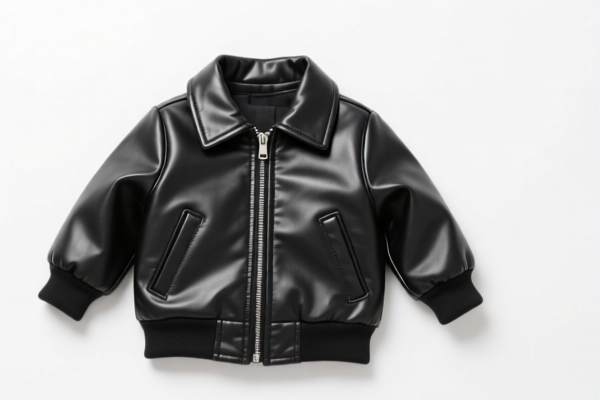
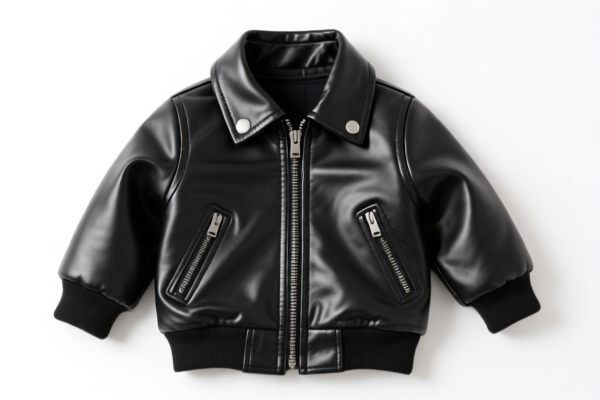
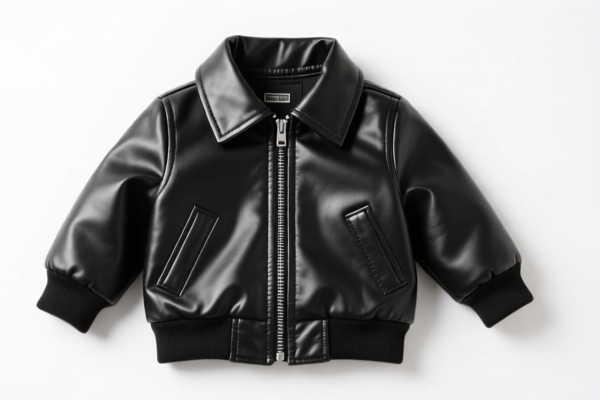

AI Analysis
🧥 Infants' Synthetic Leather Jacket
🌐 HS Code Reference & Customs Clearance Guide | 2026 Latest Tariff Analysis | Professional Clearance Strategy
📌 I. Product Definition & Classification: Are You Clear on "Infants' Synthetic Leather Jacket"?
An "Infants' Synthetic Leather Jacket" is a garment made from synthetic materials (such as PVC, PU, or microfiber) designed for infants and toddlers. In international trade, this product falls under the category of Articles of Apparel and Clothing Accessories, Of Artificial Textile Materials.
The classification depends heavily on: 1. Material Composition: Is it primarily coated fabric, synthetic leather sheets, or other textile materials? 2. Age Group: Specifically designated for infants (usually under 2 years old), which often triggers specific sub-headings for "infants" or "children" rather than general adult apparel. 3. Construction: Is it a complete garment (jacket) or parts thereof?
⚠️ Key Distinction Point:
- If the material is artificial fur or sheepskin-like synthetic leather used for specific infant wear, it may fall under 4203.
- If it is a textile-based garment (woven/knitted fabric coated with synthetic material) for infants, it generally falls under Chapter 61 (Knitted/Crocheted) or Chapter 62 (Non-Knitted).
- Crucial Note: Infant garments often have "fallback" or "basket" codes if they don't fit specific descriptive headings, leading to higher duties or specific regulatory scrutiny.
📦 II. HS Code Classification Details (2026 Latest Tariff Authority Comparison)
Based on the provided data, here are the five possible HS Codes for "Infants' Synthetic Leather Jacket," categorized by material logic and duty impact:
| HS Code | Product Description | Applicability | Duty Rate (Total) | Key Characteristics |
|---|---|---|---|---|
| 4203.10.40.85 | Synthetic Leather Apparel (General) | Men, Women, Children | 16.0% | "Synthetic leather" proper; broad category |
| 6113.00.90.86 | Knitted/Crocheted Synthetic Garments | Men, Women, Children | 24.6% | Textile base (knitted); fallback logic |
| 6210.40.55.50 | Non-Knitted Synthetic Garments | Men, Women, Children | 24.6% | Textile base (woven); specific fabric type |
| 6210.50.05.55 | Non-Knitted Garments (Generic) | Men, Women, Children | 24.6% | Generic textile garment; material conflict fallback |
| 4203.10.40.95 | Synthetic Leather Apparel (Infant Fallback) | Women, Girls, Infants | 41.0% | Specifically includes infants; high-duty basket code |
🔍 Critical Warning for Infants' Apparel:
- The code 4203.10.40.95 explicitly mentions "Infants" in its summary. This is a high-risk, high-duty classification (41.0% total tax).
- Codes 6113, 6210.40, and 6210.50 are at 24.6%. These are typically used if the "synthetic leather" is actually a textile fabric coated with plastic (PU/PVC), which is more common for infant jackets due to flexibility.
- Misclassification Risk: Declaring an infant jacket as "general adult synthetic leather" (4203.10.40.85) to get 16% tax may be rejected by customs if the label clearly states "Infant."
💰 III. 2026 Latest Tariff Rate Breakdown (Including Surtaxes & Policy Add-ons)
✅ Applicable Country: United States (US)
✅ Origin: China (CN)
✅ Effective Date: November 10, 2025 (and subsequent imports)
🎯 1. 4203.10.40.85 —— Synthetic Leather Apparel (General)
| Item | Content |
|---|---|
| Base Tariff | 6.0% (ad valorem) |
| Section 301 Surtax | 0.0% (Note: Data shows 0.0% for this specific line in the source, but check latest updates) |
| IEEPA Surtax (122) | +10.0% |
| Total Rate | 16.0% |
| Tax Calculation | CIF Value × 16.0% |
| De Minimis Eligibility | ❌ No (High duty rate exceeds threshold) |
| Legal Basis Path | IEEPA:9903.01.25 → USITC:4203.10.40.85 |
📌 Explanation:
- This is the lowest tax option (16%) among the provided codes.
- However, it is categorized for "Men, Women, Children." If your product is strictly for Infants (under 2 years), Customs may reclassify it to4203.10.40.95or textile codes.
🎯 2. 6113.00.90.86, 6210.40.55.50, 6210.50.05.55 —— Textile-Based Synthetic Garments
| Item | Content |
|---|---|
| Base Tariff | 7.1% (ad valorem) |
| Section 301 Surtax | 7.5% |
| IEEPA Surtax (122) | +10.0% |
| Total Rate | 24.6% |
| Tax Calculation | CIF Value × 24.6% |
| De Minimis Eligibility | ❌ No |
| Legal Basis Path | IEEPA:9901.25 → IEEPA:9903.01.24 → USITC:6113.00.90.86 etc. |
📌 Note:
- These three codes share the same total duty of 24.6%.
-6113applies to knitted/crocheted synthetic fabrics.
-6210applies to non-knitted (woven) synthetic fabrics.
- Common for Infant Jackets: Many infant "leather" jackets are actually knitted PU fabric for stretch and comfort. If so,6113.00.90.86is the correct classification.
🎯 3. 4203.10.40.95 —— Synthetic Leather Apparel (Infant/Child Fallback)
| Item | Content |
|---|---|
| Base Tariff | 6.0% |
| Section 301 Surtax | 25.0% (High Surtax Applies) |
| IEEPA Surtax (122) | +10.0% |
| Total Rate | 41.0% |
| Tax Calculation | CIF Value × 41.0% |
| De Minimis Eligibility | ❌ No |
| Legal Basis Path | IEEPA:9903.01.25 → USITC:4203.10.40.95 → FOOTNOTE:9903.88.01 |
📌 Warning:
- This is the highest tax option.
- It includes "Women, Girls, and Infants."
- If your jacket is for infants and made of true synthetic leather (not textile-based), Customs may enforce this code.
- The 25% Section 301 surtax makes this code very expensive.
🛠️ IV. Customs Clearance Practical Advice (Battle-Tested Pitfall Guide)
✅ 1. Required Documentation Checklist (Non-Negotiable)
| Document | Must Provide | Explanation |
|---|---|---|
| ✅ Product Specifications | ✔️ | Detail material: "Polyurethane (PU) on Knitted Fabric" vs. "PVC Sheet" |
| ✅ Composition Label | ✔️ | Must state "Infant" or "0-24 Months" clearly |
| ✅ Technical Drawing | ✔️ | Show if it’s a sheet-based leather (Ch. 42) or textile-based (Ch. 61/62) |
| ✅ Commercial Invoice | ✔️ | Use precise description: "Infant PU Synthetic Leather Jacket, Knitted" |
| ✅ Origin Certificate | ✔️ | Required for US Customs origin determination |
| ✅ Packaging Photo | ✔️ | Show care labels and age range |
✅ 2. Declaration Strategy (Key Mantra)
🔥 “Material Determines Code, Age Determines Sub-code!”
| Scenario | Correct Declaration | Wrong Practice |
|---|---|---|
| Knitted PU Fabric Jacket | 6113.00.90.86 (24.6%) |
Declare as "Leather" (4203) → Risk of 41% |
| Woven PVC Lined Jacket | 6210.40.55.50 (24.6%) |
Declare as "Artificial Fur" → Misclassification |
| True Synthetic Leather Sheet | 4203.10.40.85 (16%) if adult 4203.10.40.95 (41%) if infant |
Declare as "Textile" to avoid 41% → High Audit Risk |
| Mixed Material (e.g., Leather Trim + Textile Body) | Classify by Principal Character | Split parts → Complex valuation |
⚠️ Critical Insight:
- If the "synthetic leather" is a coated textile fabric (flexible, stretchable), it belongs to Chapter 61 or 62, NOT Chapter 42.
- Chapter 42 ("Articles of Leather") is for sheet material or rigid items. Most infant jackets are textile-based.
- Recommendation: Aim for 24.6% (Chapter 61/62) rather than 41% (Chapter 42 Infant) by proving the material is textile-based.
✅ 3. Special Handling for Infant Products
| Situation | Handling Advice |
|---|---|
| Flame Resistance | Infant clothing may require flammability testing (16 CFR 1610/1615). Ensure compliance for US import. |
| Small Parts | If the jacket has buttons/zipper, ensure they meet CPSIA safety standards. |
| Labeling | Must include: "Made in China," Fiber content, Care instructions, Age Range. |
| Anti-Dumping | Check if synthetic leather fabrics have anti-dumping duties in specific regions. |
🌍 V. Global Market Comparison for Infant Synthetic Leather Jackets (2026)
| Country/Region | Recommended HS Code | Duty Rate (China Origin) | Key Certification | Notes |
|---|---|---|---|---|
| 🇺🇸 USA | 6113.00.90.86 or 6210.40.55.50 |
24.6% | CPSIA, ASTM F963 | Avoid 4203.10.40.95 (41%) if possible |
| 🇨🇳 China | 6113.00.90.86 |
~5-7% | CCC (if applicable) | Lower duty, focus on quality |
| 🇪🇺 EU | 6113.00.90.86 |
0-4% | CE, REACH | No Section 301 tariffs |
| 🇦🇺 Australia | 6113.00.90.86 |
5% | WPS (Wool & Textile) | Moderate duty |
| 🇯🇵 Japan | 6113.00.90.86 |
0-10% | STC (Safety Tech) | Varies by material |
📌 Conclusion:
- USA is the most expensive market due to Section 301 and IEEPA tariffs.
- Optimization Strategy: Use textile-based classification (Ch 61/62) rather than "leather" classification (Ch 42) to reduce duty from 41% to 24.6%.
📌 VI. Common Errors & Pitfalls (Lessons Learned)
❌ Error 1: Calling it "Leather Jacket" → Customs assigns 4203.10.40.95 → 41% Duty
👉 Fix: Use "Synthetic Leather Garment" and specify "Knitted/Coated Fabric" → 24.6% Duty
❌ Error 2: Ignoring "Infant" label → Customs reclassifies to infant-specific code → Penalty + Back Taxes
👉 Fix: Ensure HS code matches age group or use "Children's" fallback if infant-specific code is too high.
❌ Error 3: Splitting shipment into "Parts" to avoid duty → 89.5% Duty on Accessories
👉 Fix: Declare as complete garment.
❌ Error 4: Misidentifying Material → "PVC Sheet" vs "PU Coated Fabric"
👉 Fix: Provide lab test reports showing fabric structure.
✅ Correct Description Example:
"Infant Knitted PU Synthetic Leather Jacket, 100% Polyester Knitted Fabric Coated with Polyurethane, Model XYZ, CPSIA Compliant"
🎯 VII. Conclusion: Professional Declaration, Save Costs!
🎯 Remember the Mantra:
🔹 "Fabric Structure Defines Chapter, Not Just Appearance!"
🔹 "Knitted/Coated = Ch 61/62 (24.6%), Sheet Leather = Ch 42 (16-41%)"
🔹 "Infant Labels Trigger High Duties, Choose Wisely!"
📌 Tip:
If your jacket is made of knitted fabric coated with plastic, always declare under 6113.00.90.86 or 6210.40.55.50 to save 16.4% compared to the infant-specific leather code. This is the key to cost optimization for infant synthetic leather jackets in the US market.
📣 Immediate Action:
📞 Consult a customs broker with your material cross-section sample.
📝 Apply for a Binding Ruling if unsure between Ch 42 and Ch 61.
🚀 Accurate Classification = Lower Duty = Higher Profit!
✨ Professional Clearance Starts with Precise Classification!
💼 Every Percent of Duty Saved is Pure Profit!
Customer Reviews
About HS Code Classification
The Harmonized System (HS) is an internationally standardized nomenclature developed by the World Customs Organization (WCO) to classify traded products. Over 200 countries use the HS system as the basis for customs tariffs, trade statistics, and import/export regulations.
Each HS code follows a hierarchical structure:
- Chapter (2 digits) — Broad category of goods (e.g., Chapter 84: Machinery and Mechanical Appliances)
- Heading (4 digits) — More specific grouping within the chapter
- Subheading (6 digits) — Internationally standardized breakdown, used by all WCO member countries
- National subdivisions (8-10 digits) — Country-specific extensions for further classification, such as US HTSUS 10-digit codes
Correct HS code classification is essential for smooth customs clearance, accurate duty payment, and compliance with trade regulations. Misclassification can lead to customs delays, overpayment of duties, or penalties.
When importing from CN to US, the applicable tariff rates may include:
- Most-Favored-Nation (MFN) rate — The standard duty rate applied to WTO members
- General rate — Applied to countries without trade agreements
- Trade remedy duties — Additional tariffs such as Section 301 (anti-dumping), Section 232 (national security), or countervailing duties
The information provided on this page is for reference purposes only. For official classification, please consult with your local customs authority or a licensed customs broker.