Men's Cotton T Shirt
CN → US| HS Code | Tariff Rate | Origin | Destination | Doc |
|---|---|---|---|---|
| 6109100004 | 34.0% | CN | US | Official Doc |
| 6109100012 | 34.0% | CN | US | Official Doc |
| 6110202079 | 34.0% | CN | US | Official Doc |
Product Images
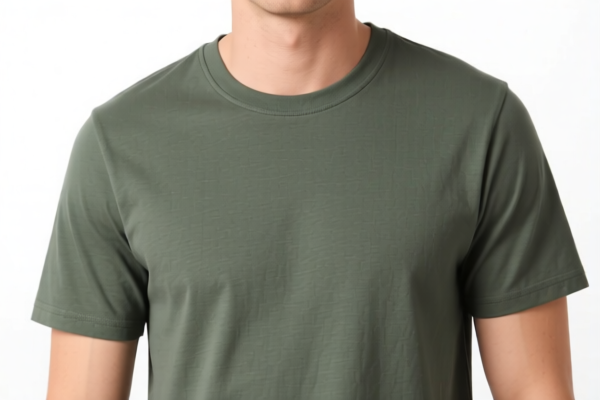
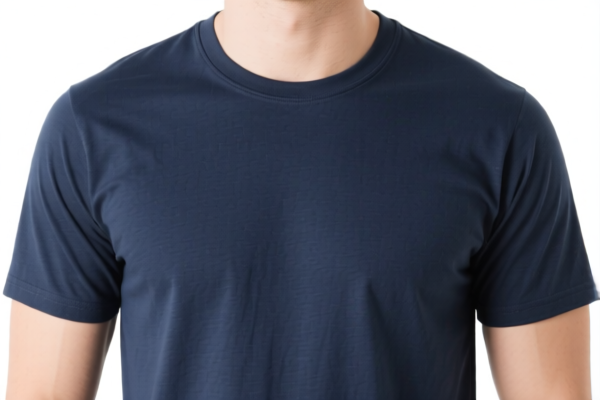
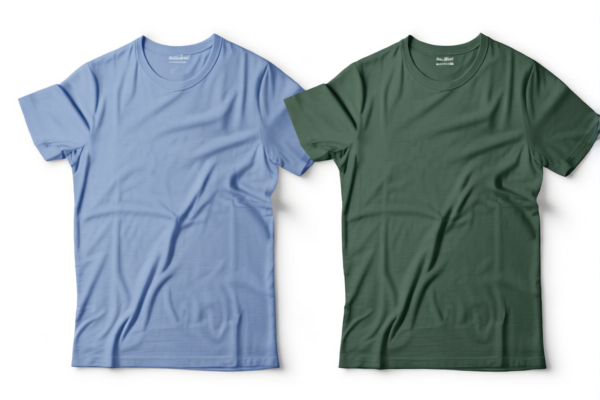
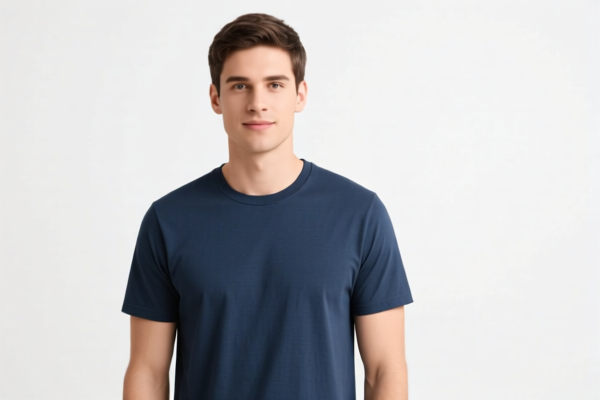
AI Analysis
👕 Men's Cotton T-Shirt: The Ultimate Import & Customs Classification Guide
🌐 HS Code Reference & Customs Clearance Guide | 2026 Latest Tariff Analysis | Professional Clearance Strategy
📌 I. Product Definition & Classification: Do You Really Understand "Cotton T-Shirts"?
Men's Cotton T-Shirts are the most fundamental staple in global apparel trade. However, in international customs classification, material composition and knitting method determine the HS Code, which in turn dictates the entire tax burden.
According to the provided data, these items fall under Chapter 61 (Articles of Apparel and Clothing Accessories, knitted or crocheted). The specific classification depends on whether the item is strictly defined as a T-shirt (6109) or classified broadly as a similar knitted article (6110).
⚠️ Critical Distinction:
- T-Shirts (6109): Specifically designed T-shirts with defined necklines and sleeve structures. This is the most precise classification for standard men's T-shirts.
- Similar Knitted Articles (6110): If the garment lacks specific T-shirt characteristics or is classified as a general pullover/sweater-like knitted item, it may fall here.
- Material Note: All listed HS codes below specify "Cotton" (100% Cotton or primarily Cotton). If the material contains synthetic fibers, these codes are invalid.
📦 II. HS Code Classification Details (2026 Latest Tariff Authority Comparison)
| HS Code | Product Description | Application Scenario | Classification Logic |
|---|---|---|---|
6109.10.00.04 |
Men's Cotton T-shirt, Material: Cotton, Form: T-shirt | Standard retail men's T-shirts, 100% cotton, plain or printed | ✅ Precise Match: Explicitly identifies "T-shirt" form and "Cotton" material. |
6109.10.00.12 |
Men's Cotton T-shirt, Material & Form meet classification requirements | High-volume basic tees, compliant with specific subheading criteria | ✅ Compliant: Confirms both material (Cotton) and form (T-shirt) align with Chapter 61 Headings. |
6110.20.20.79 |
Men's Cotton T-shirt, Belongs to Knitted/Crocheted Similar Articles | T-shirts that might be structurally similar to sweaters or lack specific T-shirt definition in certain jurisdictions | ⚠️ Alternative: Used if the item is considered a "similar article" rather than a strict T-shirt under heading 6109. |
🔍 Key Insight:
-6109is the primary heading for T-shirts.
-6110is for "Sweaters, pullovers, cardigans... and similar articles." If a "T-shirt" is thick, heavy, or has a crew neck similar to a lightweight sweater, customs may misclassify it under6110.
- All three codes share the same total tax rate in this dataset, indicating that the tariff impact is identical regardless of the slight classification nuance, likely due to specific trade policies applied to Chinese-origin cotton apparel.
💰 III. 2026 Latest Tariff Rate Breakdown (Including Additional Duties & Policy Surcharges)
✅ Applicable Country: United States (US)
✅ Origin: China (CN) (Implied by the specific combination of tariffs and "122 Clause")
✅ Effective Time: Current Active Regime
🎯 1. Unified Tariff Structure for All Listed HS Codes
| HS Code | Product Description | Base Tariff | Section 301 (Additional) | Section 122 Tariff | Total Tax Rate |
|---|---|---|---|---|---|
6109.10.00.04 |
Men's Cotton T-shirt | 16.5% | 7.5% | 10% | 34.0% |
6109.10.00.12 |
Men's Cotton T-shirt | 16.5% | 7.5% | 10% | 34.0% |
6110.20.20.79 |
Men's Cotton T-shirt | 16.5% | 7.5% | 10% | 34.0% |
📌 Detailed Breakdown of the 34% Total Tax:
1. Base Tariff: 16.5%
- Source: Standard Most Favored Nation (MFN) rate for knitted cotton T-shirts under Heading 6109.
- Explanation: This is the baseline WTO-compliant tariff for cotton apparel.
2. Additional Tariff (Section 301): 7.5%
- Source: US Trade Representative (USTR) Section 301 Investigation.
- Explanation: A surcharge imposed on a wide range of Chinese-manufactured goods, including textiles and apparel, to address unfair trade practices.
3. Section 122 Tariff: 10%
- Source: Section 122 of the Trade Act of 1974.
- Explanation: This tariff is applied for national defense reasons or to protect domestic industry from imports that threaten to impair national security. It is a less common but highly impactful surcharge on specific textile imports from China.
🚨 Total Cost Impact:
For every $100 CIF (Cost, Insurance, and Freight) value, you must pay $34.00 in duties/taxes. This is a significant cost burden that directly reduces profit margins.✅ De Minimis Exemption:
❌ Not Eligible.
Shipments under $800 (Section 321) DO NOT exempt these goods from tariffs because: 1. They are classified under headings subject to Section 301 and Section 122. 2. Textile/apparel items often have specific exclusions from de minimis relief when subject to additional duties.
🛠️ IV. Customs Clearance Practical Advice (Avoid Pitfalls)
✅ 1. Documentation Checklist (Non-Negotiable)
| Document | Required? | Why? |
|---|---|---|
| ✅ Commercial Invoice | ✔️ | Must clearly state "Men's Cotton T-Shirt," material content (e.g., "100% Cotton"), and HS Code. |
| ✅ Packing List | ✔️ | Details quantity per carton, total pieces, and gross/net weight. |
| ✅ Bill of Lading (B/L) | ✔️ | Proof of shipment and title transfer. |
| ✅ Certificate of Origin (CO) | ✔️ | Critical. Must be issued by the exporter/producer to confirm China Origin. Misdeclaration of origin can lead to severe penalties. |
| ✅ Product Description & Photos | ✔️ | High-res images showing labels, fabric close-up, and garment shape to prove it is a "T-shirt" and not a "sweater." |
| ✅ Tariff Exclusion Proof (if any) | ✔️ | If you have an exclusion number for Section 301, include it. (Note: Most cotton T-shirts are not excluded.) |
✅ 2. Classification Strategy & Risk Mitigation
| Scenario | Correct Action | Risk of Error |
|---|---|---|
| Standard Cotton T-Shirt | Use 6109.10.00.04 or 6109.10.00.12 |
Low risk if description is accurate. |
| Thick/Fleece Lined "T-Shirt" | Consider 6110.20.20.79 if classified as "similar article" |
Risk: If customs disagrees, they may reassess or penalize. Ensure consistency. |
| Blended Fabric (e.g., 95% Cotton, 5% Poly) | DO NOT use these codes. Use codes for "Other Textile Materials." | High Risk: Using cotton codes for blended fabric leads to misdeclaration, fines, and seizure. |
| Importing from Vietnam/Mexico | Ensure CO shows non-China origin. | Reward: May avoid Section 301 and Section 122 tariffs if rules of origin are met. |
✅ 3. Special Note on Section 122 Tariffs
🔥 Section 122 is a "National Security" tariff.
It is not a standard trade remedy. Customs officers scrutinize these shipments closely.
Advice:
- Ensure your Exporter of Record is clearly identified.
- Be prepared to answer questions about end-use (even if it's retail, have invoices ready).
- Do not attempt to re-route shipments to avoid origin marking if the product is indeed made in China. This is considered smuggling.
🌍 V. Global Market Comparison (2026)
| Market | Recommended HS Code | Estimated Total Tariff (China Origin) | Notes |
|---|---|---|---|
| 🇺🇸 USA | 6109.10.00.04 / 6110.20.20.79 |
34.0% (16.5% Base + 7.5% Sec 301 + 10% Sec 122) | Highest burden. Plan pricing accordingly. |
| 🇨🇳 China | 6109.10.00.04 |
~20-25% (Import Duty + VAT) | For domestic sales, not relevant for import. |
| 🇪🇺 EU | 6109.10.00.00 |
~12% (Standard MFN) | No Section 301/122. Significantly cheaper than US. |
| 🇬🇧 UK | 6109.10.00.00 |
~12% | Post-Brexit rules apply. |
| 🇨🇦 Canada | 6109.10.00.00 |
~17% | CUSMA rules may apply if Canadian origin. |
📌 Conclusion:
The US market is exceptionally expensive for cotton T-shirts from China due to the additive nature of Base, Section 301, and Section 122 tariffs.
- Strategy: If targeting the US, consider sourcing from non-China countries (Vietnam, Bangladesh, Cambodia) to avoid these additional duties.
- Alternative: If the product is not made in China, ensure the Certificate of Origin is robustly verified to claim MFN rates only (no Sec 301/122).
📌 VI. Common Mistakes & Pitfalls (Lessons Learned)
❌ Mistake 1: Assuming "T-shirt" automatically means low tariff.
👉 Reality: Cotton T-shirts from China face 34% total tariffs in the US. This is not a "low duty" category.
❌ Mistake 2: Using 6109 for a Polyester T-Shirt.
👉 Consequence: Misclassification. Polyester falls under different HS codes (e.g., 6109.90). Penalties include back-taxes and fines.
❌ Mistake 3: Ignoring Section 122.
👉 Consequence: If you only account for Base + Sec 301 (24%), you will be underpaid by 10%, leading to customs audits and delays.
❌ Mistake 4: Shipping "Personal Effects" to avoid $800 de minimis.
👉 Consequence: CBP has cracked down on de minimis abuse. Large volumes of cotton apparel are flagged regardless of value.
✅ Best Practice:
"Declare Accurately, Origin Clearly, and Price for 34%."
🎯 VII. Conclusion: Professional Clearance, Cost Control, Efficiency
🎯 Key Takeaways:
🔹 Total Tax is 34%: Do not underestimate this. It includes Base (16.5%), Sec 301 (7.5%), and Sec 122 (10%).
🔹 HS Code Precision: Use6109for standard T-shirts. Use6110only if structurally similar to sweaters.
🔹 Origin is Key: China origin triggers all three tariffs. Non-China origin may reduce costs significantly.
🔹 Documentation: A clear Commercial Invoice and Certificate of Origin are your best defense against audits.
📌 Pro Tip:
If you are importing large volumes (>100 units), consider pre-clearance rulings or working with a licensed customs broker to verify the exact HTSUS subheading for your specific product type. The difference between
6109and6110might seem minor, but consistency is vital for avoiding seizures.
📣 Immediate Action:
📞 Contact a Customs Broker + Verify Origin + Calculate 34% in Pricing Model
🚀 Ensure your T-shirts clear US Customs without delays, fines, or surprises!
✨ Precision in Classification, Profit in Margin!
💼 Every percentage point of duty counts in apparel trade.
Customer Reviews
About HS Code Classification
The Harmonized System (HS) is an internationally standardized nomenclature developed by the World Customs Organization (WCO) to classify traded products. Over 200 countries use the HS system as the basis for customs tariffs, trade statistics, and import/export regulations.
Each HS code follows a hierarchical structure:
- Chapter (2 digits) — Broad category of goods (e.g., Chapter 84: Machinery and Mechanical Appliances)
- Heading (4 digits) — More specific grouping within the chapter
- Subheading (6 digits) — Internationally standardized breakdown, used by all WCO member countries
- National subdivisions (8-10 digits) — Country-specific extensions for further classification, such as US HTSUS 10-digit codes
Correct HS code classification is essential for smooth customs clearance, accurate duty payment, and compliance with trade regulations. Misclassification can lead to customs delays, overpayment of duties, or penalties.
When importing from CN to US, the applicable tariff rates may include:
- Most-Favored-Nation (MFN) rate — The standard duty rate applied to WTO members
- General rate — Applied to countries without trade agreements
- Trade remedy duties — Additional tariffs such as Section 301 (anti-dumping), Section 232 (national security), or countervailing duties
The information provided on this page is for reference purposes only. For official classification, please consult with your local customs authority or a licensed customs broker.