Men's Faux Leather Clothing
CN → US| HS Code | Tariff Rate | Origin | Destination | Doc |
|---|---|---|---|---|
| 3926209050 | 40.0% | CN | US | Official Doc |
| 3926909000 | 0.0% | CN | US | Official Doc |
| 4203104030 | 41.0% | CN | US | Official Doc |
| 4203104085 | 41.0% | CN | US | Official Doc |
| 6210401500 | 21.3% | CN | US | Official Doc |
| 6210402800 | 20.8% | CN | US | Official Doc |
Product Images
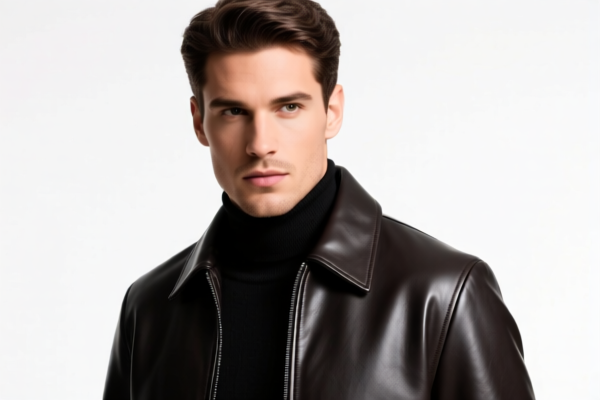

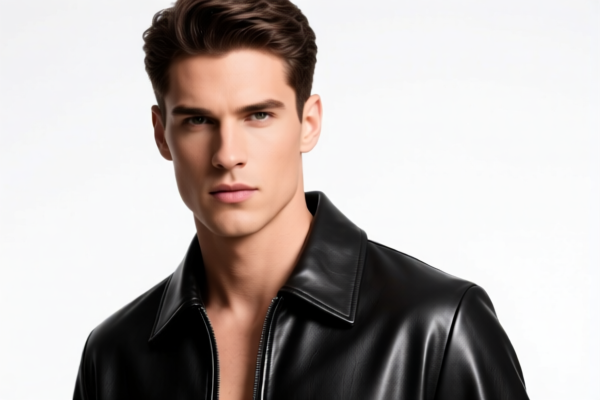
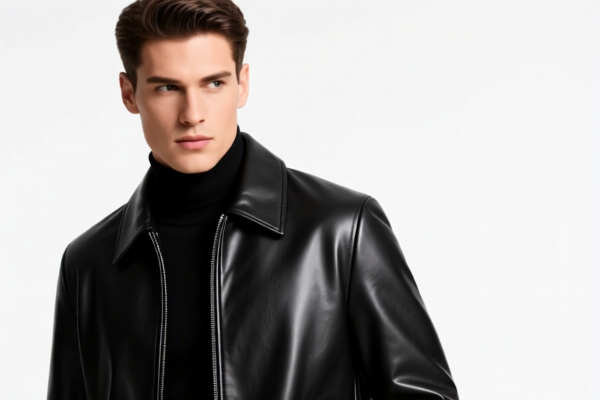
AI Analysis
🧥 Men's Faux Leather Clothing: The Ultimate Classification & Duty Guide (2026)
🌐 HS Code Reference & Customs Clearance Guide | 2026 Latest Tariff Analysis | Professional Strategy
📌 I. Product Definition & Classification: What Exactly is "Faux Leather"?
"Men's Faux Leather Clothing" is a broad category in international trade that can lead to significant duty discrepancies depending on the material composition. In the Harmonized System (HS), "Faux Leather" does not have a single code; it is split primarily between Chapter 42 (Leather Articles) and Chapter 39 (Plastics), with specific textile-based coatings falling under Chapter 62.
The Core Distinction:
1. Solid Plastics/Rubber Sheets: Garments made from sheets of plastic (PVC, PU, etc.) that are cut and sewn. These often fall under HS 3926 or HS 4203 depending on whether they mimic leather perfectly.
2. Textile-Based with Plastic Coating: Garments made of fabric (woven/knit) that is impregnated, coated, covered, or laminated with plastics/rubber. These fall under HS 6210.
⚠️ Critical Differentiator:
- If the garment is a solid sheet of plastic/PU mimicking leather → Look at 4203 or 3926.
- If the garment is fabric with a plastic coating that obscures the underlying fabric → Look at 6210.
- Why it matters: Duty rates range from 0% to 30%, and compliance risks vary wildly.
📦 II. HS Code Classification Details (2026 Latest Tariff Alignment)
Based on the provided data, here are the precise classifications for Men's Faux Leather Apparel:
| HS Code | Product Description | Material Composition | Key Characteristic |
|---|---|---|---|
| 4203.10.40.30 | Articles of apparel of leather or composition leather: Men's/Boys' Coats/Jackets: Other | Composition Leather | "Composition leather" includes bonded leather, regenerated leather, and certain PU sheets that are structurally similar to natural leather. |
| 4203.10.40.85 | Articles of apparel of leather or composition leather: Men's/Boys' Other Apparel | Composition Leather | Includes belts, gloves, or other accessories made from composition leather not specifically listed as coats/jackets. |
| 3926.20.90.50 | Other articles of plastics (HS 3901-3914): Apparel/Clothing Accessories: Other | Plastic/PU Sheets | Solid plastic garments (e.g., PVC raincoats, PU fashion jackets) that do not fall under the "leather" definition. |
| 6210.40.15.00 | Garments of fabrics (HS 5602/03/903/06/07): Men's/Boys' Recreational Outerwear | Textile + Plastic/Rubber | Specific Condition: Outer surface impregnated/coated with rubber/plastics that completely obscures the underlying fabric. |
| 6210.40.28.00 | Garments of fabrics (HS 5602/03/903/06/07): Men's/Boys' Other Garments | Textile + Plastic/Rubber | Specific Condition: Outer surface impregnated/coated with rubber/plastics that completely obscures the underlying fabric (non-recreational). |
🔍 Note on 3926.90.90.00:
This code is marked as "Error" in the source data for tax retrieval. It generally covers "Other articles of plastics." Avoid using this code for finished garments unless explicitly cleared by customs authorities, as it may trigger an audit for incorrect classification.
💰 III. 2026 Tariff Rate Breakdown (Detailed Analysis)
✅ Applicable Country: USA
✅ Origin: China (Assumed based on typical trade context)
✅ Status: Active
🎯 1. HS 4203.10.40.30 & HS 4203.10.40.85
(Composition Leather Coats, Jackets, and Accessories)
| Item | Detail |
|---|---|
| Base Tariff | 0.0% |
| Additional Tariff | 0.0% |
| Total Duty Rate | 0.0% |
| Implication | Highly Competitive. If your "Faux Leather" is classified as "Composition Leather" under Chapter 42, you pay NO DUTY. |
| Legal Path | Chapter 42 (Leather Articles) → Heading 4203 → Subheading 4203.10 |
📌 Explanation:
- Chapter 42 covers articles of leather or composition leather.
- "Composition leather" is defined as leather substitute materials made by bonding leather fibers or using plastic/polyurethane coatings on a textile backing, provided they are classified as leather.
- Strategic Advantage: This is the 0% duty sweet spot for faux leather coats/jackets.
🎯 2. HS 3926.20.90.50
(Plastic Apparel Articles)
| Item | Detail |
|---|---|
| Base Tariff | 5.0% |
| Additional Tariff | 25.0% |
| Total Duty Rate | 30.0% |
| Implication | Significant Cost Increase. If classified as general plastic articles, duties are high. |
| Legal Path | Chapter 39 (Plastics) → Heading 3926 → Subheading 3926.20 |
📌 Explanation:
- This code applies to garments made from solid plastics (like PVC) that do not qualify as "composition leather."
- The 25% additional tariff is a critical cost driver. Misclassifying a 0% item as this 30% item leads to severe underpayment penalties.
🎯 3. HS 6210.40.15.00 & HS 6210.40.28.00
(Textile Garments with Plastic/Rubber Coating)
| Item | Detail |
|---|---|
| Base Tariff | 0.0% |
| Additional Tariff | 0.0% |
| Total Duty Rate | 0.0% |
| Implication | Duty-Free. Provided the product meets the "completely obscures" test. |
| Legal Path | Chapter 62 (Non-knit apparel) → Heading 6210 |
📌 Explanation:
- These codes apply to textile fabrics (e.g., nylon, polyester) that have been impregnated, coated, covered, or laminated with rubber or plastics.
- Key Condition: The coating must completely obscure the underlying fabric. If the textile weave is still visible, it may not qualify for this specific subheading.
- Recreational vs. Other:
- 6210.40.15.00: Specifically for "Recreational performance outerwear" (e.g., ski jackets, windbreakers).
- 6210.40.28.00: For other men's/boys' garments (e.g., fashion jackets, pants).
🛠️ IV. Customs Clearance Practical Advice
✅ 1. Documentation Checklist (Critical for 0% Duty)
| Document | Requirement | Purpose |
|---|---|---|
| Product Specification Sheet | Must detail material structure (e.g., "PU coating on polyester backing") | To prove "textile base" vs. "solid plastic" |
| Material Composition Statement | Explicitly state % of textile vs. plastic | To distinguish between Ch. 39, 42, and 62 |
| Photos of Product (Cross-section) | Show the layer structure | Visual proof of "obscuring" or "composition leather" |
| Commercial Invoice | Describe as "Men's Polyurethane Coated Jacket" or "Composition Leather Coat" | Avoid generic terms like "Faux Leather" without context |
| Test Report | Optional but recommended | Confirm coating density and fabric visibility |
✅ 2. Classification Strategy & Risk Mitigation
| Scenario | Recommended HS Code | Duty | Risk Level |
|---|---|---|---|
| Men's Jacket made of Bonded Leather / PU Sheets | 4203.10.40.30 | 0% | Low (if properly documented as composition leather) |
| Men's Windbreaker with Heavy Plastic Coating | 6210.40.15.00 | 0% | Medium (must pass "obscuring" test) |
| Men's PVC Raincoat | 3926.20.90.50 | 30% | High (if misclassified as 4203 or 6210) |
| Men's Leather-Look Pants (Textile Base) | 6210.40.28.00 | 0% | Medium |
🔥 Golden Rule:
"Check the Backing!"
- If the base is textile + heavy plastic coating → Aim for 6210 (0%).
- If the base is leather fibers/paper + plastic → Aim for 4203 (0%).
- If the base is solid plastic → You are stuck with 3926 (30%).
✅ 3. Common Pitfalls to Avoid
❌ Pitfall 1: Using "Faux Leather" as the sole description.
👉 Consequence: Customs officer may default to 3926 (30%) due to ambiguity.
✅ Fix: Specify "Polyurethane-coated Polyester Jacket" or "Composition Leather Coat."
❌ Pitfall 2: Assuming all "Leather-Look" items are Chapter 42.
👉 Consequence: If it's a solid PVC sheet, Chapter 42 is wrong.
✅ Fix: Verify if it meets the definition of "Composition Leather" (bonded leather fibers).
❌ Pitfall 3: Ignoring the "Obscuring" test for Chapter 62.
👉 Consequence: If the fabric weave is visible, 6210 may be rejected.
✅ Fix: Conduct a visual inspection; if the pattern is hidden, 6210 is safe.
🌍 V. Global Market Comparison (2026 Outlook)
| Market | Preferred HS Code | Duty Rate | Key Requirement |
|---|---|---|---|
| 🇺🇸 USA | 4203.10.40.30 / 6210.40.xxxx | 0% | Proper material description; avoid 3926 |
| 🇪🇺 EU | 4203.10 / 6210.40 | Varies (0-12%) | CE marking for safety gear; REACH compliance for chemicals |
| 🇨🇳 China | 4203.10 / 6210.40 | Varies (5-10%) | CCC certification if applicable |
📌 Insight:
The USA offers the most favorable 0% duty rates for correctly classified faux leather, but enforcement is strict on material composition. Misclassification risks are highest in the US due to the 30% penalty rate for Chapter 39.
📌 VI. Final Recommendations
- Audit Your Bill of Materials: Determine if the garment is solid plastic (Chapter 39) or textile-based (Chapter 62/42).
- Target 0% Duty:
- Use 4203.10.40.30 for coats/jackets made of composition leather.
- Use 6210.40.xxxx for coated textile garments.
- Avoid 3926.20.90.50: Only use if no other classification fits, as it incurs a 30% duty.
- Pre-Ruling Consideration: For large volumes, consider filing an Advance Ruling with US CBP to lock in the 0% duty classification.
🎯 Pro Tip:
"Textile Base + Heavy Coat = 6210 (0%)
Leather Fiber Base + Plastic = 4203 (0%)
Solid Plastic Sheet = 3926 (30%)
Know your structure, save your margins!"
📣 Action Item:
📞 Consult a Customs Broker: Provide material samples and technical drawings.
📝 Update Product Descriptions: Be specific ("Composition Leather" vs. "Plastic Garment").
🚀 Optimize Supply Chain: Choose suppliers who can provide clear material composition data.
✨ Professional Classification Saves Money!
💼 Don't let ambiguity cost you 30% of your product value!
Customer Reviews
About HS Code Classification
The Harmonized System (HS) is an internationally standardized nomenclature developed by the World Customs Organization (WCO) to classify traded products. Over 200 countries use the HS system as the basis for customs tariffs, trade statistics, and import/export regulations.
Each HS code follows a hierarchical structure:
- Chapter (2 digits) — Broad category of goods (e.g., Chapter 84: Machinery and Mechanical Appliances)
- Heading (4 digits) — More specific grouping within the chapter
- Subheading (6 digits) — Internationally standardized breakdown, used by all WCO member countries
- National subdivisions (8-10 digits) — Country-specific extensions for further classification, such as US HTSUS 10-digit codes
Correct HS code classification is essential for smooth customs clearance, accurate duty payment, and compliance with trade regulations. Misclassification can lead to customs delays, overpayment of duties, or penalties.
When importing from CN to US, the applicable tariff rates may include:
- Most-Favored-Nation (MFN) rate — The standard duty rate applied to WTO members
- General rate — Applied to countries without trade agreements
- Trade remedy duties — Additional tariffs such as Section 301 (anti-dumping), Section 232 (national security), or countervailing duties
The information provided on this page is for reference purposes only. For official classification, please consult with your local customs authority or a licensed customs broker.