Men's Faux Leather Jacket
CN → US| HS Code | Tariff Rate | Origin | Destination | Doc |
|---|---|---|---|---|
| 4203104030 | 41.0% | CN | US | Official Doc |
| 4203104010 | 41.0% | CN | US | Official Doc |
| 6113001005 | 21.3% | CN | US | Official Doc |
| 6113009025 | 24.6% | CN | US | Official Doc |
| 6210203000 | 13.8% | CN | US | Official Doc |
| 6210403500 | 13.8% | CN | US | Official Doc |
Product Images
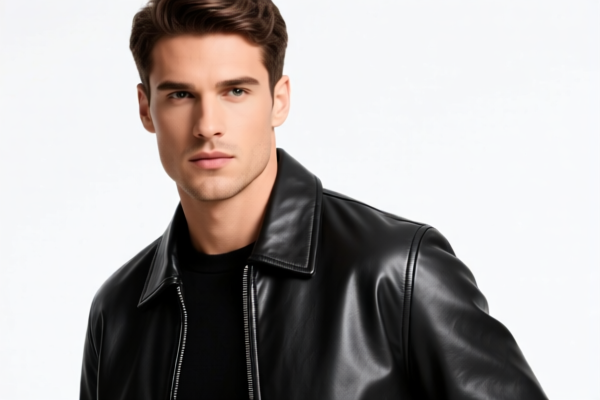
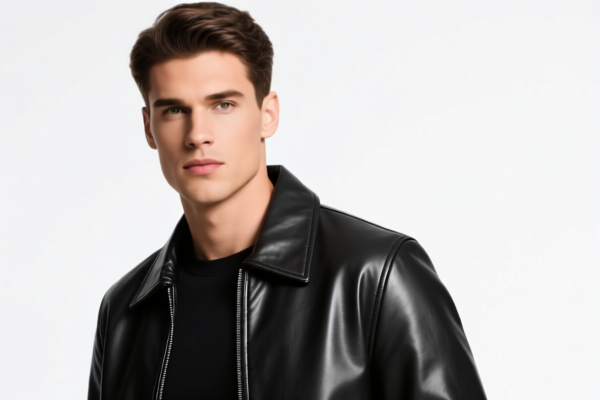
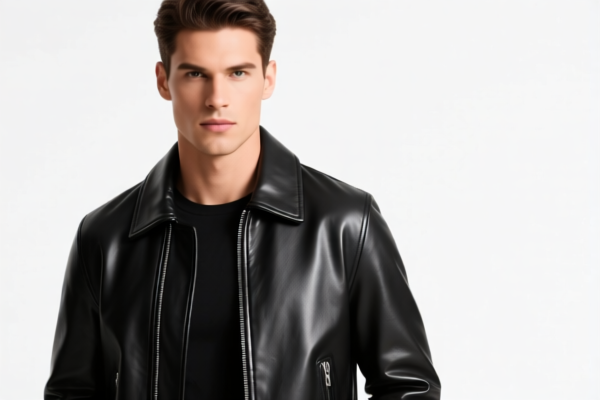
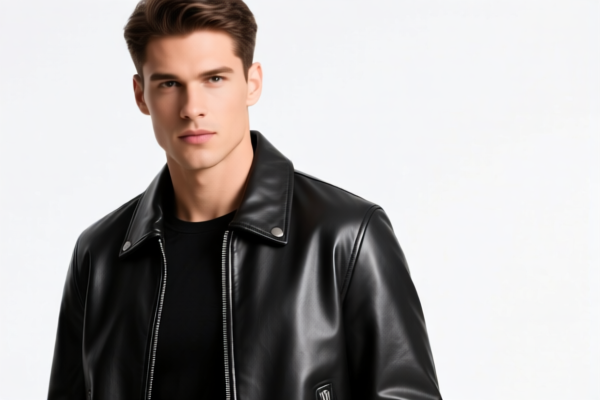
AI Analysis
🧥 Men's Faux Leather Jacket (Boy's/Child's Specification)
🌐 HS Code Reference & Customs Clearance Guide | 2026 Latest Tariff Analysis | Professional Customs Strategy
📌 1. Product Definition & Classification: Do You Really Understand "Faux Leather Jackets"?
The Men's Faux Leather Jacket (often classified under boy's/child's specifications in customs databases as seen in the data: "Boy's faux leather jacket") is a garment made from synthetic materials designed to mimic genuine leather. In international trade, classification hinges on three key factors: 1. Material Composition: Is it genuine leather or man-made? 2. Manufacturing Process: Is it knitted (针织) or woven/non-knitted (non-knitted)? 3. Target Demographic: Is it for men, women, or children?
⚠️ Key Classification Point:
- If made of knitted fabric (like synthetic leather jersey) → Usually falls under Chapter 61.
- If made of woven/non-knitted fabric (standard faux leather sheets) → Usually falls under Chapter 42 (Articles of leather) or Chapter 62 (Non-knitted garments).
- Crucial Note: Despite the user input "Men's," the provided data (<DATA>) explicitly references "Boy's" (男孩) in all summaries. In customs practice, if the size/style is clearly for children, it must be declared as such. Misdeclaring children's clothing as adult clothing can lead to classification errors and higher duties.
📦 2. HS Code Classification Details (Based on Provided Data)
The following table maps the specific HS Codes from <DATA> to their logical classification reasons and tax implications.
| HS Code | Product Description (From Data) | Classification Logic | Total Tax Rate |
|---|---|---|---|
4203.10.40.30 |
Boy's faux leather jacket, material: artificial leather, form: jacket. | Chapter 42 (Articles of Leather). Classified under "Articles of apparel and clothing accessories, of leather or of composition leather." Specifically for boys. | 41.0% |
4203.10.40.10 |
Boy's faux leather jacket, material: artificial leather, form: jacket. | Chapter 42 (Articles of Leather). Similar to above, likely a different sub-category or version within the same code family for boys. | 41.0% |
6113.00.10.05 |
Boy's faux leather jacket, purpose: boy, form: jacket, material: artificial leather. | Chapter 61 (Knitted/Crocheted). Classified as "Garments made of fabric impregnated, coated, covered or laminated with plastics." Specifically for boys. | 21.3% |
6113.00.90.25 |
Boy's faux leather jacket, form: jacket, object: boy, material: artificial leather. | Chapter 61 (Knitted/Crocheted). "Other garments" made of coated fabrics, for boys. Different sub-heading than 6113.00.10. | 24.6% |
6210.20.30.00 |
Boy's faux leather jacket, form: jacket, material: artificial leather. | Chapter 62 (Non-Knitted). Classified as "Garments made of fabrics of heading 5903... (textile fabrics impregnated, coated, covered or laminated with plastics)." Note: This chapter typically applies to non-knitted garments. | 13.8% |
🔍 Critical Distinction:
- HS 4203: Treats the faux leather as "Composition Leather." This is often the most common classification for standard faux leather jackets. However, it attracts the highest tax rate (41%).
- HS 6113/6210: Classifies the item as a textile garment with a plastic coating/impregnation. This is only valid if the base fabric is textile-based and meets specific technical criteria (e.g., coated with plastic). These codes offer significantly lower tax rates (13.8% - 24.6%).
- Why the "Boy" Specification? All entries in<DATA>specify "Boy" (男孩). If you are importing adult men's jackets, these specific 8-digit codes may not be directly applicable, and you must check the corresponding Men's sub-codes in Chapter 42, 61, or 62, which may have different rates.
💰 3. 2026 Latest Tariff Rate Breakdown (Including Surtaxes & Policy Surcharges)
✅ Applicable Market: Likely United States (US) based on the tax structure (Base + Section 301 + Section 122/IEEPA).
✅ Origin: China (CN)
✅ Effective Time: Rates apply to imports from China.
🎯 1. 4203.10.40.30 / 4203.10.40.10 —— Articles of Composition Leather (Boy's)
| Item | Content |
|---|---|
| Base Tariff | 6.0% (Standard MFN rate for leather articles) |
| Section 301 Surtax | +25.0% (Additional tariff on Chinese goods) |
| Section 122 / IEEPA Surtax | +10.0% (Additional tariff, possibly referencing specific executive orders or Section 122) |
| Total Tax Rate | 41.0% |
| Calculation | CIF Value × 41% |
| De Minimis Exemption | ❌ Not Eligible (High-value goods) |
| Legal Path | Base: 6% → Section 301: 25% → Section 122: 10% |
📌 Explanation:
- This is the most expensive classification.
- The "122 Clause" likely refers to specific U.S. trade enforcement actions.
- Risk: High duty burden. Ensure the product strictly meets "Composition Leather" standards.
🎯 2. 6113.00.10.05 —— Coated Knitted Garments (Boy's)
| Item | Content |
|---|---|
| Base Tariff | 3.8% |
| Section 301 Surtax | +7.5% |
| Section 122 / IEEPA Surtax | +10.0% |
| Total Tax Rate | 21.3% |
| Calculation | CIF Value × 21.3% |
| De Minimis Exemption | ❌ Not Eligible |
| Legal Path | Base: 3.8% → Section 301: 7.5% → Section 122: 10% |
📌 Explanation:
- Significant savings compared to HS 4203 (19.7% lower).
- Requires the jacket to be made of knitted fabric impregnated/coated with plastics.
🎯 3. 6113.00.90.25 —— Other Coated Knitted Garments (Boy's)
| Item | Content |
|---|---|
| Base Tariff | 7.1% |
| Section 301 Surtax | +7.5% |
| Section 122 / IEEPA Surtax | +10.0% |
| Total Tax Rate | 24.6% |
| Calculation | CIF Value × 24.6% |
| De Minimis Exemption | ❌ Not Eligible |
📌 Explanation:
- Slightly higher than6113.00.10.05due to a higher base rate.
- Still much cheaper than Chapter 42.
🎯 4. 6210.20.30.00 —— Non-Knitted Coated Garments (Boy's)
| Item | Content |
|---|---|
| Base Tariff | 3.8% |
| Section 301 Surtax | 0.0% (Note: Some non-knitted coated garments have lower Section 301 rates) |
| Section 122 / IEEPA Surtax | +10.0% |
| Total Tax Rate | 13.8% |
| Calculation | CIF Value × 13.8% |
| De Minimis Exemption | ❌ Not Eligible |
| Legal Path | Base: 3.8% → Section 301: 0% → Section 122: 10% |
📌 Explanation:
- Lowest Tax Rate (13.8%).
- This is the most advantageous classification if the garment is non-knitted and meets the definition of "Garments made of fabric of heading 5903" (textile fabric impregnated/coated with plastics).
- Condition: Must be explicitly non-knitted.
🛠️ 4. Customs Clearance Practical Advice (Operational Pitfall Guide)
✅ 1. Preparation Checklist (Mandatory)
| Document | Required | Notes |
|---|---|---|
| ✅ Product Composition Report | ✔️ | Must specify: Base Fabric (Knitted/Non-Knitted) + Coating Material (PVC/PU/Polyester) |
| ✅ Technical Data Sheet | ✔️ | Details on whether the plastic forms the structure or is just a coating. |
| ✅ Product Photos | ✔️ | Clear images of inner lining, stitching, and material texture. |
| ✅ Commercial Invoice | ✔️ | Must specify "Boy's Jacket" if sizes/styles indicate child's wear. |
| ✅ Labeling | ✔️ | Fiber content labels must match customs declaration. |
✅ 2. Declaration Tips (Critical Rules)
🔥 "Knitted vs. Non-Knitted Determines the Chapter!"
| Scenario | Correct HS Code | Tax Rate | Wrong Declaration |
|---|---|---|---|
| Standard Faux Leather Jacket (Often considered "Composition Leather") | 4203.10.40.xx |
41.0% | If declared as 6210, risk of reclassification. |
| Knitted Fabric with Plastic Coating | 6113.00.xx |
21.3% - 24.6% | If declared as 4203, you overpay by ~20%. |
| Non-Knitted Textile with Plastic Coating | 6210.20.30.00 |
13.8% | If declared as 4203, you overpay by ~27%. |
| Adult Men's Jacket | Check Men's Codes | Varies | Using "Boy's" codes for adult goods → Illegal Misdeclaration. |
⚠️ Important Note on "Men's" vs. "Boy's":
The user input is "Men's Faux Leather Jacket", but<DATA>only contains "Boy's" codes.
- If you are importing Adult Men's jackets, you cannot directly use the codes above. You must find the corresponding Men's sub-codes in Chapters 42, 61, and 62.
- However, the Tax Structure (Base + 301 + 122) will likely remain similar, though the specific rates might differ slightly.
- Recommendation: If the jacket is small-sized or styled for children, use "Boy's." If it is adult-sized, use "Men's" codes.
✅ 3. Special Cases
| Situation | Handling Advice |
|---|---|
| Dual-Layer Jackets | If the inner lining is separate, it does not change the primary classification unless it alters the essential character. |
| Mixed Materials | If the jacket has genuine leather patches (>50% area), it might be classified as genuine leather (4203.29). |
| Section 301 Exclusions | Check if your specific HTS code is eligible for Section 301 exclusions. Some textile codes have lower or zero 301 tariffs. |
| Section 122 Tariffs | These are additional surcharges. Ensure your forwarder is aware of the 10% add-on cost. |
🌍 5. Global Market Comparison (2026 Latest)
| Country/Region | Recommended HS Code (Adult Men's Example) | Est. Tariff (China Origin) | Certification | Notes |
|---|---|---|---|---|
| 🇺🇸 USA | 4203.29.40.20 (Leather) or 6210.40.30.00 (Non-knit coated) |
13.8% - 41.0% (with surtaxes) | No special cert | High risk due to 301/122 tariffs. |
| 🇨🇳 China | 4203.29.40 or 6210.40.30 |
7% - 10% | CCC (if applicable) | No Section 301. |
| 🇪🇺 EU | 4203.29.85 or 6210.40 |
12% - 16% | CE (if protective) | No additional tariffs. |
| 🇬🇧 UK | 4203.29.85 or 6210.40 |
12% - 16% | UKCA | Post-Brexit rules. |
📌 Conclusion:
- The US market is the most expensive due to Section 301 (25%) and Section 122 (10%) surtaxes.
- Optimization: If your product is a coated textile (not composition leather), strive to classify under Chapter 61 or 62 to save up to 27% in duties.
- Gender Classification: Ensure you declare the correct gender. If "Men's" jackets are imported but declared as "Boy's," it is fraud. If "Boy's" jackets are declared as "Men's," it may result in misclassification fines.
📌 6. Common Errors & Pitfalls (Blood Lessons)
❌ Error 1: Classifying all faux leather jackets as 4203 (Leather Articles).
👉 Consequence: Pay 41% tax instead of 13.8% or 21.3%. Huge profit loss.
❌ Error 2: Ignoring the "Knitted vs. Non-Knitted" distinction.
👉 Consequence: Customs will reclassify, demand back taxes, and impose penalties.
❌ Error 3: Declaring "Men's" jackets as "Boy's" to use specific codes.
👉 Consequence: Customs will reject based on size/style photos. Legal risk.
❌ Error 4: Forgetting the 10% Section 122 tariff.
👉 Consequence: Under-quoting duties, leading to shipment hold at port.
✅ Correct Action:
Conduct a material test.
- If it is composition leather →4203(High Tax).
- If it is knitted textile with plastic coating →6113(Medium Tax).
- If it is non-knitted textile with plastic coating →6210(Low Tax).
- Always match Gender: Men's → Men's Codes. Boys' → Boys' Codes.
🎯 7. Conclusion: Professional Declaration, Cost Saving, Efficiency!
🎯 Remember the Motto:
🔹 "Coated Textile is King, Chapter 42 is a Trap!"
🔹 "Knitted vs. Non-Knitted Determines the Code."
🔹 "Section 301 & 122 Add 35%, Know Your Code to Save 20%!"
📌 Pro Tip:
If you are importing Adult Men's jackets, please request your customs broker to look up the Men's-specific HS Codes in Chapters 42, 61, and 62. The logic remains the same, but the exact 8-digit code will differ. Always provide material composition reports to justify the Chapter 61/62 classification if applicable.
📣 Immediate Action:
📞 Contact your customs broker with:
1. Product Photos (Inner/Outer).
2. Material Composition Report (Base Fabric + Coating).
3. Size Chart (To confirm "Men's" vs. "Boy's").
🚀 Optimize your HS Code to save up to 27% in duties!
✨ Professional Customs Clearance Starts with Precise Classification!
💼 Every penny of duty paid is a penny that could be profit earned!
Customer Reviews
About HS Code Classification
The Harmonized System (HS) is an internationally standardized nomenclature developed by the World Customs Organization (WCO) to classify traded products. Over 200 countries use the HS system as the basis for customs tariffs, trade statistics, and import/export regulations.
Each HS code follows a hierarchical structure:
- Chapter (2 digits) — Broad category of goods (e.g., Chapter 84: Machinery and Mechanical Appliances)
- Heading (4 digits) — More specific grouping within the chapter
- Subheading (6 digits) — Internationally standardized breakdown, used by all WCO member countries
- National subdivisions (8-10 digits) — Country-specific extensions for further classification, such as US HTSUS 10-digit codes
Correct HS code classification is essential for smooth customs clearance, accurate duty payment, and compliance with trade regulations. Misclassification can lead to customs delays, overpayment of duties, or penalties.
When importing from CN to US, the applicable tariff rates may include:
- Most-Favored-Nation (MFN) rate — The standard duty rate applied to WTO members
- General rate — Applied to countries without trade agreements
- Trade remedy duties — Additional tariffs such as Section 301 (anti-dumping), Section 232 (national security), or countervailing duties
The information provided on this page is for reference purposes only. For official classification, please consult with your local customs authority or a licensed customs broker.