Men's Imitation Leather Leatherwear
CN → US| HS Code | Tariff Rate | Origin | Destination | Doc |
|---|---|---|---|---|
| 4203104030 | 41.0% | CN | US | Official Doc |
| 6101302020 | 45.7% | CN | US | Official Doc |
| 6201405021 | 45.2% | CN | US | Official Doc |
| 4203104085 | 41.0% | CN | US | Official Doc |
| 6101301000 | 23.1% | CN | US | Official Doc |
| 6201407521 | 45.2% | CN | US | Official Doc |
Product Images



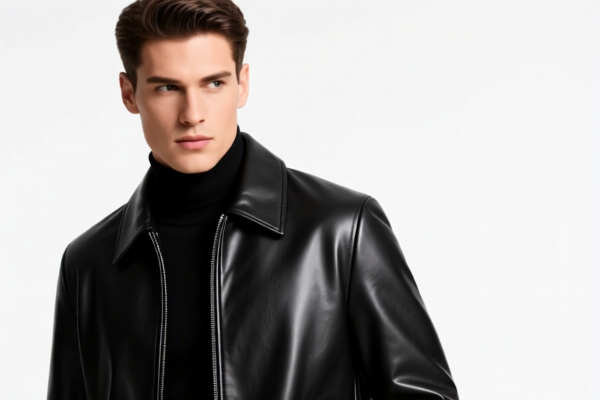
AI Analysis
🧥 Men's Imitation Leather Outerwear (The "Faux Leather" Maze)
🌐 HS Code Reference & Customs Clearance Guide | 2026 Latest Tariff Analysis | Professional Clearance Strategy
📌 Part 1: Product Definition & Classification: Do You Really Understand "Imitation Leather"?
Men's imitation leather jackets are a complex category in international trade because "Imitation Leather" is not a single material. Customs classification depends entirely on the base fabric (Knitted vs. Woven) and the surface composition (PU, PVC, or Leather-coated).
In the US import data provided, we see a stark divergence in tax rates (23.1% vs. 45.7%) based on subtle structural differences.
⚠️ Key Distinction Point:
- If the base is Knitted/Net (like fleece or jersey) → Likely Chapter 61
- If the base is Woven (like cotton twill or synthetic weave) → Likely Chapter 62
- If the material is Solid Plastic/Vinyl without fabric backing → Likely Chapter 42
📦 Part 2: HS Code Classification Details (2026 Latest Tariff Authority对照)
Based on the provided <DATA>, here is the breakdown for Men's Imitation Leather Jackets.
| HS Code | Product Description | Material/Structure Key | Total Tax | Base Tariff | Add-on Tariff (Section 301) | Section 122 Tax |
|---|---|---|---|---|---|---|
| 6101.30.10.00 | Men's imitation leather coat; contains leather components; synthetic fiber based. | Knitted/Net + Leather traces | 23.1% | 5.6% | 7.5% | 10% |
| 6101.30.20.20 | Men's imitation leather coat; synthetic/man-made fiber base. | Knitted/Net + Synthetic | 45.7% | 28.2% | 7.5% | 10% |
| 6201.40.50.21 | Men's imitation leather coat; synthetic/man-made fiber base; woven structure. | Woven + Synthetic | 45.2% | 27.7% | 7.5% | 10% |
| 6201.40.75.21 | Men's imitation leather coat; synthetic/man-made fiber base; woven structure. | Woven + Synthetic | 45.2% | 27.7% | 7.5% | 10% |
| 4203.10.40.30 | Men's imitation leather coat; material is imitation leather (leather or recycled leather). | Solid Immitation Leather (Non-knitted/non-woven standard) | 41.0% | 6.0% | 25.0% | 10% |
| 4203.10.40.85 | Men's imitation leather coat; material is synthetic leather. | Solid Synthetic Leather | 41.0% | 6.0% | 25.0% | 10% |
🔍 Critical Observation:
- Cheapest Option:6101.30.10.00at 23.1% total tax. Why? Lower base tariff (5.6%) despite the 7.5% Section 301 tax.
- Most Expensive Option:6101.30.20.20at 45.7% total tax. Why? High base tariff (28.2%) plus Section 301 tax.
- Mid-Range Options: Chapter 42 codes (4203...) have a low base (6%) but a massive 25% Section 301 surcharge, totaling 41%.
💰 Part 3: 2026 Latest Tariff Rate Breakdown (With Surcharges & Policy Add-ons)
✅ Applicable Country: United States (US)
✅ Origin: China (CN)
✅ Effective Time: Current Trade War Tariffs Applied
🎯 1. 6101.30.10.00 — The "Low-Tax" Hero (Knitted + Leather Traces)
| Item | Content |
|---|---|
| Base Tariff | 5.6% |
| Section 301 Tax | +7.5% (Note: Lower than Chapter 42) |
| Section 122 Tax | +10% |
| Total Rate | 23.1% |
| Tax Calculation | CIF Value × 23.1% |
| De Minimis Eligibility | ❌ No (High value items usually exceed $800 threshold, but even if under, these codes often face strict scrutiny for "textile" items). |
| Legal Basis | Standard HTSUS Chapter 61 + Section 301 Footnotes + Section 122 (Trade Expansion Act) |
📌 Explanation:
- This code is likely for knitted jackets where the "imitation leather" effect is achieved by coating a knit fabric with small amounts of leather or PU.
- Crucial: The base tariff is very low (5.6%), making this the most cost-effective classification if your product physically qualifies.
🎯 2. 6101.30.20.20 & 6201.40.xx.xx — The "High-Base" Trap
| Item | Content |
|---|---|
| Base Tariff | 27.7% - 28.2% |
| Section 301 Tax | +7.5% |
| Section 122 Tax | +10% |
| Total Rate | 45.2% - 45.7% |
| Tax Calculation | CIF Value × ~45.5% |
| De Minimis Eligibility | ❌ No |
📌 Explanation:
- These codes apply to standard synthetic imitation leathers (PU/PVC) on knit (Ch 61) or woven (Ch 62) bases.
- The Base Tariff is HIGH (nearly 30%). Even with only 7.5% Section 301 tax, the total hits ~45%.
- Danger: Do not assume all "synthetic leather" falls here. Check if it can be classified under Ch 42 for a potentially better rate.
🎯 3. 4203.10.40.xx — The "Section 301 Heavyweight"
| Item | Content |
|---|---|
| Base Tariff | 6.0% |
| Section 301 Tax | +25.0% (Very High!) |
| Section 122 Tax | +10% |
| Total Rate | 41.0% |
| Tax Calculation | CIF Value × 41.0% |
| De Minimis Eligibility | ❌ No |
📌 Explanation:
- Chapter 42 covers "Articles of leather." If the jacket is considered "solid" imitation leather (not just coated fabric), it goes here.
- The Trap: Although the base tariff is low (6%), the Section 301 tax is 25% (vs. 7.5% for textiles).
- Comparison: 41% (Ch 42) is cheaper than 45% (Ch 61/62) in this specific dataset, but more expensive than6101.30.10.00(23.1%).
🛠️ Part 4: Customs Clearance Practical Advice (Real-World Pitfall Guide)
✅ 1. Preparation Checklist (Non-negotiable)
| Document | Required? | Description |
|---|---|---|
| ✅ Material Breakdown Sheet | ✔️ | Must specify: Base Fabric (Knit vs. Woven) and Coating Material (PU, PVC, Leather). |
| ✅ Product Photos (Internal/External) | ✔️ | Show the back of the lining and the cut edge to prove knit vs. woven structure. |
| ✅ Commercial Invoice | ✔️ | Must clearly state "Men's Imitation Leather Jacket" AND material composition (e.g., "100% Polyester Knit with PU Coating"). |
| ✅ Label/Tag Photos | ✔️ | "Made in China" label is mandatory. |
| ✅ Structure Diagram | ✔️ | If claiming 6101.30.10.00, prove it is Knitted. If claiming 4203, prove it is Leather Article. |
✅ 2. Declaration Strategy (Key Mantras)
🔥 "Knit Low Base, Woven High Base, Solid Medium Base! Structure is King!"
| Scenario | Correct HS Code | Why? | Risk if Wrong |
|---|---|---|---|
| Knitted Base + Leather Traces | 6101.30.10.00 |
Lowest Total Tax (23.1%). | If you declare as generic knit, you might get 6101.30.20.20 (45.7%). |
| Knitted Base + Pure Synthetic | 6101.30.20.20 |
Standard synthetic knit jacket. | High tax (45.7%). |
| Woven Base + Synthetic | 6201.40.50.21 |
Standard woven jacket. | High tax (45.2%). |
| Solid PU/Vinyl (No Fabric Back) | 4203.10.40.xx |
Treated as "Leather Article". | Medium Tax (41.0%). |
📌 Pro Tip:
- If your jacket is Knitted (like a hoodie fabric) but looks like leather, FIGHT for6101.30.10.00if there is any leather content or specific construction that allows it.
- If it is Woven (like denim or twill texture), you are stuck with6201codes (~45%).
- If it is Solid Plastic/Vinyl (no fabric), use4203(41%).
✅ 3. Special Cases
| Situation | Handling Advice |
|---|---|
| Mixed Materials | If 90% Polyester + 10% Leather, ensure the description highlights "Leather Components" to aim for 6101.30.10.00. |
| OEM/Private Label | Ensure the invoice matches the product exactly. "Men's Faux Leather Jacket" is vague. Use "Men's Knitted Polyurethane-Coated Jacket". |
| Section 122 Exemption | Note: The data shows 10% Section 122 tax on ALL items. This is a recent US trade policy (Trade Expansion Act of 1962) targeting specific countries. There is no exemption shown in the data. Budget for this 10% everywhere. |
| De Minimis (Section 321) | ❌ NOT ELIGIBLE. These items are textiles/leatherwear from China. They cannot enter duty-free under $800. They must undergo formal entry. |
🌍 Part 5: Global Market Comparison (Contextual)
| Market | Recommended HS Approach | Approx. Tariff Impact | Notes |
|---|---|---|---|
| 🇺🇸 USA | 6101.30.10.00 (Best Case) |
23.1% | Must prove Knitted + Leather traces. Avoid 6201 if possible. |
| 🇪🇺 EU | 6201.93 (Woven) or 6101.30 (Knit) |
12% - 16% | No Section 301/122. VAT varies (19-27%). |
| 🇨🇳 China | 6101.30 / 6201.40 |
5% - 20% | Import duties apply. No trade war tariffs. |
| 🇬🇧 UK | 6201.93 |
12% | Post-Brexit tariffs similar to EU. |
📌 Conclusion for US Exporters:
- The US market is the most expensive due to Section 301 (7.5% or 25%) and Section 122 (10%).
- Strategy: If your jacket is knitted, try to qualify for6101.30.10.00(23.1%) rather than the generic6101.30.20.20(45.7%). The difference is over $20 per jacket on a $100 item.
📌 Part 6: Common Mistakes & Pitfalls (Blood Lessons)
❌ Mistake 1: Declaring "Faux Leather Jacket" without specifying Knit vs. Woven.
👉 Consequence: Customs will pick the highest duty code automatically (likely 45%).
❌ Mistake 2: Assuming "Imitation Leather" always means Chapter 42.
👉 Consequence: Missing the 23.1% tax rate available for 6101.30.10.00. Chapter 42 has a 25% Section 301 tax, which is higher than the 7.5% for textiles.
❌ Mistake 3: Ignoring Section 122 Tax (10%).
👉 Consequence: Budgeting only for Section 301 (7.5% or 25%) leads to unexpected 10% additional cost. All items in the data have this 10% surcharge.
✅ Correct Approach:
"Men's Knitted Jacket, Polyamide Knit Base, Polyurethane Coating to Imitate Leather, with YKK Zippers, Lined."
→ Aim for6101.30.10.00if leather traces exist.
🎯 Part 7: Conclusion: Precision Classification Saves Money!
🎯 Remember the Mantras:
🔹 "Knit with Leather Trace = 23.1% (Win!)"
🔹 "Solid Synthetics/Knits = 45% (Ouch!)"
🔹 "Solid Leather/PU Articles = 41% (Middle Ground)"
🔹 "Section 122 is 10% on EVERYTHING. Don't forget it!"
📌 Actionable Tip:
- If you are manufacturing in China, audit your material composition.
- Can you add a small percentage of leather or modify the knit structure to qualify for
6101.30.10.00? The tax savings are massive.- Always request a Binding Ruling from CBP if the classification is ambiguous between Chapter 61 and 42.
📣 Immediate Action:
📞 Contact your Freight Forwarder with the Material Breakdown Sheet.
🚀 Declare accurately. One wrong digit turns $100,000 into $145,000 in costs.
✨ Professional Clearance Starts with Accurate Classification!
💼 Every Percentage Point Counts!
Customer Reviews
About HS Code Classification
The Harmonized System (HS) is an internationally standardized nomenclature developed by the World Customs Organization (WCO) to classify traded products. Over 200 countries use the HS system as the basis for customs tariffs, trade statistics, and import/export regulations.
Each HS code follows a hierarchical structure:
- Chapter (2 digits) — Broad category of goods (e.g., Chapter 84: Machinery and Mechanical Appliances)
- Heading (4 digits) — More specific grouping within the chapter
- Subheading (6 digits) — Internationally standardized breakdown, used by all WCO member countries
- National subdivisions (8-10 digits) — Country-specific extensions for further classification, such as US HTSUS 10-digit codes
Correct HS code classification is essential for smooth customs clearance, accurate duty payment, and compliance with trade regulations. Misclassification can lead to customs delays, overpayment of duties, or penalties.
When importing from CN to US, the applicable tariff rates may include:
- Most-Favored-Nation (MFN) rate — The standard duty rate applied to WTO members
- General rate — Applied to countries without trade agreements
- Trade remedy duties — Additional tariffs such as Section 301 (anti-dumping), Section 232 (national security), or countervailing duties
The information provided on this page is for reference purposes only. For official classification, please consult with your local customs authority or a licensed customs broker.