Men's Knitted Polyester Top
CN → US| HS Code | Tariff Rate | Origin | Destination | Doc |
|---|---|---|---|---|
| 6109901049 | 49.5% | CN | US | Official Doc |
| 6110301050 | 23.5% | CN | US | Official Doc |
| 6109901007 | 49.5% | CN | US | Official Doc |
| 6103230075 | 0.0% | CN | US | Official Doc |
| 6103230036 | 0.0% | CN | US | Official Doc |
Product Images
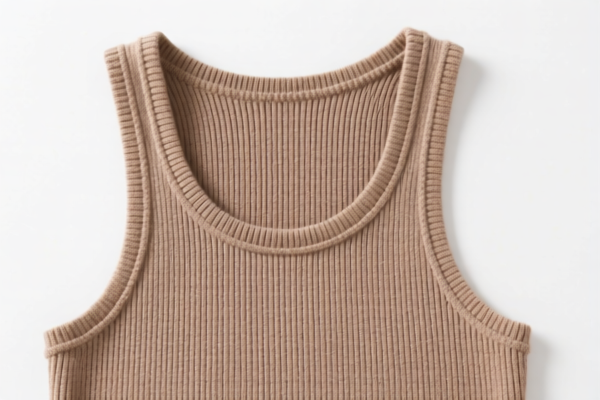
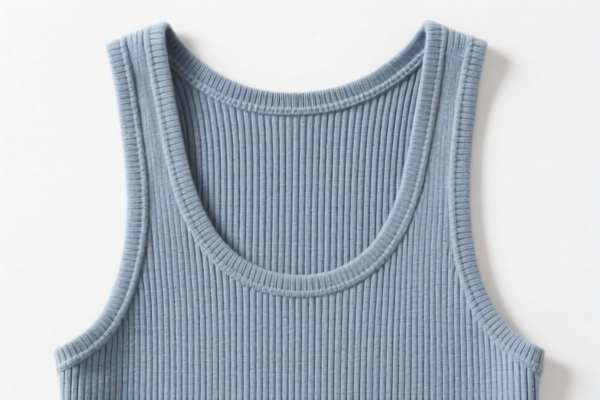
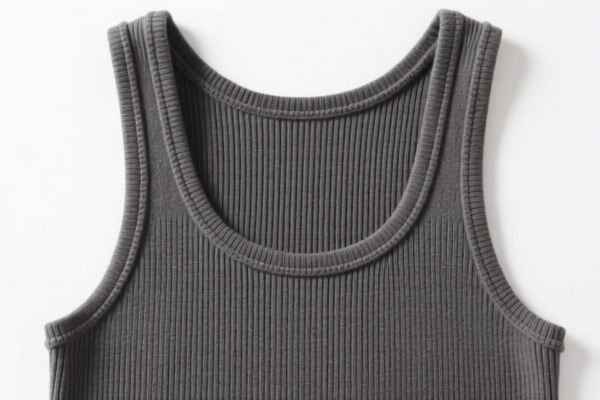

AI Analysis
👕 Men's Knitted Polyester Top: The "HS Code Minefield" & 2026 US Customs Clearance Guide
🌐 HS Code Reference & Customs Clearance Guide | 2026 Latest Tariff Analysis | Strategic Compliance Strategy
📌 I. Product Definition & Classification: Are You Sure What You're Importing?
A "Men's Knitted Polyester Top" sounds simple, but in US Customs (CBP) terms, it is a high-risk category due to the intersection of fiber content (synthetic), manufacturing process (knitted), and gender-specific classification. The ambiguity lies in which type of top it is: Is it a casual T-shirt? A sweater? Or part of a formal ensemble?
This distinction determines whether you pay 49.5% or face a "Rate Applicable to Each Garment" calculation, often exacerbated by Section 301 and Section 122 tariffs.
⚠️ Critical Distinction:
- "Top" as T-Shirt/Casual Wear → Usually 6109 or 6103 (depending on exact cut)
- "Top" as Sweater/Knitwear → Usually 6110
- "Top" as Part of an Ensemble → 6103 (Complex calculation)
- Misclassification Risk: Using 6110 for a T-shirt can lead to underpayment; using 6103 for a sweater can lead to overpayment or rejection.
📦 II. HS Code Classification Matrix (2026 Latest Tariff Reference)
Based on the provided data, here are the 5 potential HS Codes for "Men's Knitted Polyester Top," ranging from standard T-shirts to complex ensembles.
| HS Code | Product Description | Key Characteristics | Risk Level |
|---|---|---|---|
6109.90.10.49 |
T-Shirts, Singlets & Other Vests, Of Other Textile Materials | Polyester, Knitted, Men's. Note: Code .49 is specific to "Other" textile materials not elsewhere specified. | 🟡 High (Vague descriptor) |
6110.30.10.50 |
Sweaters, Pullovers, etc., Of Man-Made Fibers | Explicitly "Knitted," "Polyester/Dacron," "Men's." Fits the definition of synthetic knitted garments. | 🟢 Medium (Common for sweaters) |
6109.90.10.07 |
T-Shirts, Vests, Etc., Of Synthetic Fibers | "Full Polyester" = Synthetic. "Knitted" = Knitted. "Men's Top" = Men's T-shirt. | 🟡 High (Standard T-shirt code) |
6103.23.00.75 |
Men's Anoraks, Windbreakers & Similar Articles, Of Synthetic Fibers | Ensemble Rate. "Full Polyester" = Synthetic. "Knitted" = Knitted. "Men's Top" = Outerwear/Anorak. | 🔴 Very High (Complex tax calc) |
6103.23.00.36 |
Men's Trousers, Bib & Braces, Breeches & Shorts, Of Synthetic Fibers | Ensemble Rate. Wait, check summary: Summary says "Men's Top," but HS 6103 is generally for trousers or suits. However, the data summary claims it fits "Knitted Garment Category." Caution: 6103 is typically for woven or knitted trousers/blazers. If this is a top, it might be misclassified here unless it's a specific jacket type classified under 6103.23. | 🔴 Very High (Potential Misclassification) |
🔍 Key Insight:
- 6109 is for T-shirts/Singlets.
- 6110 is for Sweaters/Pullovers.
- 6103 is primarily for Trousers/Blazers/Suits (though 6103.23 can include certain jackets/anoraks).
- The biggest risk: If you import a T-shirt but classify it as 6103 (Jacket/Anorak), CBP will reject it. If you import a Sweater and classify as 6109, you underpay tax.
💰 III. 2026 Tariff Rate Breakdown (Including Section 301 & 122)
✅ Applicable Country: United States (US)
✅ Origin: China (CN)
✅ Effective Date: 2025-2026 Period
🎯 1. 6109.90.10.49 & 6109.90.10.07 — T-Shirts/Vests (Synthetic/Knitted)
| Item | Detail |
|---|---|
| Basic Duty | 32.0% |
| Section 301 Duty | 7.5% (Additional tariff on Chinese goods) |
| Section 122 Duty | 10.0% (Section 122 surcharge on certain goods) |
| Total Tax Rate | 49.5% |
| Calculation | CIF Value × 49.5% |
| De Minimis Exemption | ❌ Not Eligible (Deny De Minimis) |
| Legal Basis | HTSUS 6109 + Section 301 (List 4b) + Section 122 |
📌 Explanation:
- These codes apply to T-shirts, singlets, and vests.
- The 49.5% rate is punitive. There is no $800 de minimis exemption for these items from China.
- Why two codes?6109.90.10.07is the standard "Synthetic Fiber" T-shirt code.6109.90.10.49is a specific sub-category for "Other" materials. Use 6109.90.10.07 for standard polyester T-shirts unless your product has unique properties not covered by .07.
🎯 2. 6110.30.10.50 — Sweaters/Pullovers (Synthetic/Knitted)
| Item | Detail |
|---|---|
| Basic Duty | 6.0% |
| Section 301 Duty | 7.5% |
| Section 122 Duty | 10.0% |
| Total Tax Rate | 23.5% |
| Calculation | CIF Value × 23.5% |
| De Minimis Exemption | ❌ Not Eligible (Deny De Minimis) |
| Legal Basis | HTSUS 6110 + Section 301 + Section 122 |
📌 Explanation:
- This code is for Sweaters, Pullovers, and Cardigans.
- The 23.5% rate is significantly lower than T-shirts.
- Crucial: If your "Top" is a sweater (heavy knit, long sleeves, thermal properties), use 6110.30.10.50. If it's a T-shirt, do NOT use this code. CBP will reclassify and apply 49.5%.
🎯 3. 6103.23.00.75 & 6103.23.00.36 — Ensembles/Anoraks (Synthetic/Knitted)
| Item | Detail |
|---|---|
| Basic Duty | Rate applicable to each garment if separately classified |
| Section 301 Duty | 7.5% |
| Section 122 Duty | 10.0% |
| Total Tax Rate | [Garment Rate] + 17.5% |
| Calculation | Variable + 17.5% (Fixed Surcharges) |
| De Minimis Exemption | ❌ Not Eligible (Deny De Minimis) |
| Legal Basis | HTSUS 6103 + Section 301 + Section 122 |
📌 Explanation:
- These codes are highly complex. They apply to Anoraks, Windbreakers, or Ensembles.
- The "Rate Applicable to Each Garment" means CBP will break down the item into its components (e.g., fabric, lining, zipper) and tax each part separately, then add the 17.5% surcharges.
- Risk: This is often used for jackets or outerwear. If you import a simple T-shirt under this code, CBP will reject it as misclassification.
- Recommendation: Only use if you are importing jackets/anoraks specifically classified under 6103.23.
🛠️ IV. Customs Clearance Practical Advice (Avoiding Pitfalls)
✅ 1. Documentation Checklist (Non-Negotiable)
| Document | Required? | Notes |
|---|---|---|
| ✅ Product Specification Sheet | ✔️ | Must clearly state: Knitted, 100% Polyester, Men's, Type (T-shirt/Sweater/Jacket) |
| ✅ Fiber Content Label | ✔️ | Must match the import description exactly. "Polyester" ≠ "Nylon" ≠ "Cotton." |
| ✅ Product Photos (Front/Back/Inside) | ✔️ | Show collar, sleeve length, and knit texture to distinguish T-shirt vs. Sweater. |
| ✅ Commercial Invoice | ✔️ | Must use exact HS Code and description. No vague terms like "Top." Use "Men's Knitted Polyester T-Shirt." |
| ✅ Origin Certificate | ✔️ | Proof of Chinese origin to assess Section 301/122 duties. |
| ✅ Packaging List | ✔️ | Detail units per carton. |
✅ 2. Classification Strategy (The "Golden Rules")
🔥 "Know Your Knit: T-Shirt is 49.5%, Sweater is 23.5%!"
| Scenario | Correct HS Code | Tax Rate | Why? |
|---|---|---|---|
| Short-sleeve, lightweight, casual | 6109.90.10.07 |
49.5% | Classified as T-Shirt/Vest. |
| Long-sleeve, heavy knit, thermal | 6110.30.10.50 |
23.5% | Classified as Sweater/Pullover. |
| Jacket/Anorak/Windbreaker | 6103.23.00.75 |
Variable + 17.5% | Classified as Outerwear/Anorak. |
| Vague "Top" | ❌ Reject | N/A | CBP will reclassify and penalize. |
⚠️ Critical Warning:
- Do NOT use6103.23.00.36for a "Top" unless it is a specific type of jacket or ensemble component. This code is typically for trousers or blazers. Using it for a T-shirt is a major red flag. - Do NOT use6110for a T-shirt. CBP will assess 49.5% + penalties.
✅ 3. Special Cases
| Situation | Action |
|---|---|
| OEM Custom Logo | Provide logo placement diagram. Does not change HS Code. |
| Mixed Fabric (e.g., 95% Poly, 5% Spandex) | Still classified as Polyester (dominant fiber). Use same codes. |
| Sample Shipment | Still subject to 49.5% or 23.5%. No de minimis. |
| Drop-shipping from China | High Risk. CBP is aggressively auditing drop-shipments. Ensure accurate HS Code. |
🌍 V. Global Market Comparison (2026)
| Market | Recommended HS Code | Approx. Tax Rate | Notes |
|---|---|---|---|
| 🇺🇸 USA | 6109.90.10.07 or 6110.30.10.50 |
49.5% or 23.5% | High Section 301/122 duties. |
| 🇨🇳 China | 6109.90.10.07 or 6110.30.10.50 |
~15-20% | Lower duties, no Section 301. |
| 🇪🇺 EU | 6109.10.00 or 6110.30.00 |
~12% | No Section 301/122. |
| 🇬🇧 UK | 6109.10.00 or 6110.30.00 |
~12% | Post-Brexit tariffs. |
| 🇨🇦 Canada | 6109.90.00 or 6110.30.00 |
~18% | USMCA benefits if produced in NA. |
📌 Conclusion:
- The US market is the most expensive due to Section 301 and 122 duties.
- Cost Savings Strategy: If possible, source from Vietnam, Bangladesh, or India to avoid Section 301 tariffs (though Section 122 may still apply).
- Product Strategy: If you can modify the product to be a Sweater (heavier knit, long sleeves), you can save 26% in duties (23.5% vs 49.5%).
📌 VI. Common Errors & Pitfalls (Learn from Mistakes)
❌ Error 1: Calling all "Knitted Polyester Tops" the same.
👉 Result: CBP reclassifies T-shirts as Sweaters (underpaying) or Sweaters as T-shirts (overpaying).
💡 Fix: Be specific. "T-Shirt" or "Sweater."
❌ Error 2: Using 6103.23.00.36 for a T-shirt.
👉 Result: Customs rejection, fines, and delays. 6103 is for trousers/blazers, not T-shirts.
💡 Fix: Use 6109 for T-shirts.
❌ Error 3: Assuming de minimis ($800) applies.
👉 Result: Seizure of goods. Section 301/122 goods from China are not eligible for de minimis.
💡 Fix: Pay duties upfront.
❌ Error 4: Vague Invoice Description: "Men's Top."
👉 Result: CBP inspection, hold, and potential penalty.
💡 Fix: Use "Men's Knitted 100% Polyester T-Shirt."
🎯 VII. Conclusion: Precision Pays Off
🎯 Key Takeaways:
🔹 "T-Shirt = 49.5%, Sweater = 23.5%" — This 26% difference is critical.
🔹 "No De Minimis" — All shipments from China are subject to duties.
🔹 "Be Specific" — Never use "Top." Use "T-Shirt," "Sweater," or "Anorak."
📌 Pro Tip:
If you are importing high volumes, consider pre-classification rulings with CBP for ambiguous items. Also, explore supply chain diversification to countries not subject to Section 301 tariffs (e.g., Vietnam, India) to reduce costs.
📣 Call to Action:
📞 Consult a Licensed Customs Broker before your first shipment.
📄 Provide Detailed Product Specs to avoid reclassification.
🚀 Optimize Your HS Code to save 26% on T-Shirts vs. Sweaters.
✨ Professional Compliance, Smooth Clearance, Maximized Profits!
💼 Don't let HS Codes cost you your margin!
Customer Reviews
About HS Code Classification
The Harmonized System (HS) is an internationally standardized nomenclature developed by the World Customs Organization (WCO) to classify traded products. Over 200 countries use the HS system as the basis for customs tariffs, trade statistics, and import/export regulations.
Each HS code follows a hierarchical structure:
- Chapter (2 digits) — Broad category of goods (e.g., Chapter 84: Machinery and Mechanical Appliances)
- Heading (4 digits) — More specific grouping within the chapter
- Subheading (6 digits) — Internationally standardized breakdown, used by all WCO member countries
- National subdivisions (8-10 digits) — Country-specific extensions for further classification, such as US HTSUS 10-digit codes
Correct HS code classification is essential for smooth customs clearance, accurate duty payment, and compliance with trade regulations. Misclassification can lead to customs delays, overpayment of duties, or penalties.
When importing from CN to US, the applicable tariff rates may include:
- Most-Favored-Nation (MFN) rate — The standard duty rate applied to WTO members
- General rate — Applied to countries without trade agreements
- Trade remedy duties — Additional tariffs such as Section 301 (anti-dumping), Section 232 (national security), or countervailing duties
The information provided on this page is for reference purposes only. For official classification, please consult with your local customs authority or a licensed customs broker.