Men's Long Animal Fur Robe
CN → US| HS Code | Tariff Rate | Origin | Destination | Doc |
|---|---|---|---|---|
| 4303900000 | 35.0% | CN | US | Official Doc |
| 6217909095 | 32.1% | CN | US | Official Doc |
| 6201902960 | 20.3% | CN | US | Official Doc |
| 6201902920 | 20.3% | CN | US | Official Doc |
| 6110909088 | 23.5% | CN | US | Official Doc |
Product Images
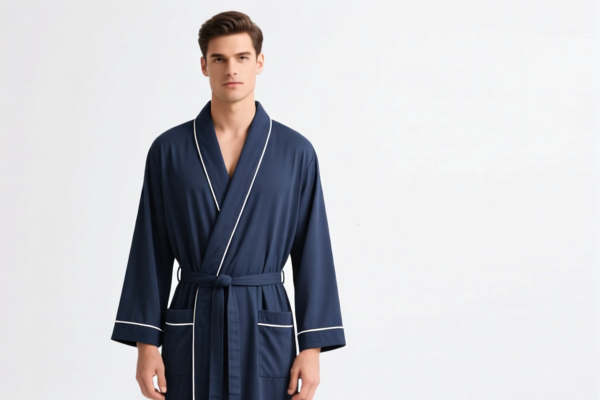
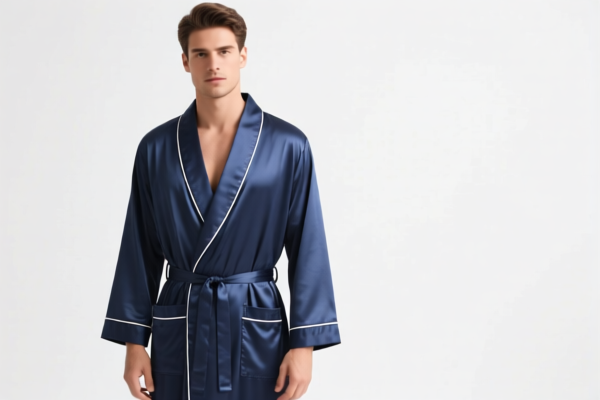
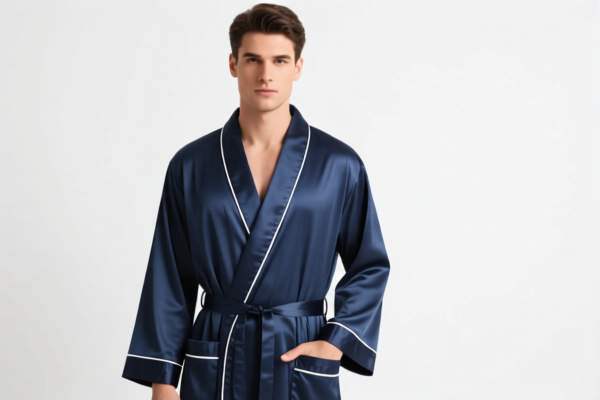
AI Analysis
🧥 Men's Long Animal Fur Robe (Animal Fur Bathrobe/Coat)
🌐 HS Code Reference & Customs Clearance Guide | 2026 Latest Tariff Analysis | Professional Clearance Strategy
📌 I. Product Definition & Classification: What Exactly Is This Product?
A "Men's Long Animal Fur Robe" is a complex textile apparel item that sits at the intersection of fur garments, textile outerwear, and accessories. In international trade, its classification is highly sensitive to: 1. Material Composition: Whether it is pure fur, fur-backed fabric, or mixed fibers. 2. Construction Method: Knitted, woven, or non-woven (fur skin assembly). 3. Final Form: Is it a standalone garment (coat/robe), an accessory (shawl), or a component/part?
⚠️ Key Distinction Point: - If it is made of fur skins stitched together without a textile backing → Classified under Chapter 43 (Fur). - If it is a textile fabric backed with fur or made of animal hair fibers (sheared/processed) → Classified under Chapter 61 or 62 (Textile Apparel). - If it is a partial item (e.g., detachable lining, trim) → Classified under Chapter 62 (Parts/Accessories).
📦 II. HS Code Classification Details (2026 Latest Tariff Authority Comparison)
| HS Code | Product Description | Application Scenario | Material/Construction Logic |
|---|---|---|---|
4303.90.00.00 |
Articles of apparel and clothing accessories, of fur, n.e.s. (Not Elsewhere Specified) | Pure animal fur robe made of stitched pelts/skins | ✅ Pure Fur/Skins (Chapter 43) |
6217.90.90.95 |
Other made-up clothing accessories; parts of articles of apparel or clothing accessories, not elsewhere specified or included | Fur robe treated as a "Finished Component" or "Accessory" of outerwear | ✅ Finished Textile Component (Chapter 62) |
6201.90.29.60 |
Men's or boys' overcoats, raincoats, carcoats, capes, anoraks, windbreakers... other, other (non-cotton, non-wool, non-synthetic) | Robe styled as a coat/cape, made of other animal fibers (not wool) | ✅ Other Animal Fiber Woven/Woven-like |
6201.90.29.20 |
Men's or boys' overcoats, raincoats, carcoats, capes, anoraks, windbreakers... other, wool or fine animal hair | Robe styled as a coat, made of wool or fine animal hair (e.g., camel hair) | ✅ Wool/Fine Animal Hair Woven |
6110.90.90.88 |
Sweaters, pullovers, cardigans... knitted or crocheted, other materials (not wool/synthetic) | Robe made of knitted/crocheted animal hair fabric | ✅ Knitted/Crocheted Animal Fiber |
🔍 Critical Reminder: - Chapter 43 vs. Chapter 62: This is the biggest pitfall. If the product is simply fur skins sewn together, it MUST go to
4303.90.00.00. If it is fabric with fur attached or sheared animal hair, it goes to Chapter 61/62. - Robe vs. Coat: If the item is long and worn like a coat, customs may push for 6201 (Men's Outerwear). If it is loose and house-wear, 6217 (Accessories) or 4303 (Fur) might apply depending on material.
💰 III. 2026 Latest Tariff Rate Breakdown (Including Surtax & Policy Surcharges)
✅ Applicable Country: United States (US)
✅ Origin: China (CN)
✅ Effective Time: November 10, 2025 onwards (inclusive of subsequent imports)
🎯 1. 4303.90.00.00 — Articles of Fur, n.e.s.
| Item | Content |
|---|---|
| Base Tariff | 0% (ad valorem) |
| USITC Surtax | +25.0% (Under USITC Footnote / Section 301) |
| IEEPA Surtax | +10.0% (Targeting China/HK products, effective Nov 10, 2025) |
| Total Rate | 35.0% |
| Tax Calculation | CIF Value × 35% |
| De Minimis Eligibility | ❌ No (deny_de_minimis) |
| Legal Basis Path | IEEPA:9903.01.25 → IEEPA:9903.01.24 → USITC:4303.90.00.00 → FOOTNOTE:301 |
📌 Explanation:
- Although the base tariff is 0%, the 35% total tax is significant. This classification is used when the product is pure fur (e.g., mink, fox, rabbit skins assembled). - Risk: High scrutiny on "fur" definition. Ensure animal species are compliant with CITES if endangered.
🎯 2. 6217.90.90.95 — Other Made-Up Clothing Accessories / Parts
| Item | Content |
|---|---|
| Base Tariff | 14.6% |
| USITC Surtax | +7.5% (Standard Section 301 rate for many textile parts) |
| IEEPA Surtax | +10.0% (Targeting China) |
| Total Rate | 32.1% |
| Tax Calculation | CIF Value × 32.1% |
| De Minimis Eligibility | ❌ No (deny_de_minimis) |
| Legal Basis Path | IEEPA:9901.25 → IEEPA:9903.01.24 → USITC:6217.90.90.95 |
📌 Note:
- This classification applies if the robe is considered a "Part of Apparel" or "Accessory" (e.g., a fur-lined vest, or a detachable fur robe component). - Key: It must not be a standalone "garment" in the traditional sense. If it's a full robe, customs might reject this and reclassify to4303or6201.
🎯 3. 6201.90.29.60 — Men's Other Overcoats (Non-Cotton/Wool/Synthetic)
| Item | Content |
|---|---|
| Base Tariff | 2.8% |
| USITC Surtax | +7.5% |
| IEEPA Surtax | +10.0% |
| Total Rate | 20.3% |
| Tax Calculation | CIF Value × 20.3% |
| De Minimis Eligibility | ❌ No (deny_de_minimis) |
| Legal Basis Path | IEEPA:9903.01.25 → IEEPA:9903.01.24 → USITC:6201.90.29.60 |
📌 Explanation:
- This is a lower tax rate scenario. It applies if the robe is made of other animal fibers (e.g., camel hair, alpaca, cashmere not classified as wool, or mixed fibers) and is styled as an overcoat. - Condition: Must be "Men's" and "Overcoat/Cape" shape. If it's a casual house robe, this might be disputed.
🎯 4. 6201.90.29.20 — Men's Other Overcoats (Wool/Fine Animal Hair)
| Item | Content |
|---|---|
| Base Tariff | 2.8% |
| USITC Surtax | +7.5% |
| IEEPA Surtax | +10.0% |
| Total Rate | 20.3% |
| Tax Calculation | CIF Value × 20.3% |
| De Minimis Eligibility | ❌ No (deny_de_minimis) |
| Legal Basis Path | IEEPA:9903.01.25 → IEEPA:9903.01.24 → USITC:6201.90.29.20 |
📌 Note:
- Same tax as above, but specifically for Wool or Fine Animal Hair (e.g., Sheep wool, Camel hair). - If the "Animal Fur" is actually sheared hair (not whole skins), this is the correct classification. Crucial distinction: "Fur Skin" (4303) vs. "Animal Hair" (6201).
🎯 5. 6110.90.90.88 — Knitted/Crocheted Sweaters (Other Materials)
| Item | Content |
|---|---|
| Base Tariff | 6.0% |
| USITC Surtax | +7.5% |
| IEEPA Surtax | +10.0% |
| Total Rate | 23.5% |
| Tax Calculation | CIF Value × 23.5% |
| De Minimis Eligibility | ❌ No (deny_de_minimis) |
| Legal Basis Path | IEEPA:9903.01.25 → IEEPA:9903.01.24 → USITC:6110.90.90.88 |
📌 Explanation:
- Only applies if the robe is Knitted or Crocheted from animal fibers (not fur skins). - Rare for "Fur Robes," but possible for knitted wool/cashmere house robes. If your product is a "Fur Robe" (real fur), this is likely incorrect.
🛠️ IV. Customs Clearance Practical Advice (Real-World Pitfall Avoidance)
✅ 1. Preparation Checklist (Mandatory)
| Material | Required? | Description |
|---|---|---|
| ✅ Composition Certificate | ✔️ | Must specify % of Fur, Wool, Synthetic Lining. Critical for 4303 vs 6201. |
| ✅ Product Photos (Front/Back/Label) | ✔️ | Clear view of stitching, lining, and any brand labels. |
| ✅ Construction Diagram | ✔️ | Show if it's skin-stitched (4303) or fabric-backed (6201/6110). |
| ✅ Commercial Invoice | ✔️ | Detailed description: "Men's Long Robe, Made of [Material Name], Not a Part of Apparel." |
| ✅ Packing List | ✔️ | List items individually if sold as sets. |
| ✅ CITES Certificate (if applicable) | ✔️ | If fur is from endangered species (e.g., Tiger, Leopard), Prohibited. |
✅ 2. Declaration Strategy (Key Mantra)
🔥 "Skin is 4303, Hair is 6201, Part is 6217, Knit is 6110!"
| Scenario | Correct HS Code | Wrong Action |
|---|---|---|
| Real Fur Skins Sewn Together | 4303.90.00.00 |
Declare as "Wool Coat" → Penalty + Rejection |
| Wool/Camel Hair Fabric Coat | 6201.90.29.20 |
Declare as "Fur" → Higher Tax + Scrutiny |
| Detachable Fur Lining/Trim | 6217.90.90.95 |
Declare as "Full Robe" → Misclassification |
| Knitted Wool House Robe | 6110.90.90.88 |
Declare as "Fur Skin" → Logical Error |
✅ 3. Special Cases
| Situation | Handling Advice |
|---|---|
| Mixed Material (Fur + Fabric) | If >50% fur skin by weight → 4303. If fabric backing dominates → 6201/6217. |
| Artificial Fur | Not "Animal Fur." Likely 6201.90.29.60 or 6101.90.00.00 (Synthetic). Lower tax. |
| Endangered Species | Do Not Import without CITES permits. Customs will seize and fine. |
| OEM Custom Design | Provide design blueprints to prove "Garment" status, not "Part." |
🌍 V. Global Market Clearance Comparison (2026 Latest)
| Country/Region | Recommended HS Code | Tariff (China Origin) | Certification Required | Notes |
|---|---|---|---|---|
| 🇺🇸 USA | 4303.90.00.00 or 6201.90.29.20 |
20.3% - 35.0% | None specific | High Surtax. Distinguish Fur vs. Wool carefully. |
| 🇨🇳 China | 4303.90.00.00 or 6201.90.29.20 |
10% - 14% | None | Lower tax. Easier clearance for genuine fur. |
| 🇪🇺 EU | 4303.90 or 6201 |
4% - 12% | CE (if electronic parts) | Strict CITES enforcement. |
| 🇦🇺 Australia | 4303.90 or 6201 |
5% - 10% | None | Good for textile fur, strict on animal welfare. |
| 🇯🇵 Japan | 4303.90 or 6201 |
15% - 18% | None | High duty on fur. Consider textile alternatives. |
📌 Conclusion: - USA is the most challenging due to Section 301 + IEEPA surtaxes. - Distinguishing "Fur Skin" (4303) from "Animal Hair" (6201) is the #1 factor for tax optimization. - Fur Skin (4303): 35% tax. - Animal Hair Coat (6201): 20.3% tax. - Potential Savings: Switching from "Pure Fur Skin" declaration to "Animal Hair/Wool Fabric" if technically accurate can save 14.7% in duties.
📌 VI. Common Mistakes & Pitfall Guide (Blood & Tears)
❌ Mistake 1: Calling a "Wool Coat" a "Fur Robe"
👉 Consequence: Customs may reclassify to 6201 (lower tax) but flag for misdescription, leading to delays. Or, if it's actual fur, they may fine for undervaluation/under-taxation.
❌ Mistake 2: Declaring "Fur Robe" as 6217.90.90.95 (Part) when it's a Full Robe
👉 Consequence: Customs will reject, claim it's a Garment, and reclassify to 4303 or 6201. Delay + Storage Fees.
❌ Mistake 3: Ignoring CITES for Exotic Fur
👉 Consequence: Seizure, Confiscation, Heavy Fines. No exemption.
❌ Mistake 4: Mixing "Knitted" and "Woven" descriptions
👉 Consequence: If it's knitted, 6110 applies. If woven, 6201. Confusion leads to Audit.
✅ Correct Approach:
"Men's Long Robe, Outerwear Style, Made of Camel Hair Fabric (Woven), Lining: Polyester, Model XYZ, Certified Wool Standard 1000"
🎯 VII. Conclusion: Professional Declaration, Save Time, Reduce Costs!
🎯 Remember the Mantra:
🔹 "Skin = 35%, Hair Coat = 20%, Part = 32%, Knit = 23%!"
🔹 "Know your material: Skin vs. Hair is the key to tax savings!"
🔹 "HS Code determines life; 15% difference means thousands saved!"
📌 Pro Tip:
If your product is Artificial Fur (Synthetic), it is NOT "Animal Fur." Use Synthetic Textile HS Codes (e.g., 6201.93, 6101.30) for much lower taxes.
Recommend Advance Ruling for complex fur blends to avoid clearance risks.
📣 Immediate Action:
📞 Contact Professional Customs Broker + Provide Material Composition Sheet + Request HS Code Pre-Ruling
🚀 Let your Fur Robe Clear Smoothly, Export Efficiently, and Maximize Profit!
✨ Professional Clearance, Starting with Accurate Classification!
💼 Every Dollar of Cost Deserves Precise Calculation!
Customer Reviews
About HS Code Classification
The Harmonized System (HS) is an internationally standardized nomenclature developed by the World Customs Organization (WCO) to classify traded products. Over 200 countries use the HS system as the basis for customs tariffs, trade statistics, and import/export regulations.
Each HS code follows a hierarchical structure:
- Chapter (2 digits) — Broad category of goods (e.g., Chapter 84: Machinery and Mechanical Appliances)
- Heading (4 digits) — More specific grouping within the chapter
- Subheading (6 digits) — Internationally standardized breakdown, used by all WCO member countries
- National subdivisions (8-10 digits) — Country-specific extensions for further classification, such as US HTSUS 10-digit codes
Correct HS code classification is essential for smooth customs clearance, accurate duty payment, and compliance with trade regulations. Misclassification can lead to customs delays, overpayment of duties, or penalties.
When importing from CN to US, the applicable tariff rates may include:
- Most-Favored-Nation (MFN) rate — The standard duty rate applied to WTO members
- General rate — Applied to countries without trade agreements
- Trade remedy duties — Additional tariffs such as Section 301 (anti-dumping), Section 232 (national security), or countervailing duties
The information provided on this page is for reference purposes only. For official classification, please consult with your local customs authority or a licensed customs broker.