Men's Pants and Belt
CN → US| HS Code | Tariff Rate | Origin | Destination | Doc |
|---|---|---|---|---|
| 6217109550 | 32.1% | CN | US | Official Doc |
| 4202999000 | 55.0% | CN | US | Official Doc |
| 6217108500 | 24.6% | CN | US | Official Doc |
| 4202399000 | 55.0% | CN | US | Official Doc |
| 6217909075 | 32.1% | CN | US | Official Doc |
Product Images



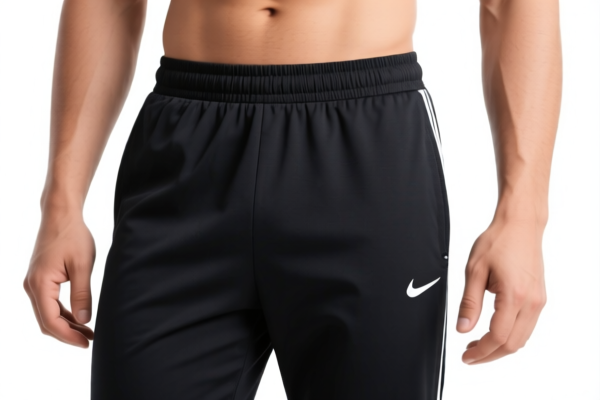
AI Analysis
👖 Men's Pants and Belt Combo: The Ultimate HS Code & Tariff Breakdown
🌐 HS Code Reference & Customs Clearance Guide | 2026 Latest Tariff Analysis | Professional Strategy
📌 One Product, Four Destinations: Why Classification Changes Everything
A simple "Men's Pants and Belt" set can mean the difference between paying 24.6% or 55.0% in duties. In international trade, accessories like belts are often the deciding factor in whether a product is classified as a Garment Accessory (lower tax) or a Leather/Bag Good (higher tax).
This guide analyzes the four specific HS Codes provided in the data, explaining the logic behind each classification and detailing the exact tariff structure.
📦 Part 1: The "Garment Accessory" Route (Lower Tax Options)
These classifications view the belt primarily as an appendage to the clothing, not a standalone bag or leather good.
🎯 Option A: 6217.10.95.50 – Other Made-Up Clothing Accessories
Logic: This code is used when the belt set is broadly categorized as a "clothing accessory." It assumes the item serves the general purpose of dressing up the pants rather than functioning as a storage container.
| Item | Detail |
|---|---|
| Product Description | Belt set classified as a clothing accessory, fitting the description of "other clothing accessories." |
| Total Tax Rate | 32.1% |
| Tax Breakdown | • Base Tariff: 14.6% • Section 301 (Additional) Tariff: 7.5% • Section 122 Tariff: 10% |
| Key Insight | This is a mid-range tariff option. It applies if the belt is made of fabric, synthetic material, or non-leather composites that don't trigger the "leather bag" classification. |
🎯 Option B: 6217.10.85.00 – Other Made-Up Clothing Accessories (Specific Subcategory)
Logic: This code also falls under "Ready-Made Garment Accessories." It suggests a specific material composition (possibly woven textiles or specific synthetic blends) that is distinct from the
95.50subcategory but still firmly within the garment accessory chapter (Chapter 62).
| Item | Detail |
|---|---|
| Product Description | Belt set belongs to ready-made garment accessories; materials can be fabric, leather, or synthetic. |
| Total Tax Rate | 24.6% (The Lowest Rate!) |
| Tax Breakdown | • Base Tariff: 14.6% • Section 301 (Additional) Tariff: 0.0% • Section 122 Tariff: 10% |
| Key Insight | 🔥 Winner for Cost Efficiency. Notice the 0% Section 301 tariff. This classification avoids the 7.5%-25% additional duties applied to other codes. It is ideal for textile-based or certain synthetic belt sets. |
🎯 Option C: 6217.90.90.75 – Men’s Belt (Specific Gender/Material)
Logic: This code explicitly identifies the item as a "Men's Belt" (or part of a men's ensemble) and classifies it as a clothing accessory. The summary notes materials can be cotton, leather, or synthetic fiber.
| Item | Detail |
|---|---|
| Product Description | Men's belt classified as a clothing accessory; materials include cotton, leather, or synthetic fiber. |
| Total Tax Rate | 32.1% |
| Tax Breakdown | • Base Tariff: 14.6% • Section 301 (Additional) Tariff: 7.5% • Section 122 Tariff: 10% |
| Key Insight | Similar to Option A. If the customs officer emphasizes the "Men's" aspect and treats the belt as a standard apparel accessory, this rate applies. It is higher than Option B due to the 7.5% Section 301 charge. |
💼 Part 2: The "Bag/Container Extension" Route (Higher Tax Options)
These classifications view the belt not just as an accessory, but as an extension of a bag or container, often implying leather or heavy-duty construction. This triggers higher Section 301 tariffs.
🎯 Option D: 4202.99.90.00 – Articles of Apparel, Travel Goods, Hand Bags... (Other)
Logic: The inference here is that the belt set is made of leather or textile materials and is treated as an "extension accessory" of bags/similar containers. Chapter 42 covers "Articles of Leather." If the belt is leather, customs often pulls it into this chapter, which carries heavy penalties.
| Item | Detail |
|---|---|
| Product Description | Belt set inferred as leather/textile material, belonging to the extended accessories of bags and similar containers. |
| Total Tax Rate | 55.0% (The Highest Rate!) |
| Tax Breakdown | • Base Tariff: 20.0% • Section 301 (Additional) Tariff: 25.0% • Section 122 Tariff: 10% |
| Key Insight | 🚫 Avoid if possible. The 25% Section 301 tariff is the maximum standard penalty. This classification is risky for leather belts. |
🎯 Option E: 4202.39.90.00 – Wallets, Purses, Key Pouches, etc.
Logic: This code is used when the belt set's form factor resembles a container or item for carrying objects. If the belt has a large buckle or pouch-like attachment, it may be classified under "wallets/key pouches" equivalents.
| Item | Detail |
|---|---|
| Product Description | Belt set shape resembles a container/item carrier; material is leather or textile. |
| Total Tax Rate | 55.0% |
| Tax Breakdown | • Base Tariff: 20.0% • Section 301 (Additional) Tariff: 25.0% • Section 122 Tariff: 10% |
| Key Insight | Same as Option D. The "container" analogy drives the classification into Chapter 42, resulting in the highest tax burden. |
💰 Part 3: Tariff Structure Deep Dive (Understanding the 3 Layers)
To understand why the rates differ, we must break down the three components of the tax:
-
Base Tariff (MFN Rate):
- 14.6% (for Chapter 62 - Textiles/Garments): Lower because apparel accessories are treated as part of the clothing industry.
- 20.0% (for Chapter 42 - Leather): Higher because leather goods are classified separately and often face stricter import controls.
-
Section 301 Additional Tariff (Trade War Tariff):
- 0.0%: Applies only to specific subcodes under
6217.10.85.00. - 7.5%: Applies to
6217.10.95.50and6217.90.90.75. - 25.0%: Applies to all
4202.xxxxcodes. This is the punitive tariff for leather/bag-related imports from China.
- 0.0%: Applies only to specific subcodes under
-
Section 122 Tariff:
- 10%: Flat rate applied to ALL codes in the provided data. This is likely a specific policy surcharge (e.g., for de minimis violations or specific trade remedies).
🧮 Math Check for
6217.10.85.00(The Best Case):
14.6% (Base) + 0.0% (Sec 301) + 10.0% (Sec 122) = 24.6%🧮 Math Check for
4202.99.90.00(The Worst Case):
20.0% (Base) + 25.0% (Sec 301) + 10.0% (Sec 122) = 55.0%
🛠️ Part 4: Customs Clearance Practical Advice
✅ 1. Material Matters Most
- Fabric/Textile/Synthetic Belts: Aim for
6217.10.85.00(24.6%). Ensure your product description emphasizes "textile," "canvas," or "synthetic webbing." Avoid the word "leather" unless necessary. - Leather Belts: You are at high risk for
4202.xxxx(55.0%). If you can prove the primary function is garment accessory rather than bag accessory, try to argue for6217.90.90.75(32.1%), but be prepared for scrutiny.
✅ 2. Description is Key
Do NOT just write "Belt." * Bad: "Leather Belt Set" → Triggers Chapter 42 (55%). * Good: "Men's Textile Clothing Accessory Belt Set, Woven Material" → Supports Chapter 62 (24.6%-32.1%).
✅ 3. Avoid "Container" Language
- Do NOT describe the belt as having "storage capability," "pouch," or "wallet-like features."
- The summaries for
4202.39.90.00explicitly mention "shape resembles container." Using this language in your commercial invoice will trigger the 55% tax.
✅ 4. Documentation Checklist
| Document | Requirement |
|---|---|
| Commercial Invoice | Clearly state Material Composition (e.g., 100% Cotton, 100% Polyester). If leather, specify type. |
| Product Photos | Show the belt as an accessory to pants, not as a standalone bag. |
| Material Declaration | Explicitly declare if the belt contains >20% leather (may trigger Chapter 42). |
| Set Definition | Clarify if it's a "Pants + Belt Set" or "Belt Sold Separately." Sets are often valued on the principal article (pants), which might have different rules, but for the belt component, these codes apply. |
🌍 Part 5: Global Context & Final Verdict
| Classification | HS Code | Total Tax | Risk Level | Best For |
|---|---|---|---|---|
| 🏆 Best Option | 6217.10.85.00 |
24.6% | Low | Textile/Synthetic Belts |
| ⚖️ Mid Option | 6217.10.95.50 / 6217.90.90.75 |
32.1% | Medium | General Clothing Accessories |
| ⚠️ High Risk | 4202.99.90.00 / 4202.39.90.00 |
55.0% | High | Leather Belts / Bag-like Accessories |
📌 Final Recommendation:
To minimize costs, classify the belt as a textile/synthetic clothing accessory under6217.10.85.00. Avoid any language suggesting it is a bag, pouch, or made of traditional leather unless absolutely required. The 30.4% savings (55.0% - 24.6%) is significant and worth the effort in precise documentation.
🎯 Pro Tip:
"If it looks like a bag, tax like a bag. If it looks like pants, tax like pants."
Keep your belt simple, textual, and accessory-focused to stay in the lower tax bracket!
✨ Professional Customs Clearance Starts with Precise Classification!
💼 Don't let a wrong HS Code cost you half your profit margin!
Customer Reviews
About HS Code Classification
The Harmonized System (HS) is an internationally standardized nomenclature developed by the World Customs Organization (WCO) to classify traded products. Over 200 countries use the HS system as the basis for customs tariffs, trade statistics, and import/export regulations.
Each HS code follows a hierarchical structure:
- Chapter (2 digits) — Broad category of goods (e.g., Chapter 84: Machinery and Mechanical Appliances)
- Heading (4 digits) — More specific grouping within the chapter
- Subheading (6 digits) — Internationally standardized breakdown, used by all WCO member countries
- National subdivisions (8-10 digits) — Country-specific extensions for further classification, such as US HTSUS 10-digit codes
Correct HS code classification is essential for smooth customs clearance, accurate duty payment, and compliance with trade regulations. Misclassification can lead to customs delays, overpayment of duties, or penalties.
When importing from CN to US, the applicable tariff rates may include:
- Most-Favored-Nation (MFN) rate — The standard duty rate applied to WTO members
- General rate — Applied to countries without trade agreements
- Trade remedy duties — Additional tariffs such as Section 301 (anti-dumping), Section 232 (national security), or countervailing duties
The information provided on this page is for reference purposes only. For official classification, please consult with your local customs authority or a licensed customs broker.