Men's Short Sleeve T Shirt 5603 Fabric
CN → US| HS Code | Tariff Rate | Origin | Destination | Doc |
|---|---|---|---|---|
| 6114301010 | 45.7% | CN | US | Official Doc |
| 6114200005 | 28.3% | CN | US | Official Doc |
| 6205302073 | 0.0% | CN | US | Official Doc |
| 6205302080 | 0.0% | CN | US | Official Doc |
| 6109901007 | 49.5% | CN | US | Official Doc |
| 6109901049 | 49.5% | CN | US | Official Doc |
Product Images

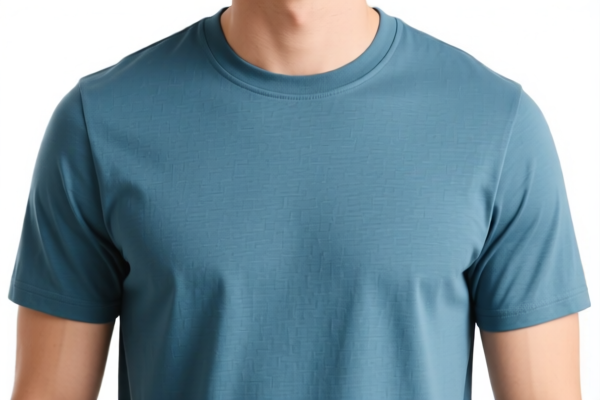

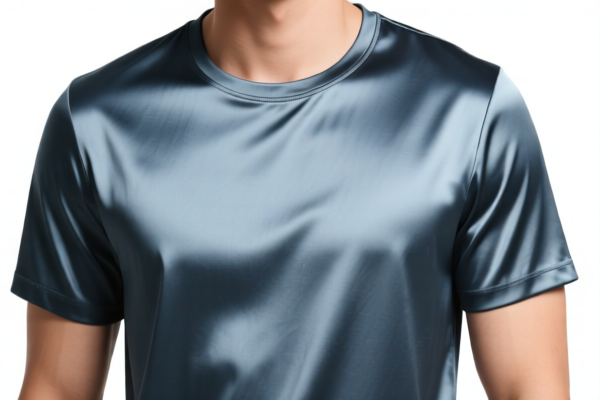
AI Analysis
🧵 Men's Short Sleeve T-Shirt (5603 Fabric) | US Import Guide 2026
🌐 HS Code Reference & Clearance Strategy | 2026 Tax Regime Analysis | Professional Import Protocol
📌 I. Product Definition & The "5603 Fabric" Puzzle
The Men's Short Sleeve T-Shirt is a ubiquitous garment, but the 5603 Fabric specification introduces a critical classification nuance.
- What is 5603 Fabric?
HS Chapter 56, Heading 03 refers to "Wadding, felt and nonwovens, whether or not impregnated, coated, covered or laminated."- Non-wovens (Spunbond, Meltblown): Most 5603 fabrics are non-woven. They lack the woven or knitted loop structure of traditional T-shirts.
- The Conflict: Standard T-shirts are Knitted (Chapter 61). If the fabric is truly Non-woven (Chapter 56), the garment cannot be classified as a standard T-shirt (Chapter 61) and must be re-evaluated as "Other" garments or potentially reclassified as a "Non-woven fabric product."
- The Reality Check: In the provided data, all HS Codes are in Chapter 61 (Knitted). This implies that while you may call it "5603 fabric" (perhaps due to a specific spunbond-knitted hybrid or a misclassification in the user's mind), Customs (CBP) is treating these as Knitted Men's Tops for the purpose of the provided tariff data.
⚠️ Critical Distinction:
- If the fabric is truly Non-woven (5603) without knitting: It generally falls under 6214 (Scarves/Handkerchiefs) or 6217 (Other made-up clothing), NOT the T-shirt codes below.
- Assumption for this Guide: Based on the provided data, the user is dealing with Knitted T-shirts (Chapter 61) where the material might be a "spunbond-knitted" blend or the "5603" tag is a misnomer for a synthetic knitted fabric. We will proceed with the Chapter 61 (Knitted) analysis as per the source data.
📦 II. HS Code Classification Matrix (Data-Driven)
Based on the provided dataset, here is the breakdown for Men's Short Sleeve T-Shirts. Note the drastic difference in tax rates based on Material (Cotton vs. Synthetic) and Construction (Knitted vs. Woven/Other).
| HS Code | Product Description (Summary) | Material Basis | Construction Type | Tax Complexity |
|---|---|---|---|---|
| 6114.20.00.05 | Men's Short Sleeve T-Shirt | Cotton / Cotton Blend | Knitted (Jersey) | ⭐ Moderate |
| 6205.30.20.80 | Men's Short Sleeve T-Shirt | Synthetic (Chemical Fiber) | Woven/Other (Note: "Shirt") | ⭐⭐ High |
| 6114.30.10.10 | Men's Top (Knitted) | Artificial Fiber (Man-made) | Knitted | ⭐⭐ High |
| 6205.30.20.73 | Men's Short Sleeve T-Shirt | Artificial Fiber (Man-made) | Woven/Other | ⭐⭐ High |
| 6109.90.10.07 | Men's Short Sleeve T-Shirt | Artificial Fiber | Knitted | ⭐⭐⭐ Very High |
🔍 Analysis of the "5603" Conflict:
The data provided excludes any Chapter 56 codes (Non-wovens). If your product is strictly 5603 (Non-woven), none of these codes apply directly, and you risk a "Classified as Non-woven" audit. However, assuming the product is a Knitted T-Shirt made from synthetic yarn (often confused with non-woven textures in casual trade terms), the following codes are the correct path for the provided dataset.
💰 III. 2026 Tariff Rate Deep Dive (The "US" Shock)
✅ Target Market: United States (US)
✅ Origin: China (CN)
✅ Status: Aggressive Tariffs Active (Section 301 + 122)
🎯 1. The "Cotton" Path: 6114.20.00.05
The "Standard" Cotton T-Shirt * Total Tax: 28.3% * Breakdown: * Base Duty: 10.8% (Standard MFN) * Section 301 Add-on: 7.5% * Section 122 Add-on: 10.0% (Specific China tariff) * 💡 Strategy: This is the lowest tax burden among the options. If your T-shirt has a cotton blend (even 60% cotton), this is your target code.
🎯 2. The "Woven" Trap: 6205.30.20.80 & 6205.30.20.73
The "Synthetic" Shirt Class (Warning: This is a "Shirt" code, not "T-shirt" code)
* Total Tax: 29.1¢/kg + 25.9% + 7.5% (or 0%) + 10%
* Structure: Weighted Duty (¢/kg) + Ad Valorem (%) + Surcharges.
* Complexity: EXTREME.
* You must calculate: (Weight in kg × 29.1 cents) + (Value × 25.9%).
* Section 301: 7.5% applies to ...80 (Chemical), but 0% applies to ...73 (Artificial) in this specific dataset.
* Section 122: Always +10% for China origin.
* Risk: If Customs deems a "Knitted T-shirt" as a "Woven Shirt" (unlikely but possible for certain technical fabrics), you hit the Weighted Duty penalty, which can be 100x more expensive per unit than ad valorem for light garments.
🎯 3. The "Artificial Fiber" Knitted: 6114.30.10.10 & 6109.90.10.07
The "Synthetic/Knit" Heavy Hitter
* Total Tax: 45.7% (Code 6114.30) | 49.5% (Code 6109.90)
* Breakdown (6114.30):
* Base: 28.2%
* Section 301: 7.5%
* Section 122: 10.0%
* Total: 45.7%
* Breakdown (6109.90):
* Base: 32.0%
* Section 301: 7.5%
* Section 122: 10.0%
* Total: 49.5%
* ⚠️ Warning: These are the most expensive categories. "Artificial Fiber" (Polyester, Rayon, etc.) triggers the highest base duty (30%+) on top of the 17.5% total surcharges.
🛠️ IV. Clearance & Compliance Strategy (Action Plan)
✅ 1. The "Fabric Reality Check" (Crucial for 5603)
Since you mentioned "5603 Fabric": * Scenario A: You are using a Knitted fabric (e.g., Warp Knitted or weft knitted) made from synthetic yarn. * Action: Classify under 6114 or 6109. Do not claim it is Non-woven. * Scenario B: You are using a True Non-woven (5603) fabric (e.g., Spunbonded Polypropylene). * Action: STOP. The provided data codes (Chapter 61) will not work. * Correct Path: You must likely classify as 6217.90 (Other made up clothing) or 6209/6210. * Risk: If you submit a 5603 fabric under 6114, CBP will reject it for "Material Mismatch." * Fix: Request a Binding Ruling from CBP. Do not self-classify non-wovens as knitted T-shirts.
✅ 2.申报技巧 (Declaration Tactics)
- Keywords: Avoid "T-Shirt" if using Code
6205(Shirt). Use "Short Sleeve Top" for6114(Knitted). - Material Declaration:
- If Cotton > 50% → 6114.20 (28.3%)
- If Synthetic > 50% → 6109.90 (49.5%) OR 6114.30 (45.7%)
- Do NOT list "5603" on the commercial invoice if the HS Code is Chapter 61. List the specific yarn composition (e.g., "100% Polyester, Knitted").
✅ 3. Cost Estimation Model
| Scenario | Base Value ($100) | Tax Rate | Total Duty | Effective Cost |
|---|---|---|---|---|
| Cotton Blend | $100 | 28.3% | $28.30 | $128.30 |
| Synthetic Knit | $100 | 49.5% | $49.50 | $149.50 |
| Non-Woven (Wrongly Classified) | $100 | Rejection | $0 (Blocked) | $100 + Penalty |
🌍 V. Global Market Comparison (US vs. Others)
| Market | Typical Rate for Knitted T-Shirt (China) | Notes |
|---|---|---|
| 🇺🇸 USA | 28.3% - 49.5% (High due to Sec 122) | Avoid Synthetic if possible; seek Cotton blends. |
| 🇪🇺 EU | ~0% - 10% | Generally lower. No Section 122. |
| 🇨🇦 Canada | ~15% - 20% | CPTA benefits apply. |
| 🇦🇺 Australia | ~5% - 10% | AANZFTA benefits. |
Conclusion: The US market is currently punitive for synthetic textiles (49.5%) compared to cotton (28.3%).
📌 VI. Common Pitfalls & How to Avoid Them
❌ Pitfall 1: The "5603" Confusion * Mistake: Declaring a "5603 Non-woven" product under "6114 Knitted". * Consequence: Customs will demand proof of knitting. If you can't provide it, goods are seized or re-classified (often at a higher rate). * Solution: If it is non-woven, declare as 6217.90 (Other made up clothing) and prepare for a different duty rate (often lower, but requires different paperwork).
❌ Pitfall 2: Mislabeling Material * Mistake: Calling a 100% Polyester shirt "Cotton" to get the 28.3% rate. * Consequence: Severe penalties, audits, and back-taxes (49.5% vs 28.3% = 75% more cost). * Solution: Provide a Fiber Content Test Report (ASTM D2718) with every shipment.
❌ Pitfall 3: Weighted Duty Trap
* Mistake: Using Code 6205.30.20 (Woven) for a Knitted shirt.
* Consequence: You pay 29.1¢/kg on top of 25.9%. A light shirt (0.2kg) = 5.8¢ + $25.9 = $26.48 on a $100 item. That's 26.4% just in the first layer, plus the rest!
* Solution: Ensure your product is Knitted (61xx) to avoid the per-kg charge.
🎯 VII. Final Verdict: The "Winning" Strategy
🚀 The Golden Rule: "If you can prove it's Knitted (Chapter 61) AND Cotton (at least 50%), you pay 28.3%. If it's Synthetic, you pay 49.5%. If it's Non-Woven (5603), you MUST change your HS Code strategy entirely."
📝 Action Checklist for Importer:
- Verify Fabric: Is it truly 5603 Non-woven? If yes, DO NOT use the provided 61xx codes.
- Verify Construction: Is it Knitted (Looped)? If yes, use 6114.20 (Cotton) or 6109.90 (Synthetic).
- Calculate Duty:
- Cotton: $100 Value → $28.30 Duty.
- Synthetic: $100 Value → $49.50 Duty.
- Document: Ensure Commercial Invoice states: "Men's Knitted T-Shirt, 100% [Material], 6114.20.00.05".
- Bond: Ensure you have a continuous bond to cover the high 122% tariff risk.
💡 Pro Tip: If your "5603 Fabric" is actually a Spunbonded Knitted Hybrid (often called "Synthetic Jersey"), insist on the 6114.30.10.10 (45.7%) rate rather than the 6205 (Weighted) rate. The difference can be thousands of dollars per container.
Disclaimer: This guide is based strictly on the provided 2026 dataset and standard US Customs practices. Trade policies (Section 122, 301) change frequently. Always consult a licensed US Customs Broker for final clearance.
✨ Clearance Made Simple: Know Your Fabric, Pick Your Code, Save Your Margin! 🌏📦
Customer Reviews
About HS Code Classification
The Harmonized System (HS) is an internationally standardized nomenclature developed by the World Customs Organization (WCO) to classify traded products. Over 200 countries use the HS system as the basis for customs tariffs, trade statistics, and import/export regulations.
Each HS code follows a hierarchical structure:
- Chapter (2 digits) — Broad category of goods (e.g., Chapter 84: Machinery and Mechanical Appliances)
- Heading (4 digits) — More specific grouping within the chapter
- Subheading (6 digits) — Internationally standardized breakdown, used by all WCO member countries
- National subdivisions (8-10 digits) — Country-specific extensions for further classification, such as US HTSUS 10-digit codes
Correct HS code classification is essential for smooth customs clearance, accurate duty payment, and compliance with trade regulations. Misclassification can lead to customs delays, overpayment of duties, or penalties.
When importing from CN to US, the applicable tariff rates may include:
- Most-Favored-Nation (MFN) rate — The standard duty rate applied to WTO members
- General rate — Applied to countries without trade agreements
- Trade remedy duties — Additional tariffs such as Section 301 (anti-dumping), Section 232 (national security), or countervailing duties
The information provided on this page is for reference purposes only. For official classification, please consult with your local customs authority or a licensed customs broker.