Men's Short Sleeved Animal Wool Pajamas
CN → US| HS Code | Tariff Rate | Origin | Destination | Doc |
|---|---|---|---|---|
| 6107299000 | 15.6% | CN | US | Official Doc |
| 6207299010 | 24.6% | CN | US | Official Doc |
| 5112113030 | 60.0% | CN | US | Official Doc |
| 6207994000 | 23.6% | CN | US | Official Doc |
| 6107292000 | 26.0% | CN | US | Official Doc |
Product Images
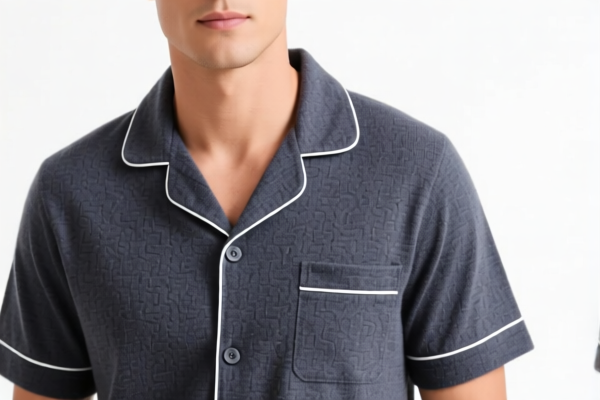
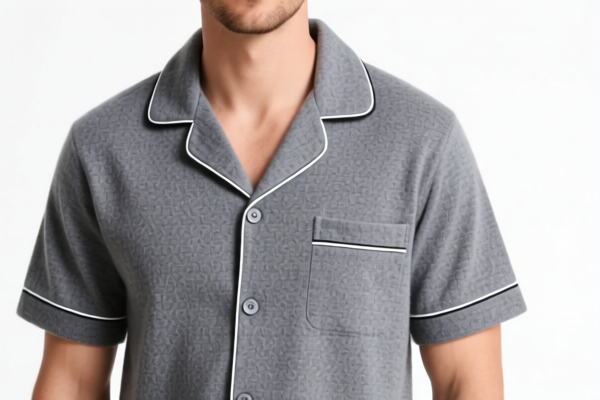
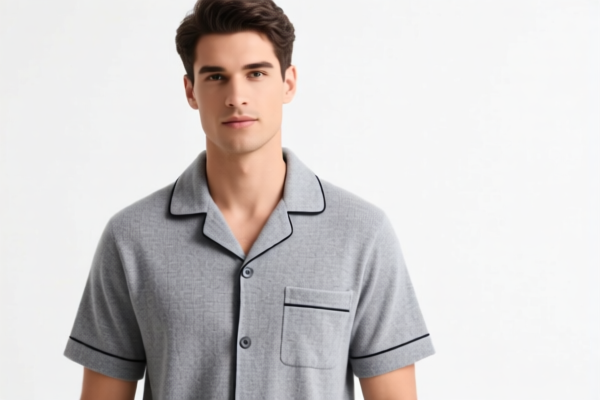
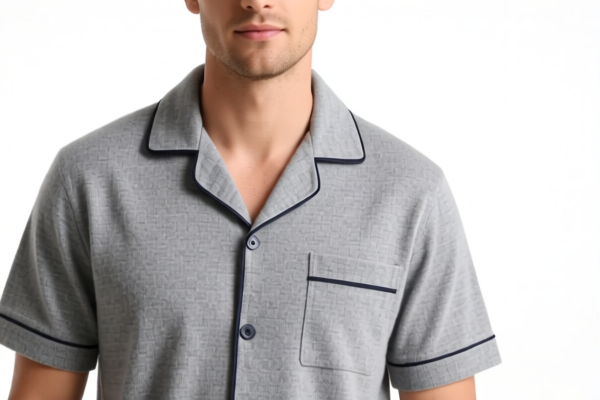
AI Analysis
👘 Men's Short-Sleeved Animal Wool Pajamas
🌐 HS Code Reference & Customs Clearance Guide | 2026 Latest Tariff Analysis | Professional Transit Strategy
📌 I. Product Definition & Classification: Do You Really Understand "Animal Wool Pajamas"?
Men's short-sleeved pajamas made from fine animal fibers represent a niche but high-value category in textile imports. In international trade, the classification hinges on three critical factors:
1. Garment Type: Pajamas (specifically nightwear/undergarments).
2. Fabric Composition: "Fine Animal Hair" (e.g., Cashmere, Mohair, Alpaca, or fine Wool).
3. Knitting vs. Woven: The distinction between 61xx (Knitted/ Crocheted) and 62xx (Woven).
⚠️ Key Distinction Point:
- If the fabric is Knitted → Falls under Chapter 61 (e.g.,6107).
- If the fabric is Woven → Falls under Chapter 62 (e.g.,6207or6209).
- "Fine Animal Hair" triggers specific subheadings that often carry higher duties due to luxury classification and trade restrictions (Section 122).
📦 II. HS Code Classification Details (2026 Latest Tariff Authority Comparison)
Based on the provided data, here are the four most relevant HS Codes for Men's Short-Sleeved Animal Wool Pajamas, ranked by relevance and tax implication.
| HS Code | Product Description | Application Scenario | Tax Rate |
|---|---|---|---|
6107.29.90.00 |
Men's or boys' knitted/p crocheted nightwear & sleepwear, Other (Fine Animal Hair) | Knitted pajamas where material is fine animal hair but doesn't fit other specific wool categories | 15.6% |
6207.29.90.10 |
Men's or boys' woven nightwear & sleepwear, Other (Fine Animal Hair) | Woven pajamas with fine animal hair; specific material requirement met | 24.6% |
6107.29.20.00 |
Men's or boys' knitted/p crocheted nightwear & sleepwear, Of fine animal hair | Direct Match: Knitted, men's, explicit fine animal hair content | 26.0% |
6207.99.40.00 |
Men's or boys' other woven articles of apparel & clothing accessories, Of fine animal hair | Woven men's apparel not elsewhere specified, containing fine animal hair | 23.6% |
5112.11.30.30 |
Woven fabrics of high-alkali wool or fine animal hair, Other | ⚠️ Likely Incorrect: This is for fabrics, not finished garments. Only use if importing bulk fabric, not ready-to-wear pajamas. | 60.0% |
🔍 Priority Analysis:
- Best Fit for Knitted Pajamas:6107.29.90.00(Lowest tax at 15.6%) or6107.29.20.00(26.0%).
- Best Fit for Woven Pajamas:6207.29.90.10(24.6%) or6207.99.40.00(23.6%).
- Avoid5112.11.30.30: This code is for textile materials/fabrics, not finished pajama sets. Using this for finished goods will likely lead to customs rejection or misclassification penalties.
💰 III. 2026 Latest Tariff Rate Breakdown (Including Surtaxes & Policy Add-ons)
✅ Applicable Country: USA (US)
✅ Origin: China (CN)
✅ Effective Date: Current rates include Section 301, Section 232 (if applicable), and Section 122 (Uyghur Forced Labor Prevention Act / General Trade restrictions).
🎯 1. 6107.29.90.00 – Men's Knitted Nightwear, Other (Fine Animal Hair)
| Item | Content |
|---|---|
| Base Duty Rate | 5.6% |
| Additional Duty (Sec 301/122) | 0.0% |
| Section 122 Tariff | 10% |
| Total Duty Rate | 15.6% |
| Tax Calculation | CIF Value × 15.6% |
| De Minimis Eligibility | ❌ No (Section 122 goods generally excluded from de minimis exemption) |
| Legal Basis Path | HTSUS:6107.29.90.00 → USITC:Section 122 → CEB:UFLPA |
📌 Explanation:
- This is the most cost-effective option for knitted pajamas.
- The "Base 5.6%" is standard for other knit nightwear.
- "Section 122 10%" reflects current enforcement on certain textiles; ensure your supply chain compliance documentation is ready.
🎯 2. 6207.29.90.10 – Men's Woven Nightwear, Other (Fine Animal Hair)
| Item | Content |
|---|---|
| Base Duty Rate | 7.1% |
| Additional Duty (Sec 301) | 7.5% |
| Section 122 Tariff | 10% |
| Total Duty Rate | 24.6% |
| Tax Calculation | CIF Value × 24.6% |
| De Minimis Eligibility | ❌ No |
| Legal Basis Path | HTSUS:6207.29.90.10 → USITC:Section 301 → CEB:Section 122 |
📌 Note:
- Woven fabrics generally incur higher base duties than knits.
- The 7.5% additional duty is a standard trade remedy rate.
🎯 3. 6107.29.20.00 – Men's Knitted Nightwear, Of Fine Animal Hair
| Item | Content |
|---|---|
| Base Duty Rate | 8.5% |
| Additional Duty (Sec 301) | 7.5% |
| Section 122 Tariff | 10% |
| Total Duty Rate | 26.0% |
| Tax Calculation | CIF Value × 26.0% |
| De Minimis Eligibility | ❌ No |
| Legal Basis Path | HTSUS:6107.29.20.00 → USITC:Section 301 → CEB:Section 122 |
📌 Important:
- If you explicitly declare "Fine Animal Hair" in a subheading that has a specific base rate (like6107.29.20.00), the base duty is higher (8.5% vs 5.6%).
- Strategy: Check if your specific wool type qualifies for the "Other" category (90.00) to save ~10% in duty.
🎯 4. 6207.99.40.00 – Men's Other Woven Apparel, Of Fine Animal Hair
| Item | Content |
|---|---|
| Base Duty Rate | 6.1% |
| Additional Duty (Sec 301) | 7.5% |
| Section 122 Tariff | 10% |
| Total Duty Rate | 23.6% |
| Tax Calculation | CIF Value × 23.6% |
| De Minimis Eligibility | ❌ No |
| Legal Basis Path | HTSUS:6207.99.40.00 → USITC:Section 301 → CEB:Section 122 |
📌 Comparison:
- Slightly cheaper than6207.29.90.10(23.6% vs 24.6%).
- Use this if the pajamas do not fit the specific "Nightwear" sub-subheading but are clearly woven men's apparel.
🚫 Why 5112.11.30.30 is NOT Recommended for Finished Pajamas
| Item | Content |
|---|---|
| Base Duty Rate | 25.0% |
| Additional Duty (Sec 301) | 25.0% |
| Section 122 Tariff | 10% |
| Total Duty Rate | 60.0% |
| Reason for Exclusion | This HS Code is for Woven Fabrics of Fine Animal Hair, not finished garments. |
⚠️ Critical Warning:
- Misclassification Risk: Declaring finished pajamas as "fabric" is a serious customs violation.
- High Penalty: Even if accepted, the 60% tax rate is excessive and unnecessary.
- Customs Action: Likely to trigger an audit, seizure, or forced reclassification with penalties.
- Only Use For: Importing bulk rolls of woolen fabric for manufacturing, NOT for retail-ready pajamas.
🛠️ IV. Customs Clearance Practical Advice (Combat Pitfalls)
✅ 1. Documentation Checklist (Mandatory)
| Document | Required | Notes |
|---|---|---|
| ✅ Product Specification Sheet | ✔️ | Must specify: "Men's Short-Sleeved Pajamas", Material: "Fine Animal Hair (e.g., Cashmere/Mohair)", Knitted/Woven. |
| ✅ Fiber Content Test Report | ✔️ | Crucial. Must be from an ISO-accredited lab confirming "Fine Animal Hair" percentage. |
| ✅ Commercial Invoice | ✔️ | Clear description: "Men's Knitted Wool Pajamas, Short Sleeve". Avoid vague terms like "Clothing". |
| ✅ Packing List | ✔️ | Detail number of pieces, sizes, and total weight. |
| ✅ Proof of Origin | ✔️ | If originating from China, be prepared for Section 122 scrutiny. |
| ✅ Supply Chain Disclosure | ✔️ | Under UFLPA/Section 122, you may need to prove the wool is not from forced labor regions. |
✅ 2. Declaration Tips (Key Mantra)
🔥 "Knitted vs. Woven, Hair Type Must Be Clear, 122 Compliance is Key!"
| Scenario | Correct Declaration | Wrong Declaration |
|---|---|---|
| Knitted Pajamas | 6107.29.90.00 or 6107.29.20.00 |
6207.xxxx (Woven code) → Penalty |
| Woven Pajamas | 6207.29.90.10 or 6207.99.40.00 |
6107.xxxx (Knitted code) → Penalty |
| Fabric Import | 5112.11.30.30 |
Declaring as "Pajamas" → 60% Tax Risk |
| Material Declaration | "100% Fine Cashmere Wool" | "Animal Hair" → Ambiguity |
| Section 122 | Provide full supply chain traceability | No documentation → Detention/Seizure |
✅ 3. Special Handling Cases
| Situation | Handling Advice |
|---|---|
| Blended Fabrics | If >50% fine animal hair, declare under "Fine Animal Hair" code. If <50%, may fall under "Other Textiles" with lower duties. Check composition! |
| Sample Imports | Even samples of Section 122 goods are not de minimis eligible. Declare properly. |
| Luxury Branding | If branded (e.g., Loro Piana), ensure invoice reflects true transaction value. Undervaluation leads to severe penalties. |
| Short Sleeves vs. Long Sleeves | Both fall under the same 6107.29 or 6207.29 subheadings. Sleeve length does not change HS Code. |
🌍 V. Global Market Comparison (2026 Latest)
| Country/Region | Recommended HS Code | Duty Rate | Certification | Notes |
|---|---|---|---|---|
| 🇺🇸 USA | 6107.29.90.00 |
15.6% | None Specific | Highest compliance risk (Section 122). |
| 🇨🇳 China | 6107.29.90.00 |
~5% | CCC (if applicable) | Lower base duty, no Section 301. |
| 🇪🇺 EU | 6107.29.90.00 |
~6-8% | CE (if applicable) | No Section 122 equivalent, but REACH for chemicals. |
| 🇯🇵 Japan | 6107.29.90.00 |
~6-10% | None Specific | Stable rates, focus on fiber accuracy. |
📌 Conclusion:
- USA is the most complex market due to Section 122 and high add-on tariffs.
- Knitted fabrics (6107) are generally cheaper than Woven (6207) for pajamas.
- Supply chain transparency is the #1 requirement for successful US clearance.
📌 VI. Common Errors & Pitfalls (Blood & Tears Lessons)
❌ Error 1: Declaring Finished Pajamas as Fabric (5112.11.30.30)
👉 Consequence: 60% Tax Rate + Customs Audit.
💡 Fix: Use 6107 or 6207 for finished garments.
❌ Error 2: Ignoring Knitted vs. Woven Distinction
👉 Consequence: Misclassification, delays, fines.
💡 Fix: Check fabric structure under microscope or ask manufacturer.
❌ Error 3: Vague Material Description ("Wool")
👉 Consequence: Customs may assess "Other Textiles" with higher duties or require testing.
💡 Fix: Specify "Fine Animal Hair (Cashmere/Mohair)" and provide test reports.
❌ Error 4: Assuming De Minimis Applies
👉 Consequence: Package seized by CBP.
💡 Fix: Section 122 goods never qualify for de minimis.
✅ Correct Declaration Example:
"Men's Short-Sleeved Knitted Pajamas, 100% Fine Cashmere Wool, Not Otherwise Specified, Origin: China, HTS: 6107.29.90.00"
🎯 VII. Conclusion: Precision in Classification Saves Money!
🎯 Remember the Mantra:
🔹 "Knitted vs. Woven, Choose Wisely. Fine Hair, Declare Clearly. Section 122, Stay Ready."
🔹 "Fabric Code ≠ Garment Code. Mistake Cost: 60% vs. 15%."
📌 Pro Tip:
If your wool originates from non-sensitive regions (e.g., Australia, New Zealand), provide Country of Origin for Fiber documentation to mitigate Section 122 risks.
Recommend Pre-Ruling (CBP Advance Ruling) for large shipments to ensure HS Code certainty.
📣 Immediate Action:
📞 Contact your Customs Broker + Provide Fiber Test Report + Verify Supply Chain Transparency
🚀 Ensure your Men's Wool Pajamas clear customs smoothly, legally, and cost-effectively!
✨ Professional Customs Clearance Starts with Accurate Classification!
💼 Your profit margin depends on getting the HS Code right!
Customer Reviews
About HS Code Classification
The Harmonized System (HS) is an internationally standardized nomenclature developed by the World Customs Organization (WCO) to classify traded products. Over 200 countries use the HS system as the basis for customs tariffs, trade statistics, and import/export regulations.
Each HS code follows a hierarchical structure:
- Chapter (2 digits) — Broad category of goods (e.g., Chapter 84: Machinery and Mechanical Appliances)
- Heading (4 digits) — More specific grouping within the chapter
- Subheading (6 digits) — Internationally standardized breakdown, used by all WCO member countries
- National subdivisions (8-10 digits) — Country-specific extensions for further classification, such as US HTSUS 10-digit codes
Correct HS code classification is essential for smooth customs clearance, accurate duty payment, and compliance with trade regulations. Misclassification can lead to customs delays, overpayment of duties, or penalties.
When importing from CN to US, the applicable tariff rates may include:
- Most-Favored-Nation (MFN) rate — The standard duty rate applied to WTO members
- General rate — Applied to countries without trade agreements
- Trade remedy duties — Additional tariffs such as Section 301 (anti-dumping), Section 232 (national security), or countervailing duties
The information provided on this page is for reference purposes only. For official classification, please consult with your local customs authority or a licensed customs broker.