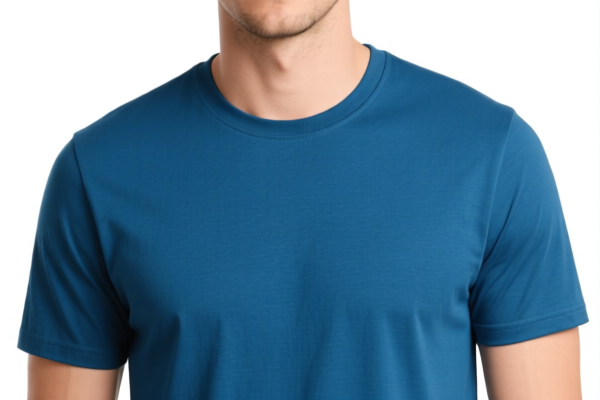
Men's T shirt
CN → US| HS Code | Tariff Rate | Origin | Destination | Doc |
|---|---|---|---|---|
| 6109901007 | 49.5% | CN | US | Official Doc |
| 6114301010 | 45.7% | CN | US | Official Doc |
| 6109901049 | 49.5% | CN | US | Official Doc |
| 6114909010 | 15.6% | CN | US | Official Doc |
Product Images


AI Analysis
👕 Men's T-Shirt: Global Trade, HS Codes & 2026 Clearance Strategy
🌐 HS Code Reference & Customs Clearance Guide | 2026 Latest Tariff Analysis | Professional Clearance Strategy
📌 I. Product Definition & Classification: Do You Know Your "T-Shirt"?
A Men's T-Shirt is a staple of global apparel trade, primarily categorized under Chapter 61 (Articles of Knitting or Crocheting). However, classification is NOT based solely on the product name. It depends strictly on Material Composition (Fiber Content) and Manufacturing Process (Knitted vs. Woven).
In the context of imports from China to the USA, the HS Code dictates whether you pay 15.6% or 49.5% in tariffs. A simple mix-up can double your cost!
⚠️ Critical Distinction: - Material Matters: Is it "Mixed" with Synthetic fibers? Is it purely "Man-made"? - Type Matters: Is it a "T-shirt" (specific) or a "General Top" (broad)? - Tax Impact: The difference between 6109.90 (T-shirts) and 6114.90 (Other tops) can change the tax by 33.9%.
📦 II. Detailed HS Code Breakdown (2026 Latest Tariff Reference)
Based on the provided data for Mixed Fabric Men's T-Shirts (Knitted), here is the authoritative classification map:
| HS Code | Product Description (Summary) | Key Material/Feature | Total Tax Rate (China → US) |
|---|---|---|---|
6109.90.10.07 |
Mixed Men's T-Shirt Knitted, Mixed fabric (incl. Man-made) |
Specific T-shirt subtype | 49.5% |
6109.90.10.49 |
Knitted Mixed Men's T-Shirt Man-made fiber category |
Broad "Mixed" category | 49.5% |
6114.30.10.10 |
Mixed Men's Top Generic "Men's Upper Garment" |
Not strictly "T-shirt" | 45.7% |
6114.90.90.10 |
Other Knitted/Crocheted Top Other textile materials |
Broad "Other" category | 15.6% |
🔍 Key Insight: - Codes ending in
6109are specifically for T-Shirts. If your product is a standard T-shirt, you must aim here to avoid classification disputes. - Codes ending in6114are "Other" garments. While sometimes used for T-shirts, they often carry different tax liabilities depending on the exact material mix. - The "Mixed" Trap: Most men's T-shirts are "Mixed" (e.g., Cotton/Polyester). This pushes them into the higher tax brackets (49.5%or45.7%) due to the presence of synthetic fibers.
💰 III. 2026 Tariff Rate Deep Dive (Detailed Breakdown)
✅ Applicable Market: United States (US)
✅ Origin: China (CN)
✅ Regime: Section 301 + Section 232 + IEEPA (Combined)
🎯 1. 6109.90.10.07 & 6109.90.10.49 — The "High Tax" Category (49.5%)
Target: Standard Mixed Fabric Men's T-Shirts
| Component | Rate | Legal Basis / Source |
|---|---|---|
| Base Tariff | 32.0% | US Harmonized Tariff Schedule (HTSUS) General Rate |
| Section 301 (Add-on) | 7.5% | Trade Remedies (China-specific punitive tariffs) |
| Section 122 (Add-on) | 10.0% | New 2026 Clause: Specific tariff on "Section 122" items (e.g., Textiles/Synetics) |
| Total Rate | 49.5% | Sum of all components |
| De Minimis? | ❌ No | Must pay full tax on every unit. |
📌 Why 49.5%?
- The 32% is the standard US duty for "Other T-shirts" of man-made fibers.
- The 7.5% is the "Section 301" surcharge for Chinese goods.
- The 10% is the Section 122 surcharge (likely targeting specific synthetic/textile segments).
- Result: Nearly half of the product's value goes to taxes!
🎯 2. 6114.30.10.10 — The "Broad Top" Category (45.7%)
Target: Men's Tops classified under "Other" rather than specific T-shirt codes
| Component | Rate | Note |
|---|---|---|
| Base Tariff | 28.2% | Lower base rate for "Other Tops" |
| Section 301 (Add-on) | 7.5% | Standard China surcharge |
| Section 122 (Add-on) | 10.0% | Same as above |
| Total Rate | 45.7% | Slightly lower than 6109, but still high. |
📌 Strategy Note:
- While6114.30is cheaper (45.7%vs49.5%), it is risky. If a T-shirt is misclassified here, Customs may audit and re-assign it to6109, forcing you to pay the higher rate + penalties. Do not use this unless the garment is truly NOT a T-shirt.
🎯 3. 6114.90.90.10 — The "Low Tax" Survivor (15.6%)
Target: Other textile materials, likely specific blends or non-synthetic mixes
| Component | Rate | Note |
|---|---|---|
| Base Tariff | 5.6% | Significantly lower base rate |
| Section 301 (Add-on) | 0.0% | Exempt (No Section 301 surcharge for this specific subheading) |
| Section 122 (Add-on) | 10.0% | Only the 122 clause applies |
| Total Rate | 15.6% | Highly competitive rate! |
📌 The "Golden Ticket":
- If your T-shirt can be legally classified under6114.90.90.10(e.g., specific material composition not covered by the "Man-made" high tax brackets), you save 33.9% in taxes!
- Caveat: The "Section 301" (7.5%) is 0%. This implies the material is either natural fiber dominated or falls under an exemption not listed in the standard man-made category. Verify material specs carefully.
🛠️ IV. Practical Clearance Advice (Avoiding Pitfalls)
✅ 1. Documentation Checklist (Must-Haves)
| Document | Requirement | Why? |
|---|---|---|
| Fabric Composition Label | Must be precise (e.g., "60% Cotton / 40% Polyester") | Determines Base Tariff (32% vs 5.6%). |
| Bill of Materials (BOM) | List all fibers | Proves "Mixed" status for Section 122 applicability. |
| Product Photos | Front/Back, Tag close-up | Proves it is a "T-shirt" (sleeveless, short sleeves) vs "Top". |
| Commercial Invoice | Must match HS Code exactly | Mismatch = Audit risk. |
| Country of Origin Cert | China Origin | Triggers Section 301 and 122. |
✅ 2. Classification Strategy (The "Golden Rule")
🔥 口诀 (Mantra): "Material First, Shape Second, Avoid 122 if Possible!"
| Scenario | Recommended Action |
|---|---|
| Standard Cotton/Poly Blend T-Shirt | Classify under 6109.90.10.xx. Accept the 49.5% cost. Do not try to force 6114 unless you have legal counsel. |
| High-Synthetic Blend | Verify if it falls under 6114.90.90.10 (15.6%). Requires specific fiber analysis. |
| "Men's Top" General Category | Avoid 6114.30.10.10 unless the item has features that disqualify it as a T-shirt (e.g., no collar, complex cut). Risk of re-classification is high. |
| Section 122 Awareness | 6114.90.90.10 is the only code listed here that avoids the 7.5% Section 301. This is the target for cost optimization. |
✅ 3. Special Handling & Compliance
- Section 122 Clause: This is a new 2026 specific tariff. It applies to 10% of the value for almost all textile items unless exempt. Only
6114.90.90.10shows 10% here, but note that6109also has 10%. The real savings in6114.90.90.10is the 0% Section 301. - De Minimis (800 USD): DO NOT RELY ON THIS. Textiles are generally exempt from de minimis thresholds for Section 301 and 122. Even small parcels will be taxed.
- Valuation: Ensure "Transaction Value" includes freight and insurance (CIF). Taxes are calculated on CIF.
🌍 V. Market Comparison & Strategic Recommendation
| Classification | Total Tax | Risk Level | Best For |
|---|---|---|---|
6109.90.10.07/49 |
49.5% | ⭐⭐⭐⭐⭐ (High) | Standard T-shirts. Must declare accurately. |
6114.30.10.10 |
45.7% | ⭐⭐⭐⭐ (High) | Generic tops. Use only if not a standard T-shirt. |
6114.90.90.10 |
15.6% | ⭐⭐⭐ (Medium) | Optimization Target. Requires specific material proof. |
📌 Conclusion: - Standard Men's T-Shirts will likely fall under
6109.90.10.07or6109.90.10.49, bearing a 49.5% tax burden. - Do not attempt to "game" the system by classifying a standard T-shirt as6114unless the material composition is unique. Customs is strict on "T-shirt" definitions (sleeve length, collar, cut). - If you can prove your fabric fits6114.90.90.10, you save 33.9% in taxes. Consult a textile lab to verify fiber content against the specific 2026 definitions.
🚀 VI. Action Plan for Importers
- Audit Your Product: Is it truly a T-shirt? (Short sleeves, round neck, no collar).
- Check Fiber Mix: Is it "Mixed" (Cotton + Polyester)? If yes, expect 49.5%.
- Verify "Mixed" Definition: Does the "Mixed" definition trigger Section 301? If the fiber is >50% synthetic, the 7.5% and 10% apply.
- Apply for Binding Ruling: Before shipping a new design, file a Pre-Ruling Request (CBP) with detailed fabric swatches. Do not guess the HS Code.
- Price Adjustment: Factor the 49.5% cost into your landed cost calculations immediately.
💡 Pro Tip: "If the tax is too high, Change the Fiber, Don't Change the HS Code!" Switching to a specific natural fiber blend might allow entry into
6114.90.90.10(15.6%) legally.
📌 Final Warning: The Section 122 Clause (10%) is a game-changer in 2026. It is no longer just about Base Tariff + Section 301. Even if Base is low, the 10% Section 122 might still apply. Always verify the latest 2026 Tariff Schedule before declaring.
✨ Clearance Success Starts with Precision!
💼 Don't let a 33.9% tax difference eat your profit margin!
Customer Reviews
About HS Code Classification
The Harmonized System (HS) is an internationally standardized nomenclature developed by the World Customs Organization (WCO) to classify traded products. Over 200 countries use the HS system as the basis for customs tariffs, trade statistics, and import/export regulations.
Each HS code follows a hierarchical structure:
- Chapter (2 digits) — Broad category of goods (e.g., Chapter 84: Machinery and Mechanical Appliances)
- Heading (4 digits) — More specific grouping within the chapter
- Subheading (6 digits) — Internationally standardized breakdown, used by all WCO member countries
- National subdivisions (8-10 digits) — Country-specific extensions for further classification, such as US HTSUS 10-digit codes
Correct HS code classification is essential for smooth customs clearance, accurate duty payment, and compliance with trade regulations. Misclassification can lead to customs delays, overpayment of duties, or penalties.
When importing from CN to US, the applicable tariff rates may include:
- Most-Favored-Nation (MFN) rate — The standard duty rate applied to WTO members
- General rate — Applied to countries without trade agreements
- Trade remedy duties — Additional tariffs such as Section 301 (anti-dumping), Section 232 (national security), or countervailing duties
The information provided on this page is for reference purposes only. For official classification, please consult with your local customs authority or a licensed customs broker.