Men's Wallet
CN → USProduct Images
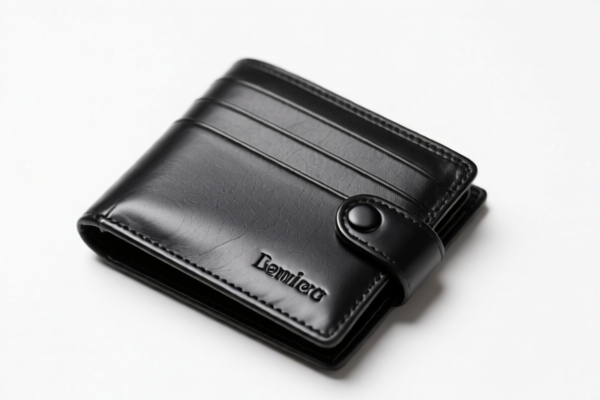
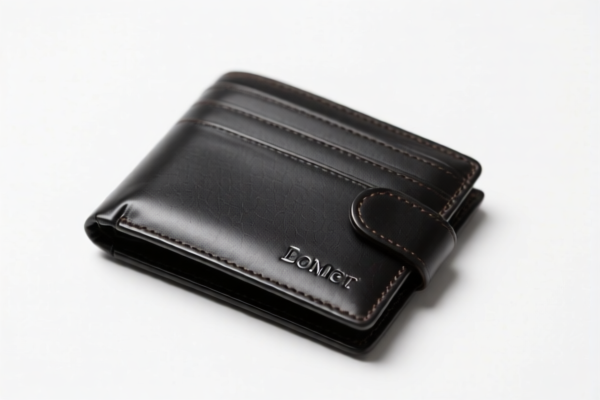
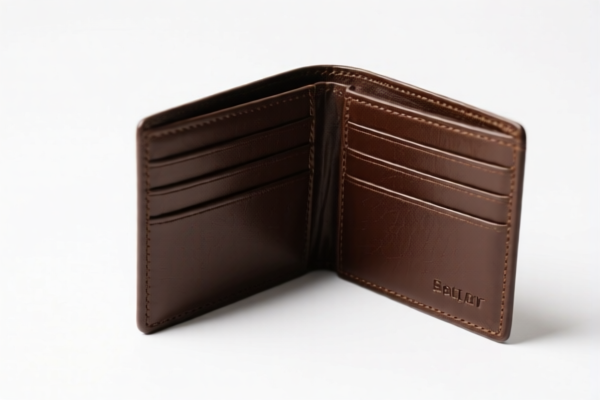
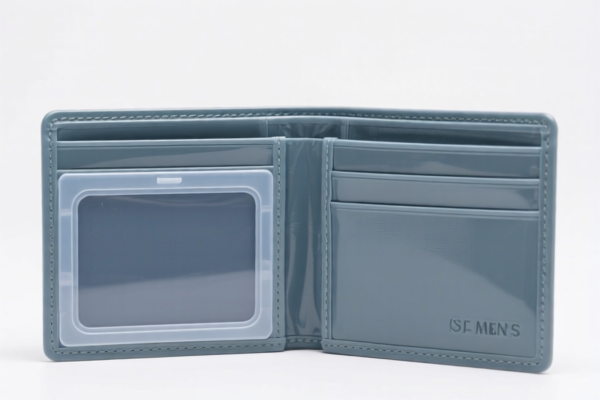
AI Analysis
💼 Men's Wallets (Leather & Synthetic Wallets)
🌐 HS Code Reference & Customs Clearance Guide | 2026 Tariff Analysis | Professional Strategy
📌 I. Product Definition & Classification: Do You Really Know "Men's Wallets"?
A men's wallet is a fundamental accessory for carrying currency, credit cards, identification, and receipts. In international trade, they are strictly categorized by material composition and function.
Leather Wallets: Made from natural or reconstituted leather (e.g., cowhide, calfskin).
Non-Leather Wallets: Made from textile, plastic, rubber, paper, or synthetic materials (e.g., nylon, canvas, PVC).
⚠️ Key Distinction:
- If made of Natural Leather → Classified under Chapter 42 (e.g.,4205.00.30).
- If made of Textile/Synthetic → Classified under Chapter 42 (e.g.,4205.00.60) or Chapter 39 (Plastic).
- Crucial Note: "Wallet" does not imply "Fashion accessory" in all contexts; some specialized wallets (e.g., RFID-blocking smart wallets) may still fall here, but biometric ones might differ.
📦 II. HS Code Classification Details (2026 Tariff Authority)
| HS Code | Product Description | Material Composition | Applicable Scenarios |
|---|---|---|---|
4205.00.30 |
Wallets, purses and similar containers, of natural leather or of reconstituted leather | Natural Leather (Cowhide, Calf, etc.) | Standard leather bifold, trifold, cardholders. |
4205.00.60 |
Wallets, purses and similar containers, of textile materials | Fabric, Nylon, Canvas, Denim | Fabric wallets, canvas cardholders, backpack wallets. |
4205.00.90 |
Wallets, purses and similar containers, of other materials | Plastic, Rubber, Paper, Metal, Synthetic | Plastic wallets, metal wallet cases, paper wallets. |
9506.99.00 |
Articles and equipment for sports, games, or pastimes (if specialized) | Mixed | Rare: Only if the wallet is part of a specific game (e.g., poker chip holder set). |
🔍 Critical Reminder:
- Leather content matters: Even if the interior is fabric, if the outer shell is >50% natural leather, it usually falls under4205.00.30.
- Composite materials: If a wallet is 50% leather and 50% fabric, the "essential character" determines the code. Usually, leather wins (4205.00.30).
- Do not mix: Do not classify a leather wallet under4205.00.60just because it has a fabric lining.
💰 III. 2026 Tariff Rate Breakdown (USA Import Scenario)
✅ Applicable Country: United States (US)
✅ Origin: China (CN)
✅ Effective Date: Nov 10, 2025 (Including Section 301 & IEEPA surcharges)
🎯 1. 4205.00.30 — Leather Wallets (Natural/Reconstituted)
| Item | Content |
|---|---|
| Base Tariff Rate | 6.5% (Ad Valorem) |
| Section 301 (USITC) Surcharge | +25% (List 3 items, Footnote 9903.88.01) |
| IEEPA Surcharge | +10% (China-specific, effective Nov 2025) |
| Total Effective Rate | 41.5% |
| De Minimis Exemption | ❌ No (Not eligible for $800 exemption) |
| Legal Path | HTSUS:4205.00.30 → General Notes → Note 301 → Footnote 9903.88.01 → IEEPA |
📌 Explanation:
- Base 6.5%: Standard Most-Favored-Nation (MFN) rate for leather goods.
- 25% Section 301: Imposed under U.S. Trade Act of 1974, Section 301, targeting Chinese manufacturing.
- 10% IEEPA: Additional tariff under International Emergency Economic Powers Act for Chinese origin goods.
- Total: 41.5% is a high barrier. Many importers switch to leather sourced from Vietnam/Mexico to avoid these surcharges.
🎯 2. 4205.00.60 — Textile Wallets
| Item | Content |
|---|---|
| Base Tariff Rate | 9.9% (Ad Valorem) |
| Section 301 (USITC) Surcharge | +25% |
| IEEPA Surcharge | +10% |
| Total Effective Rate | 44.9% |
| De Minimis Exemption | ❌ No |
| Legal Path | HTSUS:4205.00.60 → General Notes → Note 301 → Footnote 9903.88.01 |
📌 Note:
- Textile wallets often have a higher base rate (9.9%) compared to leather (6.5%).
- Same surcharges apply, resulting in a slightly higher total (44.9%).
- Strategy: If your product is synthetic, check if it can be classified under3926.90.99(Plastic), which might have a different surcharge profile (often similar or slightly lower base rate but still subject to 301).
🎯 3. 4205.00.90 — Other Material Wallets
| Item | Content |
|---|---|
| Base Tariff Rate | 3.5% (Ad Valorem) |
| Section 301 (USITC) Surcharge | +25% |
| IEEPA Surcharge | +10% |
| Total Effective Rate | 38.5% |
| De Minimis Exemption | ❌ No |
| Legal Path | HTSUS:4205.00.90 → General Notes → Note 301 |
📌 Note:
- Plastic wallets (e.g., cheap PVC card holders) have the lowest base rate (3.5%) but still face the massive 35% surcharge.
- Total: 38.5%.
🛠️ IV. Customs Clearance Practical Advice (Avoid Pitfalls)
✅ 1. Documentation Checklist (Mandatory)
| Document | Requirement | Reason |
|---|---|---|
| Commercial Invoice | ✅ Mandatory | Must clearly state: "Leather", "Textile", or "Plastic" wallet. |
| Material Composition | ✅ Mandatory | Must specify % of natural leather vs. synthetic. Customs will test this. |
| Product Photos | ✅ Mandatory | Show texture (grain), lining, and brand labels. |
| Origin Certificate | ✅ Mandatory | To verify if it qualifies for IEEPA exemptions (e.g., if assembled in Vietnam). |
| FCC/Consumer Safety | ⚠️ If Electronics | If wallet has RFID blocking chips or LED lights, may need FCC compliance. |
| Packaging List | ✅ Mandatory | Must match invoice quantity exactly. |
✅ 2. Decleration Strategy (Key Mantras)
🔥 Mantra: "Material First, Origin Second, Value Third!"
| Scenario | Correct Declaration | Wrong Declaration |
|---|---|---|
| Genuine Leather Wallet | 4205.00.30 |
Declared as 4205.00.60 (Textile) → Penalty + Audit |
| Synthetic Leather (PU) | 4205.00.30 (if deemed "reconstituted") OR 3926.90.99 |
Declared as 4205.00.30 if actually plastic → Classification Error |
| Textile Wallet | 4205.00.60 |
Declared as 4205.00.30 → Underpayment of 3.4% base rate |
| Wallet with RFID Chip | 4205.00.30 (Accessory) + FCC ID |
Declared as 8517.62 (Electronics) → Wrong Chapter |
✅ 3. Special Handling
| Situation | Handling Suggestion |
|---|---|
| RFID Blocking Wallets | If the wallet is purely leather with a simple metal mesh layer, it's still 4205. If it has a circuit board, it might be 8517. |
| Custom Branding | If the wallet has your logo but is made of Chinese leather, it's still subject to Section 301. |
| Origin Shift | If you source leather from China but assemble in Vietnam/Mexico, you may claim Country of Origin as Vietnam/Mexico (if substantial transformation occurs), potentially avoiding IEEPA surcharge. |
| De Minimis ($800) | NOT APPLICABLE for bulk imports of wallets. Only individual consumers sending small gifts via courier might qualify, but commercial shipments are taxed. |
🌍 V. Global Market Comparison (2026)
| Country/Region | Recommended HS Code | Tariff Rate (China Origin) | Certifications | Notes |
|---|---|---|---|---|
| 🇺🇸 USA | 4205.00.30 / 4205.00.60 |
38.5% - 44.9% (Total) | No specific, but FCC if electronic | Highest Tariffs |
| 🇪🇺 EU | 4205.00.30 / 4205.00.60 |
10% (Base) + VAT (20%) | CE (if electronic), REACH | No Section 301, but high VAT |
| 🇨🇦 Canada | 4205.00.30 / 4205.00.60 |
10% (Base) | No special surcharges | CUSMA benefits if from Mexico |
| 🇬🇧 UK | 4205.00.30 / 4205.00.60 |
10% (Base) + VAT (20%) | UKCA (if electronic) | Post-Brexit rules apply |
| 🇦🇺 Australia | 4205.00.30 / 4205.00.60 |
5% (Base) + GST (10%) | No special surcharges | Lowest tariff in West |
📌 Conclusion:
- USA is the only market with severe Section 301 + IEEPA surcharges on leather/textile wallets.
- EU/UK have high VAT but no punitive tariffs.
- Strategy: For US market, consider sourcing from Vietnam/Mexico or reclassifying (if possible) to avoid 40%+ tariffs.
📌 VI. Common Mistakes & Pitfalls (Lessons Learned)
❌ Mistake 1: Calling a "PU Leather" wallet "Natural Leather"
👉 Consequence: Customs may reject it or reclassify, leading to fines and delays.
👉 Fix: Always specify "Synthetic Leather" or "PU" on the invoice.
❌ Mistake 2: Mixing Leather and Textile Wallets in one shipment
👉 Consequence: Customs may audit the whole shipment.
👉 Fix: Separate shipments by material type.
❌ Mistake 3: Ignoring RFID/Electronic components
👉 Consequence: If the wallet has a battery or circuit, it might be classified as Electronics (8517) which has different duties and FCC requirements.
👉 Fix: Check if it's purely "passive" blocking or active electronics.
❌ Mistake 4: Using "Gift" to avoid duties
👉 Consequence: Commercial shipments declared as gifts are seized.
👉 Fix: Declare true commercial value.
✅ Correct Way:
"Leather Men's Bifold Wallet, 100% Cowhide, Model #XYZ, No Electronic Components, FOB Shanghai, Value $15.00"
🎯 VII. Conclusion: Precision Matters!
🎯 Remember the Mantra:
🔹 "Leather vs. Textile = 41.5% vs. 44.9%"
🔹 "China Origin = 35% Extra Tax"
🔹 "De Minimis = Not for Bulk"
📌 Pro Tip:
If your wallet is made of leather but assembled in Vietnam, apply for Origin Certificate to claim 0% IEEPA surcharge (only base rate applies).
If your wallet is plastic, check if it can be classified under3926.90.99(Plastic articles) which might have a lower base rate but still 301 surcharge.
📣 Call to Action:
📞 Contact a licensed customs broker immediately.
📄 Prepare Material Composition Reports for every product.
🚀 Optimize your supply chain to avoid 40%+ tariffs in the US!
✨ Customs Clarity: Where Every Dollar Counts!
💼 Your Wallet, Your Profit, Your Compliance!
Customer Reviews
About HS Code Classification
The Harmonized System (HS) is an internationally standardized nomenclature developed by the World Customs Organization (WCO) to classify traded products. Over 200 countries use the HS system as the basis for customs tariffs, trade statistics, and import/export regulations.
Each HS code follows a hierarchical structure:
- Chapter (2 digits) — Broad category of goods (e.g., Chapter 84: Machinery and Mechanical Appliances)
- Heading (4 digits) — More specific grouping within the chapter
- Subheading (6 digits) — Internationally standardized breakdown, used by all WCO member countries
- National subdivisions (8-10 digits) — Country-specific extensions for further classification, such as US HTSUS 10-digit codes
Correct HS code classification is essential for smooth customs clearance, accurate duty payment, and compliance with trade regulations. Misclassification can lead to customs delays, overpayment of duties, or penalties.
When importing from CN to US, the applicable tariff rates may include:
- Most-Favored-Nation (MFN) rate — The standard duty rate applied to WTO members
- General rate — Applied to countries without trade agreements
- Trade remedy duties — Additional tariffs such as Section 301 (anti-dumping), Section 232 (national security), or countervailing duties
The information provided on this page is for reference purposes only. For official classification, please consult with your local customs authority or a licensed customs broker.