Men's Woven Underwear
CN → US| HS Code | Tariff Rate | Origin | Destination | Doc |
|---|---|---|---|---|
| 6212900010 | 24.1% | CN | US | Official Doc |
| 6212900090 | 24.1% | CN | US | Official Doc |
Product Images
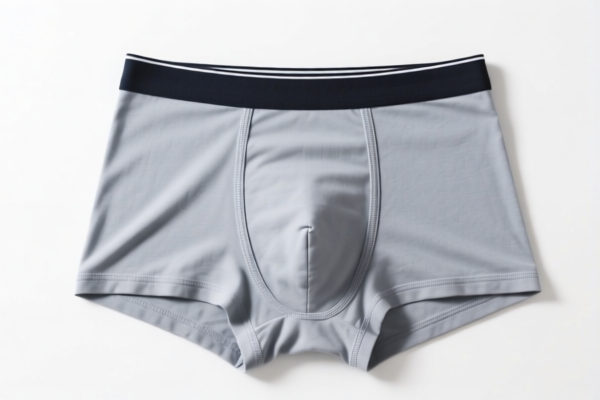
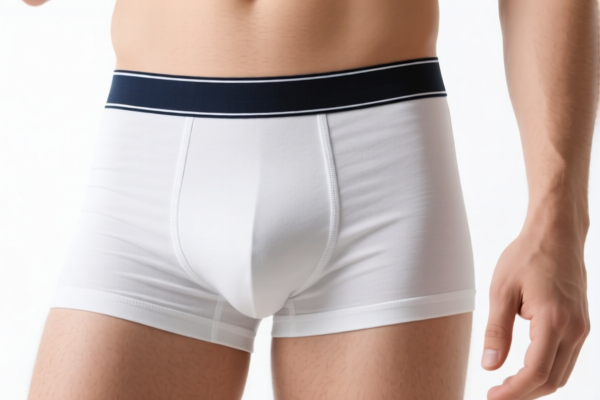
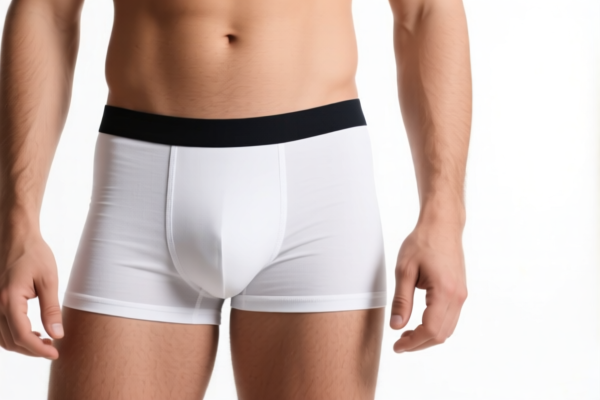
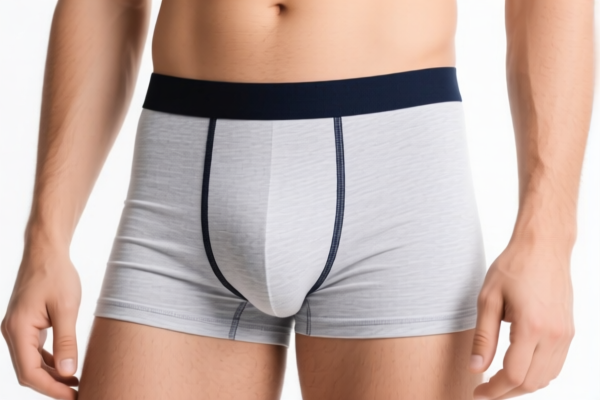
AI Analysis
👙 Men's Woven Underwear (Brassieres, Girdles, Corsets, etc.)
🌐 HS Code Reference & Customs Clearance Guide | 2026 Latest Tariff Analysis | Professional Clearance Strategy
📌 I. Product Definition & Classification: Do You Really Know "Woven Underwear"?
Men's woven underwear, in the context of international trade, is not classified under typical apparel chapters (like Chapter 61 for knitted or Chapter 62 for woven general clothing) if it falls under specific functional categories. Instead, it is categorized under Chapter 62, specifically under heading 6212, which covers "Brassieres, girdles, corsets, braces, suspenders, garters and similar articles and parts thereof, whether or not knitted or crocheted."
Key Distinction:
- If the product is woven (not knitted) and falls under the description of girdles, corsets, braces, or similar supportive garments (even if marketed as "men's underwear" or "shapewear"), it belongs to HS Code 6212.90.
- If it is knitted, it would fall under Chapter 61 (6107), but the provided data is strictly for woven items under 6212.90.
⚠️ Critical Note:
The description in the data explicitly states: "Brassieres, girdles, corsets, braces, suspenders, garters and similar articles... Of cotton or cotton and rubber or plastics" and "Other".
This means all woven supportive underwear (including men's compression shorts, girdles, or corsets) are grouped here, regardless of the material, if they don't fit the specific "cotton/rubber" sub-category.
📦 II. HS Code Classification Details (2026 Latest Tariff Authority Comparison)
Based on the provided <DATA>, there are two relevant HS Codes for Men's Woven Underwear under heading 6212.90.
| HS Code | Product Description | Material Specification | Tariff Rate |
|---|---|---|---|
| 6212.90.00.10 | Brassieres, girdles, corsets, braces, suspenders, garters and similar articles... Of cotton or cotton and rubber or plastics | Cotton-based or Cotton + Rubber/Plastics | 0.0% |
| 6212.90.00.90 | Brassieres, girdles, corsets, braces, suspenders, garters and similar articles... Other | Non-cotton (e.g., Polyester, Nylon, Spandex blends not classified as "cotton/rubber") | 0.0% |
🔍 Key Insight:
- Both codes have a total tax rate of 0.0%.
- The distinction is purely material-based:
- 6212.90.00.10: For items made of cotton or cotton blended with rubber/plastics.
- 6212.90.00.90: For items made of other materials (e.g., 100% polyester, nylon, elastane blends, etc.).
💰 III. 2026 Latest Tariff Rate Details (Including Additional Taxes & Policy Additions)
✅ Applicable Country: United States (US)
✅ Origin: China (CN)
✅ Effective Time: Current (2025-2026)
🎯 1. 6212.90.00.10 —— Woven Underwear (Cotton or Cotton + Rubber/Plastics)
| Item | Content |
|---|---|
| Base Tariff | 0.0% (ad valorem) |
| USITC Additional Tax | 0.0% |
| IEEPA Additional Tax | 0.0% |
| Total Tax Rate | 0.0% |
| Tax Calculation | CIF Value × 0.0% = $0 |
| De Minimis Eligibility | ✅ Yes (Low-value shipments may qualify for exemption under Section 321) |
| Legal Basis Path | HTSUS:6212.90.00.10 |
📌 Explanation:
- This code is for cotton-based woven supportive garments.
- The tariff rate is 0.0%, making it highly competitive for import into the US.
- No additional Section 301 or IEEPA taxes apply to this specific sub-category in the provided data.
🎯 2. 6212.90.00.90 —— Woven Underwear (Other Materials)
| Item | Content |
|---|---|
| Base Tariff | 0.0% (ad valorem) |
| USITC Additional Tax | 0.0% |
| IEEPA Additional Tax | 0.0% |
| Total Tax Rate | 0.0% |
| Tax Calculation | CIF Value × 0.0% = $0 |
| De Minimis Eligibility | ✅ Yes |
| Legal Basis Path | HTSUS:6212.90.00.90 |
📌 Explanation:
- This code covers all other woven underwear under 6212.90 not made of cotton or cotton/rubber/plastics (e.g., polyester, nylon, spandex).
- Like the cotton version, the tariff rate is 0.0%.
- This applies to most modern men's synthetic underwear, compression gear, or shapewear.
🛠️ IV. Customs Clearance Practical Advice (Real-World Pitfall Guide)
✅ 1. Document Checklist (All Required)
| Document | Required | Notes |
|---|---|---|
| ✅ Commercial Invoice | ✔️ | Must clearly state "Men's Woven Underwear" and specify material composition (e.g., "95% Polyester, 5% Spandex") to determine correct HS Code. |
| ✅ Packing List | ✔️ | List quantities and weights accurately. |
| ✅ Product Photos | ✔️ | Show the item to confirm it is woven (not knitted) and falls under "girdles/braces/supportive garments" rather than standard underwear. |
| ✅ Material Test Report | ✔️ | Recommended to prove fabric composition (Cotton vs. Synthetic) for accurate HS Code assignment. |
| ✅ Declaration of Origin | ✔️ | If claimed as non-US origin, specify country of manufacture. |
✅ 2. Declaration Tips (Key Rules)
🔥 "Material Determines Code, Woven Determines Chapter, Underwear in 6212!"
| Scenario | Correct HS Code | Incorrect Code | Risk |
|---|---|---|---|
| Men's synthetic woven girdles/shorts | 6212.90.00.90 |
6107.11.00 (Knitted) |
Misclassification → Delay, Fines |
| Men's cotton woven support garments | 6212.90.00.10 |
6212.90.00.90 |
Minor (both 0% tax) |
| Men's knitted underwear | Not Covered (Would be 6107) | 6212.90.00.90 |
Major Error → Wrong Chapter |
| Men's boxer briefs (standard) | Not Covered (Usually 6107/6207) | 6212.90.00.90 |
High Risk if not supportive/girdle-type |
⚠️ Important:
- Ensure the product is indeed "girdles, corsets, braces, or similar supportive articles".
- Standard "boxers" or "briefs" that are not supportive/girdle-type may fall under 6207 (Men's woven underwear/briefs).
- If your product is standard woven underwear (not supportive), it may be 6207.11 or 6207.22, which are NOT covered in this<DATA>.
- Confirm with your supplier: Is it "supportive shapewear" (6212) or "standard underwear" (6207)?
✅ 3. Special Case Handling
| Scenario | Handling Advice |
|---|---|
| Mixed Materials (Cotton + Polyester) | If cotton content is ≥50%, use 6212.90.00.10. If <50%, use 6212.90.00.90. |
| Knitted Underwear | Not applicable to this data. Refer to Chapter 61 (6107). |
| Children's Underwear | Still falls under 6212 if supportive. No age-based exemption. |
| Samples under $800 | ✅ Eligible for De Minimis (Section 321) → No duty, streamlined clearance. |
🌍 V. Global Market Comparison (2026 Latest)
| Country/Region | Recommended HS Code | Tariff Rate | Notes |
|---|---|---|---|
| 🇺🇸 USA | 6212.90.00.10 / .90 |
0.0% | No additional tariffs. Very favorable. |
| 🇨🇳 China | 6212.90 |
~5-10% | Import duty applies. |
| 🇪🇺 EU | 6212.90 |
~4.5% | No additional tariffs. |
| 🇬🇧 UK | 6212.90 |
~4.5% | Post-Brexit tariffs apply. |
| 🇯🇵 Japan | 6212.90 |
~0% | Often duty-free for apparel. |
📌 Conclusion:
- The USA offers 0% duty for these specific HS Codes, making it a highly competitive market for men's woven supportive underwear.
- No Section 301 or IEEPA tariffs apply to these codes in the provided data.
📌 VI. Common Errors & Pitfalls (Lessons Learned)
❌ Error 1: Classifying knitted underwear as 6212.90
👉 Consequence: Wrong chapter → Rejection or Penalty. Knitted items go to Chapter 61.
❌ Error 2: Classifying standard boxers/briefs as 6212.90
👉 Consequence: If not "supportive/girdle-type," they should be under 6207. Misclassification can lead to audits.
❌ Error 3: Ignoring material composition
👉 Consequence: Using .10 for polyester items or .90 for cotton items → Minor tax impact (both 0% here) but compliance risk.
❌ Error 4: Assuming all underwear is 6212
👉 Consequence: 6207 is for standard men's woven underwear. 6212 is for supportive garments (girdles, corsets, braces). Confirm product function.
✅ Correct Approach:
"Men's Woven Supportive Underwear, 100% Polyester, Elastic Waist, Model XYZ" → 6212.90.00.90
🎯 VII. Conclusion: Professional Declaration, Save Time & Money!
🎯 Key Takeaway:
🔹 "Woven Supportive Underwear = 6212.90"
🔹 "Cotton = .10, Other = .90"
🔹 "Both 0% Tax in USA"
🔹 "Knitted? Not this code!"
📌 Pro Tip:
If your product is under $800, declare it as De Minimis (Section 321) for fastest clearance and no duty.
For bulk shipments, ensure material composition is clearly stated on the invoice to avoid customs queries.
📣 Immediate Action:
📞 Contact your freight forwarder with product photos and material specs.
🚀 Confirm if your product is "supportive/girdle-type" (6212) or standard underwear (6207).
✅ Use the correct HS Code to ensure smooth customs clearance and zero duty where applicable.
✨ Precision in Classification, Power in Trade!
💼 Your duty is 0.0% — Make sure you classify it right!
Customer Reviews
About HS Code Classification
The Harmonized System (HS) is an internationally standardized nomenclature developed by the World Customs Organization (WCO) to classify traded products. Over 200 countries use the HS system as the basis for customs tariffs, trade statistics, and import/export regulations.
Each HS code follows a hierarchical structure:
- Chapter (2 digits) — Broad category of goods (e.g., Chapter 84: Machinery and Mechanical Appliances)
- Heading (4 digits) — More specific grouping within the chapter
- Subheading (6 digits) — Internationally standardized breakdown, used by all WCO member countries
- National subdivisions (8-10 digits) — Country-specific extensions for further classification, such as US HTSUS 10-digit codes
Correct HS code classification is essential for smooth customs clearance, accurate duty payment, and compliance with trade regulations. Misclassification can lead to customs delays, overpayment of duties, or penalties.
When importing from CN to US, the applicable tariff rates may include:
- Most-Favored-Nation (MFN) rate — The standard duty rate applied to WTO members
- General rate — Applied to countries without trade agreements
- Trade remedy duties — Additional tariffs such as Section 301 (anti-dumping), Section 232 (national security), or countervailing duties
The information provided on this page is for reference purposes only. For official classification, please consult with your local customs authority or a licensed customs broker.