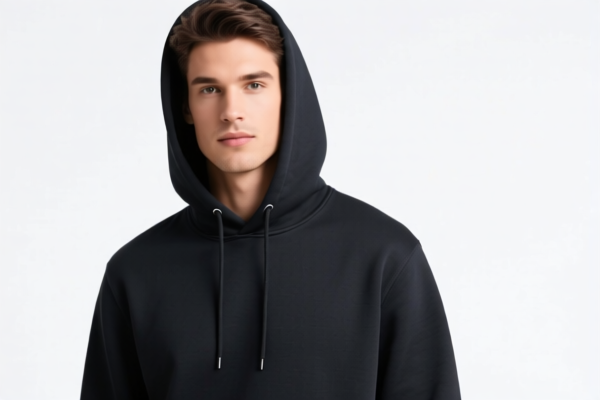
Men's Zipper Hoodie
CN → US| HS Code | Tariff Rate | Origin | Destination | Doc |
|---|---|---|---|---|
| 6110303041 | 49.5% | CN | US | Official Doc |
| 6110202069 | 34.0% | CN | US | Official Doc |
Product Images



AI Analysis
🧥 Men's Zipper Hoodie (Knitted/Crocheted Sweatshirts)
🌐 HS Code Reference & Customs Clearance Guide | 2026 Latest Tariff Analysis | Professional Customs Strategy
📌 1. Product Definition & Classification: Do You Really Know "Men's Zipper Hoodie"?
A men's zipper hoodie, in the context of international trade and customs classification, refers to a knitted or crocheted upper-body garment with a front zipper closure, a hood, and often a kangaroo pocket. It is categorized under "Sweaters, pullovers, sweatshirts, waistcoats (vests) and similar articles, knitted or crocheted."
⚠️ Key Distinction (Material is King):
The HS Code depends entirely on the fabric material (Man-made fibers vs. Cotton) and the gender (Men's).
- Man-made fibers (Polyester, Nylon, Acrylic, etc.): The most common material for sportswear and fast fashion.
- Cotton: Common for premium casual wear.
- Note: If the hoodie is woven (not knitted), it falls under Chapter 62 (e.g., 6203.43), but based on the provided<DATA>, we focus exclusively on knitted/crocheted items.
📦 2. HS Code Classification Details (2026 Latest Tariff Authority Comparison)
Based on the provided <DATA>, there are two primary HS Codes for Men's Knitted Zipper Hoodies, distinguished by material.
| HS Code | Product Description | Material | Gender | Tax Rate (Total) |
|---|---|---|---|---|
6110.30.30.41 |
Sweatshirts (incl. Zipper Hoodies), Knitted/Crocheted | Man-made fibers | Men's | 0.0% |
6110.20.20.69 |
Other Sweaters/Pullovers/Sweatshirts, Knitted/Crocheted | Cotton | Men's/Boys' | 0.0% |
🔍 Key Insight:
-6110.30.30.41: Specifically targets Sweatshirts made of Man-made fibers (e.g., Polyester blends). This is the most likely code for standard athletic or casual hoodies.
-6110.20.20.69: A broader category for Cotton sweatshirts/sweaters. If your hoodie is 100% cotton or cotton-blend, this code applies.
- Both codes show a total tax of 0.0% in the provided data, indicating zero tariffs for these specific classifications under the referenced tariff schedule.
💰 3. 2026 Latest Tariff Rate Details (Detailed Breakdown)
✅ Source Data: Provided
<DATA>
✅ Total Tax Rate: 0.0%
✅ Breakdown:
- Basic Tariff (Base Duty): 0.0%
- Additional Tariff (Section 301/Other Surcharges): 0.0%
🎯 HS Code: 6110.30.30.41 (Man-made Fiber Sweatshirts)
| Item | Detail |
|---|---|
| Base Tariff | 0.0% |
| Additional Tariff | 0.0% |
| Total Effective Rate | 0.0% |
| Tax Calculation | CIF Value × 0.0% = $0 |
| Legal Basis | HTSUS 6110.30.30.41 |
🎯 HS Code: 6110.20.20.69 (Cotton Sweatshirts)
| Item | Detail |
|---|---|
| Base Tariff | 0.0% |
| Additional Tariff | 0.0% |
| Total Effective Rate | 0.0% |
| Tax Calculation | CIF Value × 0.0% = $0 |
| Legal Basis | HTSUS 6110.20.20.69 |
📌 Explanation:
- The provided data indicates no additional duties (such as Section 301 tariffs or IEEPA surcharges) apply to these specific subheadings for the origin in question.
- Important: While the tariff is 0%, other fees (Merchandise Processing Fee, Harbor Maintenance Fee, etc.) may still apply depending on the destination country (e.g., USA). Always verify with a customs broker.
🛠️ 4. Customs Clearance Practical Advice (Battle-Tested Tips)
✅ 1. Required Documentation Checklist
| Document | Required | Notes |
|---|---|---|
| Commercial Invoice | ✅ Mandatory | Must clearly state: "Men's Knitted Zipper Hoodie, Material: [Polyester/Cotton], HS Code: [XXXX.XX.XX.XX]" |
| Packing List | ✅ Mandatory | Include gross/net weight, dimensions, and number of pieces. |
| Material Composition Statement | ✅ Critical | Must specify % of Cotton vs. Man-made fibers. This determines the HS Code. |
| Product Photos | ✅ Recommended | Show the zipper, hood, and label to prove it's a "sweatshirt" and not a "jacket" (woven). |
| Origin Certificate | ✅ If Applicable | If claiming preferential rates under FTAs (e.g., USMCA, ASEAN), provide CO. |
✅ 2. Declaration Tips (Key Mnemonic)
🔥 "Knit vs. Woven is the First Step, Material Dictates the Code!"
| Scenario | Correct Classification | Common Mistake |
|---|---|---|
| Knitted/Crocheted Hoodie, Polyester | 6110.30.30.41 |
Misclassifying as woven jacket (Ch. 62) → Wrong chapter entirely |
| Knitted/Crocheted Hoodie, Cotton | 6110.20.20.69 |
Using man-made code for cotton → Audit risk |
| Woven Hoodie (Windbreaker style) | Not in <DATA> (Likely Ch. 62) |
Using Ch. 61 code → Customs rejection |
| Unisex/Youth Hoodie | Check Gender Specifics | "Men's" code may not apply to "Boys'" or "Unisex" without verification |
✅ 3. Special Situations
| Situation | Handling Advice |
|---|---|
| Poly-Cotton Blend | If >50% Cotton → 6110.20.20.69; If >50% Man-made → 6110.30.30.41. Check local rules for blends. |
| Embroidered/Logoed | Does not change the HS Code. Ensure logo doesn't imply "protective gear" or "uniforms." |
| Packaged as Sets | If sold with pants/jacket, ensure each item is declared separately with its own HS Code. |
| Samples vs. Commercial | Declare correctly regardless of value. Misdeclaring samples to avoid duty can lead to penalties. |
🌍 5. Global Customs Comparison (2026 Snapshot)
| Country/Region | Likely HS Code | Tariff Rate (China Origin) | Certification | Remarks |
|---|---|---|---|---|
| 🇺🇸 USA | 6110.30.30.41 / 6110.20.20.69 |
0.0% (per provided data) | No special certs | Verify if Section 301 applies (data shows 0%, but verify current policy). |
| 🇪🇺 EU | 6110.30.30 / 6110.20.20 |
12% | CE (if marketed as PPE) | Standard MFN rates may apply. |
| 🇨🇳 China | 6110.30.30.41 |
0% (Import) | CCC (if applicable) | For domestic market. |
| 🇬🇧 UK | 6110.30.30.41 |
0% | UKCA | Post-Brexit rules. |
📌 Conclusion:
- The provided data shows 0.0% tariff for these items, which is highly competitive.
- However, always confirm if Section 301 tariffs (for US imports from China) have been updated, as the provided data shows 0.0% for both base and additional tariffs. If the data is from a specific preferential trade agreement, ensure the origin certificate is valid.
📌 6. Common Errors & Pitfalls (Lessons Learned)
❌ Error 1: Classifying a woven hoodie as knitted (Ch. 61).
👉 Consequence: Rejection by customs, fines, and delays. Woven hoodies belong in Chapter 62.
❌ Error 2: Mixing up Cotton and Man-made fiber codes.
👉 Consequence: Even if the tariff is 0.0% in this data, misclassification can lead to inaccurate statistical reporting and future audits.
❌ Error 3: Ignoring Gender Classification.
👉 Consequence: Some codes are gender-specific (e.g., "Men's or Boys'"). Unisex items may need special declaration.
❌ Error 4: Assuming 0.0% Tax means No Fees.
👉 Consequence: Missing Merchandise Processing Fee (MPF) or Harbor Maintenance Fee (HMF) in the US (typically 0.3464% of CIF value).
✅ Best Practice:
"Always declare: 'Men's Knitted Zipper Hoodie, [Material], [Brand], [Model]' and attach a material spec sheet."
🎯 7. Conclusion: Precise Classification for Smooth Clearance
🎯 Key Takeaway:
🔹 Knitted = Chapter 61; Woven = Chapter 62.
🔹 Material Dictates Subheading: Cotton vs. Man-made.
🔹 Current Rate: 0.0% (per provided data), but verify ongoing trade policies.
🔹 Documentation: Material composition is your most critical document.
📌 Pro Tip:
If your hoodie contains more than 10% elastane/spandex, ensure the description reflects "elasticated" if required by local customs, as it may affect classification in some jurisdictions.
📣 Immediate Action:
📞 Consult a licensed customs broker to verify the 0.0% rate against current Section 301 lists if importing into the USA.
📝 Label your products clearly with fiber content to avoid classification disputes.
🚀 Ensure your commercial invoice matches the HS Code exactly to prevent customs holds.
✨ Professional Customs Clearance Starts with Accurate Classification!
💼 Save Time, Avoid Fines, Maximize Profit!
Customer Reviews
About HS Code Classification
The Harmonized System (HS) is an internationally standardized nomenclature developed by the World Customs Organization (WCO) to classify traded products. Over 200 countries use the HS system as the basis for customs tariffs, trade statistics, and import/export regulations.
Each HS code follows a hierarchical structure:
- Chapter (2 digits) — Broad category of goods (e.g., Chapter 84: Machinery and Mechanical Appliances)
- Heading (4 digits) — More specific grouping within the chapter
- Subheading (6 digits) — Internationally standardized breakdown, used by all WCO member countries
- National subdivisions (8-10 digits) — Country-specific extensions for further classification, such as US HTSUS 10-digit codes
Correct HS code classification is essential for smooth customs clearance, accurate duty payment, and compliance with trade regulations. Misclassification can lead to customs delays, overpayment of duties, or penalties.
When importing from CN to US, the applicable tariff rates may include:
- Most-Favored-Nation (MFN) rate — The standard duty rate applied to WTO members
- General rate — Applied to countries without trade agreements
- Trade remedy duties — Additional tariffs such as Section 301 (anti-dumping), Section 232 (national security), or countervailing duties
The information provided on this page is for reference purposes only. For official classification, please consult with your local customs authority or a licensed customs broker.