Men's or Boys' Swimsuits
CN → US| HS Code | Tariff Rate | Origin | Destination | Doc |
|---|---|---|---|---|
| 6112310010 | 35.9% | CN | US | Official Doc |
| 6211111010 | 37.8% | CN | US | Official Doc |
| 6112410030 | 34.9% | CN | US | Official Doc |
| 6211121010 | 21.8% | CN | US | Official Doc |
| 6112410010 | 42.4% | CN | US | Official Doc |
| 6112310020 | 43.4% | CN | US | Official Doc |
| 6112390010 | 30.7% | CN | US | Official Doc |
Product Images
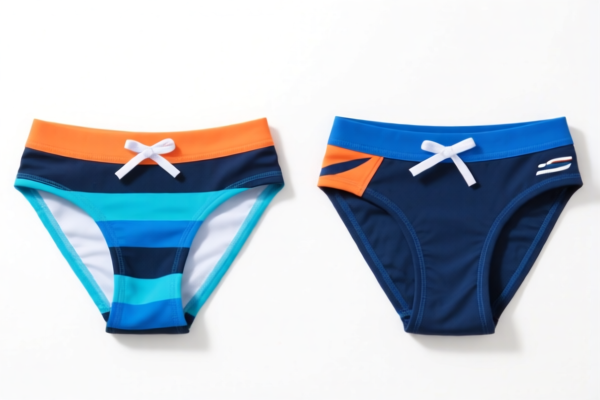
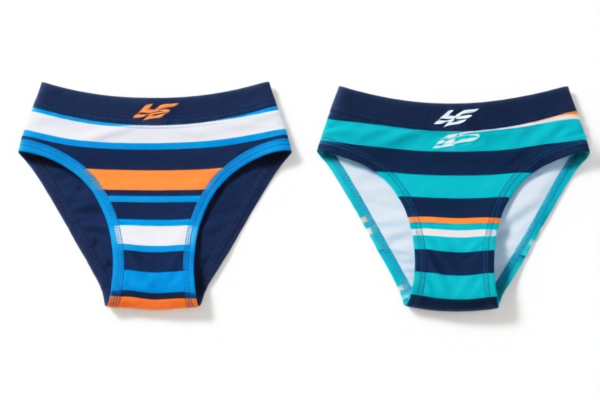
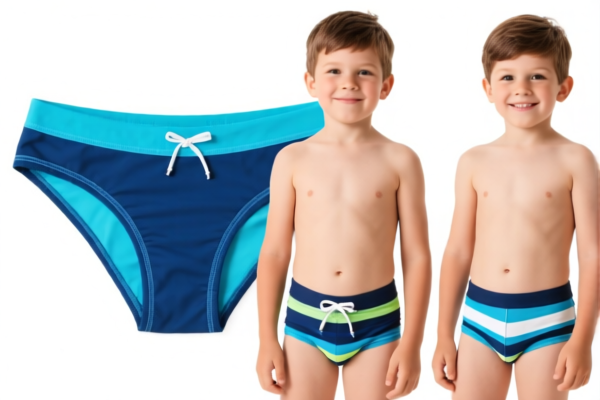

AI Analysis
🏊♂️ Men's or Boys' Swimsuits: HS Code Breakdown & U.S. Customs Clearance Guide (2026)
🌐 HS Code Reference & Clearance Strategy | Latest Tariff Analysis | Professional Compliance Guide
📌 I. Product Definition & Classification: Are You Importing the Right Swimsuit?
Swimsuits are specialized apparel designed for water activities. In international trade, they are strictly classified based on knitting method (Knitted vs. Non-knitted/Woven) and material composition (Synthetic Fibers, Artificial Fibers, Cotton/Other Textiles).
Key Distinctions for Classification:
Knitted (Chapter 61): Stretchy, jersey-like fabrics (e.g., lycra blends, tricot). Most common for performance swimsuits.
Non-Knitted/Woven (Chapter 62): Woven fabrics (e.g., nylon taffeta, polyester woven). Often used for board shorts or swim trunks.
Material Matters:* "Synthetic" usually refers to polyester/nylon; "Artificial" refers to rayon/viscose. Misclassifying material leads to significant tariff penalties.
⚠️ Critical Differentiator:
- If the suit is knitted (stretched fabric) → Chapter 61
- If the suit is woven (stitched fabric) → Chapter 62
- If it is a boy's specific style (e.g., swim trunks) → Look for specific sub-headings like 6112.39 or 6112.31.
📦 II. HS Code Breakdown & Tariff Analysis (U.S. Imports from China)
Based on the provided data, here is the detailed breakdown of HS Codes, product descriptions, and total tax rates (including Base Tariff + Section 301/122 Clause Surcharges).
| HS Code | Product Description | Material Type | Knitting Type | Total Tax Rate |
|---|---|---|---|---|
| 6112.31.00.10 | Men's or Boys' Swimsuits | Synthetic Fibers | Knitted / Crocheted | 35.9% |
| 6211.11.10.10 | Men's or Boys' Swimsuits | Artificial Fibers | Non-Knitted (Woven) | 37.8% |
| 6112.41.00.30 | Swimsuits (General) | Synthetic Fibers | Knitted / Crocheted | 34.9% |
| 6211.12.10.10 | Swimsuits (General) | Artificial Fibers | Non-Knitted (Woven) | 21.8% |
| 6112.41.00.10 | Swimsuits (General) | Synthetic Fibers | Knitted / Crocheted | 42.4% |
| 6112.31.00.20 | Boys' Sport Swim Trunks | Synthetic Fibers | Knitted / Crocheted | 43.4% |
| 6112.39.00.10 | Boys' Sport Swim Trunks | Cotton/Other Textiles | Knitted / Crocheted | 30.7% |
🔍 Key Observation:
- Section 301 / 122 Clause Surcharges apply heavily to synthetic/knitted items.
- 6112.31.00.20 (Boys' Synthetic) has the highest rate (43.4%) due to base 25.9% + 7.5% additional + 10% Clause 122.
- 6211.12.10.10 (Woven Artificial) has the lowest rate (21.8%), making it a strategic choice if material allows.
💰 III. Detailed Tariff Structure Explanation
✅ Applicable Country: United States (US)
✅ Origin: China (CN)
✅ Regulatory Framework: USITC Harmonized Tariff Schedule + Section 301/122 Enforcement
🎯 1. Synthetic Fiber Knitted Swimsuits (e.g., 6112.31.00.10)
- Total Tax: 35.9%
- Breakdown:
- Base Tariff: 25.9%
- Additional Tariff (Section 301/122): 0.0%
- Clause 122 Surcharge: 10%
- Calculation: CIF Value × 35.9%
- Note: Despite having a higher base tariff than some woven items, the total is lower than other synthetic knitted variants due to the 0% additional tariff component in this specific subheading.
🎯 2. Artificial Fiber Non-Knitted Swimsuits (e.g., 6211.11.10.10)
- Total Tax: 37.8%
- Breakdown:
- Base Tariff: 27.8%
- Additional Tariff: 0.0%
- Clause 122 Surcharge: 10%
- Calculation: CIF Value × 37.8%
- Note: This is for woven swimsuits made of artificial fibers (like rayon/viscose blends). Higher base tariff but no extra surcharge beyond Clause 122.
🎯 3. Boys' Sport Swim Trunks (Synthetic, Knitted) - 6112.31.00.20
- Total Tax: 43.4% (Highest in the dataset)
- Breakdown:
- Base Tariff: 25.9%
- Additional Tariff: 7.5%
- Clause 122 Surcharge: 10%
- Calculation: CIF Value × 43.4%
- Warning: This is the most expensive category. If you are importing boys' swim trunks, ensure they are correctly classified. If possible, check if they qualify as general "swimsuits" (Chapter 62) instead of specific "trunks" to avoid the 7.5% additional tariff.
🎯 4. General Swimsuits (Synthetic, Knitted) - 6112.41.00.10
- Total Tax: 42.4%
- Breakdown:
- Base Tariff: 24.9%
- Additional Tariff: 7.5%
- Clause 122 Surcharge: 10%
- Calculation: CIF Value × 42.4%
- Note: Similar to the boys' trunks, this incurs the 7.5% additional tariff. Compare with
6112.41.00.30(34.9%) which has 0% additional tariff.
🛠️ IV. Clearance Practical Advice (Avoiding Pitfalls)
✅ 1. Documentation Checklist (Mandatory)
| Document | Required? | Purpose |
|---|---|---|
| Commercial Invoice | ✅ | Must clearly state: "Men's Swimsuit," Material (% Synthetic/Artificial), and Knitting Method. |
| Product Composition Sheet | ✅ | Critical for determining "Synthetic" vs. "Artificial" vs. "Cotton." |
| Fabric Swatch | ✅ | CBP may request a physical sample to verify knitting vs. weaving. |
| Origin Certificate | ✅ | Confirms CN origin, triggering Section 301/122 duties. |
| Labeling | ✅ | "Made in China" label is mandatory. |
✅ 2. Classification Strategy (Optimize Costs)
🔥 "Know Your Knit, Save Your Pennies!"
| Scenario | Recommended HS Code | Why? |
|---|---|---|
| Boy's Swim Trunks (Synthetic) | 6112.31.00.20 |
High Cost (43.4%). Avoid if possible. Check if design fits "General Swimsuit" (6112.41.00.30 @ 34.9%). |
| Men's Woven Swimsuit (Artificial) | 6211.11.10.10 |
Moderate Cost (37.8%). Good for nylon/polyester woven boards shorts. |
| General Knitted Swimsuit (Synthetic) | 6112.41.00.30 |
Lower Cost (34.9%). Best for standard men's swim briefs/boxers if they fit this subheading. |
| Boys' Knitted Swim (Cotton/Other) | 6112.39.00.10 |
Lowest Cost (30.7%). If using cotton blends, this is the most cost-effective option. |
✅ 3. Common Errors to Avoid
❌ Error 1: Mislabeling "Woven" as "Knitted"
👉 Consequence: Wrong HS Code → Penalties + Back Taxes.
✅ Fix: Verify fabric stretch. Knitted fabrics stretch significantly; woven fabrics do not.
❌ Error 2: Ignoring "Clause 122"
👉 Consequence: Underpayment of duties.
✅ Fix: All listed HS Codes include a 10% Clause 122 surcharge. Ensure your tariff calculator includes this.
❌ Error 3: Overlooking "Boys" vs. "Men" Specific Subheadings
👉 Consequence: Some boys' items have higher additional tariffs (e.g., 7.5%).
✅ Fix: Check if the item can be classified under general "Swimsuits" (6112.41) rather than specific "Boys' Trunks" (6112.31) if design allows.
🌍 V. Market Comparison & Strategic Insights
| Market | HS Code Example | Base Tariff | Surcharges | Total Est. |
|---|---|---|---|---|
| 🇺🇸 USA (China Origin) | 6112.31.00.10 |
25.9% | +10% (122) | 35.9% |
| 🇨🇳 China (Import) | 6112.31.00.10 |
~15-20% | None | ~15-20% |
| 🇪🇺 EU (China Origin) | 6112.31 | 12% | None | 12% |
| 🇬🇧 UK (China Origin) | 6112.31 | 12% | None | 12% |
📌 Conclusion:
- U.S. imports from China are significantly more expensive due to Section 301/122 tariffs.
- Cotton/Other Textiles (6112.39.00.10) offer the lowest tariff (30.7%) in the U.S.
- Woven Artificial Fibers (6211.12.10.10) are also cost-effective (21.8%) if the product design allows.
📌 VI. Actionable Checklist for Importers
- Verify Material Composition:
- Synthetic (Polyester/Nylon) → Higher tariffs (35.9%-43.4%)
- Artificial (Rayon/Viscose) → Moderate tariffs (21.8%-37.8%)
-
Cotton/Other → Lowest tariffs (30.7%)
-
Determine Knitting Method:
- Knitted → Chapter 61
-
Woven → Chapter 62
-
Select Optimal HS Code:
- Prefer
6112.41.00.30(34.9%) over6112.31.00.20(43.4%) if product design permits. -
Consider
6211.12.10.10(21.8%) for woven artificial fiber suits. -
Prepare for Clause 122:
-
All rates include a 10% surcharge. Do not omit this from cost calculations.
-
Labeling Compliance:
- Ensure "Made in China" is clearly visible.
🎯 VII. Final Thoughts: Maximize Profit, Minimize Duty
🎯 Golden Rules for Swimsuit Importers:
🔹 "Cotton Wins on Tariffs" – If possible, use cotton blends to fall under
6112.39.00.10(30.7%).
🔹 "Woven Can Be Cheaper" –6211.12.10.10(21.8%) is the lowest rate in the dataset.
🔹 "Avoid Boys' Trunks if Synthetic" –6112.31.00.20(43.4%) is the most expensive.
🔹 "Clause 122 is Non-Negotiable" – The 10% surcharge applies to all listed codes.
📌 Pro Tip:
If you are importing large volumes, consider Advance Rulings from U.S. CBP to confirm HS Code classification and avoid post-entry audits. Also, explore FTZ (Foreign Trade Zone) options to defer duty payments.
📣 Next Steps:
📞 Consult a licensed customs broker.
📄 Submit fabric swatches for classification verification.
💰 Recalculate landed costs using the lowest eligible HS Code.
✨ Smart Classification Saves Thousands!
💼 Don't Let Tariffs Sink Your Profits!
Customer Reviews
About HS Code Classification
The Harmonized System (HS) is an internationally standardized nomenclature developed by the World Customs Organization (WCO) to classify traded products. Over 200 countries use the HS system as the basis for customs tariffs, trade statistics, and import/export regulations.
Each HS code follows a hierarchical structure:
- Chapter (2 digits) — Broad category of goods (e.g., Chapter 84: Machinery and Mechanical Appliances)
- Heading (4 digits) — More specific grouping within the chapter
- Subheading (6 digits) — Internationally standardized breakdown, used by all WCO member countries
- National subdivisions (8-10 digits) — Country-specific extensions for further classification, such as US HTSUS 10-digit codes
Correct HS code classification is essential for smooth customs clearance, accurate duty payment, and compliance with trade regulations. Misclassification can lead to customs delays, overpayment of duties, or penalties.
When importing from CN to US, the applicable tariff rates may include:
- Most-Favored-Nation (MFN) rate — The standard duty rate applied to WTO members
- General rate — Applied to countries without trade agreements
- Trade remedy duties — Additional tariffs such as Section 301 (anti-dumping), Section 232 (national security), or countervailing duties
The information provided on this page is for reference purposes only. For official classification, please consult with your local customs authority or a licensed customs broker.