Other Fabric Children's Business Pants
CN → US| HS Code | Tariff Rate | Origin | Destination | Doc |
|---|---|---|---|---|
| 6104632006 | 45.7% | CN | US | Official Doc |
| 6103498024 | 23.1% | CN | US | Official Doc |
| 6114303060 | 32.4% | CN | US | Official Doc |
| 6104698038 | 23.1% | CN | US | Official Doc |
| 6103292044 | 0.0% | CN | US | Official Doc |
Product Images
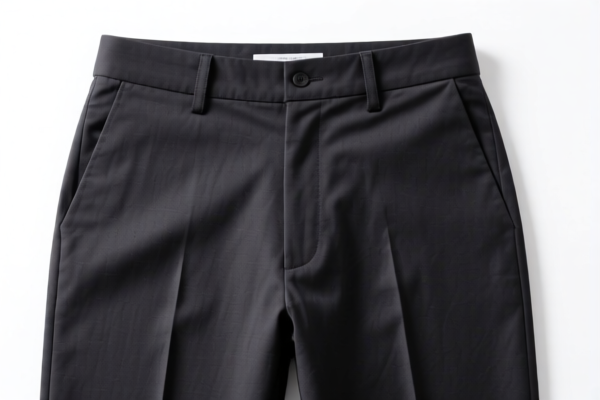
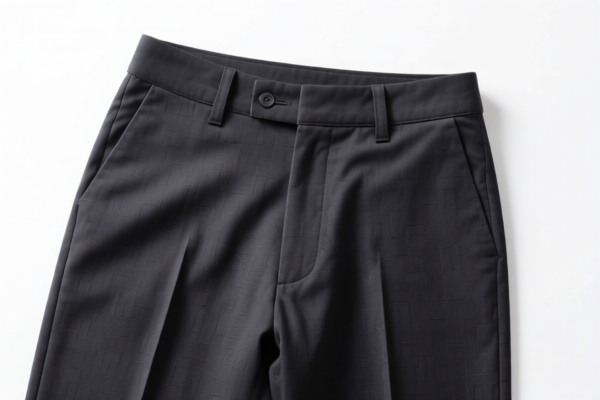
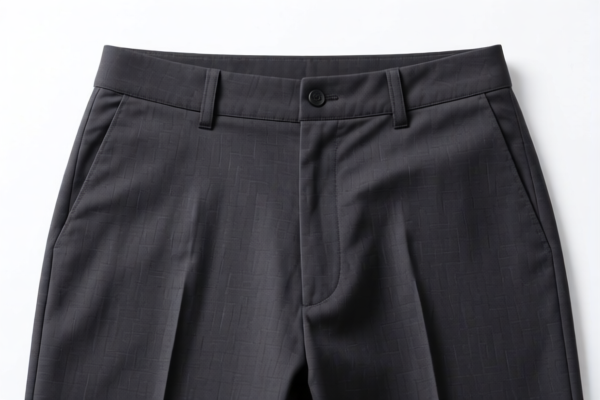
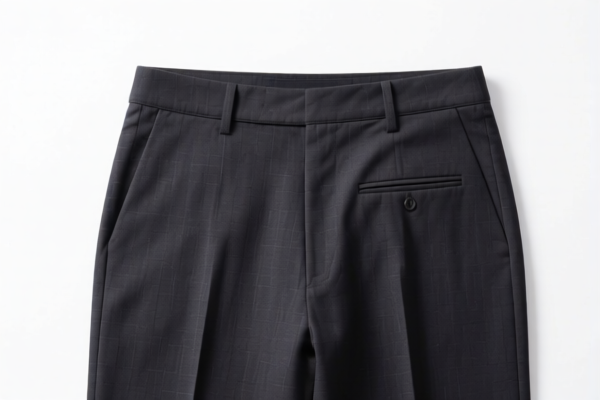
AI Analysis
👔 Other Fabric Children's Business Pants (Other Textile Material Trousers)
🌐 HS Code Reference & Customs Clearance Guide | 2026 Latest Tariff Analysis | Professional Clearance Strategy for Children's Apparel
📌 I. Product Definition and Classification: What Exactly Are "Other Fabric Children's Business Pants"?
Children's business pants refer to formal or semi-formal trousers designed for children, typically made from synthetic fibers, blended fabrics, or other textile materials (excluding cotton, wool, or specific artificial fibers that fall under different subheadings). In international trade, these goods are classified based on:
- Gender Specificity: Children's garments often have separate HS codes from adult garments.
- Fabric Composition: "Other fabric" implies synthetic fibers (polyester, nylon, etc.) or blended materials not primarily cotton or wool.
- Knitted vs. Woven: The classification differs significantly between knitted (e.g., jersey, sweatpant-style formal wear) and woven fabrics.
⚠️ Key Distinction Point:
- Knitted Children's Trousers: Belong to Chapter 61 (Knitted or Crocheted).
- Woven Children's Trousers: Belong to Chapter 62 (Not Knitted or Crocheted).
- "Business" Style: Does not automatically trigger a specific "formal wear" code; it is usually classified under general trousers unless they are suits/jackets (which are not pants).
📦 II. HS Code Classification Details (2026 Latest Tariff Authority Comparison)
Based on the provided data for "Other Fabric Pants" (interpreted here as children's business pants falling under general textile pants categories), here are the potential HS Codes and corresponding tariffs:
| HS Code | Product Description | Applicable Scenario | Fabric Type |
|---|---|---|---|
6104.63.20.06 |
Other fabric trousers, woven or knitted, made of other textile materials | General formal/business pants for children, synthetic fabric | Synthetic/Other |
6103.49.80.24 |
Other textile material trousers, meeting pants/breeches requirements | Pants made of non-cotton/non-wool/non-man-made fiber restrictions | Other Textiles |
6114.30.30.60 |
Other fabric running/pants, knitted apparel category | Knitted formal wear or stretchy business-style pants | Knitted/Other |
6104.69.80.38 |
Other fabric trousers, long pants form, other textile materials | Standard long formal trousers for children | Other Textiles |
6103.29.20.44 |
Other textile material pants, bottom-category fallback | Pants falling under general "other" provisions if no specific match | Other Textiles |
🔍 Important Reminder:
- Chapter 61 vs. 62: Note that all provided HS codes start with61, indicating Knitted or Crocheted items. If the "business pants" are woven (e.g., traditional dress trousers), they would typically fall under Chapter 62 (e.g.,6203.49or similar). However, the provided data only includes Chapter 61 codes.
- "Business" Style: If the pants are part of a suit ensemble, they may be classified differently. For single pants, the above codes apply.
💰 III. 2026 Latest Tariff Rate Details (Including Additional Taxes)
✅ Applicable Country: United States (US)
✅ Origin: China (CN)
✅ Effective Time: 2025/2026 (Current Policy)
🎯 1. 6104.63.20.06 —— Other Fabric Trousers (Synthetic/Other)
| Item | Content |
|---|---|
| Base Tariff | 28.2% |
| Additional Tariff (Section 301) | +7.5% |
| 122-Clause Tariff | +10% |
| Total Tariff Rate | 45.7% |
| Tax Calculation | CIF Value × 45.7% |
| De Minimis Eligibility | ❌ No (Subject to high tariffs) |
| Legal Basis Path | Base Rate → Section 301: 7.5% → 122-Clause: 10% |
📌 Explanation:
- Base 28.2%: Standard MFN rate for this specific knitted trouser subheading.
- Section 301 (7.5%): Additional duty on Chinese goods under the 301 investigation.
- 122-Clause (10%): Additional duty for specific textile/apparel categories from China.
- Total 45.7%: High tariff burden; careful classification is crucial.
🎯 2. 6103.49.80.24 —— Other Textile Material Trousers (Non-Cotton/Wool)
| Item | Content |
|---|---|
| Base Tariff | 5.6% |
| Additional Tariff (Section 301) | +7.5% |
| 122-Clause Tariff | +10% |
| Total Tariff Rate | 23.1% |
| Tax Calculation | CIF Value × 23.1% |
| De Minimis Eligibility | ❌ No |
| Legal Basis Path | Base Rate → Section 301: 7.5% → 122-Clause: 10% |
📌 Note:
- Lower Base Rate: 5.6% is significantly lower than6104.63.20.06.
- Condition: Must strictly meet the "other textile material" definition (not cotton/wool/man-made fiber restrictions that push it to higher brackets).
- Savings Potential: Choosing the correct subheading can save 22.6% in tariffs.
🎯 3. 6114.30.30.60 —— Knitted Apparel (Other)
| Item | Content |
|---|---|
| Base Tariff | 14.9% |
| Additional Tariff (Section 301) | +7.5% |
| 122-Clause Tariff | +10% |
| Total Tariff Rate | 32.4% |
| Tax Calculation | CIF Value × 32.4% |
| De Minimis Eligibility | ❌ No |
| Legal Basis Path | Base Rate → Section 301: 7.5% → 122-Clause: 10% |
📌 Note:
- Category: "Other knitted apparel." If the business pants are made of stretchy, knitted fabric (e.g., jersey-like formal wear), this code may apply.
- Moderate Rate: 32.4% is higher than6103.49.80.24but lower than6104.63.20.06.
🎯 4. 6104.69.80.38 —— Other Long Pants (Other Textiles)
| Item | Content |
|---|---|
| Base Tariff | 5.6% |
| Additional Tariff (Section 301) | +7.5% |
| 122-Clause Tariff | +10% |
| Total Tariff Rate | 23.1% |
| Tax Calculation | CIF Value × 23.1% |
| De Minimis Eligibility | ❌ No |
| Legal Basis Path | Base Rate → Section 301: 7.5% → 122-Clause: 10% |
📌 Note:
- Similar to #2: Also has a low base rate of 5.6%.
- Distinction: May differ in specific textile content or knitting technique details compared to6103.49.80.24.
🎯 5. 6103.29.20.44 —— Other Pants (Fallback Category)
| Item | Content |
|---|---|
| Base Tariff | "The rate applicable to each garment in the ensemble if separately" |
| Additional Tariff (Section 301) | +7.5% |
| 122-Clause Tariff | +10% |
| Total Tariff Rate | Variable + 17.5% |
| Tax Calculation | Depends on individual garment classification + 17.5% |
| De Minimis Eligibility | ❌ No |
| Legal Basis Path | Base Rate (Ensemble) → Section 301: 7.5% → 122-Clause: 10% |
📌 Critical Warning:
- Complex Calculation: This code is a "fallback" for pants that are part of an ensemble (e.g., a suit).
- Risk: If the pants are not part of a full suit ensemble, using this code may lead to misclassification penalties.
- Total Rate: The "17.5%" refers to additional duties (7.5% + 10%) added to the base rate of the individual garment if classified separately.
🛠️ IV. Customs Clearance Practical Advice (Real-World Pitfall Guide)
✅ 1. Documentation Checklist (Essential)
| Document | Required | Description |
|---|---|---|
| ✅ Product Specification Sheet | ✔️ | Detailed fabric composition (e.g., 100% Polyester, 95% Cotton/5% Spandex). Crucial for determining "Other Fabric." |
| ✅ Fabric Swatch/Label | ✔️ | Physical proof of material type (Knitted vs. Woven, Cotton vs. Synthetic). |
| ✅ Product Photos | ✔️ | Clear images showing the garment's structure (e.g., waistband, pockets, stitching style). |
| ✅ Commercial Invoice | ✔️ | Must clearly state "Children's Business Pants" and fabric content. |
| ✅ Packing List | ✔️ | Item count, weight, and dimensions. |
| ✅ Origin Certificate | ✔️ | If applicable, for potential duty drawbacks or proof of origin. |
✅ 2. Classification Strategy (Key Tips)
🔥 “Fabric Determines Code, Knitting Matters Most, Ensembles Need Care!”
| Scenario | Correct HS Code Approach | Incorrect Practice |
|---|---|---|
| Knitted Polyester Pants | 6104.63.20.06 (45.7%) |
Misclassify as woven → Risk of penalty |
| Blended Fabric Pants (Non-Cotton) | 6103.49.80.24 (23.1%) |
Use 6104 if it fits 6103 criteria → Overpay 22.6% |
| Part of a Suit Ensemble | 6103.29.20.44 (Variable) |
Classify pants alone when part of ensemble → Misclassification |
| Woven Business Pants | NOT in Provided List (Check Ch. 62) | Force into Ch. 61 codes → High risk of rejection |
📌 Critical Note:
- The provided data only includes Chapter 61 (Knitted) codes.
- If your "Business Pants" are Woven (e.g., traditional dress pants with creases), they DO NOT fit these codes. You must check Chapter 62 (e.g.,6203.49). Using a Chapter 61 code for woven goods will lead to customs detention or fines.
✅ 3. Special Cases
| Case | Handling Advice |
|---|---|
| Children's Size | Ensure "Children's" is clearly stated in the description. Some codes may have separate rates for children vs. adults. |
| Stretch Fabric | If the fabric is knitted and stretchy, it may still fall under 6114.30.30.60. Provide fabric test reports. |
| Uniforms | If these are school uniforms, ensure they are not classified as "sportswear" (6111 etc.), which may have different tariffs. |
| De Minimis (Section 321) | ❌ Not Eligible: Due to Section 301 and 122-Clause tariffs, items from China under $800 cannot use de minimis exemption for these goods. |
🌍 V. Global Market Comparison (2026 Latest)
| Country/Region | Recommended HS Code (Example) | Tariff | Certification | Notes |
|---|---|---|---|---|
| 🇺🇸 USA | 6103.49.80.24 / 6104.63.20.06 |
23.1% - 45.7% | CPSIA, ASTM F963 | High Tariffs: Must include all additional duties. |
| 🇨🇳 China | Same HS Code | 9% - 14% | CCC (if applicable) | Lower base rates, no Section 301. |
| 🇪🇺 EU | 6104.63 / 6103.49 |
8% - 12% | CE, REACH | No additional punitive tariffs. |
| 🇬🇧 UK | Same HS Code | 8% - 12% | UKCA | Post-Brexit rules apply. |
| 🇨🇦 Canada | 6104.63 / 6103.49 |
16% - 18% | CPSIA | Possible FTAA benefits if originating in Canada/Mexico. |
📌 Conclusion:
- USA Tariffs are the Highest: Due to Section 301 and 122-Clause duties.
- Fabric Classification is Key: Choosing between6103.49(23.1%) and6104.63(45.7%) can save over 20%.
- Knitted vs. Woven: Ensure the garment is indeed knitted. If woven, these codes are incorrect.
📌 VI. Common Mistakes & Pitfall Guide (Lessons Learned)
❌ Mistake 1: Using 6104.63.20.06 for woven pants
👉 Consequence: Customs rejection, fines, and delays. Woven pants belong to Chapter 62.
❌ Mistake 2: Ignoring the "Children's" aspect
👉 Consequence: Some codes have separate subheadings for children's vs. adult garments. Misclassification leads to incorrect duty assessment.
❌ Mistake 3: Assuming De Minimis Applies
👉 Consequence: For Chinese-origin goods with these HS codes, de minimis ($800) exemption is denied. Expect full tariff payment.
❌ Mistake 4: Not specifying Fabric Composition
👉 Consequence: Customs may assign the highest possible tariff rate due to ambiguity. Always provide detailed fabric content (e.g., "95% Polyester, 5% Spandex").
✅ Correct Practice:
"Children's Knitted Polyester Trousers, Formal Style, 95% Polyester/5% Spandex, Packaged in Sets"
🎯 VII. Conclusion: Precision Classification, Cost Efficiency!
🎯 Key Takeaway:
🔹 "Check Knit vs. Woven: Knit goes to Ch.61, Woven to Ch.62."
🔹 "Fabric Matters: 'Other Fabric' codes can save 20%+ if correctly classified."
🔹 "No De Minimis: Section 301 and 122-Clause duties apply regardless of value."
📌 Pro Tip:
If your goods are not from China (e.g., Vietnam, Bangladesh), you may avoid Section 301 and 122-Clause tariffs, reducing the total rate to just the Base Rate (e.g., 5.6% or 14.9%).
Consider supply chain diversification to mitigate high US tariffs.
📣 Immediate Action:
📞 Consult a Customs Broker: Verify if your pants are knitted or woven.
📄 Provide Detailed Specs: Include fabric composition and garment type.
📉 Evaluate Tariff Savings: Compare6103.49.80.24(23.1%) vs.6104.63.20.06(45.7%).
✨ Professional Clearance Starts with Accurate Classification!
💼 Every Percent Saved is Profit Gained!
Customer Reviews
About HS Code Classification
The Harmonized System (HS) is an internationally standardized nomenclature developed by the World Customs Organization (WCO) to classify traded products. Over 200 countries use the HS system as the basis for customs tariffs, trade statistics, and import/export regulations.
Each HS code follows a hierarchical structure:
- Chapter (2 digits) — Broad category of goods (e.g., Chapter 84: Machinery and Mechanical Appliances)
- Heading (4 digits) — More specific grouping within the chapter
- Subheading (6 digits) — Internationally standardized breakdown, used by all WCO member countries
- National subdivisions (8-10 digits) — Country-specific extensions for further classification, such as US HTSUS 10-digit codes
Correct HS code classification is essential for smooth customs clearance, accurate duty payment, and compliance with trade regulations. Misclassification can lead to customs delays, overpayment of duties, or penalties.
When importing from CN to US, the applicable tariff rates may include:
- Most-Favored-Nation (MFN) rate — The standard duty rate applied to WTO members
- General rate — Applied to countries without trade agreements
- Trade remedy duties — Additional tariffs such as Section 301 (anti-dumping), Section 232 (national security), or countervailing duties
The information provided on this page is for reference purposes only. For official classification, please consult with your local customs authority or a licensed customs broker.