Other Fabric Children's Vest
CN → US| HS Code | Tariff Rate | Origin | Destination | Doc |
|---|---|---|---|---|
| 6114909070 | 15.6% | CN | US | Official Doc |
| 6117809570 | 32.1% | CN | US | Official Doc |
| 6114909010 | 15.6% | CN | US | Official Doc |
| 6117809540 | 32.1% | CN | US | Official Doc |
| 6211398060 | 20.3% | CN | US | Official Doc |
Product Images

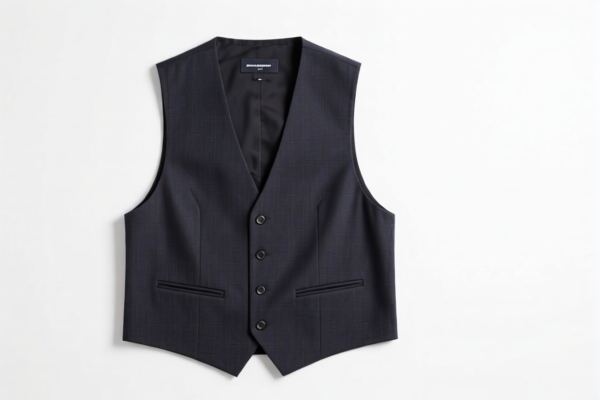
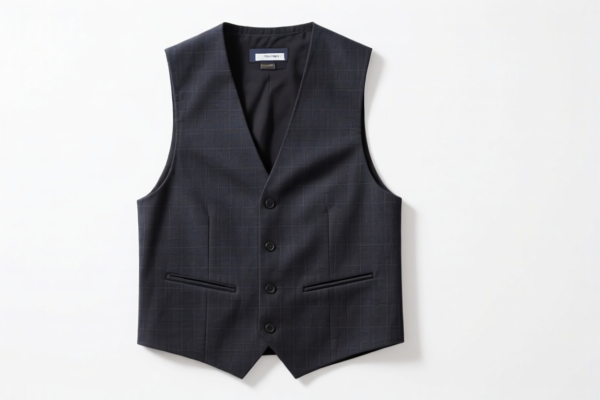

AI Analysis
🧸 Other Fabric Children's Vest (Children's Vests of Other Textile Materials)
🌐 HS Code Reference & Customs Clearance Guide | 2026 Latest Tariff Analysis | Professional Level Compliance Strategy
📌 I. Product Definition & Classification: Do You Really Know "Other Fabric Children's Vest"?
The "Other Fabric Children's Vest" refers to sleeveless outerwear for children, made from textile materials excluding cotton, wool, fine animal hair, or man-made fibers. In international trade, this product falls into a narrow but critical category where material composition and structural form (Garment vs. Accessory) drastically determine the HS Code and tariff burden.
Key Distinction Logic: 1. Garment Category (Chapter 61/62): If the item is a full vest with defined shoulder straps, body coverage, and is intended to be worn as outerwear/innerwear → Garment. 2. Accessory Category (Chapter 61.17): If the item is a decorative vest, a costume piece, or considered a "part/accessory" of clothing rather than a standalone garment → Accessory.
⚠️ Critical Pitfall Alert:
- Misclassifying a Garment as an Accessory (or vice versa) can lead to massive tariff differences (e.g., 15.6% vs. 32.1%).
- "Other Fabric" strictly excludes Cotton (6211), Wool, and Man-Made Fibers (6105/6109 etc.). It typically includes blends or fibers like silk, linen, hemp, or other exotic textiles.
📦 II. HS Code Classification Matrix (2026 Latest Tariff Authority)
Based on the provided data, here are the 5 specific HS Codes and their corresponding tariff structures. Note the split between Garment types and Accessory types.
| HS Code | Classification Logic | Tariff Profile (Total) | Key Tax Components |
|---|---|---|---|
6114.90.90.70 |
Knitted/Vcroded Vest (Garment) |
15.6% | Base: 5.6% Add-on: 0.0% Sec 301/122: 10% |
6117.80.95.70 |
Accessory/Part of Clothing (Garment Accessory) |
32.1% | Base: 14.6% Add-on: 7.5% Sec 301/122: 10% |
6114.90.90.10 |
Knitted/Vcroded Vest (Garment) |
15.6% | Base: 5.6% Add-on: 0.0% Sec 301/122: 10% |
6117.80.95.40 |
Accessory/Part of Clothing (Synthetic/Non-Wool) |
32.1% | Base: 14.6% Add-on: 7.5% Sec 301/122: 10% |
6211.39.80.60 |
Woven Vest (Other Garments) |
20.3% | Base: 2.8% Add-on: 7.5% Sec 301/122: 10% |
🔍 Analysis of the Data:
- Group A (Lowest Tariff 15.6%): HS Codes6114.90.90.70and6114.90.90.10. These are classified as Garments (Vests) made of knitted or crocheted materials. The "Add-on Tariff" is 0%, resulting in the lowest total duty. - Group B (Highest Tariff 32.1%): HS Codes6117.80.95.70and6117.80.95.40. These are classified as Accessories/Parts. The base duty is high (14.6%) plus a significant add-on (7.5%). - Group C (Mid Tariff 20.3%): HS Code6211.39.80.60. This is a Woven garment. While the base duty is low (2.8%), the add-on tariff (7.5%) raises the total above Group A.
💰 III. Detailed Tariff Breakdown (China Origin to US Market)
✅ Applicable Country: USA (US)
✅ Origin: China (CN)
✅ Note: All codes include the "Section 301/122 Tariff" of 10%.
🎯 1. The "Knitted Vest" Path (Lowest Risk & Cost)
HS Codes: 6114.90.90.70 & 6114.90.90.10
Classification: "Other knitted or crocheted garments and clothing accessories, other"
| Item | Detail |
|---|---|
| Base Duty | 5.6% |
| Add-on Tariff | 0.0% (Crucial Advantage!) |
| Section 301/122 | 10.0% |
| Total Duty Rate | 15.6% |
| Calculation | CIF Value × 15.6% |
| De Minimis? | ❌ No (Deny De Minimis) |
| Legal Basis | HTSUS 6114.90.90 -> IEEPA 10% |
📌 Why this is better:
Unlike woven goods or accessories, knitted vests in this specific "Other Material" sub-category do not attract the additional "Add-on" tariff (often associated with Section 301 specific line items). This saves 6.5% compared to the accessory codes and 4.7% compared to woven vests.
🎯 2. The "Woven Vest" Path (Mid-Range Cost)
HS Code: 6211.39.80.60
Classification: "Other garments, men's/boys' (or women's/girls'), vests, of other textile materials"
| Item | Detail |
|---|---|
| Base Duty | 2.8% (Very Low Base!) |
| Add-on Tariff | 7.5% (Significant Add-on) |
| Section 301/122 | 10.0% |
| Total Duty Rate | 20.3% |
| Calculation | CIF Value × 20.3% |
| De Minimis? | ❌ No |
📌 Why this is mid-range:
Although the base duty is the lowest (2.8%), the 7.5% Add-on Tariff pushes the total up. This code applies if the vest is woven (not knitted). Ensure your fabric construction is clearly "woven" (e.g., canvas, twill, poplin) and not "knitted" (e.g., jersey, fleece).
🎯 3. The "Accessory/Part" Path (Highest Cost - Avoid!)
HS Codes: 6117.80.95.70 & 6117.80.95.40
Classification: "Made up clothing accessories; parts of garments..."
| Item | Detail |
|---|---|
| Base Duty | 14.6% (High Base) |
| Add-on Tariff | 7.5% |
| Section 301/122 | 10.0% |
| Total Duty Rate | 32.1% |
| Calculation | CIF Value × 32.1% |
| De Minimis? | ❌ No |
📌 Why this is dangerous:
If Customs determines your product is an "Accessory" (e.g., a decorative vest, a costume piece, or a part of a larger garment set) rather than a standalone garment, you pay 32.1%. This is double the cost of the knitted vest code.
Risk Factor: High. Many "costume vests" or "vests with excessive decoration" are misclassified here.
🛠️ IV. Customs Clearance Practical Advice (Real-World Pitfall Guide)
✅ 1. Documentation Checklist (Must-Haves)
| Document | Requirement | Reason |
|---|---|---|
| ✅ Product Photos | Front, Back, Label, Tag | To prove it is a vest (sleeveless, covers torso) and not a shirt or accessory. |
| ✅ Fabric Swatch/Test Report | Confirm "Other Fabric" | Must explicitly state it is NOT Cotton, Wool, or Synthetic Fiber (to avoid Chapter 61/62 cotton/synthetic codes). |
| ✅ Construction Diagram | Knitted vs. Woven | Critical for choosing between 6114 (Knitted) and 6211 (Woven). |
| ✅ Commercial Invoice | Declare "Children's Vest" | Clear description. Avoid vague terms like "Garment" or "Clothing Part". |
| ✅ Certificate of Origin | Form A or Standard CO | For country of origin verification. |
✅ 2. Classification Strategy (Key Rules of Thumb)
| Scenario | Recommended HS Code | Why? |
|---|---|---|
| Knitted Fabric Vest (Jersey, Fleece, Rib) | 6114.90.90.70 or .10 |
Lowest Tax (15.6%). Knitted items generally have lower add-ons in this sub-category. |
| Woven Fabric Vest (Cotton-blend non-cotton, Linen, Silk, Hemp) | 6211.39.80.60 |
Mid Tax (20.3%). Woven items have a higher add-on tariff. |
| Decorative/Costume Vest or Accessory | 6117.80.95.70 / .40 |
Avoid if possible (32.1%). Only use if it is genuinely an accessory (e.g., part of a uniform set, not worn alone). |
🔥 Pro Tip:
If you can make the vest from knitted fabric instead of woven, you save 4.7% in total duty (15.6% vs 20.3%) and avoid the high-risk "Accessory" classification. Knitted is the golden path for "Other Fabric" vests.
✅ 3. Special Handling Notes
| Situation | Action |
|---|---|
| "Other Fabric" Definition | Ensure the material is NOT Cotton (HTS 6211.39.80.xx for cotton), NOT Wool, NOT Man-Made Fiber (e.g., Polyester/Nylon are often classified differently). "Other" usually implies Silk, Linen, Hemp, or Blends. Check composition carefully! |
| Children's vs. Adult | The HTS codes provided are for Children's vests. If worn by adults, the code changes completely (e.g., 6114.90.90.80 for adults). Mislabeling age group leads to immediate customs flagging. |
| Section 301/122 Tariff | All codes above include a 10% additional tariff. This is non-negotiable for China-origin goods. Factor this into your landed cost. |
🌍 V. Global Market Comparison (Quick View)
| Market | Recommended HS | Est. Total Duty (China Origin) | Notes |
|---|---|---|---|
| 🇺🇸 USA | 6114.90.90.70 |
15.6% | Includes 10% Sec 301/122. Lowest among options. |
| 🇺🇸 USA | 6117.80.95.70 |
32.1% | Avoid. High base + add-on. |
| 🇺🇸 USA | 6211.39.80.60 |
20.3% | Mid-range. Check if woven. |
| 🇨🇳 China | Various | ~5-10% | Lower import duties, but focus on export clearance. |
| 🇪🇺 EU | Varies | ~12% | No Section 301/122 tariffs. CBN (China-EU) relations apply. |
📌 Conclusion for US Export:
Prioritize6114.90.90.70or6114.90.90.10.
These offer the lowest total duty (15.6%) and avoid the punitive "Accessories" classification. Ensure the product is:
1. Knitted (not woven)
2. Children's Size
3. Made of "Other Textile Materials" (Not Cotton/Wool/Synthetic)
📌 VI. Common Errors & How to Avoid Them (Lessons Learned)
❌ Error 1: Classifying a Knitted Vest as a Woven Vest (6211).
👉 Result: Duty increases from 15.6% to 20.3%.
👉 Fix: Provide knit structure photos or fabric test reports proving it is knitted.
❌ Error 2: Classifying a Standalone Vest as an Accessory (6117).
👉 Result: Duty jumps from 15.6% to 32.1%.
👉 Fix: Declare as "Vest" (Garment), not "Part of Clothing" or "Accessory". Ensure it has a full front/back and is designed for wear.
❌ Error 3: Ignoring the "Other Fabric" Definition.
👉 Result: If the vest is actually Cotton, it should be 6211.39.80.xx (Cotton Vests), which may have different duties. If it is Polyester, it might fall under different man-made fiber codes.
👉 Fix: Get a Lab Test Report confirming the fiber content is NOT Cotton/Wool/Synthetic.
🎯 VII. Final Recommendation
🎯 Best Practice Checklist:
1. Confirm Fabric: Is it Knitted? → Use 6114.90.90.70 (15.6%).
2. Confirm Use: Is it a Vest (Garment)? → Do NOT use 6117 (Accessories).
3. Confirm Age: Is it for Children? → Ensure age labeling is clear.
4. Confirm Origin: Is it China? → Budget for +10% Sec 301/122 Tariff.
5. Document: Provide Photos, Invoice, and Composition Report.
💡 Cost Saving Summary:
By correctly classifying as Knitted Children's Vest (6114.90.90.70), you pay 15.6% total duty.
If misclassified as Accessory, you pay 32.1% → Loss of 16.5% profit margin!
📣 Immediate Action:
📞 Contact your customs broker with the fabric composition report and product photos.
📝 Request a Pre-Ruling if possible to lock in the6114.90.90.70classification.
🚀 Optimize your supply chain to use knitted "other fabric" to minimize US tariff exposure.
✨ Professional Customs Clearance Starts with Precise Classification!
💼 Every percentage point saved is pure profit!
Customer Reviews
About HS Code Classification
The Harmonized System (HS) is an internationally standardized nomenclature developed by the World Customs Organization (WCO) to classify traded products. Over 200 countries use the HS system as the basis for customs tariffs, trade statistics, and import/export regulations.
Each HS code follows a hierarchical structure:
- Chapter (2 digits) — Broad category of goods (e.g., Chapter 84: Machinery and Mechanical Appliances)
- Heading (4 digits) — More specific grouping within the chapter
- Subheading (6 digits) — Internationally standardized breakdown, used by all WCO member countries
- National subdivisions (8-10 digits) — Country-specific extensions for further classification, such as US HTSUS 10-digit codes
Correct HS code classification is essential for smooth customs clearance, accurate duty payment, and compliance with trade regulations. Misclassification can lead to customs delays, overpayment of duties, or penalties.
When importing from CN to US, the applicable tariff rates may include:
- Most-Favored-Nation (MFN) rate — The standard duty rate applied to WTO members
- General rate — Applied to countries without trade agreements
- Trade remedy duties — Additional tariffs such as Section 301 (anti-dumping), Section 232 (national security), or countervailing duties
The information provided on this page is for reference purposes only. For official classification, please consult with your local customs authority or a licensed customs broker.