Other textile material girls' outdoor jacket
CN → US| HS Code | Tariff Rate | Origin | Destination | Doc |
|---|---|---|---|---|
| 6202904961 | 20.3% | CN | US | Official Doc |
| 6210508090 | 23.7% | CN | US | Official Doc |
| 6202906961 | 20.3% | CN | US | Official Doc |
| 6102909030 | 23.2% | CN | US | Official Doc |
| 6102909005 | 23.2% | CN | US | Official Doc |
Product Images
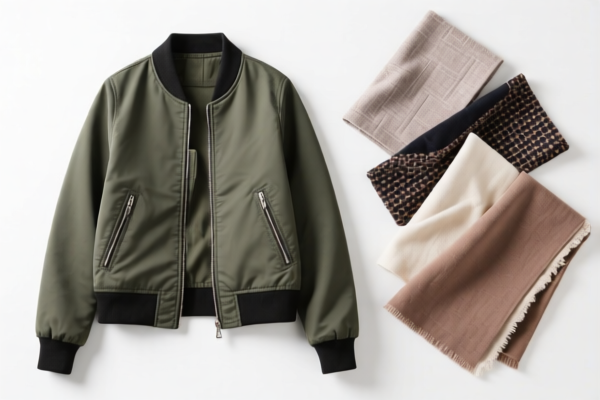
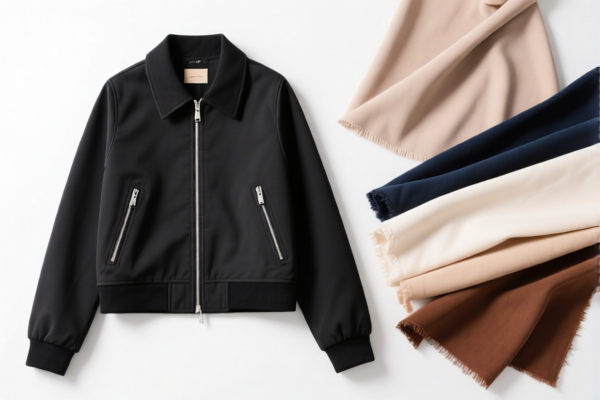
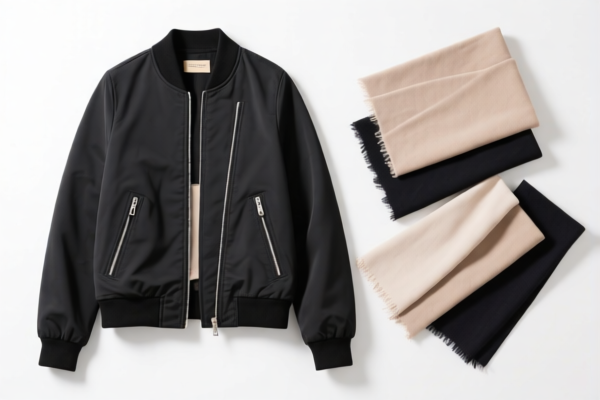
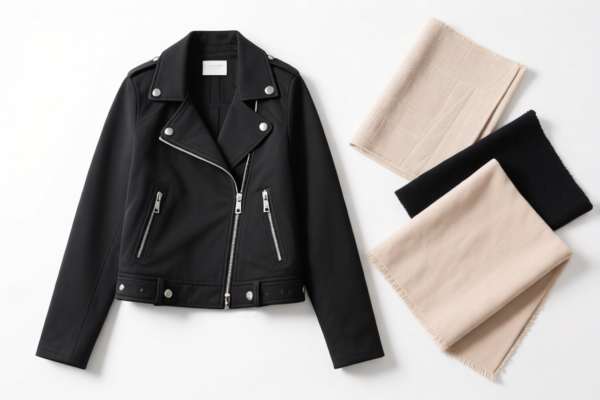
AI Analysis
👧🧥 Girls' Outdoor Windproof Jacket (Other Textile Materials)
🌐 HS Code Reference & Customs Clearance Guide | 2026 Latest Tariff Analysis | Professional Compliance Strategy 📌 I. Product Definition & Classification: Is It Knit or Woven?
A "Girls' Outdoor Windproof Jacket" made of "other textile materials" presents a critical classification decision in international trade: Is it Knitted (Chapter 61) or Woven (Chapter 62)?
The nature of the fabric determines the primary chapter: * Woven Jackets (Chapter 62): If the fabric is woven (e.g., ripstop nylon, polyester blend, canvas), it falls under heading 6202 (Women’s/Girls’ overcoats, anoraks, windbreakers, etc.). * Knitted Jackets (Chapter 61): If the fabric is knitted or crocheted (e.g., fleece, knitted polyester), it falls under heading 6102 (Women’s/Girls’ coats, anoraks, windbreakers, etc.).
⚠️ Key Distinction Point:
- Check the fabric structure: Woven = Chapter 62; Knitted = Chapter 61.
- "Other textile materials" implies the fabric is NOT Cotton, Wool, or Artificial Staples (like rayon/viscose). It is likely Polyester, Nylon, or other synthetics.
📦 II. HS Code Classification Details (Based on Provided Data)
The following HS Codes are extracted from your specific dataset. Note that they are divided between Woven (62xx) and Knitted (61xx) categories.
| HS Code | Product Description | Category | Fabric Type | Key Classification Logic |
|---|---|---|---|---|
6202.90.49.61 |
Girls' Outdoor Windproof Jacket, Other Textile Material | Woven | Other Textiles | Shape and use match perfectly; material is "other textiles" (not cotton/wool/artificial). |
6210.50.80.90 |
Girls' Outdoor Windproof Jacket, Other Textile Material | Woven | Other Textiles | Use matches girls' wear; shape is jacket; material not limited to specific type (often implies prepared garments like impregnated/coated). |
6202.90.69.61 |
Girls' Outdoor Windproof Jacket, Other Textile Material | Woven | Other Textiles | Shape and use match; material is NOT cotton, wool, or artificial fibers. |
6102.90.90.30 |
Girls' Outdoor Windproof Jacket, Other Textile Material | Knitted | Other Textiles | Shape and use match definition; material aligns with "other" category in knitted chapter. |
6102.90.90.05 |
Girls' Outdoor Windproof Jacket, Other Textile Material | Knitted | Other Textiles | Shape matches windbreaker; use matches girls'; material is consistent. |
🔍 Critical Reminder:
- You MUST determine if the jacket is Knitted or Woven before selecting the HS Code.
-6202&6210= Woven.
-6102= Knitted/Crocheted.
- Using the wrong chapter (Knitted vs. Woven) is the most common cause of customs delays and penalties.
💰 III. 2026 Latest Tariff Rate Breakdown (Detailed Tax Clauses)
✅ Applicable Country: United States (US)
✅ Origin: China (CN)
✅ Effective Time: Current Rates Include Section 301, Section 232 (if applicable), and IEEPA Surcharges.
🎯 1. Woven Jackets (Chapter 62) – Lower Base Duty
A. 6202.90.49.61 & 6202.90.69.61
These codes share the same tax structure in your data. They target "Other" textile materials (likely synthetic fibers like polyester/nylon) that do not fall under cotton, wool, or artificial staple fibers.
| Item | Content |
|---|---|
| Base Duty (MFN) | 2.8% (Ad Valorem) |
| Section 301 Tariff | 7.5% (List 4B/Additional) |
| Section 122 Tariff | 10.0% (Specific Surcharges per data note) |
| Total Effective Rate | 20.3% |
| Tax Calculation | CIF Value × 20.3% |
| De Minimis Exemption? | ❌ NO (De minimis does not apply to goods subject to Section 301/IEEPA duties) |
| Legal Basis Path | HTSUS:6202.90.49.61 → USITC Footnote → Section 301 (17 CFR Part 301) → IEEPA Surcharges |
📌 Explanation:
- The 2.8% base duty is relatively low for apparel.
- However, the 7.5% Section 301 tariff and 10% additional "122 clause" (likely referring to specific retaliatory or emergency measures) push the total to 20.3%.
- Why this code? It captures "Other" textiles, excluding cotton (6204/6206) and wool.
B. 6210.50.80.90
This code often covers garments made from fabric of heading 5602, 5603, 5903, 5906, or 5907 (e.g., waterproofed, coated, or laminated fabrics) which are technically "prepared" textiles.
| Item | Content |
|---|---|
| Base Duty (MFN) | 6.2% (Ad Valorem) |
| Section 301 Tariff | 7.5% |
| Section 122 Tariff | 10.0% |
| Total Effective Rate | 23.7% |
| Tax Calculation | CIF Value × 23.7% |
| De Minimis Exemption? | ❌ NO |
| Legal Basis Path | HTSUS:6210.50.80.90 → USITC Footnote → Section 301 → IEEPA Surcharges |
📌 Explanation:
- 23.7% is higher than the6202codes because the base duty (6.2%) is higher for "prepared" garments (e.g., fully assembled from cut pieces of technical fabrics).
- Use this if the jacket is made from laminated/coated "windproof" fabric of a specific technical class.
🎯 2. Knitted Jackets (Chapter 61) – Higher Base Duty
C. 6102.90.90.30 & 6102.90.90.05
These codes apply to Knitted or Crocheted jackets of "Other" textile materials (non-cotton, non-wool, non-artificial staple).
| Item | Content |
|---|---|
| Base Duty (MFN) | 5.7% (Ad Valorem) |
| Section 301 Tariff | 7.5% |
| Section 122 Tariff | 10.0% |
| Total Effective Rate | 23.2% |
| Tax Calculation | CIF Value × 23.2% |
| De Minimis Exemption? | ❌ NO |
| Legal Basis Path | HTSUS:6102.90.90.x0 → USITC Footnote → Section 301 → IEEPA Surcharges |
📌 Explanation:
- Knitted apparel generally has a higher base duty (5.7%) compared to woven "other" textiles (2.8%).
- Why this code? Use if the windproof fabric is a knit (e.g., softshell, fleece-lined windbreaker).
- Total Rate: 23.2%, which is higher than the woven6202codes (20.3%).
🛠️ IV. Customs Clearance Practical Advice (Pitfall Avoidance Guide)
✅ 1. Preparation Checklist (Non-Negotiable)
| Document | Required | Notes |
|---|---|---|
| ✅ Fabric Swatch / Fiber Content Label | ✔️ | Must state % of Polyester, Nylon, etc. Confirm "Other Textile Material" (i.e., NOT Cotton > 50%, NOT Wool). |
| ✅ Woven vs. Knit Determination | ✔️ | Provide a micro-graph or fabric description. Is it woven or knitted? This is the #1 risk factor. |
| ✅ Product Photos (Front/Back/Inside) | ✔️ | Show zippers, cuffs, hem, and any waterproof coatings (if applicable for 6210.50). |
| ✅ Commercial Invoice | ✔️ | Describe as "Girls' Outdoor Windproof Jacket, Woven/Knitted, 100% Polyester." Avoid vague terms like "Clothing." |
| ✅ Origin Certificate | ✔️ | Confirm China Origin. |
| ✅ Packaging List | ✔️ | Ensure HS Code matches the invoice exactly. |
✅ 2. Declaration Strategy (Key Mantra)
🔥 “Weave or Knit? Check First! ‘Other Textiles’ Mean No Cotton or Wool!”
| Scenario | Correct HS Code | Incorrect Code | Consequence |
|---|---|---|---|
| Woven Jacket (Polyester) | 6202.90.49.61 (20.3%) |
6102.90.90.30 (23.2%) |
Overpay tax by ~3% OR Customs penalty for misclassification. |
| Knitted Jacket (Polyester) | 6102.90.90.30 (23.2%) |
6202.90.49.61 (20.3%) |
Underpayment of tax! Customs will demand back payment + interest. |
| Coated/Laminated Jacket | 6210.50.80.90 (23.7%) |
6202 |
If fabric is technically "prepared" under 56/59/62 heading, using 6202 may be challenged. |
| Cotton Jacket | NONE OF ABOVE | 6202.90... |
If >50% cotton, it should be 6204.43 or 6204.44. Misclassification leads to heavy penalties. |
✅ 3. Special Case Handling
| Situation | Advice |
|---|---|
| "Windproof" Feature | Does not change HS code. It remains a jacket. Do not try to classify as "Equipment." |
| Mixed Materials | If the jacket has a cotton lining but a polyester shell, the outer surface material usually determines the classification. |
| De Minimis (Section 321) | ❌ Do NOT use De Minimis. Goods from China subject to Section 301 tariffs are excluded from the $800 de minimis exemption. You must file a formal entry. |
| Section 122 / IEEPA | The data notes a "10%" surcharge. Ensure your broker applies the correct IEEPA or Section 301 surcharge codes. These are additive to the base duty. |
🌍 V. Global Market Comparison (2026 Snapshot)
| Country/Region | Recommended HS Code | Est. Duty (China Origin) | Notes |
|---|---|---|---|
| 🇺🇸 USA | 6202.90.49.61 (Woven) or 6102.90.90.30 (Knit) |
20.3% - 23.7% | Includes Base + 301 + IEEPA Surcharges. High cost. |
| 🇨🇳 China | 6202.90.49.61 |
~9-10% | Import duty. No Section 301. |
| 🇪🇺 EU | 6202.93.00 (Synthetic) |
12% | No Section 301. No IEEPA. |
| 🇬🇧 UK | 6202.93.00 |
12% | Post-Brexit tariff. |
| 🇨🇦 Canada | 6202.93.00 |
17% | No Section 301. |
📌 Conclusion:
- The USA is significantly more expensive due to the combination of MFN base duties and Section 301/IEEPA surcharges.
- Woven jackets (6202) are slightly cheaper than Knitted jackets (6102) in this specific dataset.
- No De Minimis benefit for China-origin goods.
📌 VI. Common Errors & Pitfall Guide (Lessons Learned)
❌ Error 1: Classifying a Woven jacket under 6102 (Knitted) or vice versa.
👉 Consequence: Customs rejects the entry, demands re-classification, or issues a penalty for undervaluation/misclassification.
❌ Error 2: Assuming "Other Textile Material" includes Cotton.
👉 Consequence: If the jacket is >50% cotton, it belongs in 6204.43/44 or 6206. Using 6202.90 leads to underpayment and audits.
❌ Error 3: Trying to use De Minimis ($800) for this shipment.
👉 Consequence: The shipment will be seized or held because Chinese apparel is explicitly excluded from de minimis when Section 301 duties apply.
❌ Error 4: Ignoring the "122 Clause" / IEEPA Surcharge.
👉 Consequence: Underpaying by 10%. Customs will issue a CBP Import Priority or penalty for duty underpayment.
✅ Correct Declaration Example:
"Girls' Windproof Jacket, Woven, 100% Polyester, Other Textile Material, Not Cotton or Wool. Model: XYZ. Country of Origin: China."
🎯 VII. Conclusion: Professional Classification Saves Money!
🎯 Remember the Mantra:
🔹 "Check Weave or Knit! Woven is Cheaper (20.3%), Knit is Expensive (23.2%). No Cotton, No Wool!"
🔹 "No De Minimis for China! Always file full entry!"
🔹 "Material is King: 'Other' means Synthetics (Poly/Nylon)."
📌 Pro Tip:
If your supplier uses blended fabrics (e.g., 60% Polyester, 40% Cotton), it may still be classified as "Cotton" if Cotton > 50%. Always request a Fiber Content Test Report from your factory.
📣 Immediate Action Required:
📞 Contact your Customs Broker to verify if your fabric is Woven or Knitted.
📄 Prepare the Bill of Lading and Invoice with precise material descriptions.
🚀 Budget for ~20-24% Total Duty. Do not rely on De Minimis!
✨ Professional Clearance Starts with Accurate Classification!
💼 Your Bottom Line Depends on the Right HS Code!
Customer Reviews
About HS Code Classification
The Harmonized System (HS) is an internationally standardized nomenclature developed by the World Customs Organization (WCO) to classify traded products. Over 200 countries use the HS system as the basis for customs tariffs, trade statistics, and import/export regulations.
Each HS code follows a hierarchical structure:
- Chapter (2 digits) — Broad category of goods (e.g., Chapter 84: Machinery and Mechanical Appliances)
- Heading (4 digits) — More specific grouping within the chapter
- Subheading (6 digits) — Internationally standardized breakdown, used by all WCO member countries
- National subdivisions (8-10 digits) — Country-specific extensions for further classification, such as US HTSUS 10-digit codes
Correct HS code classification is essential for smooth customs clearance, accurate duty payment, and compliance with trade regulations. Misclassification can lead to customs delays, overpayment of duties, or penalties.
When importing from CN to US, the applicable tariff rates may include:
- Most-Favored-Nation (MFN) rate — The standard duty rate applied to WTO members
- General rate — Applied to countries without trade agreements
- Trade remedy duties — Additional tariffs such as Section 301 (anti-dumping), Section 232 (national security), or countervailing duties
The information provided on this page is for reference purposes only. For official classification, please consult with your local customs authority or a licensed customs broker.