Other textile material girls' thickened jacket
CN → US| HS Code | Tariff Rate | Origin | Destination | Doc |
|---|---|---|---|---|
| 6210501200 | 13.3% | CN | US | Official Doc |
| 6202906961 | 20.3% | CN | US | Official Doc |
| 6202902960 | 20.3% | CN | US | Official Doc |
| 6102909010 | 23.2% | CN | US | Official Doc |
Product Images
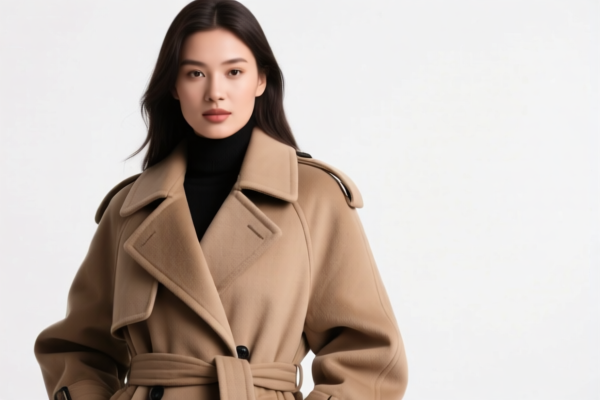
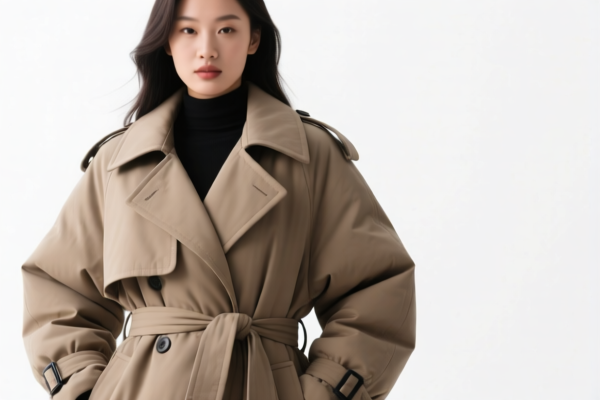
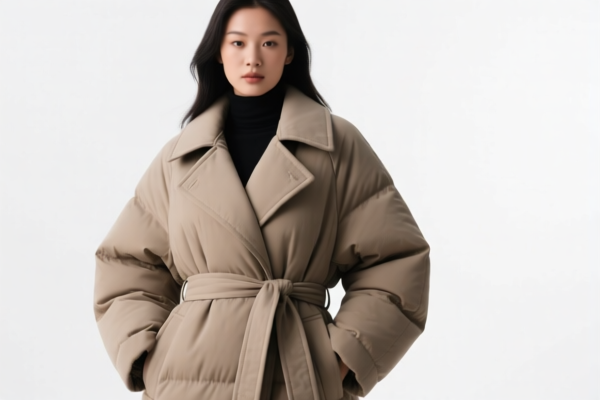
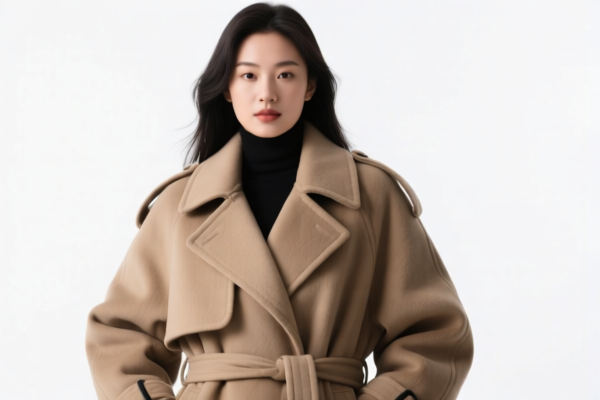
AI Analysis
👗 Girls' Thickened Jacket (Other Textile Materials)
🌐 HS Code Reference & Customs Clearance Guide | 2026 Latest Tariff Analysis | Professional Entry Strategies
📌 I. Product Definition & Classification: Do You Truly Understand "Girls' Thickened Jackets"?
A "Girls' Thickened Jacket" made of other textile materials (excluding wool, cotton, or synthetic fibers if specified otherwise, though typically "other" implies blends or specific non-major fibers like linen, hemp, or mixed textiles not covered in primary chapters) refers to outerwear designed for female children, intended for warmth, and constructed from textile fabrics other than the primary categories of cotton or wool often found in dedicated chapters.
In international trade, classification hinges on three key factors:
1. Gender: Must be for females ("Girls").
2. Material: "Other textile materials" (excluding wool/felt or specific cotton categories if they fall under different headings, but generally falls under 6202 or 6210 depending on manufacturing).
3. Form: "Jacket" (outerwear, typically not coats or trench coats which might have specific length/cut definitions, but "thickened" implies insulated or heavy fabric).
⚠️ Key Distinction Point:
- Non-Knit vs. Knit: If the jacket is woven (non-knit), it falls under Chapter 62 (Articles of Apparel and Clothing Accessories, Not Knitted or Crocheted).
- Knit: If the jacket is knitted or crocheted, it would fall under Chapter 61 (Knitted or Crocheted).
Note: The provided data points to Chapter 62 and 61 codes, implying a mix of potential classifications based on specific fabric definitions and construction.
📦 II. HS Code Classification Details (2026 Latest Tariff Authority Comparison)
Based on the provided data, here are the potential HS Codes for "Girls' Thickened Jacket, Other Textile Materials":
| HS Code | Product Description | Match Reason | Total Tax Rate |
|---|---|---|---|
6210.50.12.00 |
Women's/Girls' Other Textile Material Outerwear | Matched: Fits gender, purpose, and material range. Classifies as "Other" outerwear not specified elsewhere. | 13.3% |
6202.90.69.61 |
Women's/Girls' Other Textile Material Outerwear | Matched: Material and gender attributes consistent. Classified under "Other" subcategory. | 20.3% |
6202.90.29.60 |
Women's/Girls' Other Textile Material Outerwear | Matched: Form is "Jacket" (outerwear). Material fits "Other" definition. | 20.3% |
6102.90.90.10 |
Women's/Girls' Other Textile Material Outerwear | Matched: Form includes coats/similar items. Classified under "Other" based on broader category judgment. | 23.2% |
🔍 Important Note:
- Chapter 62 items (6210,6202) are typically woven fabrics.
- Chapter 61 items (6102) are typically knitted/crocheted fabrics.
- The discrepancy in tax rates (13.3% vs. 23.2%) highlights the critical importance of correctly identifying whether the garment is knitted or woven and its specific material composition.
💰 III. 2026 Latest Tariff Rate Breakdown (Including Additional Taxes & Policy Surcharges)
✅ Applicable Country: United States (US)
✅ Origin: China (CN)
✅ Effective Time: Post-November 2025 (Includes subsequent imports)
🎯 1. 6210.50.12.00 — Girls' Other Textile Material Outerwear (Woven, "Other")
| Item | Content |
|---|---|
| Base Tariff | 3.3% (Ad Valorem) |
| Additional Tariff (Section 301) | +0.0% (Specific exemption or lower bracket for this sub-category) |
| Section 122 Tariff | +10% (Specific to China-origin textile/apparel under Section 122) |
| Total Tax Rate | 13.3% |
| Calculation | CIF Value × 13.3% |
| De Minimis Exemption | ❌ Not Applicable (Section 321 de minimis does not apply to textiles/apparel from China under current enforcement trends for higher-value items) |
| Legal Basis Path | HTSUS:6210.50.12 → Section 122 Tariff List |
📌 Explanation:
- This is the most favorable rate among the options provided.
- It benefits from a low base tariff and no Section 301 additional tariff, but still incurs the 10% Section 122 tariff.
- Strategy: If your jacket is woven and fits this specific "Other" description, this is the optimal classification.
🎯 2. 6202.90.69.61 — Girls' Other Textile Material Outerwear (Woven, Specific "Other")
| Item | Content |
|---|---|
| Base Tariff | 2.8% (Ad Valorem) |
| Additional Tariff (Section 301) | +7.5% (Part of the broader 301 tariff list for certain apparel) |
| Section 122 Tariff | +10% (Specific to China-origin) |
| Total Tax Rate | 20.3% |
| Calculation | CIF Value × 20.3% |
| De Minimis Exemption | ❌ Not Applicable |
| Legal Basis Path | HTSUS:6202.90.69 → Section 301 Footnote → Section 122 Tariff List |
📌 Note:
- Higher total tax due to the 7.5% Section 301 surcharge.
- Applies if the jacket falls under a more specific "Other" category that triggers the 301 tariff.
🎯 3. 6202.90.29.60 — Girls' Other Textile Material Outerwear (Woven, Another "Other")
| Item | Content |
|---|---|
| Base Tariff | 2.8% (Ad Valorem) |
| Additional Tariff (Section 301) | +7.5% |
| Section 122 Tariff | +10% |
| Total Tax Rate | 20.3% |
| Calculation | CIF Value × 20.3% |
| De Minimis Exemption | ❌ Not Applicable |
| Legal Basis Path | HTSUS:6202.90.29 → Section 301 Footnote → Section 122 Tariff List |
📌 Note:
- Identical tax structure to the previous code.
- The distinction between.69.61and.29.60lies in the specific material subtype or construction detail not fully detailed in the summary, but both trigger the same tariffs.
🎯 4. 6102.90.90.10 — Girls' Other Textile Material Outerwear (Knitted/Crocheted)
| Item | Content |
|---|---|
| Base Tariff | 5.7% (Ad Valorem) |
| Additional Tariff (Section 301) | +7.5% |
| Section 122 Tariff | +10% |
| Total Tax Rate | 23.2% |
| Calculation | CIF Value × 23.2% |
| De Minimis Exemption | ❌ Not Applicable |
| Legal Basis Path | HTSUS:6102.90.90 → Section 301 Footnote → Section 122 Tariff List |
📌 Critical Warning:
- This is the highest tax rate at 23.2%.
- It applies if the jacket is knitted or crocheted (Chapter 61) rather than woven.
- Even though the base tariff (5.7%) is higher than woven counterparts, the combination with Section 301 and Section 122 tariffs makes it the most expensive option.
🛠️ IV. Customs Clearance Practical Advice (Real-World Pitfall Guide)
✅ 1. Preparation Checklist (All Required)
| Document | Mandatory? | Description |
|---|---|---|
| ✅ Product Specification Sheet | ✔️ | Must detail: Fabric composition (e.g., "50% Polyester, 50% Cotton"), Weave/Knit type, Thickness/Insulation type. |
| ✅ Fabric Swatch/Photo | ✔️ | Visual proof of texture (knitted vs. woven) is crucial for Chapter 61 vs. 62 determination. |
| ✅ Commercial Invoice | ✔️ | Must state: "Girls' Jacket, Other Textile Material, Country of Origin: China". |
| ✅ Packing List | ✔️ | Include size breakdown and item count. |
| ✅ Origin Certificate | ✔️ | If non-China origin, may apply for preferential rates. |
✅ 2. Declaration Tips (Key Mnemonic)
🔥 “Knit is 61, Woven is 62; Check Chapter, Avoid Big Fee!”
| Scenario | Correct HS Code | Error Consequence |
|---|---|---|
| Woven Jacket (e.g., Windbreaker, Thick Cotton Blend) | 6202.xxxx or 6210.xxxx |
Misclassified as Knit → Tax jumps to 23.2% |
| Knitted Jacket (e.g., Fleece, Knitted Sweater-Jacket) | 6102.xxxx |
Misclassified as Woven → May face 20.3% instead of 23.2% (or vice versa depending on specific subcategory) |
| "Other Textile" (Uncommon fibers) | Ensure material fits "Other" definition | Misclassified as Cotton/Wool → Different base tariff |
| Section 122 Compliance | Mark as China Origin | Failure to declare → Penalties + Interest |
✅ 3. Special Cases Handling
| Scenario | Recommendation |
|---|---|
| Mixed Fabric (Knit + Woven) | Classify based on principal material or defining character. If unsure, consult a customs broker for advance ruling. |
| Thickened/Insulated | If insulation is synthetic (e.g., fleece lining), it’s still "Textile Material." Do not misclassify as "Fur" or "Leather." |
| Section 122 Tariff | Be aware that 10% is fixed for China-origin apparel under this section. No exemptions for small shipments. |
🌍 V. Global Market Comparison (2026 Latest)
| Country/Region | Recommended HS Code | Tariff (China Origin) | Certification | Notes |
|---|---|---|---|---|
| 🇺🇸 USA | 6210.50.12.00 (Best Case) |
13.3% - 23.2% | None | Section 122 + 301 apply. High complexity. |
| 🇨🇳 China | 6202.xxxx |
5-10% | CCC (if applicable) | No Section 122 or 301. Lower entry barrier. |
| 🇪🇺 EU | 6202.xxxx |
12% | CE (if safety-related) | No Section 122. Standard tariff applies. |
| 🇦🇺 Australia | 6202.xxxx |
5% | ACCC | Free Trade Agreement may apply (check CHAFTA). |
| 🇯🇵 Japan | 6202.xxxx |
10-18% | PSE (if functional) | No Section 122. CPTPP may reduce rates. |
📌 Conclusion:
- USA is the most challenging market due to Section 122 (10%) and Section 301 (7.5%) tariffs.
- Best Practice: Aim for6210.50.12.00(13.3%) if possible, as it avoids the 7.5% Section 301 tariff.
📌 VI. Common Mistakes & Pitfalls (Blood-Teachings)
❌ Mistake 1: Assuming "Thickened" means "Coat"
👉 Consequence: May be misclassified under different subheadings with higher base tariffs.
Fix: Define clearly as "Jacket" (shorter length, typical outerwear).
❌ Mistake 2: Ignoring Knit vs. Woven
👉 Consequence: Chapter 61 vs. 62 error → Tariff rate change from 13.3% to 23.2% (~10% difference!).
Fix: Always provide fabric swatch or weave photo.
❌ Mistake 3: Underestimating Section 122
👉 Consequence: Assuming "Other Textile" is exempt from Section 122.
Fix: Section 122 applies to most China-origin apparel/textiles. Budget for +10%.
✅ Correct Declaration:
"Girls' Jacket, Woven, Other Textile Material, Thickened, China Origin, Model ABC"
🎯 VII. Conclusion: Precision Saves Money!
🎯 Remember the Rules:
🔹 "Woven = 62, Knit = 61; Check Section 122, It's 10% Plus!"
🔹 "Best Rate is 13.3% (6210.50.12.00), Avoid 23.2% if You Can!"
🔹 "De Minimis Doesn't Apply, Prepare Documentation!"
📌 Pro Tip:
If your jacket is made in Vietnam, Bangladesh, or India, you avoid Section 122 tariffs entirely!
- Section 122 applies only to China-origin goods.
- Consider supply chain diversification to save 10% on tariffs.
📣 Immediate Action:
📞 Contact a Customs Broker + Provide Fabric Swatch + Request Advance Ruling
🚀 Ensure Smooth Clearance, Avoid Penalties, Maximize Profit!
✨ Professional Classification Starts with Accuracy!
💼 Every Percent Counts in Apparel Import Costs!
Customer Reviews
About HS Code Classification
The Harmonized System (HS) is an internationally standardized nomenclature developed by the World Customs Organization (WCO) to classify traded products. Over 200 countries use the HS system as the basis for customs tariffs, trade statistics, and import/export regulations.
Each HS code follows a hierarchical structure:
- Chapter (2 digits) — Broad category of goods (e.g., Chapter 84: Machinery and Mechanical Appliances)
- Heading (4 digits) — More specific grouping within the chapter
- Subheading (6 digits) — Internationally standardized breakdown, used by all WCO member countries
- National subdivisions (8-10 digits) — Country-specific extensions for further classification, such as US HTSUS 10-digit codes
Correct HS code classification is essential for smooth customs clearance, accurate duty payment, and compliance with trade regulations. Misclassification can lead to customs delays, overpayment of duties, or penalties.
When importing from CN to US, the applicable tariff rates may include:
- Most-Favored-Nation (MFN) rate — The standard duty rate applied to WTO members
- General rate — Applied to countries without trade agreements
- Trade remedy duties — Additional tariffs such as Section 301 (anti-dumping), Section 232 (national security), or countervailing duties
The information provided on this page is for reference purposes only. For official classification, please consult with your local customs authority or a licensed customs broker.