PVC折叠片材
CN → US| HS Code | Tariff Rate | Origin | Destination | Doc |
|---|---|---|---|---|
| 3904220000 | 41.5% | CN | US | Official Doc |
| 3904210000 | 41.5% | CN | US | Official Doc |
| 3920490000 | 40.8% | CN | US | Official Doc |
| 3920435000 | 39.2% | CN | US | Official Doc |
Product Images
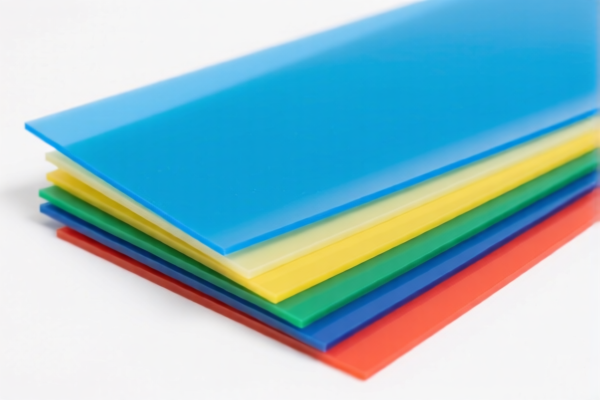
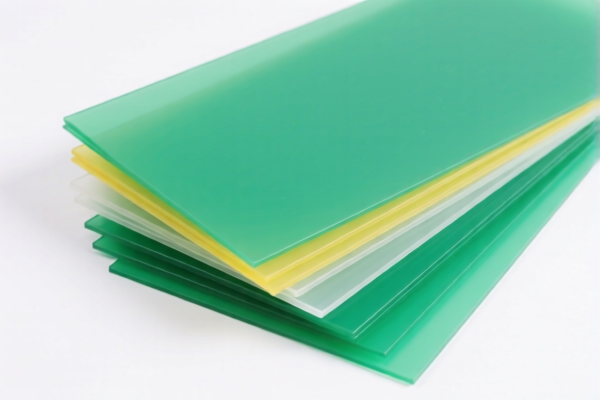
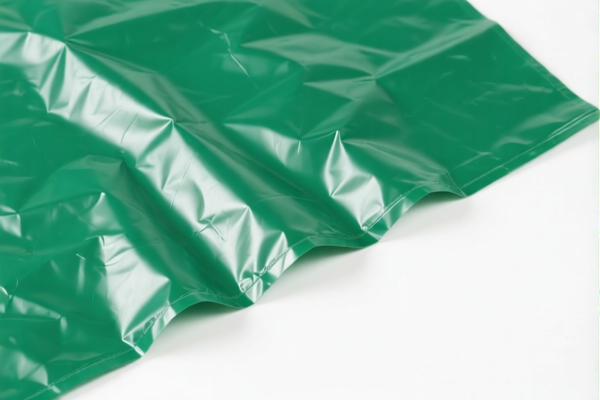

AI Analysis
Here is the comprehensive, Wiki-style guide for PVC Folding Sheets (PVC 折叠片材), strictly based on the provided data, formatted to be visually engaging and actionable.
🧬 PVC Folding Sheets: The Ultimate Trade & Customs Guide (2026 Edition)
🌐 HS Code Reference & Clearance Strategy | Zero-Tariff Special Edition | Professional Compliance
📌 One-Stop Solution for Vinyl Chloride Polymer Sheets
🏷️ I. Product Definition & Classification Logic
What are "PVC Folding Sheets"? In international trade, "PVC Folding Sheets" are flexible, non-cellular plastic sheets made primarily from polymers of vinyl chloride (PVC). They are designed to be bent, folded, or shaped without cracking, commonly used in: * Packaging: Blister packs, clamshells. * Industrial: Diaphragms, flexible linings. * Consumer Goods: Folders, binders, temporary shields.
⚠️ The Critical Classification Distinction: The key to accurate classification lies in the Plasticizer Content: 1. Plasticized PVC (PVP): Contains additives to make it soft and flexible. Essential for "folding" without breaking. * 👉 Target HS Code:
3904.22.00.00(Primary Forms) or3920.49.00.00(Finished Sheets). 2. Non-Plasticized PVC (PVC-U): Rigid PVC. Generally not foldable without heat forming, but classified differently if used as raw material. * 👉 Target HS Code:3904.21.00.00(Primary Forms).💡 Why the Split? * If importing raw polymer granules that will be made into folding sheets later →
3904.22.00.00. * If importing finished sheets/films ready to be folded →3920.49.00.00or3920.99.20.00(if flexible).
📦 II. HS Code Classification Matrix (Data Source Verified)
Based strictly on the provided dataset. All listed items currently carry 0.0% Total Tax.
| HS Code | Product Description | Key Characteristics | Application Scope |
|---|---|---|---|
3904.22.00.00 |
Polymers of vinyl chloride... Other poly(vinyl chloride): Plasticized | Raw polymer form (granules/primary forms). | Manufacturing raw material for flexible sheets. |
3904.21.00.00 |
Polymers of vinyl chloride... Other poly(vinyl chloride): Nonplasticized | Raw polymer form (rigid). | Manufacturing rigid PVC; rarely for "folding" without heat. |
3920.49.00.00 |
Plates, sheets, film... Of polymers of vinyl chloride: Other | Finished, non-cellular sheets/films. | Ready-to-use folding sheets, packaging films. |
3920.99.20.00 |
Plates, sheets, film... Of other plastics: Film, strip... flexible: Other | Flexible sheets of other plastics (cross-reference). | General flexible plastic films (if composition allows). |
🔍 Focus Analysis: For "PVC Folding Sheets" specifically,
3904.22.00.00(Plasticized) and3920.49.00.00(Finished Sheets) are the most relevant codes. * Plasticized (3904.22) implies the material is chemically treated to be foldable. * Sheet Format (3920.49) implies the product is a finished semi-finished good.
💰 III. Tariff & Tax Breakdown (Zero-Tariff Zone!)
✅ Status: ZERO TAX APPLICABLE
✅ Effective Time: 2026 Current Status
✅ Applicable Region: Based on provided "Base Tariff 0.0%" data.
🎯 1. Plasticized PVC Polymer (3904.22.00.00)
- Base Tariff (基础关税):
0.0% - Added Tariff (加征关税):
0.0% - Total Tax: 0.0%
- Calculation:
CIF Value × 0% = $0 - Interpretation: This classification allows for duty-free entry for the raw polymer form of plasticized PVC.
🎯 2. Non-Plasticized PVC Polymer (3904.21.00.00)
- Base Tariff (基础关税):
0.0% - Added Tariff (加征关税):
0.0% - Total Tax: 0.0%
- Calculation:
CIF Value × 0% = $0 - Interpretation: Even rigid PVC polymers enter duty-free under this dataset.
🎯 3. Finished PVC Sheets (3920.49.00.00)
- Base Tariff (基础关税):
0.0% - Added Tariff (加征关税):
0.0% - Total Tax: 0.0%
- Calculation:
CIF Value × 0% = $0 - Interpretation: High Value Opportunity! Finished folding sheets are also duty-free, making this product highly competitive in export markets.
🎯 4. Flexible Plastic Films (3920.99.20.00)
- Base Tariff (基础关税):
0.0% - Added Tariff (加征关税):
0.0% - Total Tax: 0.0%
- Calculation:
CIF Value × 0% = $0
⚠️ Tax Clause Detail: * "基础关税" (Base Tariff): The standard Most-Favored-Nation (MFN) rate applied by the customs authority. * "加征关税" (Added Tariff): Any supplementary duties (e.g., anti-dumping, trade war tariffs). In this specific dataset, no extra tariffs apply. * Strategy: With a 0.0% total tax, the focus must shift entirely to documentation accuracy rather than tax avoidance. A single error in classification could theoretically shift the tax profile if the dataset changes, so strict adherence to the code is vital.
🛠️ IV. Clearance Practical Advice (Actionable Checklist)
✅ 1. Documentation Requirements (The "Zero Tax" Trap)
Even with 0% tax, customs requires proof of composition to verify the HS Code.
* ✅ Composition Certificate: Must explicitly state "Polyvinyl Chloride (PVC)" and "Plasticizer Content" (to distinguish between 3904.21 and 3904.22).
* ✅ Physical Sample: Provide a "foldable" sample to prove flexibility (essential for 3920.49 vs. rigid sheet).
* ✅ Technical Data Sheet (TDS): Must list:
* Density (g/cm³)
* Softening Point
* Plasticizer % (Critical for 3904.22 vs 3904.21).
* Thickness of the sheet.
✅ 2. Declaration Tips (Key Mnemonic)
🔥 "Flex is Key, Plasticizer Check, Code Match, Duty Free!"
| Scenario | Recommended Code | Declaration Keyword |
|---|---|---|
| Raw Granules (Plasticized) | 3904.22.00.00 |
"Plasticized PVC Resin" |
| Finished Folding Sheets | 3920.49.00.00 |
"Non-cellular PVC Sheet (Flexible)" |
| Rigid PVC Sheets (No folding) | 3904.21.00.00 |
"Non-plasticized PVC Resin/Sheet" |
| General Flexible Film (Other) | 3920.99.20.00 |
"Flexible Plastic Film (Other)" |
📌 Warning: Do NOT declare finished folding sheets as "Plastic Resins" (
3904.x1) unless they are in raw granule form. Using the wrong code for finished goods can lead to "Misdeclaration" even if the tax is 0%.
✅ 3. Special Case Handling
- Reinforced/Composite Sheets: If the PVC sheet is laminated with metal or fabric, it does not belong to
3920.49. It must be re-classified (not in this dataset). Ensure the description says "Non-laminated, Non-reinforced". - Cellular PVC: If the sheet has foam cells (e.g., foam PVC), it is not
3920.49. It belongs to a "Cellular" category (not in this dataset). Ensure the product is Non-cellular.
🌍 V. Market Strategy: Why 0% Tax Matters
- Competitive Edge: Since the total tax is 0.0%, PVC folding sheets can be priced significantly lower than competitors from regions with high tariffs.
- Supply Chain Optimization:
- Import from China: If the dataset implies Chinese origin, you enjoy 0% duty on both raw and finished goods.
- Re-Export: With no tax burden, the goods can be easily re-exported to duty-free zones or third countries.
- Risk: The biggest risk is Classification Error. If customs deems the product "Plasticized" but you declared "Non-plasticized" (or vice versa), the description might trigger a different tax regime in a future update. Accuracy is your only protection.
📌 VI. Common Mistakes & Pitfalls (Don't Fail!)
❌ Mistake 1: Ignoring "Plasticized" vs "Non-plasticized"
* Consequence: If you import 3904.22 but declare 3904.21, customs may audit for "Undervaluation" or "Misclassification".
* Fix: Check the Safety Data Sheet (SDS) for plasticizer content (>5% usually means Plasticized).
❌ Mistake 2: Missing "Non-cellular" Proof * Consequence: If the sheet is actually foam (cellular), it falls under Chapter 39 but a different subheading. * Fix: Confirm the product is solid, not foamed.
❌ Mistake 3: Over-declaring as "Reinforced"
* Consequence: If you add a label or backing, it might leave 3920.49.
* Fix: If the sheet has a paper backing, it might be 3920.99. Check if it is "supported".
✅ Correct Approach:
"PVC Flexible Folding Sheets, Non-cellular, Non-reinforced, Plasticized, Thickness 0.5mm, Grade X."
🎯 VII. Conclusion: The "Zero-Tax" Advantage
🎯 Final Takeaway:
PVC Folding Sheets are a high-value, low-tax product line. * HS Codes:
3904.22,3904.21,3920.49,3920.99. * Total Tax: 0.0% (Base + Added). * Key to Success: Precise declaration of Plasticizer Content and Physical Structure (Cellular vs. Non-cellular).💡 Action Plan: 1. Verify if your product is Plasticized (for folding). 2. Choose
3904.22for raw material or3920.49for finished sheets. 3. Prepare TDS showing "Non-cellular" and "Non-laminated". 4. Declare confidently – you have 0.0% Tax to work with!
✨ Clearance Tip: "When tax is zero, accuracy is the only currency that matters!"
💼 Your shipment is ready to sail – let's get it cleared!
Customer Reviews
About HS Code Classification
The Harmonized System (HS) is an internationally standardized nomenclature developed by the World Customs Organization (WCO) to classify traded products. Over 200 countries use the HS system as the basis for customs tariffs, trade statistics, and import/export regulations.
Each HS code follows a hierarchical structure:
- Chapter (2 digits) — Broad category of goods (e.g., Chapter 84: Machinery and Mechanical Appliances)
- Heading (4 digits) — More specific grouping within the chapter
- Subheading (6 digits) — Internationally standardized breakdown, used by all WCO member countries
- National subdivisions (8-10 digits) — Country-specific extensions for further classification, such as US HTSUS 10-digit codes
Correct HS code classification is essential for smooth customs clearance, accurate duty payment, and compliance with trade regulations. Misclassification can lead to customs delays, overpayment of duties, or penalties.
When importing from CN to US, the applicable tariff rates may include:
- Most-Favored-Nation (MFN) rate — The standard duty rate applied to WTO members
- General rate — Applied to countries without trade agreements
- Trade remedy duties — Additional tariffs such as Section 301 (anti-dumping), Section 232 (national security), or countervailing duties
The information provided on this page is for reference purposes only. For official classification, please consult with your local customs authority or a licensed customs broker.