PVC食品级板
CN → US| HS Code | Tariff Rate | Origin | Destination | Doc |
|---|---|---|---|---|
| 3921125000 | 41.5% | CN | US | Official Doc |
| 3923900080 | 38.0% | CN | US | Official Doc |
| 3921121950 | 40.3% | CN | US | Official Doc |
| 3921125000 | 41.5% | CN | US | Official Doc |
| 3921121950 | 40.3% | CN | US | Official Doc |
Product Images
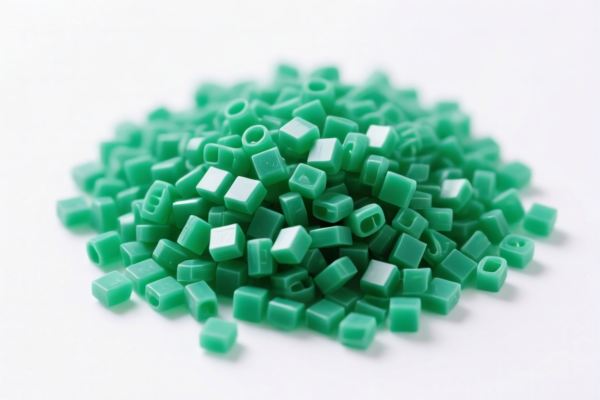
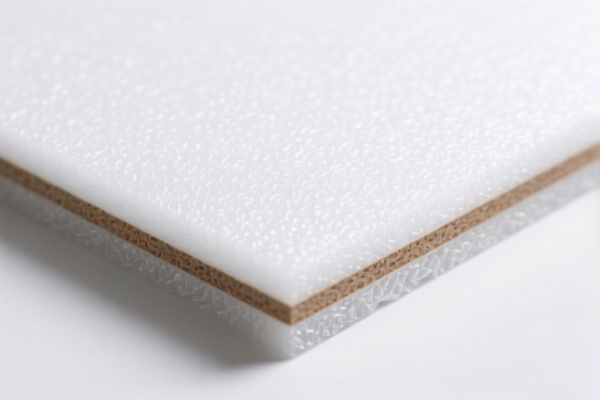
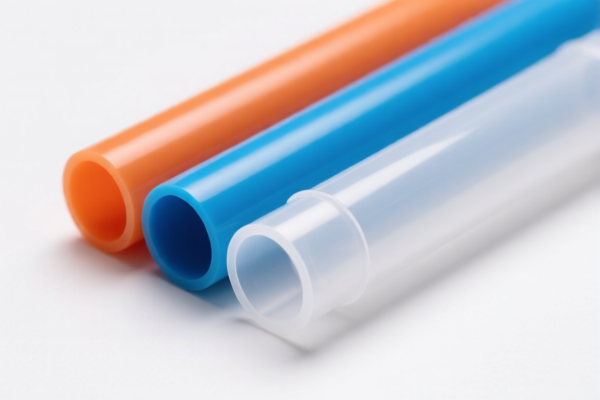

AI Analysis
🍽️ PVC Food-Grade Sheet (PVC Plastic Sheet for Food Contact Applications)
🌐 HS Code & Tariff Guide | 2026 Updated | U.S. Import Compliance & Strategic Clearance Tips
📌 One Product, Multiple Classifications — Know the Difference to Avoid 40%+ Tariffs!
📦 一、Product Definition & Classification Logic: Why Is This PVC Sheet So Tricky?
You're importing PVC (Polyvinyl Chloride) sheet material intended for food packaging or food-grade contact applications — but here’s the catch: the same material can be classified under multiple HS Codes, depending on form, function, and intended use.
⚠️ Critical Insight:
- If it’s a rigid board or sheet used in food packaging → likely 3921.12.50.00
- If it’s a flexible film or thin sheet used for wrapping food → may fall under 3921.12.19.50
- If it’s not clearly food-grade or lacks documentation → risk of higher tariffs due to misclassification
📊 二、HS Code Classification Breakdown (2026 U.S. Tariff Schedule)
| HS Code | Product Description | Key Characteristics | Tax Implications |
|---|---|---|---|
3921.12.50.00 |
PVC (vinyl) sheet, rigid, 蜂窝状 or other board-like form, used in packaging or industrial applications | Rigid, thick, board-like structure; may be corrugated or honeycomb | ✅ High Risk of 41.5% Total Tax |
3921.12.19.50 |
PVC sheet/film, flexible, used for food-grade packaging | Thin, pliable, used in wrapping, sealing, or food containers | ✅ 40.3% Total Tax |
3923.90.00.80 |
Plastic (PVC) packaging products, not otherwise specified | General-purpose plastic packaging — often used for food wrap, bags, trays | ✅ 38.0% Total Tax |
🔍 Why the Confusion?
- The same PVC material can be classified differently based on: - Thickness & rigidity (sheet vs. film) - Intended use (food contact vs. general packaging) - Physical form (honeycomb board vs. flat film)
💰 三、2026 U.S. Tariff Breakdown (With Full Legal Basis)
✅ Applicable Country: China (CN)
✅ Effective Date: November 10, 2025 (including retroactive enforcement)
✅ Applicable to: All PVC-based plastic sheets/films imported into the U.S.
🎯 1. 3921.12.50.00 — Rigid PVC Board (Honeycomb or Other Board Form)
| Tax Component | Rate | Legal Basis | Notes |
|---|---|---|---|
| Base Tariff | 6.5% | U.S. HTSUS §3921.12.50 | Standard rate for PVC boards |
| Section 301 (USITC) Additional Duty | +25.0% | USITC:9903.88.01 |
Imposed under Section 301 of the Trade Act of 1974 |
| Section 122 (IEEPA) Emergency Tariff | +10.0% | IEEPA:9903.01.25 |
From the International Emergency Economic Powers Act (IEEPA) |
| Total Effective Tariff | 41.5% | — | Highest risk category |
📌 Why This Matters:
- If your PVC board has a honeycomb or corrugated structure, even if used for food packaging, it must be declared under 3921.12.50.00. - No de minimis exemption — even small shipments face full 41.5% duty.
🎯 2. 3921.12.19.50 — Flexible PVC Sheet/Film (Food-Grade Packaging Use)
| Tax Component | Rate | Legal Basis | Notes |
|---|---|---|---|
| Base Tariff | 5.3% | HTSUS §3921.12.19 | Applies to unspecified PVC sheets/films |
| Section 301 (USITC) Additional Duty | +25.0% | USITC:9903.88.01 |
Same as above |
| Section 122 (IEEPA) Emergency Tariff | +10.0% | IEEPA:9903.01.24 |
Applies to China-origin goods |
| Total Effective Tariff | 40.3% | — | Still extremely high |
📌 Key Clarification:
- This code applies to thin, flexible PVC sheets or films used in food packaging — e.g., shrink wrap, food tray covers, laminated films. - Even if labeled “food-safe” or “FDA-compliant”, this does NOT reduce the tariff — only the regulatory compliance.
🎯 3. 3923.90.00.80 — General Plastic Packaging (PVC-Based)
| Tax Component | Rate | Legal Basis | Notes |
|---|---|---|---|
| Base Tariff | 3.0% | HTSUS §3923.90.00 | General packaging goods |
| Section 301 (USITC) Additional Duty | +25.0% | USITC:9903.88.01 |
Applies to all Chinese-origin plastic packaging |
| Section 122 (IEEPA) Emergency Tariff | +10.0% | IEEPA:9903.01.25 |
Applies to all China-origin plastic packaging |
| Total Effective Tariff | 38.0% | — | Slightly lower, but still high |
📌 When to Use This Code?
- If the product does not qualify as a "sheet" or "film" under 3921.12.19.50 or 3921.12.50.00 - If it’s not rigid, not clearly a board, and used in general packaging (e.g., bags, wraps, trays)⚠️ Warning:
- Do NOT use this code if your product is clearly a rigid board or flexible film — misclassification risks penalties.
🛠️ 四、Clearance & Compliance Strategy (Real-World Tips)
✅ 1. Required Documentation (Must-Have)
| Document | Why It’s Critical |
|---|---|
| ✅ Product Specifications | Must clearly state: material (PVC), thickness, rigidity, intended use (food contact) |
| ✅ FDA/GRAS Compliance Certificate | Proves food safety — not for tariff reduction, but for customs clearance |
| ✅ Material Safety Data Sheet (MSDS) | Required for chemical compliance |
| ✅ Commercial Invoice | Must include exact HS Code, product description, CIF value, origin (CN) |
| ✅ Certificate of Origin (CO) | If not from China, may qualify for lower tariffs |
| ✅ Product Photos (with labels) | Show thickness, surface texture, and markings |
| ✅ Test Reports (e.g., FDA, ISO 18562) | Proves food-grade status — avoids rejection |
✅ 2.申报技巧 (Pro申报 Tips)
🔥 "Form Defines Code, Use Defines Duty"
| Scenario | Correct HS Code | Common Mistake |
|---|---|---|
| Rigid PVC board, honeycomb, used in food packaging | 3921.12.50.00 |
Misclassified as 3923.90.00.80 → 2.5% higher duty |
| Thin, flexible PVC film for food wrap | 3921.12.19.50 |
Misclassified as 3923.90.00.80 → 2.3% higher duty |
| General PVC packaging tray (not rigid/film) | 3923.90.00.80 |
Over-classified as 3921.12.19.50 → 38% vs 40.3% |
✅ Best Practice:
- Use the most specific HS Code that matches physical form + function. - Never default to “general packaging” unless you’re certain.
✅ 3. Special Handling Cases
| Situation | Recommended Action |
|---|---|
| PVC film with food-grade label but no test reports | ❌ Do not declare as food-grade — risk of customs rejection |
| PVC board with food contact but no certification | Use 3921.12.50.00 but declare “for packaging” — avoid “food contact” in invoice |
| Mixed shipment (board + film) | Split by HS Code — declare separately to avoid misclassification |
| Re-export or re-import | Check HTSUS §9802.00.00 for duty-free re-entry (if applicable) |
🌍 五、Global Market Comparison (2026)
| Country | Recommended HS Code | Base Tariff | Additional Duties | Notes |
|---|---|---|---|---|
| 🇺🇸 United States | 3921.12.50.00 / 3921.12.19.50 |
5.3%–6.5% | +25% (301) +10% (IEEPA) | Total: 40.3%–41.5% |
| 🇨🇳 China | 3921.12.50.00 |
5% | None | No extra tariffs |
| 🇪🇺 European Union | 3921.12.50.00 |
0% | None | Only CE/REACH compliance |
| 🇦🇺 Australia | 3921.12.19.50 |
5% | None | No附加税 |
| 🇯🇵 Japan | 3921.12.19.50 |
0% | None | No附加税 |
📌 Takeaway:
- U.S. is the only market with 40%+ tariffs on PVC food-grade sheets. - China, EU, AU, JP have no extra tariffs — consider re-routing to avoid U.S. duty.
🚨 Six Common Pitfalls (Avoid These or Pay the Price!)
❌ Mistake 1: Using 3923.90.00.80 for a rigid PVC board
👉 Result: Underpaid duty → penalties + interest (up to 200% of unpaid amount)
❌ Mistake 2: Declaring "food-grade" without documentation
👉 Result: Customs hold or refusal of entry
❌ Mistake 3: Not distinguishing between sheet and film
👉 Result: Wrong HS Code → 40.3% vs 41.5% — small difference, big cost
❌ Mistake 4: Combining rigid board and flexible film in one shipment
👉 Result: Mixed classification → delayed clearance
❌ Mistake 5: Assuming "PVC = low tariff"
👉 Result: Ignorance of 301 + IEEPA → 41.5% tax shock
❌ Mistake 6: No pre-clearance check
👉 Result: Cargo held at port, demurrage fees, lost time
✅ Final Verdict: How to Win the Tariff Game
🔥 "Form First, Use Second, Origin Last"
| Step | Action |
|---|---|
| 1️⃣ Identify physical form | Rigid board? → 3921.12.50.00 |
| 2️⃣ Confirm intended use | Food packaging? → Use correct code, not general |
| 3️⃣ Verify documentation | FDA, MSDS, test reports — no exceptions |
| 4️⃣ Use a U.S. Customs Broker | For pre-ruling, classification review, and duty optimization |
| 5️⃣ Consider origin change | If possible, source from Vietnam, Mexico, or Thailand → IEEPA exemption (0% extra duty) |
🎯 Pro Tip: Apply for an Advance Ruling (Pre-Approval)
📞 Contact a U.S. Customs Broker and request:
- HS Code Pre-Approval (Advance Ruling)
- Tariff Classification Ruling (HTSUS)
- Documentation Review for Food-Grade Compliance💡 Cost: $500–$2,000
💡 Savings: Avoid $10,000+ in penalties & overpayment
📌 Summary: Your Action Plan
✅ Step 1: Confirm physical form (rigid board vs. flexible film)
✅ Step 2: Choose correct HS Code from the three options
✅ Step 3: Prepare full documentation (FDA, MSDS, invoice)
✅ Step 4: Hire a U.S. customs broker for pre-clearance
✅ Step 5: Consider re-routing to avoid 41.5% tariff
📣 Don’t Let 41.5% Kill Your Profit!
🚀 Act now — classify correctly, document thoroughly, and clear smoothly.
✨ Expert Advice:
"In U.S. trade, HS Code is law — not suggestion.
One wrong code = 41.5% tax + penalties + delay.
Get it right the first time."
💼 Your product’s success starts with the right classification.
📦 Clearance is not just paperwork — it’s strategy.
Customer Reviews
About HS Code Classification
The Harmonized System (HS) is an internationally standardized nomenclature developed by the World Customs Organization (WCO) to classify traded products. Over 200 countries use the HS system as the basis for customs tariffs, trade statistics, and import/export regulations.
Each HS code follows a hierarchical structure:
- Chapter (2 digits) — Broad category of goods (e.g., Chapter 84: Machinery and Mechanical Appliances)
- Heading (4 digits) — More specific grouping within the chapter
- Subheading (6 digits) — Internationally standardized breakdown, used by all WCO member countries
- National subdivisions (8-10 digits) — Country-specific extensions for further classification, such as US HTSUS 10-digit codes
Correct HS code classification is essential for smooth customs clearance, accurate duty payment, and compliance with trade regulations. Misclassification can lead to customs delays, overpayment of duties, or penalties.
When importing from CN to US, the applicable tariff rates may include:
- Most-Favored-Nation (MFN) rate — The standard duty rate applied to WTO members
- General rate — Applied to countries without trade agreements
- Trade remedy duties — Additional tariffs such as Section 301 (anti-dumping), Section 232 (national security), or countervailing duties
The information provided on this page is for reference purposes only. For official classification, please consult with your local customs authority or a licensed customs broker.