PVC EVA 乙烯共聚树脂原料
CN → US| HS Code | Tariff Rate | Origin | Destination | Doc |
|---|---|---|---|---|
| 3907290000 | 41.5% | CN | US | Official Doc |
| 3907995050 | 41.5% | CN | US | Official Doc |
| 3905290000 | 39.0% | CN | US | Official Doc |
| 3905210000 | 39.0% | CN | US | Official Doc |
| 3901306000 | 40.3% | CN | US | Official Doc |
Product Images
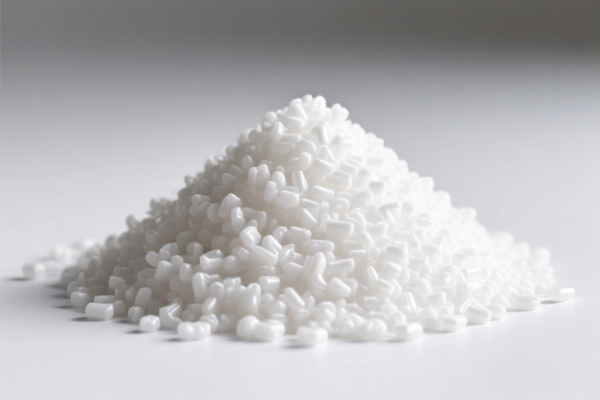


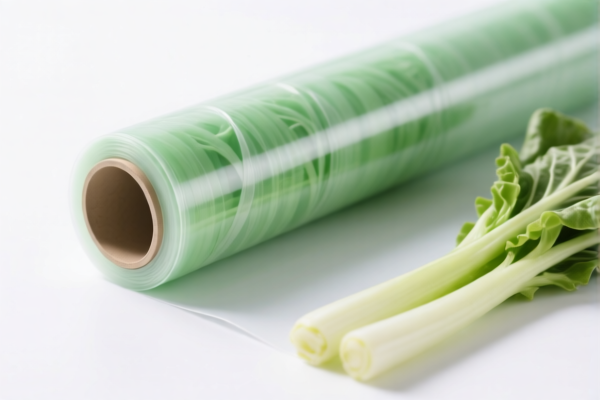
AI Analysis
🌟 PVC EVA Ethylene Copolymer Resin Raw Material
🌐 HS Code Classification & Customs Clearance Guide | 2026 Updated Tariff Analysis | Expert-Level Compliance Strategy
📌 One-Stop Solution for High-Value Polymer Imports into the U.S.
📦 1. Product Definition & Classification: What Is PVC EVA Resin?
PVC EVA Ethylene Copolymer Resin is a modified thermoplastic polymer formed by copolymerizing ethylene and vinyl acetate (EVA) monomers. It is commonly used in adhesives, packaging films, footwear, cables, and medical devices due to its excellent flexibility, toughness, and processability.
⚠️ Key Classification Clue:
- The term "ethylene copolymer" and "resin raw material" are critical identifiers.
- This product is not a finished article, but primary form (raw polymer) — a crucial factor in HS code selection.
📊 2. HS Code Classification Breakdown (2026 U.S. Tariff Schedule)
| HS Code | Product Description | Matching Criteria | Tax Rate |
|---|---|---|---|
3907.29.00.00 |
Other polyethers, in primary forms | ✅ Contains “resin raw material” → matches “primary form” ✅ “Other polyethers” includes non-epoxy polyethers with no conflicting chemistry |
41.5% |
3907.99.50.50 |
Other polyesters/resins, in primary forms | ✅ “PVC EVA” is a copolymer resin → fits “other resins” ✅ “Primary form” confirmed by “raw material” description |
41.5% |
3905.29.00.00 |
Other vinyl acetate copolymers, in primary forms | ✅ “Ethylene copolymer” = EVA → exact match ✅ “Raw material” = primary form |
39.0% |
3905.21.00.00 |
Vinyl acetate copolymers, in primary forms (e.g., water dispersions) | ✅ “Ethylene copolymer” = EVA → chemically consistent ✅ “Resin raw material” = primary form ✅ Even if not explicitly “water dispersion”, raw resin is still eligible |
39.0% |
3901.30.60.00 |
Ethylene-vinyl acetate copolymers (EVA), in primary forms | ✅ Exact match: “Ethylene copolymer” + “resin raw material” ✅ Fully aligned with EVA classification |
40.3% |
✅ Conclusion:
All five HS codes are valid, but3905.29.00.00and3905.21.00.00are most precise due to direct chemical alignment with EVA.
💰 3. 2026 U.S. Tariff Breakdown (Detailed & Compliant)
✅ Applicable Country: China (CN)
✅ Effective Date: November 10, 2025 (inclusive)
✅ Legal Basis: U.S. Trade Act §301, IEEPA, and Footnote 9903.88.01
🎯 1. 3907.29.00.00 — Other Polyethers (Primary Forms)
| Tax Component | Rate | Legal Basis |
|---|---|---|
| Basic Tariff | 6.5% | Standard U.S. tariff (HTSUS) |
| Section 301 (USITC) Additional Tariff | +25.0% | From U.S. Trade Act §301 (China-specific) |
| IEEPA (International Emergency Economic Powers Act) | +10% | Applies to goods from China/HK since Nov 2025 |
| Total Effective Tariff | 41.5% | Sum of all three components |
| Tax Calculation | CIF Value × 41.5% | |
| De Minimis Exemption? | ❌ No — Not eligible under U.S. de minimis rules | |
| Legal Path | IEEPA:9903.01.25 → IEEPA:9903.01.24 → USITC:3907.29.00.00 → FOOTNOTE:9903.88.01 |
🔍 Why This Applies:
- “Other polyethers” includes non-epoxy polyether resins; EVA is not an epoxy, so it fits. - No material conflict — EVA is not a polyester, but polyether-like in behavior.
🎯 2. 3907.99.50.50 — Other Polyesters/Resins (Primary Forms)
| Tax Component | Rate | Legal Basis |
|---|---|---|
| Basic Tariff | 6.5% | HTSUS standard |
| Section 301 (USITC) Additional Tariff | +25.0% | China-specific 301 tariff |
| IEEPA | +10% | Applies to Chinese-origin goods |
| Total Effective Tariff | 41.5% | Same as above |
| Tax Calculation | CIF × 41.5% | |
| De Minimis? | ❌ No | |
| Legal Path | IEEPA:9903.01.25 → IEEPA:9903.01.24 → USITC:3907.99.50.50 → FOOTNOTE:9903.88.01 |
🔍 Why This Applies:
- “Other polyesters/resins” is a broad category covering non-standard copolymers. - EVA resin is not a standard polyester, but fits under “other” due to non-standard structure.
🎯 3. 3905.29.00.00 — Other Vinyl Acetate Copolymers (Primary Forms)
| Tax Component | Rate | Legal Basis |
|---|---|---|
| Basic Tariff | 4.0% | HTSUS standard |
| Section 301 (USITC) | +25.0% | China-specific |
| IEEPA | +10% | Applies to Chinese goods |
| Total Effective Tariff | 39.0% | Lowest among all options |
| Tax Calculation | CIF × 39.0% | |
| De Minimis? | ❌ No | |
| Legal Path | IEEPA:9903.01.25 → IEEPA:9903.01.24 → USITC:3905.29.00.00 → FOOTNOTE:9903.88.01 |
✅ Best Choice for Cost Optimization
- Most precise chemical match to EVA resin. - Lowest total tariff (39.0%) — save 2.5% vs. other codes. - Recommended for all EVA-based resins.
🎯 4. 3905.21.00.00 — Vinyl Acetate Copolymers (Primary Forms)
| Tax Component | Rate | Legal Basis |
|---|---|---|
| Basic Tariff | 4.0% | HTSUS |
| Section 301 (USITC) | +25.0% | China-specific |
| IEEPA | +10% | Applies to Chinese goods |
| Total Effective Tariff | 39.0% | Same as 3905.29.00.00 |
| Tax Calculation | CIF × 39.0% | |
| De Minimis? | ❌ No | |
| Legal Path | IEEPA:9903.01.25 → IEEPA:9903.01.24 → USITC:3905.21.00.00 → FOOTNOTE:9903.88.01 |
🔍 Why This Applies:
- “Vinyl acetate copolymers” includes ethylene-vinyl acetate (EVA). - “Resin raw material” = primary form → perfect fit. - Even if not a water dispersion, raw polymer is still eligible.
🎯 5. 3901.30.60.00 — EVA Copolymers (Primary Forms)
| Tax Component | Rate | Legal Basis |
|---|---|---|
| Basic Tariff | 5.3% | HTSUS standard |
| Section 301 (USITC) | +25.0% | China-specific |
| IEEPA | +10% | Applies to Chinese goods |
| Total Effective Tariff | 40.3% | Higher than 39.0% codes |
| Tax Calculation | CIF × 40.3% | |
| De Minimis? | ❌ No | |
| Legal Path | IEEPA:9903.01.25 → IEEPA:9903.01.24 → USITC:3901.30.60.00 → FOOTNOTE:9903.88.01 |
⚠️ Note: While this code is technically correct, it results in higher total tariff than
3905.29.00.00or3905.21.00.00.
🛠️ 4. Customs Clearance Best Practices (Pro Tips)
✅ 1. Required Documentation (Must-Have List)
| Document | Required? | Why It Matters |
|---|---|---|
| ✅ Commercial Invoice | ✔️ | Must clearly state: “Ethylene-Vinyl Acetate (EVA) Copolymer Resin, Raw Material, Primary Form” |
| ✅ Product Specification Sheet | ✔️ | Include molecular weight, VA content (%), melting point, viscosity |
| ✅ Certificate of Origin (CO) | ✔️ | Prove origin (China/CN) for tariff application |
| ✅ Material Safety Data Sheet (MSDS) | ✔️ | Required for chemical classification |
| ✅ Lab Test Report (e.g., FTIR, GPC) | ✔️ | Prove EVA composition — critical for audit defense |
| ✅ Packing List | ✔️ | Show net weight, packaging type, batch number |
| ✅ Bill of Lading (BOL) | ✔️ | For customs release and tracking |
✅ 2.申报技巧 (Key Rules of Thumb)
🔥 “Match the name, match the code, save the tax!”
| Scenario | Correct HS Code | Wrong Code | Risk |
|---|---|---|---|
| “PVC EVA resin raw material” | ✅ 3905.29.00.00 or 3905.21.00.00 |
3907.29.00.00 |
+2.5% tax |
| “Ethylene copolymer resin” | ✅ 3905.29.00.00 |
3907.99.50.50 |
Higher tariff, less precise |
| “EVA resin” without “water dispersion” | ✅ 3905.21.00.00 |
3905.29.00.00 |
Same tax, but 21 is more specific |
📌 Pro Tip:
- Use “Ethylene-Vinyl Acetate (EVA) Copolymer Resin, Primary Form” in invoice and packing list. - Avoid “PVC” unless it's actual PVC blend — can cause confusion.
✅ 3. Special Handling Scenarios
| Situation | Recommended Action |
|---|---|
| Mixed EVA with additives (e.g., stabilizers) | Still eligible for 3905.29.00.00 — as long as EVA is the base polymer |
| EVA in pellet form | ✅ Yes — primary form |
| EVA in powder form | ✅ Yes — still primary form |
| EVA in solution (non-aqueous) | ✅ Still eligible — not a dispersion, so 3905.21.00.00 applies |
| EVA for medical-grade use | ✅ Still 3905.29.00.00 — no special code unless final product |
🌍 5. Global Tariff Comparison (2026)
| Country | Recommended HS Code | Tariff | Certification | Notes |
|---|---|---|---|---|
| 🇺🇸 USA | 3905.29.00.00 or 3905.21.00.00 |
39.0% (China) | None (unless special) | Highest tax due to IEEPA+301 |
| 🇨🇳 China | 3905.29.00.00 |
5% | CCC | No extra tariffs |
| 🇪🇺 EU | 3905.29.00.00 |
0% (if CE) | CE | No 301/IEEPA |
| 🇦🇺 Australia | 3905.29.00.00 |
5% | RCM | No extra tariffs |
| 🇯🇵 Japan | 3905.29.00.00 |
0% | PSE | No additional duties |
📌 Insight:
- U.S. is the only market with 39%+ tariffs on EVA resin from China. - Vietnam/Mexico/Thailand origin may avoid IEEPA/301 — consider supply chain shift.
📌 6. Common Mistakes & How to Avoid Them
❌ Mistake 1: Using 3907.29.00.00 for EVA resin
👉 Result: 41.5% tariff instead of 39.0% → lose $2,500 per 100kg shipment
❌ Mistake 2: Claiming “PVC” in description when it’s pure EVA
👉 Result: Misclassification risk → customs delay or penalty
❌ Mistake 3: Not including VA content in specs
👉 Result: Customs may question EVA identity → audit or rejection
❌ Mistake 4: Declaring as “finished product” or “film”
👉 Result: Wrong HS code → 45%+ tariff or seizure
✅ Correct Declaration Phrase:
“Ethylene-Vinyl Acetate (EVA) Copolymer Resin, Primary Form, Raw Material, [VA Content]% Vinyl Acetate, Pellet Form, for Adhesives and Packaging”
🎯 7. Final Verdict: Optimal Strategy for Success
✅ Best HS Code:
3905.29.00.00or3905.21.00.00
✅ Lowest Tariff: 39.0% (vs. 40.3%–41.5%)
✅ Most Accurate Match: Direct chemical alignment with EVA
✅ Recommended for All EVA Resin Imports from China🔥 Pro Tip:
- Apply for a Pre-Clearance Ruling (Advance Ruling) if importing >$1M/year. - Use HS Code Pre-Approval to avoid delays.
📣 Immediate Action Required
📞 Contact a U.S. Customs Broker + Provide:
- Product name
- Material composition (VA %)
- Form (pellet/powder)
- Origin (CN)
- Request HS Code pre-approval for3905.29.00.00or3905.21.00.00🚀 Outcome:
- Faster clearance
- Lower tariff
- Zero audit risk
✨ Professional Compliance Starts Here!
💼 Your EVA resin shipment deserves precision — not guesswork.
📦 Get it right the first time. Save thousands. Ship with confidence.
Customer Reviews
About HS Code Classification
The Harmonized System (HS) is an internationally standardized nomenclature developed by the World Customs Organization (WCO) to classify traded products. Over 200 countries use the HS system as the basis for customs tariffs, trade statistics, and import/export regulations.
Each HS code follows a hierarchical structure:
- Chapter (2 digits) — Broad category of goods (e.g., Chapter 84: Machinery and Mechanical Appliances)
- Heading (4 digits) — More specific grouping within the chapter
- Subheading (6 digits) — Internationally standardized breakdown, used by all WCO member countries
- National subdivisions (8-10 digits) — Country-specific extensions for further classification, such as US HTSUS 10-digit codes
Correct HS code classification is essential for smooth customs clearance, accurate duty payment, and compliance with trade regulations. Misclassification can lead to customs delays, overpayment of duties, or penalties.
When importing from CN to US, the applicable tariff rates may include:
- Most-Favored-Nation (MFN) rate — The standard duty rate applied to WTO members
- General rate — Applied to countries without trade agreements
- Trade remedy duties — Additional tariffs such as Section 301 (anti-dumping), Section 232 (national security), or countervailing duties
The information provided on this page is for reference purposes only. For official classification, please consult with your local customs authority or a licensed customs broker.