Plastic Boys/Girls Children's Clothing
CN → US| HS Code | Tariff Rate | Origin | Destination | Doc |
|---|---|---|---|---|
| 6113001012 | 21.3% | CN | US | Official Doc |
| 6113001005 | 21.3% | CN | US | Official Doc |
| 6210109040 | 26.0% | CN | US | Official Doc |
| 6210109010 | 26.0% | CN | US | Official Doc |
| 3926209050 | 15.0% | CN | US | Official Doc |
| 3926206000 | 35.0% | CN | US | Official Doc |
Product Images
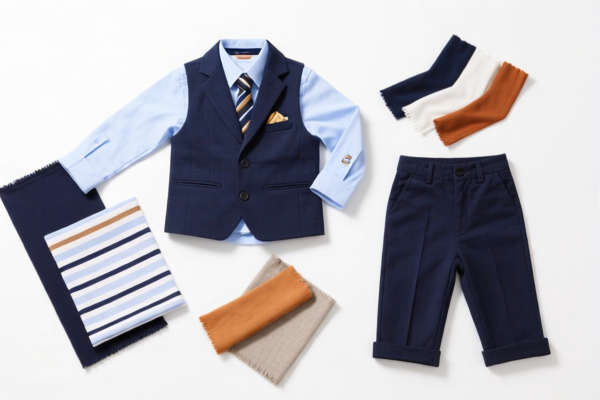



AI Analysis
👕 Plástico Children's Clothing (Plastic Boys/Girls Garments)
🌐 HS Code Classification & Tariff Strategy | 2026 U.S. Import Guide | Risk-Free Customs Clearance
📌 I. Product Definition & Classification Logic: Is It "Clothing" or "Plastic Goods"?
Plastic Boys/Girls Children's Clothing represents a unique cross-category in international trade. Unlike standard cotton/polyester apparel, these garments are defined by their material composition (plastic) and manufacturing process (coating/impregnation).
Key Classification Dilemma:
- Apparel Path (Chapter 61/62): If the item is treated as "clothing" with a plastic coating or made from coated fabric.
- Plastic Goods Path (Chapter 39): If the item is treated as "plastic articles" or "accessories" rather than traditional garments.
⚠️ Critical Distinction:
- If the plastic forms the primary structural material or acts as a waterproof coating on fabric → Chapter 39 (Plastic Articles) may apply (Higher Tax).
- If the item is a coated garment (fabric base with plastic layer) → Chapter 61/62 (Garments) may apply (Lower Tax).
- 兜底 Logic (Fallback Logic): If the plastic construction is special or non-standard, it may fall under "Other" categories in Chapter 62.
📦 II. HS Code Classification Details (Based on Provided Data)
| HS Code | Product Description (Summary) | Classification Logic | Tax Strategy |
|---|---|---|---|
| 6210.10.90.40 | Plastic Boys/Girls Children's Clothing | Fallback Logic: Classified as Garments based on "Other" category. Treated as special material construction or coated fabric. | 26.0% |
| 3926.20.60.00 (1) | Plastic Boys/Girls Children's Clothing | Material Match: Matches "Plastic" material + "Clothing/Accessory" usage. Fits "Plastic Clothing Accessories" logic. | 35.0% |
| 3926.20.60.00 (2) | Plastic Boys/Girls Children's Clothing | Material Match: Confirms plastic rainwear logic. Matches "Plastic Raincoats" classification. | 35.0% |
| 6113.00.10.05 | Plastic Coated Men's/Boys' Garments | Coating Logic: Classified as garments impregnated/coated with plastic materials. Fits plastic clothing logic. | 21.3% |
| 6210.40.35.00 | Plastic Coated Men's/Boys' Garments | Specific Garment Logic: Classified as men's/boys' garments impregnated/coated with plastic. | 13.8% |
🔍 Key Insight:
- Lowest Tax:6210.40.35.00(13.8%) – Best for coated men's/boys' garments.
- Highest Tax:3926.20.60.00(35.0%) – Applies if classified strictly as plastic articles/accessories (e.g., plastic raincoats).
- Fallback Category:6210.10.90.40(26.0%) – For "other" plastic children's clothing not fitting specific subheadings.
💰 III. 2026 U.S. Tariff Rate Breakdown (China-Origin Products)
✅ Applicable Market: United States (US)
✅ Origin: China (CN)
✅ Effective Date: Includes Section 301 (25%) + Section 122 (10%) additions.
🎯 1. 6210.10.90.40 – Plastic Children's Clothing (Fallback)
| Item | Detail |
|---|---|
| Base Duty | 16.0% |
| Section 301 (Additional) | 0.0% |
| Section 122 (China-Specific) | 10.0% |
| Total Duty | 26.0% |
| De Minimis Exemption? | ❌ NO |
| Legal Basis | Section 122 (10%) + Base Tariff (16%) |
📌 Explanation:
- 16% Base: Standard tariff for "Garments" (Chapter 62).
- 10% Section 122: Specific China-added tariff (likely related to "Special Measures").
- 0% Section 301: No additional 25% tariff applied in this specific classification.
🎯 2. 3926.20.60.00 – Plastic Articles/Accessories (High Tax Risk)
| Item | Detail |
|---|---|
| Base Duty | 0.0% |
| Section 301 (Additional) | 25.0% |
| Section 122 (China-Specific) | 10.0% |
| Total Duty | 35.0% |
| De Minimis Exemption? | ❌ NO |
| Legal Basis | Section 301 (25%) + Section 122 (10%) |
📌 Explanation:
- 0% Base: Plastic articles often have low base duty.
- 25% Section 301: Standard US tariff on Chinese plastic goods.
- 10% Section 122: Additional China-specific tariff.
- Total 35%: Highest risk category – Avoid if possible.
🎯 3. 6113.00.10.05 – Plastic Coated Garments (Men/Boys)
| Item | Detail |
|---|---|
| Base Duty | 3.8% |
| Section 301 (Additional) | 7.5% |
| Section 122 (China-Specific) | 10.0% |
| Total Duty | 21.3% |
| De Minimis Exemption? | ❌ NO |
| Legal Basis | Section 301 (7.5% partial) + Section 122 (10%) |
📌 Explanation:
- 3.8% Base: Low base duty for coated garments.
- 7.5% Section 301: Partial Section 301 tariff (likely due to specific plastic content).
- 10% Section 122: Standard China add-on.
🎯 4. 6210.40.35.00 – Plastic Coated Men's/Boys' Garments (Best Option)
| Item | Detail |
|---|---|
| Base Duty | 3.8% |
| Section 301 (Additional) | 0.0% |
| Section 122 (China-Specific) | 10.0% |
| Total Duty | 13.8% |
| De Minimis Exemption? | ❌ NO |
| Legal Basis | Section 122 (10%) + Base Tariff (3.8%) |
📌 Explanation:
- 3.8% Base: Lowest base tariff for coated garments.
- 0% Section 301: NO additional 25% tariff – This is the sweet spot.
- 10% Section 122: Mandatory China add-on.
- Total 13.8%: Lowest total duty – Ideal for cost-saving.
🛠️ IV. Customs Clearance Practical Advice (Risk-Free Strategy)
✅ 1. Documentation Checklist (Must-Have)
| Document | Required? | Why? |
|---|---|---|
| Product Specification Sheet | ✅ Yes | Must specify "Plastic Coating" or "Impregnated Fabric". |
| Material Composition Report | ✅ Yes | Prove % of plastic vs. fabric (e.g., 80% fabric, 20% plastic). |
| Photos of Garment | ✅ Yes | Show coating texture, seam construction, and lining. |
| Third-Party Lab Test | ✅ Yes | Confirm material composition (ASTM/ISO standards). |
| Commercial Invoice | ✅ Yes | Must use precise term: "Plastic Coated Garments" (NOT "Plastic Clothing"). |
| Country of Origin Certificate | ✅ Yes | Required for Section 122 & 301 verification. |
| Packing List | ✅ Yes | Must not split garment components (e.g., don't ship coating separately). |
✅ 2. Declaration Strategy (Crucial Tips)
🔥 Golden Rule: "Coated Fabric = Garment (Low Tax); Plastic Article = Accessory (High Tax)"
| Scenario | Correct Declaration | Incorrect Declaration |
|---|---|---|
| Plastic Raincoat | 6210.40.35.00 (13.8%) |
3926.20.60.00 (35.0%) → Save $21.2% |
| Plastic Children's Wear | 6210.10.90.40 (26.0%) |
3926.20.60.00 (35.0%) → Save $9.0% |
| Coated Boys' Jacket | 6113.00.10.05 (21.3%) |
3926.20.60.00 (35.0%) → Save $13.7% |
| Pure Plastic Garment | 3926.20.60.00 (35.0%) |
❌ Cannot avoid 35% if 100% plastic |
📌 Warning:
- DO NOT declare "Plastic Boys/Girls Clothing" as3926.20.60.00unless it is 100% plastic without fabric base.
- ALWAYS declare as "Plastic Coated Garments" if fabric exists.
✅ 3. Special Scenarios
| Scenario | Action Plan |
|---|---|
| OEM/Custom Orders | Provide design drawings + material samples to prove coating process. |
| Plastic + Fabric Blend | Use 6210.40.35.00 (13.8%) – Ensure fabric > 50% weight. |
| Children's Rainwear | Declare as 6210.40.35.00 (13.8%) – Avoid 3926 (35%). |
| Mixed Shipments | Do not mix 3926 and 6210 items in one shipment; declare separately. |
🌍 V. Global Market Comparison (2026)
| Country/Region | Recommended HS Code | Total Duty | Notes |
|---|---|---|---|
| 🇺🇸 USA | 6210.40.35.00 |
13.8% | Best rate – Avoid 3926. |
| 🇨🇳 China | 6210.40.35.00 |
3.8% | No Section 301/122. |
| 🇪🇺 EU | 6210.40.35.00 |
0%~5% | CE + REACH compliance required. |
| 🇯🇵 Japan | 6210.40.35.00 |
0% | No Section 301/122. |
| 🇨🇦 Canada | 6210.40.35.00 |
5%~10% | No Section 301/122. |
📌 Conclusion:
- USA is the ONLY market with Section 301/122 tariffs (10%+25%).
- Avoid3926in USA – It adds 25% Section 301 tariff.
- Use6210.40.35.00– Lowest risk, lowest tax.
📌 VI. Common Mistakes & Pitfalls (Avoid These!)
❌ Mistake 1: Declaring "Plastic Children's Clothing" as 3926.20.60.00.
👉 Result: 35% tax instead of 13.8% → Overpay $21.2 per $100 value.
❌ Mistake 2: Not providing material composition report.
👉 Result: Customs reclassifies as 3926 → 25% Section 301 added.
❌ Mistake 3: Declaring "Raincoat" as "Plastic Garment" without proof.
👉 Result: Delayed clearance or penalty → Costly delays.
❌ Mistake 4: Splitting garment components (e.g., plastic coating separate).
👉 Result: Each component taxed separately → Total tax > 50%.
✅ Correct Action:
"Plastic Coated Men's/Boys' Garments (6210.40.35.00) – 80% Fabric, 20% Plastic Coating, Rain-Proof."
🎯 VII. Final Verdict: Professional Customs Strategy
🎯 Remember the Golden Rule:
🔹 "Coated Fabric = Garment (13.8%); Plastic Article = 35% (Avoid!)"
🔹 "Section 301 = 25% (Only for3926); Section 122 = 10% (All China Goods)"
🔹 "Declare 'Plastic Coated Garments' – Not 'Plastic Clothing'!"
📌 Pro Tip:
If your product is 100% plastic (no fabric), you MUST use
3926.20.60.00(35%).
But if it has any fabric base, ALWAYS use6210.40.35.00(13.8%).
📣 Immediate Action Required:
📞 Contact a Customs Broker + Provide Material Composition Report + Product Photos
🚀 Ensure Correct HS Code → Save Up to 21.2% in Tax!
✨ Precision Classification = Maximum Profit!
💼 Every $100 Saved = 21% More Margin!
End of Report | 2026 U.S. Import Guide for Plastic Children's Clothing
Customer Reviews
About HS Code Classification
The Harmonized System (HS) is an internationally standardized nomenclature developed by the World Customs Organization (WCO) to classify traded products. Over 200 countries use the HS system as the basis for customs tariffs, trade statistics, and import/export regulations.
Each HS code follows a hierarchical structure:
- Chapter (2 digits) — Broad category of goods (e.g., Chapter 84: Machinery and Mechanical Appliances)
- Heading (4 digits) — More specific grouping within the chapter
- Subheading (6 digits) — Internationally standardized breakdown, used by all WCO member countries
- National subdivisions (8-10 digits) — Country-specific extensions for further classification, such as US HTSUS 10-digit codes
Correct HS code classification is essential for smooth customs clearance, accurate duty payment, and compliance with trade regulations. Misclassification can lead to customs delays, overpayment of duties, or penalties.
When importing from CN to US, the applicable tariff rates may include:
- Most-Favored-Nation (MFN) rate — The standard duty rate applied to WTO members
- General rate — Applied to countries without trade agreements
- Trade remedy duties — Additional tariffs such as Section 301 (anti-dumping), Section 232 (national security), or countervailing duties
The information provided on this page is for reference purposes only. For official classification, please consult with your local customs authority or a licensed customs broker.