Plastic Coated Women's Clothing
CN → US| HS Code | Tariff Rate | Origin | Destination | Doc |
|---|---|---|---|---|
| 6307909884 | 24.5% | CN | US | Official Doc |
| 6307909891 | 24.5% | CN | US | Official Doc |
| 5903101000 | 37.7% | CN | US | Official Doc |
| 3921121100 | 39.2% | CN | US | Official Doc |
| 3921901100 | 39.2% | CN | US | Official Doc |
| 5903102010 | 35.0% | CN | US | Official Doc |
Product Images


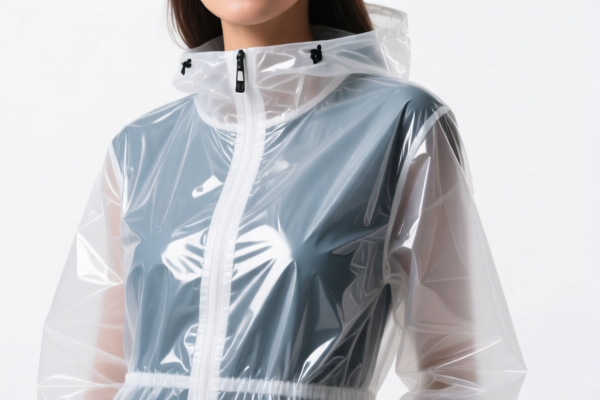

AI Analysis
👗 Plastic Coated Women's Clothing (Raincoats & Technical Outerwear)
🌐 HS Code Reference & Customs Clearance Guide | 2026 Latest Tariff Analysis | Professional Entry Strategy
📌 I. Product Definition & Classification: What Exactly Are "Plastic Coated Clothing"?
"Plastic coated women's clothing" typically refers to raincoats, windbreakers, or protective outerwear where a textile base is impregnated, coated, covered, or laminated with plastics. In international trade, the classification depends heavily on which material dominates the character (Textile vs. Plastic) and the specific construction method.
Key Distinctions: * Textile-Dominated (Chapter 63): If the fabric structure remains predominant (e.g., coated nylon/polyester where plastic is just a thin layer), it often falls under 6307 (Other made-up articles) or 5903 (Textiles impregnated/coated with plastics). * Plastic-Dominated (Chapter 39): If the plastic layer is so thick or extensive that it gives the essential character to the article (e.g., PVC weight >70%), it may fall under 3921 (Other plates, sheets, film, foil, strip, of plastics).
⚠️ Critical Classification Point:
- If the product is a finished garment (cut, sewn) and the plastic coating is thin/moderate → 6307.90.98 or 5903.10.
- If the product is effectively a plastic sheet formed into a garment (e.g., heavy-duty PVC rain ponchos where plastic >70% by weight) → 3921.12 or 3921.90.
📦 II. HS Code Classification Details (2026 Latest Tariff Authority Mapping)
Based on the provided data, here are the five potential HS Codes for "Plastic Coated Textiles/Garments," categorized by their structural and material characteristics:
| HS Code | Product Description & Logic | Applicable Scenario | Plastic Weight/Character |
|---|---|---|---|
6307.90.98.84 |
Other made-up articles of textile materials. Logic: Classified as "other textile articles" due to being a made-up garment. Assumes synthetic fiber composition. |
General coated raincoats, fashion windbreakers where textile structure is clear. | Low/Moderate (Textile remains dominant) |
6307.90.98.91 |
Other made-up articles. Logic: Fits the "other finished products" category under material attributes. |
Standard coated outerwear, not specifically defined as impregnated fabric sheets. | Low/Moderate (Garment form dominates) |
5903.10.10.00 |
Textile fabrics impregnated, coated, covered or laminated with PVC. Logic: Specifically for fabrics with PVC plastic. |
Raw fabric or semi-finished goods, OR garments where PVC impregnation is the key feature. | High (PVC specific) |
3921.12.11.00 |
Other plates, sheets, film, foil, strip of polymers of ethylene. Logic: Corresponds to composite materials where plastic weight >70% and polymer type is specified. |
Heavy-duty plastic-coated suits, PVC rain gear where plastic >70% of weight. | >70% Plastic (Plastic dominates) |
3921.90.11.00 |
Other plates, sheets... of plastics. Logic: Composite materials combined with textiles but with high plastic weight. |
Non-PVC plastic coatings (e.g., PU, PE) where plastic weight is high. | High Plastic (Plastic dominates) |
5903.10.20.10 |
Textile fabrics impregnated, coated, covered or laminated with plastics (other than PVC). Logic: Clearly fits non-PVC plastic coatings (e.g., PU, TPU) on textiles. |
PU-coated raincoats, TPU breathable membranes. | Non-PVC (Coated Textile) |
🔍 Key Reminder:
- Garments classified under 6307 are generally treated as "Textile Made-up Articles."
- Garments classified under 5903 are treated as "Impregnated/Coated Textile Fabrics" (often used for industrial or specific technical applications).
- Garments classified under 3921 are treated as "Plastic Products" (very high tariff risk).
💰 III. 2026 Latest Tariff Rate Breakdown (Including Additional Taxes & Policy Surcharges)
✅ Applicable Country: United States (US)
✅ Origin: China (CN)
✅ Effective Date: Current trade environment (Section 301 & IEEPA provisions)
🎯 1. 6307.90.98.84 & 6307.90.98.91 —— Other Made-Up Textile Articles
| Item | Content |
|---|---|
| Base Tariff Rate | 7.0% (MFN Rate) |
| Section 301 Surcharge | +7.5% (List 3/4B specific adjustments) |
| Section 122 Tariff | +10% (Specific retaliatory/countermeasure tariff) |
| Total Effective Rate | 24.5% |
| Calculation Base | CIF Value × 24.5% |
| De Minimis Exemption | ❌ Not Eligible (De_minimis_denied) |
| Legal Basis Path | USITC:6307.90.98 → Footnote:301 → IEEPA:122 |
📌 Explanation:
- These codes represent the lowest tariff burden among the options provided.
- The 7.0% is the standard Most Favored Nation (MFN) duty.
- The 7.5% is the standard Section 301 tariff on many textile/apparel products from China.
- The 10% is the additional "122 clause" tariff, often applied to specific categories to address trade imbalances.
- Total: 24.5% is moderate but manageable for general apparel.
🎯 2. 5903.10.10.00 —— PVC Impregnated/Coated Textiles
| Item | Content |
|---|---|
| Base Tariff Rate | 2.7% (Lower base for technical textiles) |
| Section 301 Surcharge | +25.0% (Higher surcharge for chemical/plastic-related textiles) |
| Section 122 Tariff | +10% |
| Total Effective Rate | 37.7% |
| Calculation Base | CIF Value × 37.7% |
| De Minimis Exemption | ❌ Not Eligible |
| Legal Basis Path | USITC:5903.10.10 → Footnote:301(High) → IEEPA:122 |
📌 Explanation:
- The base rate is low (2.7%) because it's considered an industrial/technical fabric.
- However, the Section 301 surcharge jumps to 25%, likely due to its proximity to plastic manufacturing.
- Total: 37.7% is significantly higher than general apparel codes.
🎯 3. 5903.10.20.10 —— Non-PVC (e.g., PU/TPU) Coated Textiles
| Item | Content |
|---|---|
| Base Tariff Rate | 0.0% (Often duty-free for technical textiles) |
| Section 301 Surcharge | +25.0% (High surcharge applies) |
| Section 122 Tariff | +10% |
| Total Effective Rate | 35.0% |
| Calculation Base | CIF Value × 35.0% |
| De Minimis Exemption | ❌ Not Eligible |
| Legal Basis Path | USITC:5903.10.20 → Footnote:301(High) → IEEPA:122 |
📌 Explanation:
- Even though the base rate is 0%, the 25% Section 301 surcharge dominates the cost.
- Total: 35.0% is cheaper than the PVC version (5903.10.10.00) but still high compared to general apparel (6307).
🎯 4. 3921.12.11.00 & 3921.90.11.00 —— Plastic-Dominated Composite Articles (>70% Plastic)
| Item | Content |
|---|---|
| Base Tariff Rate | 4.2% (Plastic sheet/film rate) |
| Section 301 Surcharge | +25.0% (Maximum surcharge for plastic goods) |
| Section 122 Tariff | +10% |
| Total Effective Rate | 39.2% |
| Calculation Base | CIF Value × 39.2% |
| De Minimis Exemption | ❌ Not Eligible |
| Legal Basis Path | USITC:3921 → Footnote:301(Max) → IEEPA:122 |
📌 Explanation:
- Classifying a garment here means you are declaring it as a plastic product, not a textile.
- The 25% Section 301 is standard for most plastic articles from China.
- Total: 39.2% is the highest tax burden. This classification is risky unless the product is undeniably a plastic sheet formed into a garment (e.g., heavy PVC ponchos).
🛠️ IV. Customs Clearance Practical Advice (Avoid Pitfalls)
✅ 1. Preparation Checklist (Essential Documents)
| Document | Required? | Purpose |
|---|---|---|
| ✅ Product Specification Sheet | ✔️ | Must detail: Outer material (Textile type), Coating material (PVC/PU/etc.), Plastic Weight %. |
| ✅ Construction Diagram | ✔️ | Shows layering: Fabric base + Coating thickness. Crucial for proving "Textile Character" vs "Plastic Character." |
| ✅ Composition Declaration | ✔️ | Explicitly state: "Polyester fabric coated with 20% PVC by weight." |
| ✅ Photos (Front/Back/Internal) | ✔️ | Show zipper, lining, and coating texture. |
| ✅ Commercial Invoice | ✔️ | Use precise description: "Women's PVC-Coated Nylon Raincoat, Garment Type." |
| ✅ Packing List | ✔️ | Standard shipping details. |
✅ 2. Declaration Strategy (Key Mantra)
🔥 “Define the Character, Declare the Form, Avoid the 3921 Trap!”
| Scenario | Recommended HS Code | Why? | Risk if Incorrect |
|---|---|---|---|
| Light/Medium Coated Raincoat (Fashion/Utility) | 6307.90.98.84 |
Textile character dominates; it's a "made-up article." | Misclassifying as 3921 → +14.7% extra tax. |
| Heavy PVC Rain Poncho (Disposable/Industrial) | 5903.10.10.00 or 3921.12.11.00 |
Depends on exact plastic % and form. | If it's a garment, 6307 is safer. If it's a sheet, 3921 is correct. |
| PU/TPU Breathable Jacket | 6307.90.98.91 or 5903.10.20.10 |
If it's a sewn garment, 6307 (24.5%) is cheaper than 5903 (35%). |
Using 5903 for a simple jacket increases cost by ~10%. |
| Pure Plastic Sheet Sold as "Garment" | 3921.12.11.00 |
If no sewing, no lining, just formed plastic. | N/A (Correct for plastic sheets). |
✅ 3. Critical Tips for "Plastic Coated Clothing"
- Weight Ratio is King: If the plastic coating weighs more than 50-70% of the total product, US Customs may reclassify from Textile (6307/5903) to Plastic (3921). Prove it's a garment by emphasizing seams, linings, and textile structure.
- Avoid
5903for Simple Garments:5903is for "fabrics." If you sell a finished coat,6307is usually more appropriate and cheaper (24.5% vs 35-37.7%). - Section 122 Tariff Applies to All: Regardless of the code, the 10% additional tariff is likely applicable to all Chinese-origin plastic/textile composites. Do not assume it's waived.
- De Minimis (Section 321) is Blocked: These goods cannot use the $800 de minimis rule. They must be formally entered (CBP Form 7501).
🌍 V. Global Market Comparison (2026 Overview)
| Market | Likely HS Code | Estimated Total Duty (China Origin) | Key Requirement |
|---|---|---|---|
| 🇺🇸 USA | 6307.90.98 |
24.5% (Best Option) | Detailed material % breakdown. |
| 🇺🇸 USA | 5903 or 3921 |
35% - 39.2% (Avoid if possible) | Hard to justify "garment" status. |
| 🇪🇺 EU | 6210 (Felt/Nonwoven) or 6102 |
~4% - 12% | No Section 301/122. CE/RoHS only. |
| 🇨🇳 China | 6210 or 6102 |
~5% - 15% | Import license may be needed for certain textiles. |
📌 Conclusion for US Importers:
Strive for6307.90.98.84or6307.90.98.91.
These codes offer the lowest total tax (24.5%).
Avoid5903and3921unless the product is technically an industrial fabric or a heavy plastic sheet, as the tax burden increases by 10-15 percentage points.
📌 VI. Common Errors & Pitfalls (Lessons Learned)
❌ Error 1: Declaring a sewn raincoat as 5903 (Coated Fabric)
👉 Consequence: You pay 35-37.7% instead of 24.5%. Lost profit: ~10% on COGS.
❌ Error 2: Declaring a PVC Poncho as 6307 when Plastic >70%
👉 Consequence: Customs may audit and demand 39.2%. While you might get away with it initially, it's a compliance risk.
❌ Error 3: Ignoring the "Section 122" 10% tariff
👉 Consequence: Under-declaration leads to penalties and back-taxes. Always add 10% to your margin calculation.
❌ Error 4: Saying "Plastic Clothing" without specifying "Textile Base"
👉 Consequence: Customs may classify as pure plastic (3921) or reject the entry for lack of detail.
✅ Correct Description: "Women's Nylon Fabric, Coated with PVC, Made into Raincoat."
🎯 VII. Conclusion: Optimize Tariff, Optimize Profit
🎯 Remember the Golden Rule:
"If it's sewn, it's a Garment (6307). If it's a sheet, it's Plastic (3921). If it's fabric, it's 5903."
"For Finished Coated Clothing: 6307 is the Sweet Spot (24.5%). Avoid 5903/3921 unless technically necessary (35-39%)."
📌 Pro Tip:
If your plastic coating is very thin (e.g., waterproof breathable membrane like Gore-Tex), emphasize the Textile Component in your technical specs. This supports classification under 6307 (24.5%) rather than 5903 (35%+).
📣 Immediate Action:
📞 Review your product's plastic-to-textile weight ratio.
📝 Update your HS Code to6307.90.98.84if it is a standard coated garment.
🚀 Save 10-15% in tariffs by choosing the right code!
✨ Precision Classification = Maximum Profit!
💼 Don't let tariff complexity cost you your margin!
Customer Reviews
About HS Code Classification
The Harmonized System (HS) is an internationally standardized nomenclature developed by the World Customs Organization (WCO) to classify traded products. Over 200 countries use the HS system as the basis for customs tariffs, trade statistics, and import/export regulations.
Each HS code follows a hierarchical structure:
- Chapter (2 digits) — Broad category of goods (e.g., Chapter 84: Machinery and Mechanical Appliances)
- Heading (4 digits) — More specific grouping within the chapter
- Subheading (6 digits) — Internationally standardized breakdown, used by all WCO member countries
- National subdivisions (8-10 digits) — Country-specific extensions for further classification, such as US HTSUS 10-digit codes
Correct HS code classification is essential for smooth customs clearance, accurate duty payment, and compliance with trade regulations. Misclassification can lead to customs delays, overpayment of duties, or penalties.
When importing from CN to US, the applicable tariff rates may include:
- Most-Favored-Nation (MFN) rate — The standard duty rate applied to WTO members
- General rate — Applied to countries without trade agreements
- Trade remedy duties — Additional tariffs such as Section 301 (anti-dumping), Section 232 (national security), or countervailing duties
The information provided on this page is for reference purposes only. For official classification, please consult with your local customs authority or a licensed customs broker.