Plastic Paper Coated Children's Handbag
CN → US| HS Code | Tariff Rate | Origin | Destination | Doc |
|---|---|---|---|---|
| 4202999000 | 55.0% | CN | US | Official Doc |
| 4819400040 | 35.0% | CN | US | Official Doc |
| 4819400020 | 35.0% | CN | US | Official Doc |
| 3923210085 | 38.0% | CN | US | Official Doc |
| 3923210095 | 38.0% | CN | US | Official Doc |
Product Images
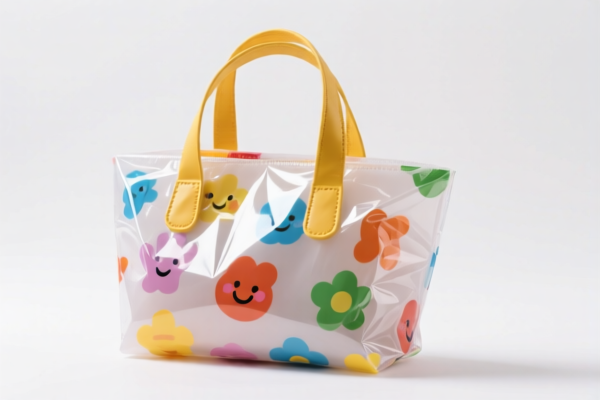
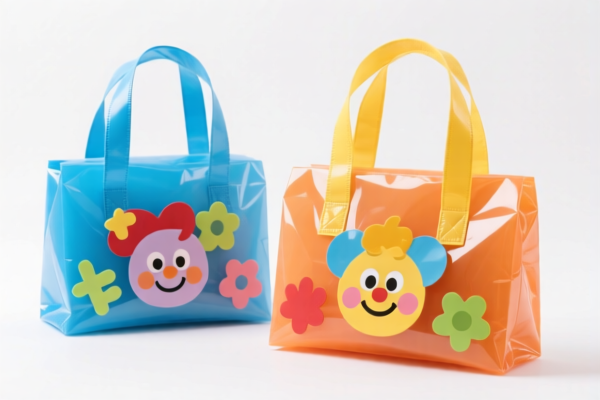
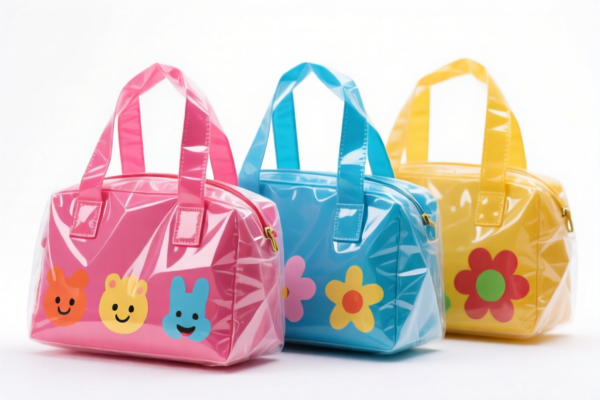
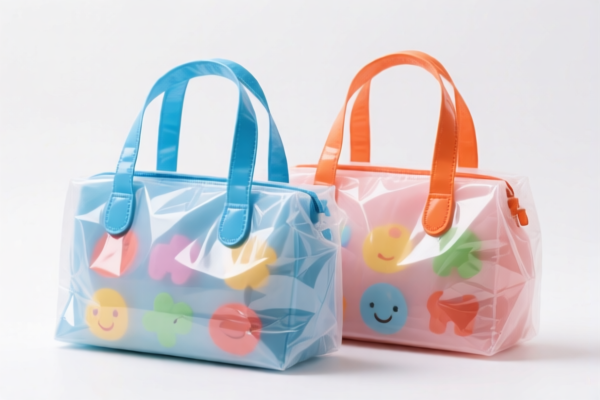
AI Analysis
👜 Plastic Paper Coated Children's Handbag: HS Code Classification & 2026 Customs Clearance Guide
🌐 HS Code Reference & Clearance Guide | 2026 Latest Tariff Analysis | Strategic Compliance Strategy
📌 Part I: Product Definition & Classification: What Exactly is this "Handbag"?
A "Plastic Paper Coated Children's Handbag" is a retail packaging item or small carrier, typically used for gifts, promotional materials, or children's accessories. Its classification hinges on the primary material and structure.
In international trade, this product is ambiguous because it combines two distinct materials: 1. Paper Base: Provides structure and printability. 2. Plastic Coating/Lamination: Provides water resistance, durability, and a glossy finish.
⚠️ Key Classification Dilemma: * Is it primarily a Plastic Article (Chapter 39)? * Or is it primarily a Paper Product (Chapter 48)? * Or is it a Textile/Leather Article (Chapter 42)? Note: While the title says "Plastic Paper," Chapter 42 often captures "bags of plastic sheeting" if the plastic is the essential character.
The provided data suggests a 3-way split based on how customs officers interpret the "Essential Character" of the coated bag.
📦 Part II: HS Code Classification Details (2026 Latest Tariff Authority)
The following table details the five possible classifications derived from the <DATA> input, sorted by tax liability and logical grouping.
| HS Code | Product Description | Material Interpretation | Primary Use |
|---|---|---|---|
| 4202.99.90.00 | Plastic-coated Ad Handbag, Material Compliant with Plastic/Film Category | Plastic/Film is dominant. Considered a "Bag of Plastic Sheetings." | Retail/Gift Packaging |
| 4819.40.00.40 | Plastic-coated Ad Handbag, Form: Handbag, Material: Paper or Paper-Plastic Composite | Paper is dominant. Considered a "Carton/Box/Container of Paper." | Retail/Gift Packaging |
| 4819.40.00.20 | Plastic-coated Ad Handbag, Form: Handbag, Material: Paper/Composite Attributes | Paper is dominant. Specific sub-category for Paper Containers. | Retail/Gift Packaging |
| 3923.21.00.85 | Plastic-coated Ad Handbag, Material: Plastic, Form: Handbag, Use: Retail Packaging | Plastic is dominant. Specifically classified under "Sacks and Bags" of Polymers. | Retail Packaging |
| 3923.21.00.95 | Plastic-coated Ad Handbag, Material: Plastic, Form: Bag, Classified as "Other" | Plastic is dominant. A residual category for plastic bags not elsewhere specified. | General Packaging |
🔍 Critical Insight: * Group A (Ch 42): If the plastic coating is thick, seamless, or makes the bag waterproof/plastic-like in nature, Customs may classify it under Chapter 42 (Articles of Apparel Accessories). Here, the plastic layer defines the essential character. * Group B (Ch 48): If the paper core is rigid, thick, and the plastic is just a thin laminate for print protection, Customs may classify it under Chapter 48 (Paper Products). * Group C (Ch 39): If the item is viewed strictly as a "plastic bag" with a paper insert or thin coating, it falls under Chapter 39 (Plastics and Articles Thereof).
💰 Part III: 2026 Latest Tariff Rate Breakdown (Detailed Policy Analysis)
✅ Applicable Region: United States (US) ✅ Origin: China (CN) ✅ Effective Date: Includes subsequent imports post-2025 measures
🎯 1. Classification: 4202.99.90.00 (Plastic/Film Essential Character)
- Summary: Plastic Paper Coated Ad Handbag, Material Compliant with Plastic/Film Category.
- Tax Detail:
- Base Tariff: 20.0%
- Section 301 (Add-on Tariff): 25.0%
- Section 122 Tariff (IEEPA): 10.0%
- Total Tax Rate: 55.0%
- Explanation:
- This is the highest tariff bracket.
- The "Base Tariff" of 20% is high for a simple bag, reflecting the duty on "Other bags."
- The 25% Section 301 tariff applies to most Chinese-origin consumer goods.
- The 10% Section 122 tariff is a specific punitive tariff on certain Chinese goods.
- Warning: This classification should be avoided if possible due to the 55% total duty burden.
🎯 2. Classification: 4819.40.00.40 (Paper Essential Character - Type A)
- Summary: Plastic Paper Coated Ad Handbag, Form: Handbag, Material: Paper or Paper-Plastic Composite.
- Tax Detail:
- Base Tariff: 0.0%
- Section 301 (Add-on Tariff): 25.0%
- Section 122 Tariff (IEEPA): 10.0%
- Total Tax Rate: 35.0%
- Explanation:
- Significant Savings: The base tariff is 0%, reducing the total burden by 20% compared to the Ch 42 classification.
- However, Section 301 (25%) and Section 122 (10%) still apply, bringing the total to 35%.
- This is often the preferred classification for premium, rigid, paper-based gift bags where the paper structure is evident.
🎯 3. Classification: 4819.40.00.20 (Paper Essential Character - Type B)
- Summary: Plastic Paper Coated Ad Handbag, Form: Handbag, Material: Paper/Composite Attributes.
- Tax Detail:
- Base Tariff: 0.0%
- Section 301 (Add-on Tariff): 25.0%
- Section 122 Tariff (IEEPA): 10.0%
- Total Tax Rate: 35.0%
- Explanation:
- Identical tax rate to 4819.40.00.40.
- The distinction between
.20and.40usually lies in the specific sub-category of paper containers (e.g., folded vs. rigid, or specific paper grade). - Strategy: Both are favorable. Use the one that best matches your exact paper manufacturing standard.
🎯 4. Classification: 3923.21.00.85 (Plastic Sacks/Bags - Specific)
- Summary: Plastic Paper Coated Ad Handbag, Material: Plastic, Form: Handbag, Use: Retail Packaging.
- Tax Detail:
- Base Tariff: 3.0%
- Section 301 (Add-on Tariff): 25.0%
- Section 122 Tariff (IEEPA): 10.0%
- Total Tax Rate: 38.0%
- Explanation:
- The base tariff is low (3%), but the total is higher than the Paper classification (35%) due to the 3% base.
- This applies if the item is legally defined as a "Bag" (like a plastic shopping bag) but with a paper aesthetic or coating.
- Risk: Customs may argue that because it has paper, it shouldn't be here. But if the plastic is the primary material, this is the correct legal bucket.
🎯 5. Classification: 3923.21.00.95 (Plastic Sacks/Bags - Other)
- Summary: Plastic Paper Coated Ad Handbag, Material: Plastic, Form: Bag, Classified as "Other".
- Tax Detail:
- Base Tariff: 3.0%
- Section 301 (Add-on Tariff): 25.0%
- Section 122 Tariff (IEEPA): 10.0%
- Total Tax Rate: 38.0%
- Explanation:
- Identical tax rate to 3923.21.00.85.
- This is a "catch-all" for plastic bags not fitting specific descriptions.
- Use this only if
.85(specifically for retail packaging sacks/bags) is not technically accurate for your product's specific form.
🛠️ Part IV: Customs Clearance Practical Advice (Real-World Pitfall Guide)
✅ 1. Preparation Checklist (Must-Haves)
| Document | Required? | Purpose |
|---|---|---|
| ✅ Product Photographs | YES | Must clearly show the paper texture vs. plastic sheen. If the paper is visible through the coating, argue for Ch 48. If it looks like a solid plastic bag, Customs may default to Ch 39/42. |
| ✅ Material Composition Report | YES | Specify the GSM (Grams per Square Meter) of the paper and the microns of the plastic coating. High paper weight + thin coating = Argue for 4819. |
| ✅ Structure Diagram | YES | Show handles, folds, and seams. If it has rigid cardboard inserts, it strengthens the Ch 48 argument. |
| ✅ Commercial Invoice | YES | Description must be precise. Avoid generic terms like "Plastic Bag." Use "Paper Gift Bag with Protective Lamination." |
| ✅ Packing List | YES | Ensure weight and volume match the invoice. |
✅ 2. Declaration Strategy (Key Mantras)
🔥 "Paper is King, Plastic is Skin; Choose 4819 for 35%, Not 4202 for 55%!"
| Scenario | Recommended HS Code | Reasoning |
|---|---|---|
| Rigid, Thick Paper Bag (e.g., luxury gift bag) | 4819.40.00.40 or 4819.40.00.20 | The paper provides the structure. Plastic is just a laminate. Base tariff 0%. |
| Flimsy, Plastic-like Bag (e.g., promotional tote) | 3923.21.00.85 | If it behaves like a plastic bag (wrinkles, waterproof), Ch 39 is safer than Ch 42. Base tariff 3%. |
| High-End, Leather-like Plastic Bag | 4202.99.90.00 | Avoid unless necessary. 55% tax is prohibitive. Only use if the product is technically a "synthetic leather" bag. |
| Unclear Material Mix | 4819.40.00.40 (with Pre-ruling) | Seek a Pre-Ruling from CBP. Argue that the "Essential Character" is imparted by the paper substrate. |
✅ 3. Special Handling Tips
- The "Essential Character" Test: In US Customs law, if materials are combined, the one that gives the article its basic nature determines the classification.
- Argue for Ch 48: "The bag holds its shape because of the paper board. The plastic is a 10-micron film for print protection. Without the paper, it would be a floppy sheet."
- Argue for Ch 39: "The bag is waterproof and durable like a plastic bag. The paper is just a decorative layer inside."
- Avoid "Plastic Bag" in Description: If you label it "Plastic Bag," Customs will likely classify it under Chapter 39 or 42. Use "Paper Handbag," "Laminated Paper Carrier Bag," or "Gift Bag."
- Section 122 (10%) is Unavoidable: For most Chinese-origin consumer goods, the 10% Section 122 tariff applies regardless of the HS Code (unless specifically exempted). Do not waste time trying to avoid this part; focus on minimizing the Base Tariff and the 301 Tariff if possible.
🌍 Part V: Global Market Comparison (2026 Outlook)
| Market | Recommended HS Code | Est. Total Tariff (China Origin) | Notes |
|---|---|---|---|
| 🇺🇸 USA | 4819.40.00.40 | 35.0% | Best Option. 0% Base + 25% (301) + 10% (122). |
| 🇺🇸 USA | 4202.99.90.00 | 55.0% | Avoid. High base duty makes it uncompetitive. |
| 🇨🇳 China | 4819.40.00.40 | ~5-10% | Lower domestic import duties, but focus on US export strategy. |
| 🇪🇺 EU | 4819.40.00 | ~6.5% | No Section 301/122 equivalent. EU tariffs are generally lower. |
| 🇬🇧 UK | 4819.40.00 | ~6.5% | Post-Brexit tariff structure similar to EU for general goods. |
📌 Conclusion: The United States is the most challenging market due to Section 301 (25%) and Section 122 (10%) tariffs. However, by correctly classifying the item as a Paper Product (Chapter 48) rather than a Plastic/Leather Article, you save 17-20% in total duty.
📌 Part VI: Common Errors & Pitfalls (Lessons Learned)
❌ Error 1: Classifying as 4202.99.90.00 (55% Tax)
👉 Consequence: Profit margin destroyed.
👉 Fix: Prove the paper is the structural base. Use Ch 48.
❌ Error 2: Using generic description "Plastic Bag" 👉 Consequence: Customs assigns the wrong code automatically or requests additional info, causing delays. 👉 Fix: Use "Paper Gift Bag with Protective Lamination."
❌ Error 3: Ignoring Section 122 (10%) 👉 Consequence: Unexpected surprise at customs. 👉 Fix: Factor the 10% into your cost model for ALL Chinese-origin goods entering the US.
✅ Correct Approach:
"Laminated Paper Gift Bag, 200gsm Paper Substrate, 10micron PE Coating, with Twisted Paper Handles."
🎯 Part VII: Conclusion: Smart Classification, Higher Profits!
🎯 Remember the Mantra:
🔹 "Paper Base = 35% Duty (Ch 48)"
🔹 "Plastic Base = 38% Duty (Ch 39)"
🔹 "Synthetic/Leather Base = 55% Duty (Ch 42)"
Action Plan: 1. Check Material Weight: If paper > plastic in weight/volume/structure → Choose 4819.40.00.40. 2. Prepare Documentation: Highlight the paper composition in the invoice and packing list. 3. Apply for Pre-Ruling: If the product is ambiguous, submit an HTSUS Pre-Ruling Request to CBP to lock in the 35% rate. 4. Budget for 35%: Ensure your pricing model includes the 25% (301) + 10% (122) + 0% (Base) total.
📣 Immediate Action:
📞 Contact your freight forwarder with the "Paper-Based Gift Bag" classification. 🚀 Maximize your margin by choosing the right Chapter 48 code!
✨ Professional Clearance, Precise Classification! 💼 Every Percentage Point Saved is Pure Profit!
Customer Reviews
About HS Code Classification
The Harmonized System (HS) is an internationally standardized nomenclature developed by the World Customs Organization (WCO) to classify traded products. Over 200 countries use the HS system as the basis for customs tariffs, trade statistics, and import/export regulations.
Each HS code follows a hierarchical structure:
- Chapter (2 digits) — Broad category of goods (e.g., Chapter 84: Machinery and Mechanical Appliances)
- Heading (4 digits) — More specific grouping within the chapter
- Subheading (6 digits) — Internationally standardized breakdown, used by all WCO member countries
- National subdivisions (8-10 digits) — Country-specific extensions for further classification, such as US HTSUS 10-digit codes
Correct HS code classification is essential for smooth customs clearance, accurate duty payment, and compliance with trade regulations. Misclassification can lead to customs delays, overpayment of duties, or penalties.
When importing from CN to US, the applicable tariff rates may include:
- Most-Favored-Nation (MFN) rate — The standard duty rate applied to WTO members
- General rate — Applied to countries without trade agreements
- Trade remedy duties — Additional tariffs such as Section 301 (anti-dumping), Section 232 (national security), or countervailing duties
The information provided on this page is for reference purposes only. For official classification, please consult with your local customs authority or a licensed customs broker.