Polyester Knitted Women's Shirt
CN → US| HS Code | Tariff Rate | Origin | Destination | Doc |
|---|---|---|---|---|
| 6206403010 | 44.4% | CN | US | Official Doc |
| 6206403035 | 44.4% | CN | US | Official Doc |
| 6106202030 | 49.5% | CN | US | Official Doc |
| 6106202010 | 49.5% | CN | US | Official Doc |
| 6104230036 | 0.0% | CN | US | Official Doc |
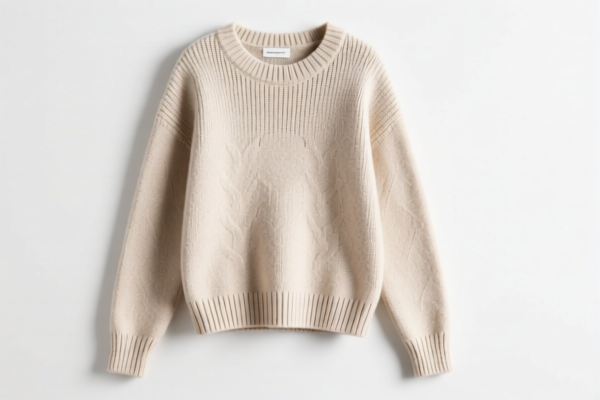
Product Images



AI Analysis
👗 Polyester Knitted Women's Shirt (聚酯针织女式衬衫)
🌐 HS Code Reference & Customs Clearance Guide | 2026 Latest Tariff Analysis | Professional-Level Strategy
📌 I. Product Definition & Classification: Do You Truly Understand "Women's Shirts"?
Polyester Knitted Women's Shirts are essential items in the global apparel trade. They are characterized by knitted fabric construction and synthetic fiber material. In international trade, classification depends heavily on:
- Fabric Structure: Knitted (针织) vs. Woven (梭织). This is the most critical distinction.
- Material Composition: Polyester/Synthetic Fibers (人造纤维/合成纤维).
- Gender: Women’s/Men’s/Unisex.
⚠️ Critical Classification Distinction:
- Knitted (针织): Flexible, stretchy fabric structure → Classify under Chapter 61 (Articles of Apparel and Clothing Accessories, Knitted or Crocheted).
- Woven (梭织): Non-stretchy, structured fabric → Classify under Chapter 62 (Articles of Apparel and Clothing Accessories, Not Knitted or Crocheted).Many importers mistakenly classify knitted shirts as woven, leading to significant duty discrepancies.
📦 II. HS Code Classification Details (2026 Latest Tariff Authority Comparison)
Based on the provided data, here are the five possible HS Code classifications for this product, ranging from most accurate to alternative interpretations:
| HS Code | Product Description | Applicability Scenario | Key Classification Criteria |
|---|---|---|---|
6106.20.20.30 |
Polyester Knitted Women's Shirt | High Match: Knitted shirt, Polyester fiber, Women's wear. | ✅ Best Fit: Explicitly mentions "Knitted" and "Polyester". |
6106.20.20.10 |
Polyester Knitted Women's Shirt | High Match: Knitted shirt, Polyester fiber, Women's use. | ✅ Best Fit: Same as above, different sub-code variant. |
6104.23.00.36 |
Polyester Knitted Women's Top | Moderate Match: General "Top" rather than specific "Shirt". | ⚠️ Alternative: Used if product is not a formal "shirt" but a general top. |
6206.40.30.10 |
Polyester Knitted Women's Shirt | Low Match: Lists "Knitted" but classifies under Ch.62 (Woven Chapter). | ❌ Risk: Chapter 62 is for woven items. Contradictory description. |
6206.40.30.35 |
Polyester Knitted Women's Shirt | Low Match: Same contradiction as above. | ❌ Risk: Chapter 62 is for woven items. Contradictory description. |
🔍 Key Insight:
- Chapters 61 vs. 62: The fundamental split is Knitted (61) vs. Woven (62).
- Polyester (聚酯纤维): Falls under synthetic fibers.
- Women's (女式): Specific gender category.
- Most Accurate Codes:6106.20.20.30and6106.20.20.10are the most logically consistent because they place "Knitted Women's Shirts" under Chapter 61.
- Risky Codes:6206.40.30.10and6206.40.30.35appear in the data but describe "Knitted" items under Chapter 62 (which is typically for Woven). This may indicate a data error or a very specific regional interpretation. Use with caution.
💰 III. 2026 Latest Tariff Rate Details (Including Additional Duties & Policy Surcharges)
✅ Applicable Country: United States (US)
✅ Origin: China (CN)
✅ Effective Date: As per 2025/2026 trade policies
🎯 1. 6106.20.20.30 & 6106.20.20.10 —— Polyester Knitted Women's Shirt (Best Fit)
| Item | Content |
|---|---|
| Base Tariff | 32.0% (Ad Valorem) |
| Section 301 Surcharge | +7.5% |
| Section 122 Surcharge | +10% |
| Total Tariff Rate | 49.5% |
| Tax Calculation | CIF Value × 49.5% |
| De Minimis Exemption | ❌ Not Eligible (High duty rate prevents de minimis threshold) |
| Legal Basis Path | HTS:6106.20.20 → USITC:7.5% → IEEPA:10% |
📌 Explanation:
- Base 32.0%: Standard US duty for knitted synthetic women's shirts.
- 7.5% Section 301: Additional tariff on Chinese imports under Trade Act Section 301.
- 10% Section 122: Additional tariff under International Emergency Economic Powers Act (IEEPA) or specific trade remedy measures.
- Total 49.5%: Extremely High Duty. This significantly impacts profit margins.
🎯 2. 6104.23.00.36 —— Polyester Knitted Women's Top (Alternative)
| Item | Content |
|---|---|
| Base Tariff | Variable ("Rate applicable to each garment...") |
| Section 301 Surcharge | +7.5% |
| Section 122 Surcharge | +10% |
| Total Tariff Rate | Variable + 17.5% |
| Tax Calculation | Depends on specific garment type within ensemble |
| De Minimis Exemption | ❌ Not Eligible |
| Legal Basis Path | HTS:6104.23.00 → USITC:7.5% → IEEPA:10% |
📌 Explanation:
- This code is less precise for "Shirts" and more for general "Tops" or ensembles.
- The base rate is not fixed in the data, making cost prediction difficult. Not recommended unless the product is clearly a general top, not a shirt.
🎯 3. 6206.40.30.10 & 6206.40.30.35 —— Polyester Knitted Women's Shirt (Risky/Contradictory)
| Item | Content |
|---|---|
| Base Tariff | 26.9% (Ad Valorem) |
| Section 301 Surcharge | +7.5% |
| Section 122 Surcharge | +10% |
| Total Tariff Rate | 44.4% |
| Tax Calculation | CIF Value × 44.4% |
| De Minimis Exemption | ❌ Not Eligible |
| Legal Basis Path | HTS:6206.40.30 → USITC:7.5% → IEEPA:10% |
📌 Explanation:
- Lower Total Duty (44.4%) compared to Chapter 61 codes (49.5%).
- BUT: Chapter 62 is for Woven items. Classifying a Knitted item here is incorrect under standard international rules (HS Convention).
- Risk: High chance of customs audit, reclassification, penalties, and delayed clearance. Only use if explicitly advised by a customs broker due to specific local interpretations.
🛠️ IV. Customs Clearance Practical Advice (Real-World Pitfall Avoidance Guide)
✅ 1. Preparation Checklist (Non-Negotiable)
| Document | Required | Notes |
|---|---|---|
| ✅ Product Specifications | ✔️ | Must clearly state: "Knitted", "100% Polyester", "Women's Shirt". |
| ✅ Fabric Swatch/Photo | ✔️ | Evidence of knitted structure (vs. woven). |
| ✅ Commercial Invoice | ✔️ | HS Code must match product description. |
| ✅ Bill of Lading | ✔️ | Consistent with invoice. |
| ✅ Labeling | ✔️ | "Made in China" label visible. |
✅ 2. Declaration Strategy (Key Mantra)
🔥 "Knitted goes to 61, Woven to 62. Misclassification = 5% Duty Difference + Penalties!"
| Scenario | Correct Declaration | Incorrect Declaration | Consequence |
|---|---|---|---|
| Knitted Shirt | 6106.20.20.30 |
6206.40.30.10 |
Potential penalty for incorrect HS Code. |
| Woven Shirt | 6206.40.30.10 |
6106.20.20.30 |
Potential penalty for incorrect HS Code. |
| General Top | 6104.23.00.36 |
6106.20.20.30 |
Possible duty difference, but less severe. |
✅ 3. Special Considerations
| Scenario | Handling Advice |
|---|---|
| OEM/Custom Designs | Provide design drawings to prove "Shirt" features (collar, buttons, etc.). |
| Mixed Materials | If fabric is not 100% polyester, classify based on principal material. |
| Set Ensembles | If shirt is part of a set (e.g., shirt + skirt), classify based on the essential character. |
| De Minimis (Section 321) | ❌ Not Applicable: Tariff rate > 30% generally disqualifies de minimis entry. |
🌍 V. Global Market Clearance Comparison (2026 Latest)
| Country/Region | Recommended HS Code | Duty Rate (China Origin) | Certification Required | Notes |
|---|---|---|---|---|
| 🇺🇸 USA | 6106.20.20.30 |
49.5% (32% Base + 7.5% Sec 301 + 10% Sec 122) | N/A (Low Risk) | High Duty. Consider supply chain diversification. |
| 🇪🇺 EU | 6106.90.30 |
~12% + VAT | CE (if special function) | No Section 301/122 surcharges. |
| 🇨🇳 China | 6106.20.20.30 |
~15% | N/A | Export only. |
| 🇬🇧 UK | 6106.90.30 |
~12% | UKCA (if applicable) | Post-Brexit rules apply. |
📌 Conclusion:
- The USA has the highest effective duty rate (49.5%) for Chinese-made polyester knitted women's shirts.
- EU/UK rates are significantly lower.
- Recommendation: For US-bound goods, consider Tariff Engineering (modifying product to fit a lower-duty code) or Supply Chain Shift (e.g., Vietnam, India).
📌 VI. Common Errors & Pitfall Guide (Lessons Learned)
❌ Error 1: Classifying Knitted shirts under Chapter 62 (Woven)
👉 Result: Customs may reject the declaration or impose penalties. Although the duty is lower (44.4% vs. 49.5%), the risk of audit is high.
❌ Error 2: Omitting "Knitted" in the product description
👉 Result: Customs assumes Woven → Classifies under 6206 → Potential mismatch if inspected.
❌ Error 3: Ignoring Section 301 & 122 Surcharges
👉 Result: Underestimating landed cost by 17.5%. Profit margins can be wiped out.
❌ Error 4: Assuming De Minimis (Section 321) applies
👉 Result: Shipments with duties > 30% are not eligible for de minimis. All 500 packages will be subject to full duty.
✅ Correct Practice:
"Women's Knitted Polyester Shirt, Collared, Long Sleeve, Model XYZ, Made in China, HS Code 6106.20.20.30"
🎯 VII. Conclusion: Precise Classification, Cost Control, Risk Mitigation!
🎯 Remember the Mantra:
🔹 "Knitted = Chapter 61, Woven = Chapter 62."
🔹 "Polyester Shirt = 49.5% Duty (US)."
🔹 "De Minimis is OFF the table."
🔹 "Check the fabric structure first!"
📌 Pro Tip:
If your volume is high, consider Advance Ruling from US Customs and Border Protection (CBP) to lock in the HS Code and duty rate. This provides legal certainty and avoids future disputes.
📣 Immediate Action:
📞 Consult a licensed customs broker.
📄 Provide fabric swatches and product images.
📊 Calculate landed cost including 49.5% duty.
🚀 Optimize supply chain to mitigate high US tariffs.
✨ Professional Clearance Starts with Accurate Classification!
💼 Your Profit Margin Depends on Every Percent Point of Duty!
Customer Reviews
About HS Code Classification
The Harmonized System (HS) is an internationally standardized nomenclature developed by the World Customs Organization (WCO) to classify traded products. Over 200 countries use the HS system as the basis for customs tariffs, trade statistics, and import/export regulations.
Each HS code follows a hierarchical structure:
- Chapter (2 digits) — Broad category of goods (e.g., Chapter 84: Machinery and Mechanical Appliances)
- Heading (4 digits) — More specific grouping within the chapter
- Subheading (6 digits) — Internationally standardized breakdown, used by all WCO member countries
- National subdivisions (8-10 digits) — Country-specific extensions for further classification, such as US HTSUS 10-digit codes
Correct HS code classification is essential for smooth customs clearance, accurate duty payment, and compliance with trade regulations. Misclassification can lead to customs delays, overpayment of duties, or penalties.
When importing from CN to US, the applicable tariff rates may include:
- Most-Favored-Nation (MFN) rate — The standard duty rate applied to WTO members
- General rate — Applied to countries without trade agreements
- Trade remedy duties — Additional tariffs such as Section 301 (anti-dumping), Section 232 (national security), or countervailing duties
The information provided on this page is for reference purposes only. For official classification, please consult with your local customs authority or a licensed customs broker.