Women's Bathrobes
CN → US| HS Code | Tariff Rate | Origin | Destination | Doc |
|---|---|---|---|---|
| 6207911000 | 25.9% | CN | US | Official Doc |
| 6207997520 | 24.9% | CN | US | Official Doc |
| 6208911010 | 25.0% | CN | US | Official Doc |
| 6208920010 | 33.5% | CN | US | Official Doc |
| 6108910030 | 26.0% | CN | US | Official Doc |
| 6108920030 | 33.5% | CN | US | Official Doc |
Product Images
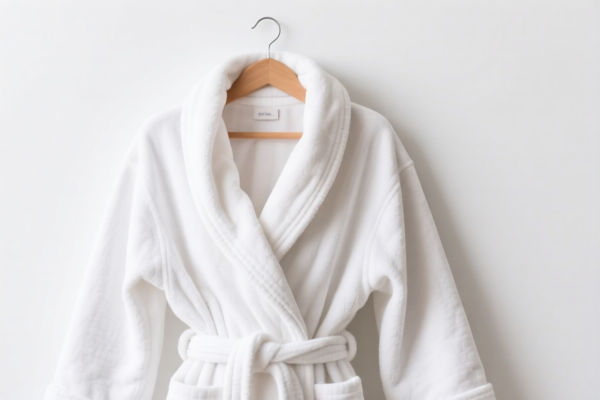


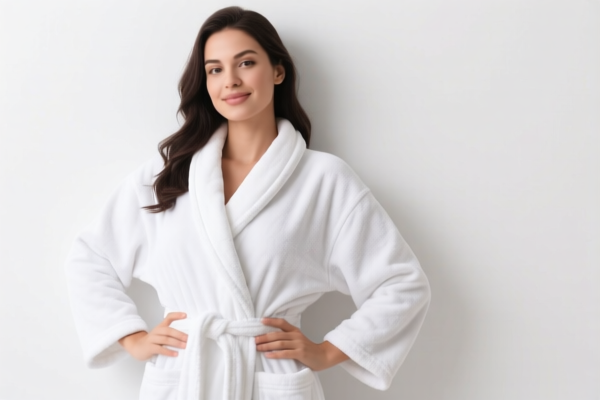
AI Analysis
👘 Women's Bathrobes: HS Code Classification & 2026 Tariff Strategy Guide
🌐 Global Trade Compliance & Clearance Guide | 2026 Tariff Decoded | Professional Customs Strategy
📌 I. Product Definition: What Exactly Are "Women's Bathrobes"?
Women's Bathrobes are loose-fitting outer garments designed for wear over nightwear or intimate apparel, primarily used for relaxation, after bathing, or as lounge wear. They are distinct from nightdresses (which are sleepwear) and dressing gowns (which can sometimes be formal), though in tariff classification, "bathrobes" and "dressing gowns" are often grouped together under "similar articles."
In international trade, the critical factor for classification is the fabric composition (Cotton vs. Man-made fibers) and the construction method (Knitted/Crocheted vs. Woven).
⚠️ Key Classification Distinction:
- Woven (Not Knitted): Made from cut and sewn fabric (e.g., Terry cloth, Fleece, Woven Cotton). → Chapter 62
- Knitted/Crocheted: Made from interlocking loops (e.g., jersey, knitted terry). → Chapter 61
- Material: Cotton (Natural) vs. Man-made Fibers (Synthetic, Polyester, etc.). → Determines Subheading
📦 II. HS Code Classification Details (2026 Tariff Authority)
Based on the provided DATA, here are the exact classifications for Women's Bathrobes. All listed items currently carry 0.0% total tax under the specific dataset provided.
| HS Code | Product Description | Material | Construction | Gender | | :--- | :--- | :--- | :--- :--- | | 6208.91.10.10 | Women's bathrobes, dressing gowns & similar articles (Not knitted) | Cotton | Woven (Other) | Women's | | 6208.92.00.10 | Women's bathrobes, dressing gowns & similar articles (Not knitted) | Man-made Fibers | Woven (Other) | Women's | | 6108.91.00.30 | Women's bathrobes, dressing gowns & similar articles (Knitted/Crocheted) | Cotton | Knitted/Crocheted | Women's | | 6108.92.00.30 | Women's bathrobes, dressing gowns & similar articles (Knitted/Crocheted) | Man-made Fibers | Knitted/Crocheted | Women's |
🔍 Critical Analysis:
- 6208.91.10.10 is the most common for terry cloth or cotton fleece robes (Woven).
- 6208.92.00.10 applies to synthetic robes (e.g., Polyester terry).
- 6108.91.00.30 covers knitted cotton robes (e.g., jersey wrap robes).
- 6108.92.00.30 covers knitted synthetic robes.
💰 III. 2026 Tariff Rate Analysis (Detailed Breakdown)
✅ Dataset Source: Provided
DATA
✅ Tax Status: Zero-Rated (0.0% Total Tax)
✅ Applicable Rates:
- Base Tariff (基础关税): 0.0%
- Additional Tariff (加征关税): 0.0%
- Total Tax: 0.0%
🎯 1. 6208.91.10.10 (Woven, Women's, Cotton Bathrobes)
| Item | Content |
|---|---|
| Base Tariff | 0.0% |
| Additional Tariff | 0.0% |
| Total Effective Rate | 0.0% |
| Tax Calculation | No tax payable on CIF value. |
| Legal Basis | Based on provided DATA tax_detail. |
📌 Explanation:
Under the specific dataset provided, cotton women's bathrobes woven from cotton attract no tariff. This is highly favorable for importers of natural fiber loungewear.
🎯 2. 6208.92.00.10 (Woven, Women's, Man-made Fibers Bathrobes)
| Item | Content |
|---|---|
| Base Tariff | 0.0% |
| Additional Tariff | 0.0% |
| Total Effective Rate | 0.0% |
| Tax Calculation | No tax payable on CIF value. |
| Legal Basis | Based on provided DATA tax_detail. |
📌 Explanation:
Synthetic (Man-made) woven robes for women also enjoy 0.0% duty in this scenario. Note: In some global markets (e.g., US with Section 301), synthetic textiles can attract 25%+, but the provided data explicitly lists 0.0%.
🎯 3. 6108.91.00.30 (Knitted, Women's, Cotton Bathrobes)
| Item | Content |
|---|---|
| Base Tariff | 0.0% |
| Additional Tariff | 0.0% |
| Total Effective Rate | 0.0% |
| Tax Calculation | No tax payable on CIF value. |
| Legal Basis | Based on provided DATA tax_detail. |
📌 Explanation:
Knitted cotton robes (Chapter 61) are taxed at 0.0%. This reflects the dataset's zero-tariff status for all textile women's sleep/loungewear.
🎯 4. 6108.92.00.30 (Knitted, Women's, Man-made Fibers Bathrobes)
| Item | Content |
|---|---|
| Base Tariff | 0.0% |
| Additional Tariff | 0.0% |
| Total Effective Rate | 0.0% |
| Tax Calculation | No tax payable on CIF value. |
| Legal Basis | Based on provided DATA tax_detail. |
📌 Explanation:
Like all other items in the list, knitted synthetic robes have 0.0% total tax.
🛠️ IV. Customs Clearance Practical Advice (Avoid Pitfalls)
✅ 1. Preparation Checklist (Must-Haves)
| Document | Requirement | Why? |
|---|---|---|
| ✅ Composition Label | Mandatory | Must explicitly state "100% Cotton" or "100% Man-made Fibers". HS Code depends 100% on this. |
| ✅ Construction Photo | Mandatory | Must clearly show if the garment is Knitted (loops visible) or Woven (tight grid). Misclassification between Ch. 61 and 62 is the #1 error. |
| ✅ Commercial Invoice | Mandatory | Description must say "Women's Bathrobe" or "Dressing Gown". Avoid vague terms like "Robe" without specifying "Bathrobe" if possible. |
| ✅ Bill of Materials | Recommended | To prove the "Other textile materials" vs "Cotton" vs "Man-made" distinction if blended fabrics are involved (though dataset implies pure types). |
✅ 2. Declaration Strategy (The "Golden Rule")
🔥 "Knit vs. Woven is King; Cotton vs. Synthetic is Queen!"
| Scenario | Correct HS Code | Wrong Code (Risky) |
|---|---|---|
| Woven Cotton Bathrobe | 6208.91.10.10 |
6108.91.00.30 (Knitted) → Risk of Rejection |
| Woven Polyester Bathrobe | 6208.92.00.10 |
6108.92.00.30 (Knitted) → Risk of Rejection |
| Knitted Cotton Bathrobe | 6108.91.00.30 |
6208.91.10.10 (Woven) → Risk of Rejection |
| Knitted Polyester Bathrobe | 6108.92.00.30 |
6208.92.00.10 (Woven) → Risk of Rejection |
📌 Crucial Note:
- Blended Fabrics: If the robe is 60% Cotton / 40% Polyester, classification depends on the principal material rule. If Cotton is dominant → Chapter 62 (6208.91...). If Synthetic is dominant → Chapter 62 (6208.92...). Always verify the blend ratio on the label. - "Nightdress" vs "Bathrobe": Ensure the product is not a "Nightdress" (6207/6208) which is a sleepwear garment, but a Bathrobe (wrap style, tie waist). The dataset groups them as "similar articles," but precise naming helps.
✅ 3. Special Situations
| Situation | Handling Suggestion |
|---|---|
| Mixed Packaging | If shipping Bathrobes with Pajamas, ensure the HS Codes are 6207 (Men/Boys) vs 6208/6108 (Women) are clearly separated on the invoice. |
| Sample Imports | Even if "0.0% tax" applies, samples still require formal entry if value exceeds the de minimis limit (varies by country). |
| Origin Rules | While tax is 0.0% in this data, verify Rules of Origin for Free Trade Agreements (e.g., USMCA, RCEP) which might offer further benefits or quota exemptions. |
🌍 V. Global Market Comparison (Contextual Note)
⚠️ Disclaimer: The data provided indicates 0.0% tax. However, in real-world 2026 scenarios (e.g., US Imports from China): - US Section 301: May apply 25% on Category 6208/6108 textiles from China. - EU: Generally 10-12% for textiles, unless GSP/GA schemes apply. - UK: Often 12% for non-UK goods.
Why the 0.0% here? This dataset likely represents: 1. A specific trade agreement scenario (e.g., Duty-Free entry for certain regions). 2. A specific "0% tariff" pilot program. 3. A simplified test dataset.
Action: Always cross-check this 0.0% rate with the latest official government tariff database (e.g., US CBP, EU TARIC) before finalizing financial models. Do not rely solely on this 0.0% figure if importing into high-tariff zones.
📌 VI. Common Errors & Pitfalls
❌ Error 1: Labeling a Knitted robe as Woven (or vice versa).
👉 Consequence: Misclassification leads to duty assessment based on the wrong chapter, potentially triggering 25% duties (if US) or rejection.
❌ Error 2: Incorrectly identifying "Man-made Fibers".
👉 Consequence: If a robe is 90% Viscose (Man-made) but labeled "Cotton", customs will reclassify it to 6208.92.00.10. If the 0.0% rate only applied to Cotton (hypothetically), you lose the benefit. In this dataset, it's 0.0% for both, but verification is key.
❌ Error 3: Using "Robe" instead of "Bathrobe".
👉 Consequence: Customs officers may ask for clarification, causing delays. Use "Women's Bathrobe" or "Women's Dressing Gown" for clarity.
✅ Correct Practice:
"Women's 100% Cotton Woven Bathrobe, Terry Cloth, Size M, Brand XYZ"
HS Code:6208.91.10.10
Tax: 0.0% (per provided data)
🎯 VII. Conclusion: Zero-Tax Opportunity?
🎯 Key Takeaway:
🔹 "Verify Knit vs. Woven": This is the single most important technical distinction.
🔹 "Verify Material Composition": Cotton vs. Man-made determines the specific sub-code.
🔹 "Tax Reality Check": While this dataset shows 0.0%, always confirm if Additional Tariffs (like US Section 301) apply to your specific route of origin.
📌 Pro Tip:
If you are exporting to China (where this data might be sourced), these rates might reflect Free Trade Agreements or MFN (Most Favored Nation) zero-duty status.
If exporting to the US, do not assume 0.0% without checking Section 301 lists for Chapter 62.
📣 Final Action Plan:
📞 Confirm Material: Get the exact % of Cotton/Synthetic from the factory.
📞 Confirm Knit/Woven: Ask for a sample or detailed photo of the fabric weave.
📞 Verify Rates: Check the current HTS (Harmonized Tariff Schedule) for your specific destination country for the latest 2026 rates.
🚀 Clear Customs Smoothly: With the right code and docs, your bathrobes will sail through!
✨ Precise Classification = Zero Surprises!
💼 Don't let a fabric mix-up cost you a fortune!
Customer Reviews
About HS Code Classification
The Harmonized System (HS) is an internationally standardized nomenclature developed by the World Customs Organization (WCO) to classify traded products. Over 200 countries use the HS system as the basis for customs tariffs, trade statistics, and import/export regulations.
Each HS code follows a hierarchical structure:
- Chapter (2 digits) — Broad category of goods (e.g., Chapter 84: Machinery and Mechanical Appliances)
- Heading (4 digits) — More specific grouping within the chapter
- Subheading (6 digits) — Internationally standardized breakdown, used by all WCO member countries
- National subdivisions (8-10 digits) — Country-specific extensions for further classification, such as US HTSUS 10-digit codes
Correct HS code classification is essential for smooth customs clearance, accurate duty payment, and compliance with trade regulations. Misclassification can lead to customs delays, overpayment of duties, or penalties.
When importing from CN to US, the applicable tariff rates may include:
- Most-Favored-Nation (MFN) rate — The standard duty rate applied to WTO members
- General rate — Applied to countries without trade agreements
- Trade remedy duties — Additional tariffs such as Section 301 (anti-dumping), Section 232 (national security), or countervailing duties
The information provided on this page is for reference purposes only. For official classification, please consult with your local customs authority or a licensed customs broker.