Women's Brassiere
CN → US| HS Code | Tariff Rate | Origin | Destination | Doc |
|---|---|---|---|---|
| 6212105020 | 34.4% | CN | US | Official Doc |
| 6114301020 | 45.7% | CN | US | Official Doc |
| 6106100010 | 37.2% | CN | US | Official Doc |
| 6106202010 | 49.5% | CN | US | Official Doc |
| 6206100010 | 24.4% | CN | US | Official Doc |
Product Images
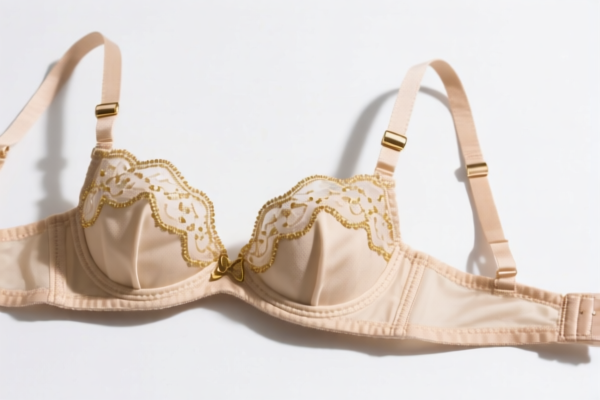
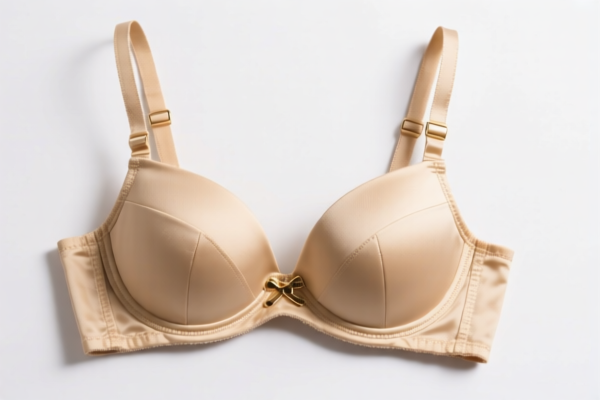
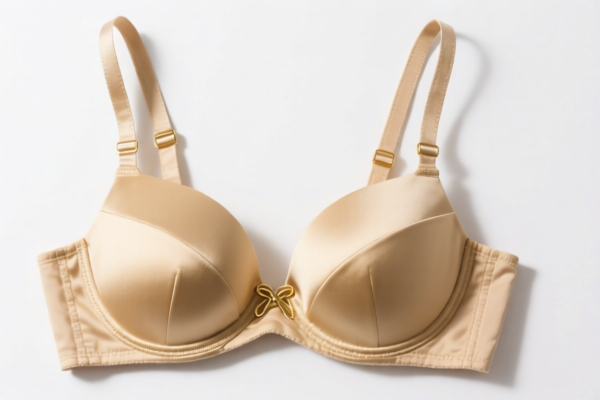
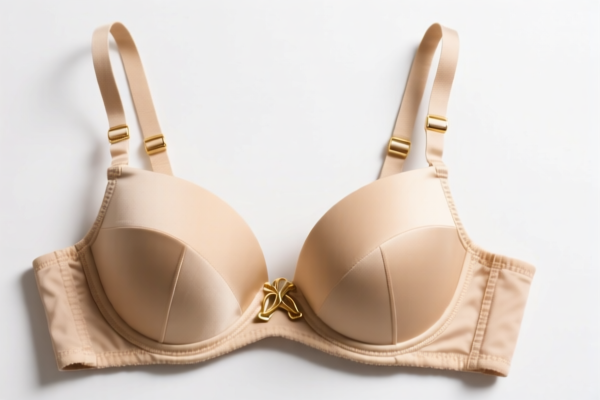
AI Analysis
👙 Women's Brassiere (Lingerie & Tops)
🌐 HS Code Reference & Customs Clearance Guide | 2026 Latest Tariff Analysis | Professional Clearance Strategy
📌 I. Product Definition & Classification: Do You Really Know "Women's Brassiere"?
A Women's Brassiere is a fundamental undergarment designed to support and shape the breasts. In international trade, classification depends heavily on material composition and manufacturing method (knitted vs. woven).
Key Classification Paths: 1. Knitted/Belting Items (Chapter 61): If the item is knitted or crocheted (e.g., lace bra, seamless knit bra), it often falls under 6112 or 6114. 2. Woven/Other Textile Articles (Chapter 62): If the item is made of woven fabric (e.g., structured bra with rigid cups, synthetic fiber bras), it falls under 6212. 3. Blouses/Shirts (Misclassification Risk): Sometimes, loose-fitting, sheer, or oversized "brassiere-style" tops are misclassified. However, if the primary function is support/undergarment, it must be classified as lingerie (6112/6212), NOT as a blouse (6106/6206).
⚠️ Critical Distinction:
- True Bras (Supportive): Use hooks, straps, cups → 6112 / 6212.
- Blouses/Tops (Outerwear): Designed to be worn visibly as outerwear → 6106 / 6206.
- Risk: Misclassifying a bra as a blouse to avoid higher tariffs is a common audit trigger!
📦 II. HS Code Classification Details (2026 Latest Tariff Alignment)
Based on the provided data, here are the specific HS Codes associated with "Women's Brassiere" and related top garments. Note that while the primary query is for "Brassiere," the data includes related tops (Blouses/Houses) which are often confused in classification.
| HS Code | Product Description (Inferred) | Material/Type Inference | Total Tax Rate | Tax Breakdown |
|---|---|---|---|---|
| 6212.10.50.20 | Women's Brassiere (Primary Match) | Artificial Fibers (Woven/Synthetic) | 34.4% | Base: 16.9% Section 301: 7.5% Section 122: 10% |
| 6114.30.10.20 | Women's Blouse (Knitted) | Knitted/Synthetic Fiber | 45.7% | Base: 28.2% Section 301: 7.5% Section 122: 10% |
| 6106.10.00.10 | Women's Blouse (Knitted) | Cotton/Synthetic Fiber | 37.2% | Base: 19.7% Section 301: 7.5% Section 122: 10% |
| 6106.20.20.10 | Women's Blouse (Knitted) | Synthetic Fiber | 49.5% | Base: 32.0% Section 301: 7.5% Section 122: 10% |
| 6206.10.00.10 | Women's Blouse (Woven) | Silk/Natural Fiber | 24.4% | Base: 6.9% Section 301: 7.5% Section 122: 10% |
🔍 Key Insight for "Women's Brassiere":
The most accurate match for a standard brassiere is 6212.10.50.20 (if woven/synthetic) or potentially 6112.10 (if knitted, though not explicitly listed with a total rate in the prompt, 6114.30 is a related knitted category).
Crucially: If you misclassify a bra as a Blouse (6106/6206), you might pay less tax (e.g., 24.4% vs 34.4%), but this is illegal if the product is clearly an undergarment. Customs will reclassify and penalize.
💰 III. 2026 Latest Tariff Rate Detail (Including Surcharges)
✅ Applicable Country: USA (US)
✅ Origin: China (CN)
✅ Effective Time: Post-2025 Policies (Section 122 & 301)
🎯 1. 6212.10.50.20 – Women's Brassiere (Artificial Fiber/Woven)
(This is the primary classification for "Women's Brassiere" in the provided data)
| Item | Content |
|---|---|
| Base Tariff | 16.9% (Standard MFN rate for woven lingerie) |
| Section 301 Tariff | +7.5% (List 4B items, often applies to apparel/textiles) |
| Section 122 Tariff | +10% (Newly applied surcharge on certain textile/apparel imports) |
| Total Effective Rate | 34.4% |
| Calculation | CIF Value × 34.4% |
| De Minimis Exemption | ❌ Not Eligible (Section 301 and 122 items usually excluded from $800 de minimis) |
| Legal Path | USITC:6212.10.50.20 → USITC:Footnote 9903.88.01 → IEEPA:9903.01.25 |
📌 Explanation:
- 16.9% Base: Reflects the standard duty for woven brassieres.
- 7.5% Section 301: Additional tariff on Chinese-made goods.
- 10% Section 122: A newer, specific surcharge on certain apparel/textile categories.
- Total 34.4%: This is the mandatory cost. Do not attempt to underreport.
🎯 2. 6114.30.10.20 – Women's Blouse (Knitted/Synthetic)
(Included for comparison, but NOT a brassiere)
| Item | Content |
|---|---|
| Base Tariff | 28.2% |
| Section 301 Tariff | +7.5% |
| Section 122 Tariff | +10% |
| Total Effective Rate | 45.7% |
| Legal Path | USITC:6114.30.10.20 → IEEPA:9903.01.24 |
📌 Warning:
- If you declare a bra as a "knitted blouse" to avoid higher taxes, you risk a 45.7% rate if caught, plus penalties.
- Knitted bras should ideally go under 6112, but if the data points to 6114, ensure the product is truly a blouse (outerwear) and not an undergarment.
🎯 3. 6206.10.00.10 – Women's Blouse (Silk/Natural)
(Lowest tax option, but only for silk blouses)
| Item | Content |
|---|---|
| Base Tariff | 6.9% |
| Section 301 Tariff | +7.5% |
| Section 122 Tariff | +10% |
| Total Effective Rate | 24.4% |
| Legal Path | USITC:6206.10.00.10 → IEEPA:9903.01.25 |
📌 Note:
- Only applies if the item is 100% Silk and clearly a Blouse (not a bra).
- Misclassifying a synthetic bra as silk will lead to severe penalties.
🛠️ IV. Customs Clearance Practical Advice (Avoid Pitfalls)
✅ 1. Required Documentation Checklist
| Document | Required | Notes |
|---|---|---|
| Product Specification Sheet | ✔️ | Must specify: "Brassiere/Undergarment," material composition (e.g., 80% Nylon, 20% Spandex), and construction (woven/knitted). |
| Photos (Front/Back/Inside) | ✔️ | Must show hooks, straps, cups clearly to prove it is an undergarment, not outerwear. |
| Commercial Invoice | ✔️ | Description must match HS Code: "Women's Woven Brassiere, Synthetic Fiber." |
| Packing List | ✔️ | Detailed breakdown of units. |
| Origin Certificate | ✔️ | Required for Section 301/122 compliance. |
| Third-Party Test Report | ✔️ | Fiber content analysis (e.g., SGS, Intertek) to prove material is NOT silk if claiming 6212. |
✅ 2. Declaration Tips (Golden Rules)
🔥 "Function is Key: Support = Undergarment, Coverage = Blouse"
| Scenario | Correct HS Code | Incorrect HS Code | Risk |
|---|---|---|---|
| Standard Bra (Woven) | 6212.10.50.20 |
6206.10.00.10 |
Tax underpayment, penalty |
| Bra (Knitted) | 6112.xxxx (Not in data) |
6114.30.10.20 |
Misclassification |
| Lace Top (Outerwear) | 6114.30.10.20 or 6206.10.00.10 |
6212.10.50.20 |
Overpayment (if intentional) or audit flag |
| Bra + Bralette Set | Declare as Brassiere | Declare as Set | Complex classification, higher risk |
✅ 3. Special Handling
| Situation | Advice |
|---|---|
| Sheer/See-through Bra | If it cannot cover the body without additional clothing, it must be declared as an undergarment (6212), not a blouse. |
| Sports Bra | Still falls under 6212 or 6112. Do not classify as "Athletic Wear" (6114/6211) if it's clearly a bra. |
| Material Composition | If the bra is >50% silk, it might qualify for 6206.10.00.10 ONLY if it is a blouse. A silk bra is still a bra (6212), not a blouse. |
🌍 V. Global Market Comparison (2026)
| Country/Region | Recommended HS Code | Tariff | Notes |
|---|---|---|---|
| 🇺🇸 USA | 6212.10.50.20 |
34.4% | High due to Section 301 + 122. De Minimis not available. |
| 🇨🇳 China | 6212.10.50.20 |
~8-10% | Lower base rates, no Section 301/122. |
| 🇪🇺 EU | 6212.10.00 |
~6-12% | No Section 301/122. VAT applies separately. |
| 🇬🇧 UK | 6212.10.00 |
~6-12% | Post-Brexit rules. No US-style surcharges. |
📌 Conclusion:
- USA is the most expensive market due to additional tariffs.
- Accurate classification is vital to avoid penalties.
- Do not use "Blouse" codes for "Brassieres" to save money.
📌 VI. Common Mistakes & Pitfalls (Blood & Tears)
❌ Mistake 1: Declaring a bra as a "Lingerie Top" or "Blouse" to get the 24.4% rate (6206.10.00.10).
👉 Consequence: Customs will reclassify as 6212.10.50.20 (34.4%), charge back taxes, and impose penalties.
❌ Mistake 2: Ignoring Section 122 and Section 301 in the tariff calculation.
👉 Consequence: Underpayment by ~17.5% (7.5% + 10%), leading to audits.
❌ Mistake 3: Using "Lingerie" as a vague description.
👉 Consequence: Customs may delay clearance for further investigation. Use precise terms: "Women's Woven Brassiere, Synthetic Fiber."
✅ Correct Approach:
"Women's Woven Brassiere, 80% Nylon, 20% Spandex, with Hooks and Straps. HS Code: 6212.10.50.20."
🎯 VII. Conclusion: Professional Clearance Saves Money!
🎯 Remember the Formula:
🔹 "Brassiere = Undergarment = 6212 (Woven) / 6112 (Knitted)"
🔹 "Blouse = Outerwear = 6106 / 6206"
🔹 "USA Tariff = Base + 7.5% (301) + 10% (122)"
📌 Pro Tip:
- If your product is knitted, check if it fits 6112 (not in the provided data, but standard).
- If woven, use 6212.10.50.20.
- Never misclassify undergarments as outerwear to avoid tariffs. The risk is not worth the 10% savings.
📣 Immediate Action:
📞 Contact a Customs Broker + Provide Product Photos + Verify Material Composition
🚀 Ensure Accurate HS Code Classification for Smooth US Customs Clearance!
✨ Professional Clearance Starts with Accurate Classification!
💼 Every Percent of Tax Matters!
Customer Reviews
About HS Code Classification
The Harmonized System (HS) is an internationally standardized nomenclature developed by the World Customs Organization (WCO) to classify traded products. Over 200 countries use the HS system as the basis for customs tariffs, trade statistics, and import/export regulations.
Each HS code follows a hierarchical structure:
- Chapter (2 digits) — Broad category of goods (e.g., Chapter 84: Machinery and Mechanical Appliances)
- Heading (4 digits) — More specific grouping within the chapter
- Subheading (6 digits) — Internationally standardized breakdown, used by all WCO member countries
- National subdivisions (8-10 digits) — Country-specific extensions for further classification, such as US HTSUS 10-digit codes
Correct HS code classification is essential for smooth customs clearance, accurate duty payment, and compliance with trade regulations. Misclassification can lead to customs delays, overpayment of duties, or penalties.
When importing from CN to US, the applicable tariff rates may include:
- Most-Favored-Nation (MFN) rate — The standard duty rate applied to WTO members
- General rate — Applied to countries without trade agreements
- Trade remedy duties — Additional tariffs such as Section 301 (anti-dumping), Section 232 (national security), or countervailing duties
The information provided on this page is for reference purposes only. For official classification, please consult with your local customs authority or a licensed customs broker.