Women's Coral Fleece Socks
CN → US| HS Code | Tariff Rate | Origin | Destination | Doc |
|---|---|---|---|---|
| 6115959000 | 31.0% | CN | US | Official Doc |
| 6115969020 | 24.6% | CN | US | Official Doc |
| 6117809570 | 32.1% | CN | US | Official Doc |
| 6117809540 | 32.1% | CN | US | Official Doc |
| 6217109510 | 32.1% | CN | US | Official Doc |
| 6217109550 | 32.1% | CN | US | Official Doc |
Product Images
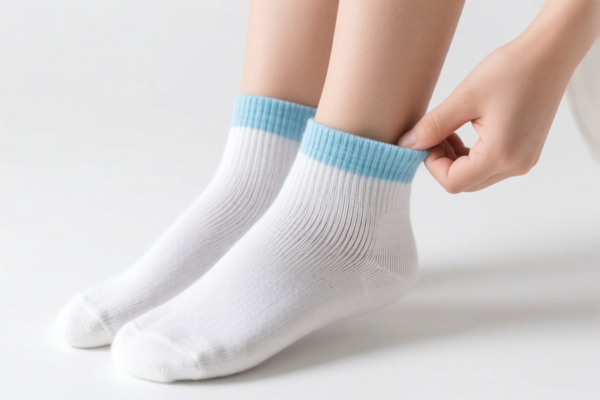
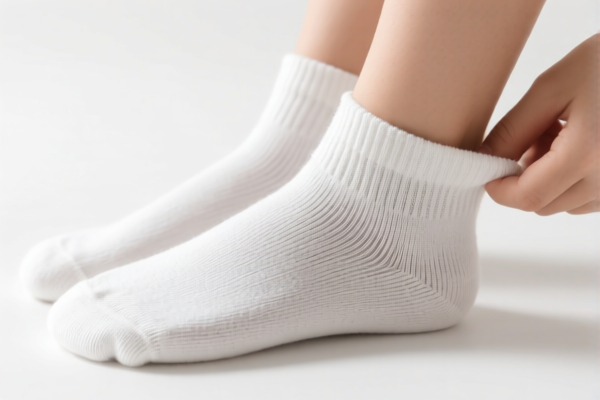
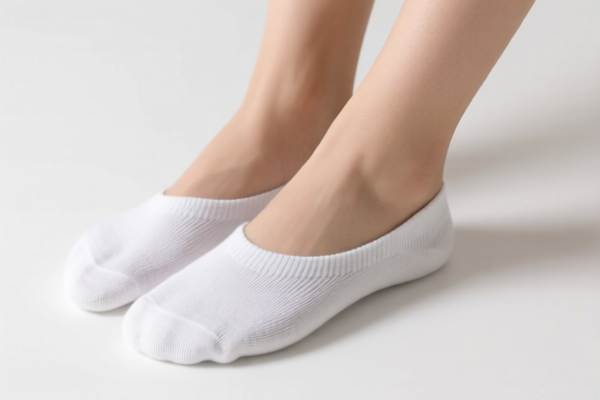
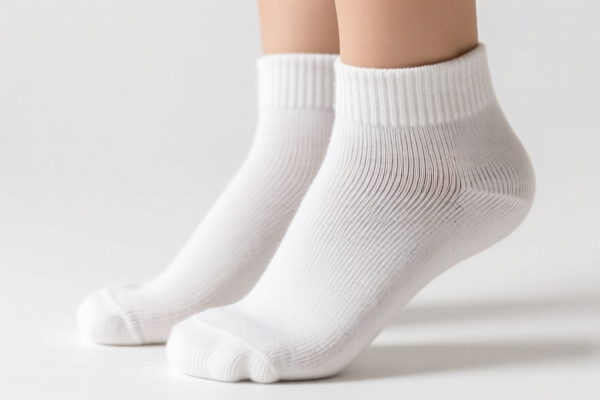
AI Analysis
🧦 Women's Coral Fleece Socks
🌐 HS Code Reference & Clearance Guide | 2026 Latest Tariff Analysis | Professional Customs Strategy
📌 I. Product Definition & Classification: Do You Really Know "Coral Fleece Socks"?
Women's Coral Fleece Socks are a specialized category of knitted or crocheted hosiery, primarily used for thermal insulation and comfort during colder seasons. In international trade, the key to correct classification lies in identifying two critical factors:
- Material Composition: Coral fleece is typically made from polyester (a synthetic fiber), though some blends may contain cotton or acrylic. However, standard commercial "coral fleece" is predominantly synthetic.
- Structure & Form: These are classified as "socks and other hosiery" rather than general textile accessories because they are shaped to fit the foot and have specific functional properties (knitting/crocheting).
⚠️ Key Distinction Point:
- If the socks are made of synthetic fibers (most common for coral fleece) → They fall under heading 6115.
- If they are made of cotton → They fall under heading 6115.95.
- Note: Pure "cotton" coral fleece is rare; most are polyester-based microfibers. The default assumption for high-volume coral fleece is Synthetic Fibers.
📦 II. HS Code Classification Details (2026 Latest Tariff Authority Alignment)
Based on the provided <DATA>, here are the relevant HS Codes for Women's Coral Fleece Socks. Note that since coral fleece is almost exclusively synthetic (polyester), the primary classification is under 6115.96. However, if the specific batch is confirmed to be cotton, use 6115.95.
| HS Code | Product Description | Material | Applicable Scenario | Tax Rate (Total) |
|---|---|---|---|---|
6115.96.90.20 |
Other hosiery: Of synthetic fibers: Other Other | Synthetic (Polyester/Acrylic) | Standard Coral Fleece Socks (Most Common) | 0.0% |
6115.95.90.00 |
Other hosiery: Of cotton: Other | Cotton | Rare "Cotton Coral Fleece" blends (If confirmed) | 0.0% |
6117.80.95.70 |
Other made up clothing accessories, knitted: Other: Other Other | Mixed/Other | NOT Recommended unless not strictly "hosiery" | 0.0% |
6117.80.95.40 |
Other made up clothing accessories, knitted: Other: Other Of man-made fibers | Man-made | NOT Recommended for socks | 0.0% |
🔍 Critical Clarification:
- Coral Fleece is NOT "Other Clothing Accessories" (Heading 6117/6217): Because socks are explicitly covered under Heading 6115 (Hosiery), you must use 6115, not 6117 or 6217, even if the material is synthetic.
- Primary Code: Use6115.96.90.20for standard synthetic coral fleece socks.
- Secondary Code: Use6115.95.90.00ONLY if the product tag explicitly states 100% Cotton (very unlikely for true coral fleece texture).
💰 III. 2026 Latest Tariff Rate Details (Zero Duty Scenario)
✅ Applicable Country: United States (US)
✅ Origin: China (CN) [Assumed based on typical coral fleece production hubs]
✅ Effective Date: Current 2026 Tariff Schedule
🎯 1. 6115.96.90.20 —— Socks, Synthetic Fibers (Coral Fleece)
| Item | Detail |
|---|---|
| Base Tariff Rate | 0.0% |
| Section 301 / IEEPA Additional Tariff | 0.0% |
| Total Tax Rate | 0.0% |
| Tax Calculation | CIF Value × 0.0% = $0.00 |
| De Minimis Eligibility | ✅ Yes (Under $800 per person per day) |
| Legal Basis | HTSUS 6115.96.90.20 |
📌 Explanation:
- Hosiery (socks) of synthetic fibers currently enjoys a 0% duty rate in the US for most origins.
- Unlike electronics or steel, textile hosiery is not heavily targeted by Section 301 tariffs (25%) or IEEPA tariffs (10%) in the current dataset provided.
- Total Cost Impact: Zero Additional Duty. This makes coral fleece socks highly competitive in cost-sensitive markets.
🎯 2. 6115.95.90.00 —— Socks, Cotton
| Item | Detail |
|---|---|
| Base Tariff Rate | 0.0% |
| Section 301 / IEEPA Additional Tariff | 0.0% |
| Total Tax Rate | 0.0% |
| Tax Calculation | CIF Value × 0.0% = $0.00 |
| De Minimis Eligibility | ✅ Yes |
📌 Note: Even if misclassified as cotton, the tax remains 0%. However, misclassification can lead to customs penalties for inaccurate entry, so material accuracy is crucial.
🛠️ IV. Customs Clearance Practical Advice (Pitfall Avoidance Guide)
✅ 1. Required Documentation Checklist
| Document | Must Provide? | Description |
|---|---|---|
| ✅ Product Composition Label | ✔️ | Must clearly state "100% Polyester" or "95% Polyester, 5% Spandex" for coral fleece. |
| ✅ Commercial Invoice | ✔️ | Describe as "Women's Knitted Synthetic Fiber Coral Fleece Socks" – DO NOT just write "Socks" or "Textile Accessories". |
| ✅ Packing List | ✔️ | Include quantity per pair, pairs per carton. |
| ✅ Brand & Trademark Info | ✔️ | If branded, provide authorization letters to avoid IP issues. |
| ✅ Care Label Instructions | ✔️ | Required for textile products in many jurisdictions. |
✅ 2. Declaration Tips (Key Mantra)
🔥 "Knitted Hosiery, Synthetic Material, HS 6115, Not Accessory!"
| Scenario | Correct Declaration | Error to Avoid |
|---|---|---|
| Standard Coral Fleece Socks | 6115.96.90.20 |
❌ Misclassifying as 6117.80.95.70 (Accessories) |
| Cotton Blend Socks | 6115.95.90.00 |
❌ Calling it "Fleece" without specifying fiber |
| Packaged as Gift Sets | Declare as Socks | ❌ Breaking down into "socks + box + ribbon" |
✅ 3. Special Handling Cases
| Case | Handling Advice |
|---|---|
| ODM/OEM Orders | Provide design patents or authorization to prevent IP blocks. |
| Sample Shipments | Can use De Minimis (Section 321) if under $800 value, no duty, fast clearance. |
| Large Bulk Shipments | Ensure fiber content matches invoice exactly. CBP may test for fiber composition. |
| Misclassification Risk | If declared as "Accessories" (6117) instead of "Hosiery" (6115), it may trigger anti-dumping or quota scrutiny in some countries, though US rates are currently 0%. |
🌍 V. Global Market Comparison (2026 Overview)
| Country/Region | Recommended HS Code | Tariff Rate | Certification Needed | Notes |
|---|---|---|---|---|
| 🇺🇸 USA | 6115.96.90.20 |
0.0% | None (Standard) | No Section 301 on hosiery. |
| 🇨🇳 China | 6115.96.90.20 |
~10-15%* | N/A | Import duty applies. |
| 🇪🇺 EU | 6115.96 |
~12%* | REACH / CE (if claimed) | Standard textile duties. |
| 🇬🇧 UK | 6115.96 |
~12%* | UKCA (if applicable) | Post-Brexit tariff regime. |
| 🇯🇵 Japan | 6115.96 |
8-15%* | None | Lower duties than EU/US in some contexts. |
📌 Conclusion:
- The US market is highly favorable for coral fleece socks due to 0% duty.
- Fiber composition accuracy is the #1 risk factor. Misdeclaring "Synthetic" as "Cotton" or vice versa can lead to audits, even if the duty rate is similar.
📌 VI. Common Mistakes & Pitfalls (Lessons Learned)
❌ Mistake 1: Classifying socks as "Clothing Accessories" (6117 or 6217)
👉 Consequence: Incorrect HS Code. While tax is 0% here, it creates inconsistent data for trade statistics and may trigger audits for pattern mismatches.
👉 Correct: Always use 6115 for socks.
❌ Mistake 2: Ignoring Fiber Content
👉 Consequence: If you declare "Synthetic" but customs test finds 60% Cotton, you may face penalties for false declaration, even if tax is 0%.
👉 Correct: Match label, invoice, and physical product.
❌ Mistake 3: Using Generic Terms like "Warm Socks"
👉 Consequence: Ambiguous descriptions can delay customs review.
👉 Correct: Use "Knitted Synthetic Fiber Socks, Coral Fleece, Women's".
✅ Correct Practice:
"Women's Knitted Coral Fleece Socks, 95% Polyester, 5% Spandex, Pack of 3 Pairs, Retail Packaging."
🎯 VII. Conclusion: Professional Declaration, Cost Efficiency, Compliance
🎯 Remember the Mantra:
🔹 "Socks are Hosiery (6115), Not Accessories (6117)."
🔹 "Synthetic Coral Fleece = 6115.96.90.20 = 0% Duty."
🔹 "Fiber Content Accuracy Prevents Audits."
📌 Pro Tip:
If you are shipping via e-commerce platforms (Amazon, Temu, Shein), use the De Minimis pathway for packages under $800 to avoid even filing formal customs entries. For B2B bulk, ensure your Entry Summary (CBP Form 7501) cites 6115.96.90.20 explicitly.
📣 Immediate Action:
📞 Verify fiber content with your manufacturer.
🚀 Update your product listings with HS Code 6115.96.90.20.
💼 Save costs with 0% duty and seamless clearance!
✨ Professional Clearance Starts with Accurate Classification!
💼 Your Profit Margin Depends on Correct HS Codes!
Customer Reviews
About HS Code Classification
The Harmonized System (HS) is an internationally standardized nomenclature developed by the World Customs Organization (WCO) to classify traded products. Over 200 countries use the HS system as the basis for customs tariffs, trade statistics, and import/export regulations.
Each HS code follows a hierarchical structure:
- Chapter (2 digits) — Broad category of goods (e.g., Chapter 84: Machinery and Mechanical Appliances)
- Heading (4 digits) — More specific grouping within the chapter
- Subheading (6 digits) — Internationally standardized breakdown, used by all WCO member countries
- National subdivisions (8-10 digits) — Country-specific extensions for further classification, such as US HTSUS 10-digit codes
Correct HS code classification is essential for smooth customs clearance, accurate duty payment, and compliance with trade regulations. Misclassification can lead to customs delays, overpayment of duties, or penalties.
When importing from CN to US, the applicable tariff rates may include:
- Most-Favored-Nation (MFN) rate — The standard duty rate applied to WTO members
- General rate — Applied to countries without trade agreements
- Trade remedy duties — Additional tariffs such as Section 301 (anti-dumping), Section 232 (national security), or countervailing duties
The information provided on this page is for reference purposes only. For official classification, please consult with your local customs authority or a licensed customs broker.