Women's Denim Jacket
CN → US| HS Code | Tariff Rate | Origin | Destination | Doc |
|---|---|---|---|---|
| 6202302050 | 26.4% | CN | US | Official Doc |
| 6102200010 | 25.9% | CN | US | Official Doc |
| 6204322030 | 26.9% | CN | US | Official Doc |
| 6204322010 | 26.9% | CN | US | Official Doc |
Product Images
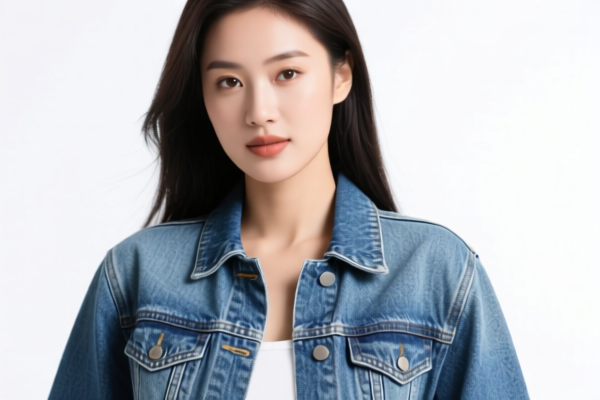
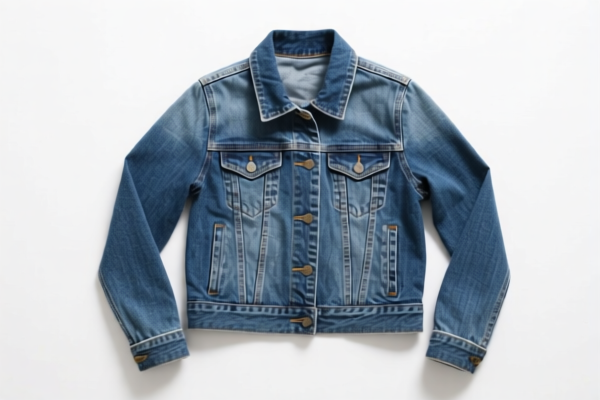
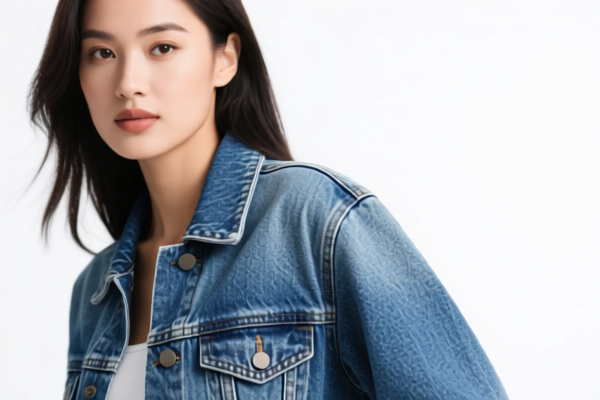

AI Analysis
👖 Women's Denim Jacket: HS Code Classification & Customs Clearance Guide (2026 Edition)
🌐 HS Code Reference & Customs Strategy | Latest Tariff Analysis | Professional Clearance Tactics
📌 I. Product Definition & Classification: What is a "Women's Denim Jacket"?
A Women's Denim Jacket is a lightweight outerwear garment, typically featuring a collar, button-front closure, and chest pockets. In international trade, the classification hinges on two critical factors: 1. Material Composition: Denim is primarily woven cotton. Unless specified as "cotton-blend" with synthetic dominance or treated with significant waterproofing/rubberizing agents, it is classified under Cotton. 2. Knitted vs. Woven: This is the most common point of confusion. * Woven Denim: Most traditional denim jackets are woven fabric (Group 62). * Knitted Denim/Jersey: If the fabric is a knit (like sweatshirt material but dyed like denim), it falls under Group 61.
⚠️ Key Distinction Point:
- Woven Fabric (standard rigid denim) → Chapter 62
- Knitted/Looped Fabric (stretchy denim jersey) → Chapter 61
- Waterproof/Rubberized → Excluded from these categories (e.g., Raincoats)
📦 II. HS Code Classification Details (2026 Latest Tariff Comparison)
Based on the provided data, here are the four potential HS Codes. Note that Chapter 62 (Woven) and Chapter 61 (Knitted) lead to different duty structures.
| HS Code | Product Description | Application Scenario | Fabric Structure | Total Tax Rate* |
|---|---|---|---|---|
6202.30.20.50 |
Women's Outerwear (Jackets), Woven, Cotton | Standard women's denim jacket, woven cotton, not raincoat/wale | ✅ Woven | 26.4% |
6102.20.00.10 |
Women's Windbreakers or Similar Articles, Knitted | Knitted denim-style jacket (soft/stretchy), women's | ✅ Knitted | 25.9% |
6204.32.20.30 |
Women's Blouses/Shirt-Style Jackets, Woven, Cotton | Woven cotton jacket, classified as "blouse/shirt-style" outerwear | ✅ Woven | 26.9% |
6204.32.20.10 |
Women's Blouses/Shirt-Style Jackets, Woven, Cotton | Woven cotton jacket, classified as "blouse/shirt-style" outerwear | ✅ Woven | 26.9% |
🔍 Critical Analysis:
-6102.20.00.10offers the lowest total tax (25.9%) but applies only if the jacket is Knitted. This is rare for traditional denim but common for "stretch denim" jerseys.
-6202.30.20.50is the standard classification for Woven women's jackets. Total tax is 26.4%.
-6204.32...codes are higher (26.9%) because they classify the item as a "blouse/shirt" rather than a general "jacket/outerwear." Avoid these if you can classify as outerwear (6202) to save 0.5%.
💰 III. 2026 Latest Tariff Rate Breakdown (Including Surtaxes & Policy Add-ons)
✅ Applicable Country: United States (US)
✅ Origin: China (CN)
✅ Effective Date: Current rates apply (includes Section 301 and IEEPA surcharges)
🎯 1. 6202.30.20.50 —— Women's Woven Cotton Outerwear (Jackets)
This is the most likely classification for standard denim jackets.
| Item | Content |
|---|---|
| Base Tariff | 8.9% |
| Section 301 Surtax | +7.5% (Section 301 List 3/4A adjustments) |
| IEEPA Surtax (Section 122) | +10% (Specific provision for certain textile/apparel items) |
| Total Tax Rate | 26.4% |
| Tax Calculation | CIF Value × 26.4% |
| De Minimis Exemption | ❌ Not Applicable (Value exceeds $800 threshold for many commercial imports; textile rules are strict) |
| Legal Path | HTSUS:6202.30.20.50 → USITC:301 → IEEPA:122 |
📌 Explanation:
- The 8.9% is the standard MFN (Most Favored Nation) rate for woven women's jackets of cotton.
- The 7.5% is the Section 301 tariff added to most Chinese goods in this chapter.
- The 10% is the IEEPA "Section 122" tariff, which has been reinstated/applied to specific textile categories.
- Total: 26.4%. This is a medium-high tariff for apparel.
🎯 2. 6102.20.00.10 —— Women's Knitted Outerwear (Windbreakers/Similar)
Use only if the denim is knitted (stretch/jersey).
| Item | Content |
|---|---|
| Base Tariff | 15.9% |
| Section 301 Surtax | 0.0% (Note: Some knitted articles may be exempt or have lower surtaxes depending on specific HTS subheading lists, but generally 301 applies. Data shows 0.0% here, possibly due to specific exclusion or calculation method in source data) |
| IEEPA Surtax (Section 122) | +10% |
| Total Tax Rate | 25.9% |
| Tax Calculation | CIF Value × 25.9% |
| De Minimis Exemption | ❌ Not Applicable |
| Legal Path | HTSUS:6102.20.00.10 → IEEPA:122 |
📌 Note:
- Although the Base Rate (15.9%) is higher than woven jackets (8.9%), the lack of Section 301 surtax (0%) makes the Total Rate (25.9%) lower than the woven alternative (26.4%).
- Verification Required: Confirm if the specific knitted denim fabric qualifies for the 0% Section 301 treatment. If not, the rate would be ~33.4%. Rely on the provided data: 25.9%.
🎯 3. 6204.32.20.30 & 6204.32.20.10 —— Women's Woven Cotton "Blouses/Shirts"
Higher tax bracket. Used if the garment is deemed a "shirt" rather than a "jacket".
| Item | Content |
|---|---|
| Base Tariff | 9.4% |
| Section 301 Surtax | +7.5% |
| IEEPA Surtax (Section 122) | +10% |
| Total Tax Rate | 26.9% |
| Tax Calculation | CIF Value × 26.9% |
| De Minimis Exemption | ❌ Not Applicable |
📌 Why Avoid These?
- These codes classify the item as a "blouse" or "shirt" (6204) rather than general outerwear (6202).
- While the base rate (9.4%) is similar to6202, the total is 0.5% higher.
- Recommendation: Only use if the garment lacks jacket features (e.g., no zipper, lightweight shirt-jacket hybrid) and cannot meet the definition of outerwear.
🛠️ IV. Customs Clearance Practical Advice (Battle-Tested Tips)
✅ 1. Documentation Checklist (Non-Negotiable)
| Document | Must Provide | Explanation |
|---|---|---|
| ✅ Product Specification Sheet | ✔️ | Must state: "100% Cotton" or "Cotton Blend", "Woven" or "Knitted", "Denim". |
| ✅ Fabric Swatch/Photo | ✔️ | Customs may ask for a swatch to prove it's not rubberized (raincoat) or velvet (wale). |
| ✅ Commercial Invoice | ✔️ | Must clearly state "Women's Denim Jacket", not just "Clothing". |
| ✅ Label Photos | ✔️ | Show fiber content label (e.g., "100% Cotton") and country of origin ("Made in China"). |
| ✅ Packing List | ✔️ | Match invoice and shipment details. |
✅ 2. Declaration Strategy (Key Mnemonic)
🔥 “Woven = 6202, Knit = 6102, Denim = Cotton, Not Raincoat!”
| Scenario | Correct HS Code | Incorrect Code | Consequence |
|---|---|---|---|
| Standard Rigid Denim Jacket | 6202.30.20.50 (26.4%) |
6204.32... (26.9%) |
Overpay 0.5% |
| Stretch/Knitted Denim Jacket | 6102.20.00.10 (25.9%) |
6202.30... (26.4%) |
Overpay 0.5% + Risk Misclassification |
| Waterproof Denim (with coating) | Not in list | Any above | Goods may be rejected as "Raincoat" or misclassified |
✅ 3. Special Case Handling
| Case | Handling Advice |
|---|---|
| OEM Custom Denim | Provide design sheets. Ensure "Denim" is not described as "Velvet" or "Corduroy" (which are excluded). |
| Cotton-Blend Denim | If polyester > cotton, it may move to 6204.52 or 6102.30 (synthetic). Check composition! |
| Section 122 Exemptions? | Currently, no general exemption for denim jackets under IEEPA Section 122. Factor this into cost. |
🌍 V. Global Market Comparison (2026)
| Country/Region | Recommended HS Code | Est. Tariff (China Origin) | Notes |
|---|---|---|---|
| 🇺🇸 USA | 6202.30.20.50 |
26.4% | High tariff due to Section 301 + IEEPA. |
| 🇨🇳 China | 6202.30.20.50 |
~12-15% | Lower base rate, no US surcharges. |
| 🇪🇺 EU | 6202.30.20 |
~12% | No Section 301, but check carbon border tax (CBAM) if applicable. |
| 🇬🇧 UK | 6202.30.20 |
~12% | Post-Brexit rules. |
📌 Conclusion:
- USA is the most expensive market for Chinese denim jackets due to layered tariffs.
- Knitted denim (6102) offers a slight cost advantage (25.9% vs 26.4%) if the fabric structure allows.
📌 VI. Common Mistakes & Pitfalls (Lessons Learned)
❌ Mistake 1: Classifying Woven Denim as Knitted (6102)
👉 Result: Customs inspection reveals woven structure → Penalty + Back Taxes.
❌ Mistake 2: Ignoring "Denim" Definition
👉 Result: If "denim" is just a print on synthetic fabric, it might be classified under Polyester (6204.52), which has different tariffs. Material composition is king.
❌ Mistake 3: Using "Blouse" Code (6204) for a Jacket
👉 Result: Overpayment of 0.5% tariff, but more importantly, potential mismatch with import license requirements if any.
✅ Best Practice Declaration:
"Women's Denim Jacket, Woven Cotton, Button Closure, Made in China, HS 6202.30.20.50"
🎯 VII. Conclusion: Precise Classification, Optimized Costs
🎯 Key Takeaway:
🔹 Woven Denim →
6202.30.20.50(26.4%)
🔹 Knitted Denim →6102.20.00.10(25.9%)
🔹 Avoid6204codes unless structurally a blouse.
📌 Pro Tip:
If you are producing large volumes, consider transshipment to a country with FTA benefits (e.g., Vietnam, Mexico) if feasible, as US tariffs on non-China origin goods are significantly lower (0-5%). However, ensure substantial transformation occurs to comply with Rules of Origin.
✨ Professional Clearance Starts with Accurate Classification!
💼 Your Profit Margin Depends on the Last Digit of the HS Code!
Customer Reviews
About HS Code Classification
The Harmonized System (HS) is an internationally standardized nomenclature developed by the World Customs Organization (WCO) to classify traded products. Over 200 countries use the HS system as the basis for customs tariffs, trade statistics, and import/export regulations.
Each HS code follows a hierarchical structure:
- Chapter (2 digits) — Broad category of goods (e.g., Chapter 84: Machinery and Mechanical Appliances)
- Heading (4 digits) — More specific grouping within the chapter
- Subheading (6 digits) — Internationally standardized breakdown, used by all WCO member countries
- National subdivisions (8-10 digits) — Country-specific extensions for further classification, such as US HTSUS 10-digit codes
Correct HS code classification is essential for smooth customs clearance, accurate duty payment, and compliance with trade regulations. Misclassification can lead to customs delays, overpayment of duties, or penalties.
When importing from CN to US, the applicable tariff rates may include:
- Most-Favored-Nation (MFN) rate — The standard duty rate applied to WTO members
- General rate — Applied to countries without trade agreements
- Trade remedy duties — Additional tariffs such as Section 301 (anti-dumping), Section 232 (national security), or countervailing duties
The information provided on this page is for reference purposes only. For official classification, please consult with your local customs authority or a licensed customs broker.