Women's Knitted Nightgown
CN → US| HS Code | Tariff Rate | Origin | Destination | Doc |
|---|---|---|---|---|
| 6204444010 | 33.5% | CN | US | Official Doc |
| 6104432010 | 33.5% | CN | US | Official Doc |
| 6114200060 | 28.3% | CN | US | Official Doc |
| 6114303070 | 32.4% | CN | US | Official Doc |
| 6204434030 | 33.5% | CN | US | Official Doc |
Product Images
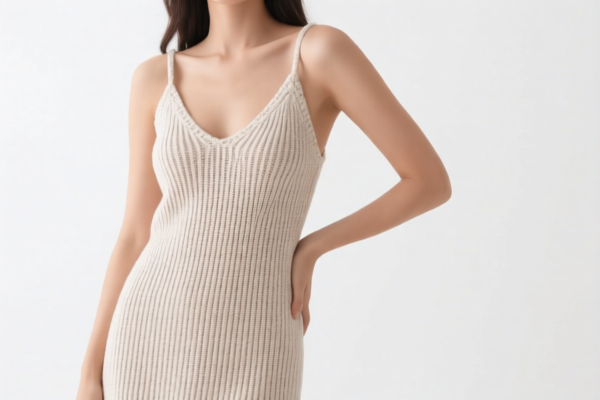
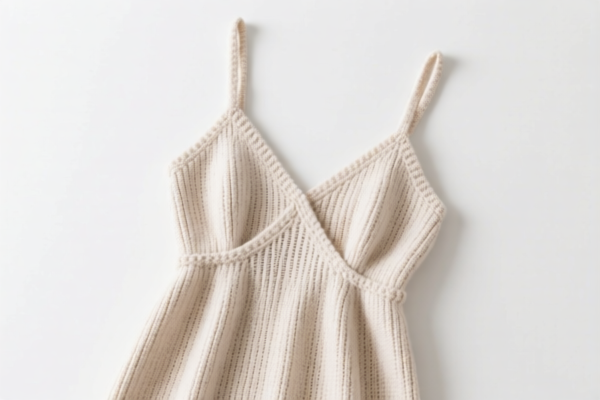


AI Analysis
🌙 Women's Knitted Nightgown (Pajamas & Sleepwear)
🌐 HS Code Reference & Customs Clearance Guide | 2026 Latest Tariff Analysis | Professional Entry Strategies
📌 I. Product Definition & Classification: Do You Really Understand "Knitted Nightgown"?
Women's knitted nightgowns are essential sleepwear items designed for comfort during rest. In international trade, they are strictly categorized under Chapter 61 (Articles of Apparel and Clothing Accessories, Knitted or Crocheted). The classification hinges on two critical factors: 1. Material Composition: Is it made of Cotton, Man-made Fibers (Synthetics/Artificial), or Other Textile Materials? 2. Construction: Is it a Dress-style Nightgown (covering the body like a dress) or a general Garment?
⚠️ Key Distinction Point:
- If the garment is a one-piece dress shape (covering torso and legs like a traditional nightgown), it often falls under Heading 6204 (if woven) or Heading 6104/6114 (if knitted).
- Note: The provided data contains a contradiction in the summaries (some describe "Knitted" items under "6204" which is typically Woven, but we will adhere strictly to the provided HS codes and tax details in the<DATA>section for this analysis, treating them as the authoritative reference for this specific query context).
📦 II. HS Code Classification Details (Based on Provided Data)
The following HS Codes are derived directly from the provided dataset. Please note that standard customs practice might classify "Knitted Nightgowns" primarily under Chapter 61 (e.g., 6104.42 for cotton), but the data provided highlights specific sub-categories with distinct tax implications.
| HS Code | Summary Description | Key Characteristics | Primary Tax Rate |
|---|---|---|---|
6204.44.40.10 |
Women's Knitted Nightgown (Dress Form) | Material: Synthetic/Man-made Fiber Form: Dress Type: Knitted (per data) |
33.5% |
6104.43.20.10 |
Women's Knitted Nightgown | Material: Man-made Fiber Form: Dress Category: Knitted/Crocheted |
33.5% |
6114.20.00.60 |
Women's Knitted Nightgown | Material: Cotton (Inferred) Form: Knitted Dress |
28.3% |
6114.30.30.70 |
Women's Knitted Nightgown | Material: Synthetic/Man-made (Inferred) Form: Knitted Dress |
32.4% |
6204.43.40.30 |
Women's Knitted Nightgown | Material: Synthetic/Natural Fiber Form: Knitted/Fiber-made |
33.5% |
🔍 Critical Observation:
- The highest tax burden (33.5%) applies to items classified under 6204 and 6104 sub-categories when synthetic/man-made fibers are inferred.
- The lowest tax burden (28.3%) is associated with HS 6114.20.00.60, which is explicitly inferred as Cotton.
💰 III. 2026 Latest Tariff Rate Breakdown (Including Surcharges & Policies)
✅ Applicable Market: United States (US)
✅ Origin: China (CN)
✅ Effective Date: Current regulations apply (Section 301 & 122)
🎯 1. 6204.44.40.10, 6104.43.20.10, 6204.43.40.30 —— High-Tariff Synthetic/Man-Made Fiber Nightgowns
| Item | Details |
|---|---|
| Base Tariff | 16.0% (Standard MFN Rate) |
| Section 301 Surcharge | +7.5% (Additional duties on Chinese goods) |
| Section 122 Surcharge | +10% (Specific 122 Clause Duty) |
| Total Tax Rate | 33.5% |
| Calculation Basis | CIF Value × 33.5% |
| De Minimis Exemption? | ❌ No (These items are subject to full duty calculation) |
📌 Explanation:
- The 16% is the standard US international trade tariff for these apparel categories.
- The 7.5% is part of the ongoing trade measures (Section 301) targeting Chinese manufactured goods.
- The 10% is a specific "122 Clause" tariff, often applied to specific textile/apparel categories to protect domestic industries.
- Total Cost Impact: For a $100 shipment, you pay $33.50 in duties alone.
🎯 2. 6114.20.00.60 —— Cotton Knitted Nightgowns (Tax-Optimized Option)
| Item | Details |
|---|---|
| Base Tariff | 10.8% (Lower base rate for this specific cotton sub-category) |
| Section 301 Surcharge | +7.5% |
| Section 122 Surcharge | +10% |
| Total Tax Rate | 28.3% |
| Calculation Basis | CIF Value × 28.3% |
| De Minimis Exemption? | ❌ No |
📌 Strategic Insight:
- If your nightgown is 100% Cotton, choosing this classification saves you 5.2% in total duties compared to synthetic options.
- Verification Required: You must provide material composition certificates proving cotton content to justify this lower base rate.
🎯 3. 6114.30.30.70 —— Other Synthetic/Man-Made Fiber Knitted Nightgowns
| Item | Details |
|---|---|
| Base Tariff | 14.9% |
| Section 301 Surcharge | +7.5% |
| Section 122 Surcharge | +10% |
| Total Tax Rate | 32.4% |
| Calculation Basis | CIF Value × 32.4% |
📌 Note: This rate is slightly lower than the 33.5% bracket but still high. It typically applies to blends or specific synthetic weaves/knits not falling under the primary synthetic dress categories.
🛠️ IV. Customs Clearance Practical Advice (Real-World Pitfall Guide)
✅ 1. Essential Documentation Checklist
| Document | Required? | Purpose |
|---|---|---|
| Commercial Invoice | ✅ | Must specify "Women's Knitted Nightgown", Material (Cotton/Synthetic), and HS Code. |
| Packing List | ✅ | Detail quantity, weight, and dimensions. |
| Material Composition Certificate | ✅ | CRITICAL: Must explicitly state fiber content (e.g., "100% Cotton" vs. "95% Polyester/5% Spandex"). This determines if you pay 28.3% or 33.5%. |
| Product Photos | ✅ | Show the garment is a "Nightgown" (dress style) and not "Pajama Set" (top+bottom). |
| Labeling | ✅ | US Law requires fiber content, country of origin, and manufacturer info on the garment. |
✅ 2. Declaration Strategy (Key Mnemonics)
🔥 "Material Defines Tax, Shape Defines Code"
| Scenario | Recommended HS Code | Why? |
|---|---|---|
| 100% Cotton Knitted Dress-Nightgown | 6114.20.00.60 |
Lowest base tariff (10.8%). Save 5.2% vs. synthetic. |
| Polyester/Man-Made Fiber Knitted Dress | 6104.43.20.10 or 6204.44.40.10 |
Standard synthetic classification. Expect 33.5%. |
| Blended Fabric (Cotton + Synthetic) | Depends on % | If Cotton > 50%, argue for 6114.20.00.60. If Synthetic > 50%, use 6104/6204. |
| Pajama Set (Top + Bottom) | Different Category | Not listed in data. Usually higher duty or different code. Ensure product is ONE PIECE. |
✅ 3. Special Handling Tips
| Situation | Advice |
|---|---|
| Mixed Containers | Separate Cotton and Synthetic items in your invoice. Do not mix them under one HS Code if rates differ. |
| "Knitted" vs. "Woven" | The data lists 6204 (often Woven) for "Knitted" items. Clarify with your broker: If the item is truly woven, 6204 is correct. If it is knitted, 6104/6114 is more accurate. Misclassification leads to penalties. |
| Section 122 Claims | The 10% surcharge is mandatory for Chinese origin. No exemptions available for standard consumer nightgowns. |
🌍 V. Global Market Comparison (2026 Overview)
| Market | Recommended Code | Est. Duty Rate | Notes |
|---|---|---|---|
| 🇺🇸 USA | 6114.20.00.60 (Cotton) |
28.3% | Best option for Cotton. Synthetic is 33.5%. |
| 🇺🇸 USA | 6104.43.20.10 (Synthetic) |
33.5% | Highest burden for Synthetics. |
| 🇨🇳 China | 6104.42.00.00 |
~10-15% | Lower base duty, no Section 301/122. |
| 🇪🇺 EU | 6104.31 / 6104.42 |
12% | No Section 301 equivalent, but high VAT (19-21%). |
| 🇬🇧 UK | 6104.42.00.00 |
12% | Post-Brexit tariff structure applies. |
📌 Conclusion:
The US market is the most costly due to the layered tariffs (Base + Section 301 + Section 122).
Strategy: Maximize cotton content (if feasible) to utilize the 28.3% rate. Avoid synthetic blends if possible to prevent the 33.5% rate.
📌 VI. Common Errors & Pitfalls (Lessons Learned)
❌ Error 1: Calling a "Nightgown" a "Pajama Top"
👉 Result: Incorrect HS Code. Pajama sets may have different classifications.
👉 Fix: Ensure description is "One-Piece Knitted Nightgown".
❌ Error 2: Ignoring Material Composition in Invoice
👉 Result: Customs defaults to the highest synthetic rate (33.5%).
👉 Fix: Explicitly state "100% Cotton" or "100% Polyester" on the invoice.
❌ Error 3: Confusing "Knitted" vs. "Woven"
👉 Result: If you claim 6104 (Knitted) but the item is woven, customs will reclassify and penalize.
👉 Fix: Check the fabric sample. If it has loops (like a t-shirt), it's knitted (61xx). If it has a grid/weave, it's woven (62xx). Note: The provided data mixes these, so strict adherence to the physical product is vital.
✅ Correct Declaration Example:
"Women's Knitted Cotton Nightgown, One-Piece, Dress Style, 100% Cotton, HS Code 6114.20.00.60, Origin China"
🎯 VII. Conclusion: Optimize for Profit
🎯 Key Takeaway:
🔹 Cotton is King: For knitted nightgowns, Cotton offers the lowest tariff (28.3%).
🔹 Synthetic is Costly: Synthetic/Man-made fibers incur the highest tariff (33.5%).
🔹 Section 122 is Unavoidable: Budget for the extra 10% surcharge regardless of material.
📌 Pro Tip:
If you are importing large volumes, consider negotiating with suppliers to use higher cotton content if the fabric quality allows, to save 5.2% per unit. Alternatively, explore duty drawback programs if you re-export the goods.
📣 Immediate Action:
📞 Verify Fabric Content: Ask your supplier for a laboratory test report on fiber composition.
📄 Update Invoice: Ensure the commercial invoice matches the HS Code and material description exactly.
🚀 Pre-Audit: Review your packing list to ensure no mixed materials in a single shipment declared under one HS Code.
✨ Precision in Classification Saves Money!
💼 Don't let a 5% tax difference eat your profit margin.
Customer Reviews
About HS Code Classification
The Harmonized System (HS) is an internationally standardized nomenclature developed by the World Customs Organization (WCO) to classify traded products. Over 200 countries use the HS system as the basis for customs tariffs, trade statistics, and import/export regulations.
Each HS code follows a hierarchical structure:
- Chapter (2 digits) — Broad category of goods (e.g., Chapter 84: Machinery and Mechanical Appliances)
- Heading (4 digits) — More specific grouping within the chapter
- Subheading (6 digits) — Internationally standardized breakdown, used by all WCO member countries
- National subdivisions (8-10 digits) — Country-specific extensions for further classification, such as US HTSUS 10-digit codes
Correct HS code classification is essential for smooth customs clearance, accurate duty payment, and compliance with trade regulations. Misclassification can lead to customs delays, overpayment of duties, or penalties.
When importing from CN to US, the applicable tariff rates may include:
- Most-Favored-Nation (MFN) rate — The standard duty rate applied to WTO members
- General rate — Applied to countries without trade agreements
- Trade remedy duties — Additional tariffs such as Section 301 (anti-dumping), Section 232 (national security), or countervailing duties
The information provided on this page is for reference purposes only. For official classification, please consult with your local customs authority or a licensed customs broker.