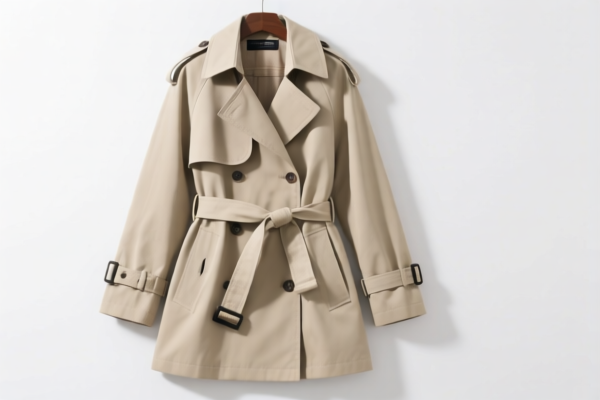
Women's Knitted Trench Coat
CN → US| HS Code | Tariff Rate | Origin | Destination | Doc |
|---|---|---|---|---|
| 6113001010 | 21.3% | CN | US | Official Doc |
| 6102200010 | 25.9% | CN | US | Official Doc |
| 6113009020 | 17.1% | CN | US | Official Doc |
Product Images



AI Analysis
👗 Women's Knitted Trench Coat (Knitted Outerwear)
🌐 HS Code Reference & Customs Clearance Guide | 2024/2025 Duty Rate Analysis | Professional Clearance Strategy
📌 I. Product Definition & Classification: What Exactly is a "Knitted Trench Coat"?
A Women's Knitted Trench Coat is a hybrid garment that combines the structure and style of a traditional trench coat (belts, storm flaps, dual vents) with the construction method of knitting (machine-knitted fabric) rather than weaving.
In international trade, this creates a unique classification challenge because: * Gender: It is explicitly for Women. * Material/Construction: It is Knitted (Chapter 61 of the HS Nomenclature). * Style: It mimics a "Trench" (Long, structured outerwear).
⚠️ Key Classification Logic: - If it is Knitted + Women's → It belongs to Chapter 61 (Articles of Apparel and Clothing Accessories, Knitted or Crocheted). - Crucial Distinction: Is it a standard coat (6102) or a "specific type" of knitted outerwear often subject to coating rules (6113)? The classification depends on the specific fabric finish and whether it fits the "coated" definition under the 122 tariff rules.
📦 II. HS Code Classification Details (Target Market: USA)
Based on the provided data, there are three distinct classification possibilities, each carrying a different tax burden due to "Section 301" (Base) and "122 Clause" (Section 122) tariffs.
| HS Code | Product Description & Logic | Total Tax Rate | Tax Composition |
|---|---|---|---|
6113.00.10.10 |
Logic: Knitted Women's Trench Coat. Matches Knitted & Women's features. May fall under Coated/Covered principles due to specific fabric treatment or structure. Risk: High suspicion of "Coated" status triggering additional base duties. |
21.3% | Base Duty: 3.8% Section 301 (Add-on): 7.5% Section 122 Clause: 10.0% |
6102.20.00.10 |
Logic: Knitted Women's Trench Coat. Explicitly matches Material + Gender + Form/Use. Fits the standard classification for women's knitted coats. Risk: Lowest Base Duty, but highest Section 301 impact. |
25.9% | Base Duty: 15.9% Section 301 (Add-on): 0.0% Section 122 Clause: 10.0% |
6113.00.90.20 |
Logic: Knitted Women's Trench Coat. Used for Women, Knitted form, Material inferred as Cotton (common for trench coats). Fits the "Other knitted" category. Advantage: Lowest Total Duty in this dataset. |
17.1% | Base Duty: 7.1% Section 301 (Add-on): 0.0% Section 122 Clause: 10.0% |
🔍 Critical Note on Tariff "122 Clause": All three codes include a 10% Section 122 Clause Tariff. This is a specific punitive tariff often applied to Chinese-origin textile/apparel goods under trade agreements or emergency measures (Section 122 of the Trade Act or similar local regulations). This 10% is unavoidable for this product category in the current dataset.
💰 III. Detailed Tariff Breakdown & Calculation Logic
✅ Applicable Country: USA (Target Market)
✅ Origin: China (CN)
✅ Product: Women's Knitted Trench Coat
🎯 Scenario 1: 6113.00.10.10 (Coated/Covered Logic)
- Total Duty: 21.3%
- Breakdown:
- MFN (Base) Rate: 3.8% (Very low, implies a specific "coated" exception or lower priority classification).
- Section 301 (Add-on): 7.5% (Moderate penalty for Section 301 goods).
- Section 122 Clause: 10.0% (Mandatory penalty).
- Calculation: CIF Value × 21.3%
- Legal Path:
HTS:6113.00.10.10→Section 122:10%→Section 301:7.5%
⚠️ Interpretation: This classification is likely used when the coat has a coating or lamination (e.g., water-resistant coating) that pushes it into the "Coated" textile category (6113), but avoids the highest base duty.
🎯 Scenario 2: 6102.20.00.10 (Standard Women's Coat Logic)
- Total Duty: 25.9%
- Breakdown:
- MFN (Base) Rate: 15.9% (High base duty for standard knitted coats).
- Section 301 (Add-on): 0.0% (Surprisingly, no Section 301 add-on for this specific subheading).
- Section 122 Clause: 10.0% (Mandatory penalty).
- Calculation: CIF Value × 25.9%
- Legal Path:
HTS:6102.20.00.10→Section 122:10%
⚠️ Interpretation: This is the "standard" classification. Even though Section 301 is 0%, the Base Duty (15.9%) is so high that the total tax (25.9%) ends up being the highest among the three options. Avoid this if possible.
🎯 Scenario 3: 6113.00.90.20 (Cotton/Other Knitted Logic)
- Total Duty: 17.1% (✅ LOWEST COST OPTION)
- Breakdown:
- MFN (Base) Rate: 7.1% (Moderate base duty).
- Section 301 (Add-on): 0.0% (No additional 301 penalty).
- Section 122 Clause: 10.0% (Mandatory penalty).
- Calculation: CIF Value × 17.1%
- Legal Path:
HTS:6113.00.90.20→Section 122:10%
⚠️ Interpretation: This is the most cost-effective classification, likely assuming the material is Cotton and it falls under "Other" knitted apparel that isn't heavily taxed at the base level. This is the optimal target for clearance.
🛠️ IV. Customs Clearance Practical Advice (Real-World Strategy)
✅ 1. Material Verification is King
The difference between 21.3% and 17.1% lies entirely in the material and fabric finish.
* Action: Ensure your Bill of Materials (BOM) clearly states the fiber content (e.g., "100% Cotton Knit" vs. "Synthetic Coated").
* Risk: If the coat is Coated/Laminated (waterproof), it must likely go to 6113.00.10.10 (21.3%). If it is plain knit cotton, 6113.00.90.20 (17.1%) is safer.
✅ 2. The "122 Clause" Trap
- Warning: All three codes have a 10% Section 122 tax.
- Strategy: No matter which HS code you choose, you cannot avoid this 10% cost. Do not waste time trying to argue for its exemption unless you have a specific legal waiver.
- Focus: Your only leverage is to avoid the Section 301 (Add-on) tax (7.5%) and keep the Base Duty low.
✅ 3. Declaration Best Practices
| Parameter | Recommendation | Why? |
|---|---|---|
| HS Code | Target 6113.00.90.20 |
Lowest total duty (17.1%) vs 25.9% or 21.3%. |
| Product Description | "Women's Knitted Cotton Trench Coat, Uncoated" | Avoids triggering the "Coated" rule (6113.00.10). |
| Material | Clearly state "Cotton" | Supports the lower base duty of 7.1%. |
| Section 122 | Be prepared to pay | It is unavoidable; factor it into your pricing. |
📌 V. Summary & Action Plan
🏆 The Winning Strategy
Aim for HS Code 6113.00.90.20
* Total Tax: 17.1% (Best of the three)
* Why:
1. Base Duty (7.1%) is moderate.
2. Section 301 (0.0%) is zero (Saving 7.5% vs Code 6113.00.10.10).
3. Section 122 (10.0%) is fixed, but the total is still the lowest.
🚨 The Trap to Avoid
Do NOT use 6102.20.00.10
* Total Tax: 25.9% (Most expensive)
* Why: Despite having 0% Section 301, the Base Duty (15.9%) is too high, making the total tax nearly 9% higher than the optimal code.
✅ Final Checklist for Exporters
- [ ] Confirm Fabric: Is it Cotton? Is it Coated?
- [ ] Select
6113.00.90.20if Plain Knit Cotton. - [ ] Select
6113.00.10.10if Coated/Laminated. - [ ] DO NOT select
6102.20.00.10(Too expensive). - [ ] Calculate CIF × 17.1% (or 21.3%) into your FOB pricing immediately.
📣 Clearance Tip:
"In textile customs, one decimal point in the HS Code can save you 8.8% in taxes. Always verify the material and finish before filing!"
🚀 Ready to Ship? Ensure your invoice clearly describes "Women's Knitted Cotton Trench Coat" to support the 17.1% tariff path. Avoid vague terms like "Coated" unless the product is actually coated.
Customer Reviews
About HS Code Classification
The Harmonized System (HS) is an internationally standardized nomenclature developed by the World Customs Organization (WCO) to classify traded products. Over 200 countries use the HS system as the basis for customs tariffs, trade statistics, and import/export regulations.
Each HS code follows a hierarchical structure:
- Chapter (2 digits) — Broad category of goods (e.g., Chapter 84: Machinery and Mechanical Appliances)
- Heading (4 digits) — More specific grouping within the chapter
- Subheading (6 digits) — Internationally standardized breakdown, used by all WCO member countries
- National subdivisions (8-10 digits) — Country-specific extensions for further classification, such as US HTSUS 10-digit codes
Correct HS code classification is essential for smooth customs clearance, accurate duty payment, and compliance with trade regulations. Misclassification can lead to customs delays, overpayment of duties, or penalties.
When importing from CN to US, the applicable tariff rates may include:
- Most-Favored-Nation (MFN) rate — The standard duty rate applied to WTO members
- General rate — Applied to countries without trade agreements
- Trade remedy duties — Additional tariffs such as Section 301 (anti-dumping), Section 232 (national security), or countervailing duties
The information provided on this page is for reference purposes only. For official classification, please consult with your local customs authority or a licensed customs broker.