Women's Knitted or Crocheted Robes and Nightdresses
CN → US| HS Code | Tariff Rate | Origin | Destination | Doc |
|---|---|---|---|---|
| 6114200060 | 28.3% | CN | US | Official Doc |
| 6114303070 | 32.4% | CN | US | Official Doc |
| 6204434030 | 33.5% | CN | US | Official Doc |
| 6104420010 | 29.0% | CN | US | Official Doc |
| 6204444010 | 33.5% | CN | US | Official Doc |
Product Images
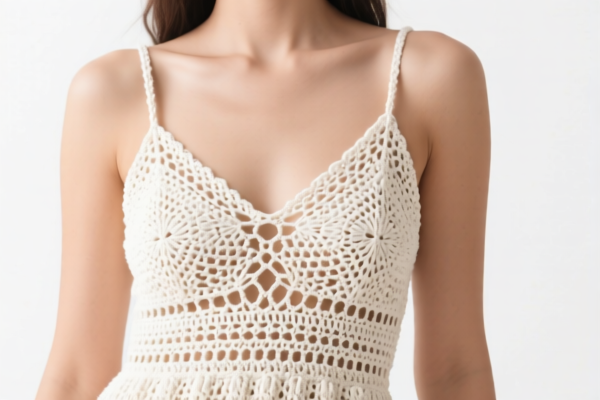
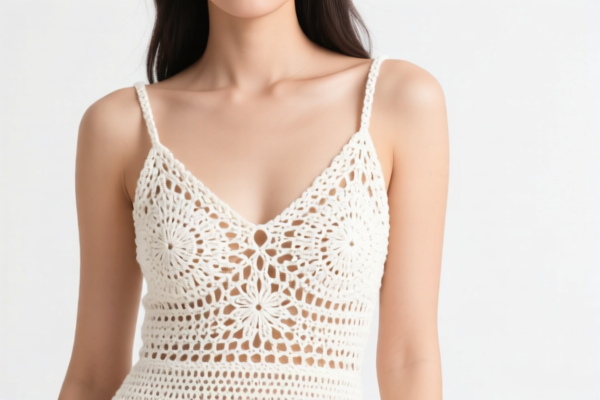
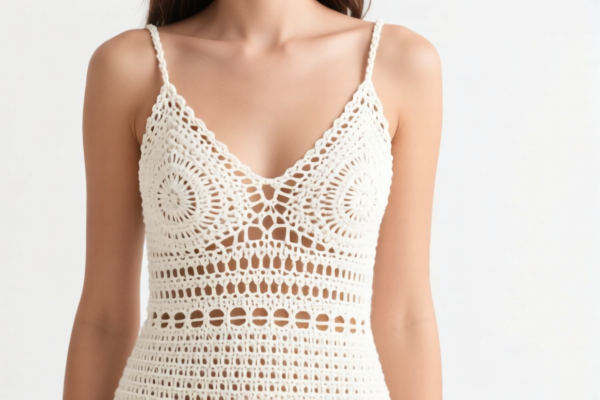
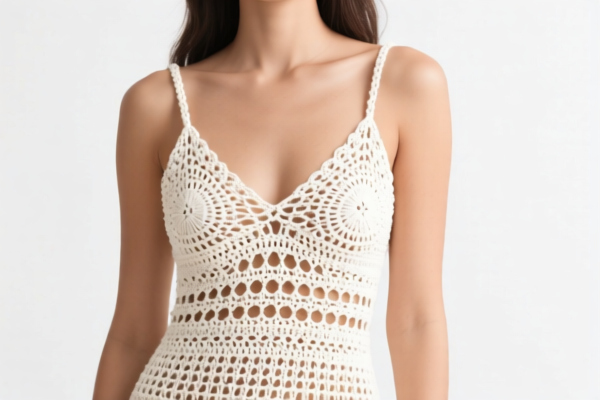
AI Analysis
👗 Women's Knitted or Crocheted Robes and Nightdresses (Lingerie & Loungewear)
🌐 HS Code Reference & Customs Clearance Guide | 2026 Latest Tariff Analysis | Strategic Clearance Strategy
📌 Part I: Product Definition & Classification: Do You Really Know "Women's Knitted/Loungewear"?
In international trade, "Women's Knitted or Crocheted Robes and Nightdresses" are primarily classified under Chapter 61 (Articles of Apparel and Clothing Accessories, Knitted or Crocheted). However, a critical distinction exists based on fabric composition (Cotton vs. Synthetic/Man-made) and construction method (Knitted/Crocheted vs. Woven/Non-Knitted).
Key Distinction Points: * Knitted/Crocheted (Chapter 61): Garments made from yarn via knitting or crochet machines. Includes most nightdresses, robes, and pajamas. * Woven/Non-Knitted (Chapter 62): If the fabric is woven (e.g., satin, flannel woven, not knitted) or made from non-fabric materials, it falls under Chapter 62. Note: The user prompt specifically asks for "Knitted or Crocheted," so the primary focus is Chapter 61. However, some items described as "dresses" in the data provided (62xx) may be misclassified or represent woven garments often confused with knitted ones. We will analyze the provided DATA to clarify the tax implications for both scenarios.
⚠️ Critical Classification Warning:
- If the garment is Knitted/Crocheted and made of Cotton →归入 6114.20.00.60 or 6104.42.00.10
- If the garment is Knitted/Crocheted and made of Synthetic/Man-made → 归入 6114.30.30.70
- If the garment is Woven (often misidentified as "dress" but structurally different) → 归入 6204.43.40.30 or 6204.44.40.10
📦 Part II: HS Code Classification Details (Based on Provided DATA)
| HS Code | Product Description | Material Inference | Total Tax Rate | Tax Breakdown |
|---|---|---|---|---|
| 6114.20.00.60 | Women's Knitted Dress/Robe | Cotton (or other fibers) | 28.3% | Base: 10.8% + Add'l: 7.5% + Sec 301: 10% |
| 6114.30.30.70 | Women's Knitted Dress/Robe | Synthetic/Man-made | 32.4% | Base: 14.9% + Add'l: 7.5% + Sec 301: 10% |
| 6204.43.40.30 | Women's Woven Dress* | Synthetic/Natural Fiber | 33.5% | Base: 16.0% + Add'l: 7.5% + Sec 301: 10% |
| 6104.42.00.10 | Women's Knitted Dress/Robe | Cotton | 29.0% | Base: 11.5% + Add'l: 7.5% + Sec 301: 10% |
| 6204.44.40.10 | Women's Woven Dress* | Synthetic/Cotton | 33.5% | Base: 16.0% + Add'l: 7.5% + Sec 301: 10% |
📌 Note on Chapter 62 (6204.xx): Although the prompt specifies "Knitted or Crocheted," the provided DATA includes Chapter 62 codes (Woven dresses). In customs practice, "Robes" and "Nightdresses" can sometimes be woven. If the item is Woven, it cannot be classified under Chapter 61. This guide includes all codes from the DATA for completeness.
💰 Part III: 2026 Tariff Rate Detailed Explanation
✅ Applicable Country: United States (US)
✅ Origin: China (CN)
✅ Effective Time: 2025/2026 (Current US Trade Policy)
🎯 1. 6114.20.00.60 & 6104.42.00.10 —— Cotton Knitted/Dressed Items
- Base Duty (General Rate): 10.8% - 11.5% (Ad Valorem)
- Reason: Standard MFN (Most Favored Nation) rate for cotton knitwear.
- Section 301 Additional Duty: +7.5% (List 4B)
- Reason: Part of the ongoing US-China trade war tariffs on specific textile categories.
- Section 122 Duty: +10%
- Reason: Additional surcharge applied to specific apparel lines under recent executive orders or trade enforcement actions.
- Total Effective Tax Rate: 28.3% - 29.0%
- Calculation: CIF Value × 28.3% (for 6114.20.00.60) or CIF Value × 29.0% (for 6104.42.00.10)
📌 Explanation:
Cotton knitwear generally enjoys lower base duties than synthetics. However, the Section 301 (7.5%) and Section 122 (10%) surcharges significantly increase the landed cost. Total tax is near 30%.
🎯 2. 6114.30.30.70 —— Synthetic/Man-Made Knitted Items
- Base Duty: 14.9%
- Reason: Synthetics (Polyester, Nylon, etc.) have higher base MFN rates due to domestic industry protection.
- Section 301 Additional Duty: +7.5%
- Section 122 Duty: +10%
- Total Effective Tax Rate: 32.4%
- Calculation: CIF Value × 32.4%
📌 Explanation:
Synthetic knitted garments are taxed higher than cotton due to the 4.1% higher base duty. This makes cotton often a slightly more cost-effective material from a tariff perspective, despite similar manufacturing costs.
🎯 3. 6204.43.40.30 & 6204.44.40.10 —— Woven Dresses (If applicable)
- Base Duty: 16.0%
- Reason: Woven garments often have higher base duties than knitwear.
- Section 301 Additional Duty: +7.5%
- Section 122 Duty: +10%
- Total Effective Tax Rate: 33.5%
- Calculation: CIF Value × 33.5%
📌 Explanation:
If the "robe" or "nightdress" is actually woven (e.g., woven silk, woven cotton twill), it falls under Chapter 62. This attracts the highest total tax rate (33.5%) among the listed codes. Do not misclassify woven items as knitted.
🛠️ Part IV: Customs Clearance Practical Advice (Real-World Pitfall Guide)
✅ 1. Documentation Checklist (Non-Negotiable)
| Document | Required? | Purpose |
|---|---|---|
| ✅ Product Specification Sheet | ✔️ | Must specify: "Knitted" or "Woven", Fabric Composition (e.g., 100% Cotton), and Garment Type (Robe/Nightdress). |
| ✅ Composition Label Photo | ✔️ | Clear photo of the care label showing fiber content (e.g., "100% COTTON"). |
| ✅ Commercial Invoice | ✔️ | Must match HS Code description precisely. Avoid vague terms like "Clothing". Use "Women's Knitted Cotton Nightdress". |
| ✅ Packing List | ✔️ | Confirm quantity and weight. |
| ✅ Certified Lab Test Report | ✔️ | Highly Recommended: For fiber content verification if origin is disputed. |
✅ 2. Declaration Tips (Crucial for Accuracy)
🔥 Golden Rule: "Knit vs. Woven is Destiny. Cotton vs. Synthetic is Cost."
| Scenario | Correct HS Code | Common Mistake | Consequence |
|---|---|---|---|
| Knitted, 100% Cotton | 6114.20.00.60 or 6104.42.00.10 |
Misclassifying as Woven (6204.xx) |
Overpaying ~4.5% in taxes |
| Knitted, 100% Polyester | 6114.30.30.70 |
Misclassifying as Cotton | Underpayment → Penalties & Back Taxes |
| Woven, 100% Cotton | 6204.43.40.30 |
Misclassifying as Knitted (6114.xx) |
Underpayment → Penalties & Back Taxes |
| Mixed Fabric (e.g., 80% Cotton/20% Elastane) | Depends on dominant fiber | Ambiguous declaration | Customs may reclassify and penalize |
✅ 3. Special Handling for "Robes" and "Nightdresses"
- Definition Check: Ensure the item is truly a "Robe" or "Nightdress" and not a "Dress" for daywear. While HS codes 6114/6204 cover "Dresses," specific subheadings may apply to lingerie. However, the provided DATA groups them under general "Dress" codes. Consult the specific country's tariff schedule for "Underwear/Loungewear" subheadings if available.
- Set Declarations: If selling a "Nightdress + Robe" set, declare them together if they are sold as a single unit. If separate, declare separately. Misdeclaring a set as a single item to avoid higher taxes on accessories is illegal.
- Section 321 (De Minimis):
- ❌ NOT APPLICABLE: These items are subject to Section 301 and 122 duties, which are generally not exempt under the $800 de minimis rule for China-origin goods in many enforcement contexts, or may be excluded. Assume full taxation for B2B shipments. For B2C, check current CBP enforcement status.
🌍 Part V: Global Market Comparison (2026 Context)
| Market | Recommended HS Code (Cotton Knit) | Approx. Duty | Notes |
|---|---|---|---|
| 🇺🇸 USA | 6114.20.00.60 |
28.3% | High due to Sec 301 & 122. |
| 🇨🇳 China (Import) | 6114.20.00.00 |
~10-15% | Lower base duties, no US-style surcharges. |
| 🇪🇺 EU | 6104.42.00 |
8-12% | No Section 301/122. Standard EU duty. |
| 🇬🇧 UK | 6104.42.00 |
8-12% | Post-Brexit tariffs similar to EU. |
📌 Conclusion:
- USA is the most expensive market for Chinese-origin knitwear due to political tariffs.
- EU/UK offer lower tariff burdens but require strict REACH/RoHS compliance.
- Strategy: For US market, consider cotton over synthetic to save ~4% in base duty, but factor in the total ~29-33% landed cost.
📌 Part VI: Common Errors & Pitfalls (Lessons Learned)
❌ Error 1: Confusing Knitted vs. Woven
👉 Result: Wrong HS Code → Customs delay, potential fines.
👉 Fix: Always provide a fabric sample or close-up photo of the knit structure (loops) vs. weave (grid) with declaration.
❌ Error 2: Ignoring "Section 122" Tariffs
👉 Result: Unexpected 10% surcharge at customs.
👉 Fix: Calculate landed cost using Total Tax Rate (Base + 7.5% + 10%), not just base duty.
❌ Error 3: Misdeclaring Material Composition
👉 Result: If declared as 100% Cotton but tested as 100% Polyester, duty jumps from 28.3% to 32.4%. Plus penalties.
👉 Fix: Ensure Label = Invoice = Physical Product.
🎯 Part VII: Conclusion: Smart Clearance, Higher Margins!
🎯 Key Takeaway:
🔹 "Knit or Weave? Cotton or Synth? Check Twice, Pay Once!"
🔹 Total Tax Range: 28.3% (Cotton Knit) to 33.5% (Woven/Synth).
🔹 Maximize Savings: Use Cotton (lower base) if possible, but ensure accurate classification.
📌 Pro Tip:
- For US Imports, budget for ~30% tax on knitted cotton items.
- For EU Imports, budget for ~10% duty but ensure Compliance Certs.
- Always request a Customs Ruling (Advance Ruling) from CBP if you have a high-volume SKU to lock in the HS Code and avoid disputes.
✨ Professional Clearance Starts with Accurate Classification!
💼 Every percent saved is pure profit.
Customer Reviews
About HS Code Classification
The Harmonized System (HS) is an internationally standardized nomenclature developed by the World Customs Organization (WCO) to classify traded products. Over 200 countries use the HS system as the basis for customs tariffs, trade statistics, and import/export regulations.
Each HS code follows a hierarchical structure:
- Chapter (2 digits) — Broad category of goods (e.g., Chapter 84: Machinery and Mechanical Appliances)
- Heading (4 digits) — More specific grouping within the chapter
- Subheading (6 digits) — Internationally standardized breakdown, used by all WCO member countries
- National subdivisions (8-10 digits) — Country-specific extensions for further classification, such as US HTSUS 10-digit codes
Correct HS code classification is essential for smooth customs clearance, accurate duty payment, and compliance with trade regulations. Misclassification can lead to customs delays, overpayment of duties, or penalties.
When importing from CN to US, the applicable tariff rates may include:
- Most-Favored-Nation (MFN) rate — The standard duty rate applied to WTO members
- General rate — Applied to countries without trade agreements
- Trade remedy duties — Additional tariffs such as Section 301 (anti-dumping), Section 232 (national security), or countervailing duties
The information provided on this page is for reference purposes only. For official classification, please consult with your local customs authority or a licensed customs broker.