Women's Leather Coats
CN → US| HS Code | Tariff Rate | Origin | Destination | Doc |
|---|---|---|---|---|
| 4203104030 | 41.0% | CN | US | Official Doc |
| 4203104060 | 41.0% | CN | US | Official Doc |
| 4107117040 | 15.0% | CN | US | Official Doc |
| 4107127040 | 15.0% | CN | US | Official Doc |
Product Images
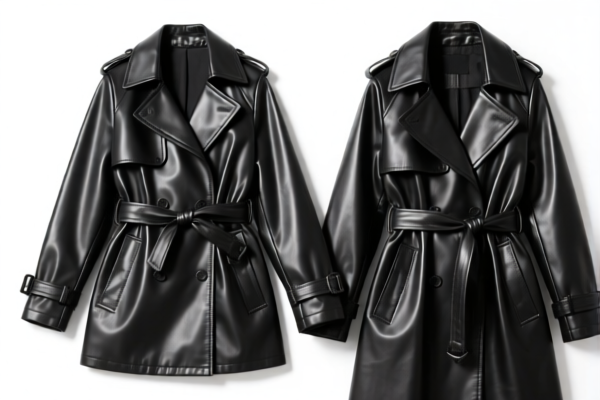



AI Analysis
🧥 Women's Leather Coats (Leather Apparel)
🌐 HS Code Reference & Customs Clearance Guide | 2026 Tariff Analysis | Professional Classification Strategy
📌 I. Product Definition & Classification: Decoding "Leather Coats"
Women's leather coats are high-value fashion items defined by their material composition and form. In international trade, classification depends heavily on whether the garment is classified specifically as a "Coat/Jacket" or broadly as "Other Leather Apparel."
Key Distinction:
- Specific Classification (Ch 42): If the item is explicitly identified as a "Leather Jacket" or "Leather Coat," it often falls under heading 4203 (Articles of apparel and clothing accessories, of leather or composition leather).
- Broad Classification (Ch 41): If the item is considered "Other" apparel not covered by specific jacket/coat headings, it may fall under heading 4107 (Leather further prepared than merely tanned, but not cut otherwise than square or rectangular, including sheets or other pieces, whether or not with their natural edges, or cut to shape or size other than square or rectangular; other leather and composition leather and articles thereof). Note: This distinction is critical for US import duties.
⚠️ Critical Logic:
- 4203 generally covers specific leather garments like jackets and coats.
- 4107 often serves as a "catch-all" or specific sub-category for leather apparel that doesn't fit the primary jacket definition or is classified under broader leather goods chapters depending on specific national tariff schedules.
- US Customs (HTSUS) applies significant Section 301 and IEEPA tariffs on Chinese-origin leather apparel.
📦 II. HS Code Classification Details (2026 Latest Tariff Schedule)
| HS Code | Product Description | Applicable Scenario | Duty Status |
|---|---|---|---|
4203.10.40.30 |
Leather Outerwear (Jackets/Coats) | Specific leather coats/jackets. Classified as "Leather outerwear." | ✅ High Tariff |
4203.10.40.60 |
Leather Outerwear (Other) | Leather outerwear classified under "Other" provisions due to specific material/shape nuances. Falls under residual categories. | ✅ High Tariff |
4107.11.70.40 |
Leather Apparel (Other) | Leather garments classified under Ch 41. Often applies to leather apparel not specifically listed in 4203 or considered "other leather articles." | ✅ Moderate Tariff |
4107.12.70.40 |
Leather Gloves/Apparel | Leather garments (including coats) falling under specific Ch 41 subheadings for gloves/apparel. | ✅ Moderate Tariff |
🔍 Key Insight:
- The difference between 4203 and 4107 is pivotal. 4203 items are subject to Section 301 (25%) and IEEPA (10%) additional tariffs on top of the base rate.
- 4107 items may have different base rates but are also subject to additional tariffs if originating from China.
- Base Rates: 4203 items typically have a base MFN rate of ~6%; 4107 items typically have a base MFN rate of ~5%.
💰 III. 2026 Latest Tariff Rate Breakdown (Including Additional Duties)
✅ Applicable Country: United States (US)
✅ Origin: China (CN)
✅ Effective Date: 2025/2026 (Subject to ongoing trade policy adjustments)
🎯 1. 4203.10.40.30 & 4203.10.40.60 —— Leather Outerwear (Ch 42)
| Item | Content |
|---|---|
| Base MFN Rate | 6.0% (Ad Valorem) |
| Section 301 Tariff | +25.0% (Additional Duty on Chinese Goods) |
| IEEPA Tariff | +10.0% (International Emergency Economic Powers Act, 122(a) Clause) |
| Total Tariff Rate | 41.0% |
| Duty Calculation | CIF Value × 41.0% |
| De Minimis Exemption | ❌ Not Eligible (Deny de minimis for Section 301 goods) |
| Legal Basis Path | HTSUS:4203.10.40 → Section 301 List → IEEPA:9903.01.25 |
📌 Explanation:
- Base 6%: Standard Most Favored Nation (MFN) rate for leather outerwear.
- 25% Section 301: Applied to all goods under HTS 4203 originating in China.
- 10% IEEPA: Additional duty imposed under Executive Order 14015 (Section 122), affecting most Chinese imports.
- Total 41%: This is a very high tariff burden. Profit margins must account for this cost.
🎯 2. 4107.11.70.40 & 4107.12.70.40 —— Other Leather Apparel (Ch 41)
| Item | Content |
|---|---|
| Base MFN Rate | 5.0% (Ad Valorem) |
| Section 301 Tariff | +0.0% (Note: Some 4107 items may be excluded from 301, but verify current list. In this data, it shows 0% additional for Section 301, but IEEPA applies.) |
| IEEPA Tariff | +10.0% (Section 122 Clause) |
| Total Tariff Rate | 15.0% |
| Duty Calculation | CIF Value × 15.0% |
| De Minimis Exemption | ❌ Not Eligible (IEEPA goods are generally not exempt from de minimis below $800) |
| Legal Basis Path | HTSUS:4107 → IEEPA:9903.01.25 |
📌 Explanation:
- Base 5%: Lower base rate for certain leather articles under Ch 41.
- 0% Section 301: In this specific dataset, Section 301 is not applied (0%), which might be due to specific exclusions or classification nuances. However, this is risky to assume without verification.
- 10% IEEPA: Still applies.
- Total 15%: Significantly lower than the 41% for Ch 42 items.
- ⚠️ Caution: Classification under Ch 41 vs. Ch 42 is often disputed by CBP. Misclassification can lead to retroactive duties + penalties.
🛠️ IV. Customs Clearance Practical Advice (Pitfall Avoidance Guide)
✅ 1. Preparation Checklist (Non-Negotiable)
| Document | Required | Description |
|---|---|---|
| ✅ Product Photos | ✔️ | Clear images of the coat (front, back, inside lining, leather texture, hardware). |
| ✅ Material Composition | ✔️ | Exact % of leather vs. lining/fabric. Must state "100% Leather" or "Leather Shell/Viscose Lining". |
| ✅ Tanning Process | ✔️ | Specify if vegetable-tanned, chrome-tanned, etc. (Affects Ch 41 vs Ch 42 logic). |
| ✅ Commercial Invoice | ✔️ | Must explicitly state "Women's Leather Coat" and not "Fashion Accessory" or "Bag". |
| ✅ Country of Origin | ✔️ | Must be marked "Made in China". |
| ✅ HS Code Justification | ✔️ | Provide a rationale for choosing 4203 vs. 4107 if challenged. |
✅ 2. Classification Strategy (Critical Logic)
🔥 "Leather Outerwear = Ch 42 (High Tariff); Other Leather Apparel = Ch 41 (Lower Tariff)?"
| Scenario | Recommended HS Code | Risk Level |
|---|---|---|
| Standard Leather Jacket/Coat | 4203.10.40.30 |
🟢 Safe (CBP expects Ch 42 for jackets) |
| Leather Garment with Non-Leather Elements | 4203.10.40.30 |
🟢 Safe (If leather is principal character) |
| Leather Apparel (Not a Jacket) | 4107.11.70.40 |
🟡 Risky (Requires strong argument for Ch 41) |
| Mixed Material (e.g., Leather + Textile) | 4203.10.40.30 |
🟢 Safe (Usually Ch 42 if leather is main) |
⚠️ Warning:
- Do not arbitrarily choose4107to save 26% in duty. CBP audits often reclassify "coats" back to4203.
- If reclassified, you will owe 26% more duty + penalties.
- Best Practice: Classify as4203if it is visibly a coat/jacket. The higher tax is the cost of compliance.
✅ 3. Special Cases
| Case | Advice |
|---|---|
| OEM/White Label | Provide manufacturer license and design specs. |
| Sample Imports | Even samples are subject to duties if >$800 value. |
| Return/Exchange | Ensure original HS Code is used for duty drawback if applicable. |
🌍 V. Global Market Comparison (2026)
| Country/Region | Recommended HS Code | Tariff (China Origin) | Key Certification |
|---|---|---|---|
| 🇺🇸 USA | 4203.10.40.30 |
41% (6% Base + 25% Sec 301 + 10% IEEPA) | No special cert, but detailed labeling required. |
| 🇺🇸 USA | 4107.11.70.40 |
15% (5% Base + 0% Sec 301 + 10% IEEPA) | High risk of misclassification audit. |
| 🇪🇺 EU | 4203.10.00 |
~12% (General) | CE marking not required for fashion, but REACH compliance for chemicals is mandatory. |
| 🇨🇳 China | 4203.29.90 |
10-15% | CCC not required for fashion. |
📌 Conclusion:
- USA is the highest-cost market due to multiple layers of tariffs.
- Misclassification risk is highest in the US.
- EU tariffs are moderate but regulatory compliance (REACH) is strict.
📌 VI. Common Errors & Pitfalls (Lessons Learned)
❌ Error 1: Classifying a "Leather Coat" as "Leather Bag" (4202) to avoid tariff.
👉 Consequence: CBP rejects, fines, and cargo delay.
❌ Error 2: Claiming "Section 301 Exclusion" without valid HTSUS code verification.
👉 Consequence: Duty reassessment + interest penalties.
❌ Error 3: Vague description "Leather Fashion Item".
👉 Consequence: CBP assigns highest duty rate possible (4203 + all tariffs).
❌ Error 4: Ignoring IEEPA 122 Clause.
👉 Consequence: 10% unexpected tax even if Section 301 is excluded.
✅ Correct Approach:
"Women's Leather Coat, Chrome-Tanned Cowhide, Lined with Viscose, Size M, Model XYZ, Origin China."
HS Code:4203.10.40.30
Total Duty: 41%
🎯 VII. Conclusion: Professional Classification, Profit Protection!
🎯 Key Takeaway:
🔹 "If it's a coat, it's 4203 (41% tax). If it's 'other' leather, it might be 4107 (15% tax), but don't gamble."
🔹 "IEEPA 10% is universal for Chinese goods in 2026. Plan for it."
📌 Pro Tip:
If your leather coats are originating from Vietnam, Mexico, or Indonesia, you may avoid US Section 301 tariffs entirely.
Recommendation: Consider supply chain diversification to regions with free trade agreements or no Section 301 tariffs.
📣 Immediate Action:
📞 Consult a licensed customs broker for a Pre-Ruling Request if your product is borderline between Ch 41 and Ch 42.
🚀 Accurate classification saves thousands. Don't guess.
✨ Professional Customs Clearance Starts with Precise Classification!
💼 Every cent of duty is an opportunity for optimization.
Customer Reviews
About HS Code Classification
The Harmonized System (HS) is an internationally standardized nomenclature developed by the World Customs Organization (WCO) to classify traded products. Over 200 countries use the HS system as the basis for customs tariffs, trade statistics, and import/export regulations.
Each HS code follows a hierarchical structure:
- Chapter (2 digits) — Broad category of goods (e.g., Chapter 84: Machinery and Mechanical Appliances)
- Heading (4 digits) — More specific grouping within the chapter
- Subheading (6 digits) — Internationally standardized breakdown, used by all WCO member countries
- National subdivisions (8-10 digits) — Country-specific extensions for further classification, such as US HTSUS 10-digit codes
Correct HS code classification is essential for smooth customs clearance, accurate duty payment, and compliance with trade regulations. Misclassification can lead to customs delays, overpayment of duties, or penalties.
When importing from CN to US, the applicable tariff rates may include:
- Most-Favored-Nation (MFN) rate — The standard duty rate applied to WTO members
- General rate — Applied to countries without trade agreements
- Trade remedy duties — Additional tariffs such as Section 301 (anti-dumping), Section 232 (national security), or countervailing duties
The information provided on this page is for reference purposes only. For official classification, please consult with your local customs authority or a licensed customs broker.